
The relentless march of technological innovation ensures that the title of “newest” in the realm of graphics cards is ever-shifting. As of the latest iterations, NVIDIA’s cutting-edge offering that redefines the pinnacle of desktop GPU performance belongs to the GeForce RTX 40 Series, spearheaded by the formidable NVIDIA GeForce RTX 4090. This card, a titan among GPUs, represents the zenith of NVIDIA’s engineering prowess, introducing a new generation of architecture, enhanced ray tracing, and groundbreaking AI-powered features.
The RTX 40 Series: A New Era of Performance
NVIDIA’s RTX 40 Series, based on the revolutionary Ada Lovelace architecture, has dramatically elevated the standard for graphics processing. While the RTX 4090 sits atop this hierarchy, offering unparalleled capabilities, the series also includes other powerful contenders like the RTX 4080, RTX 4070 Ti, and more recently, the RTX 4070 and RTX 4060 Ti, each designed to cater to different segments of the market while embodying the core advancements of Ada Lovelace. However, when inquiring about “the newest” in terms of raw power and technological breakthroughs, the focus inevitably gravitates towards the flagship RTX 4090.
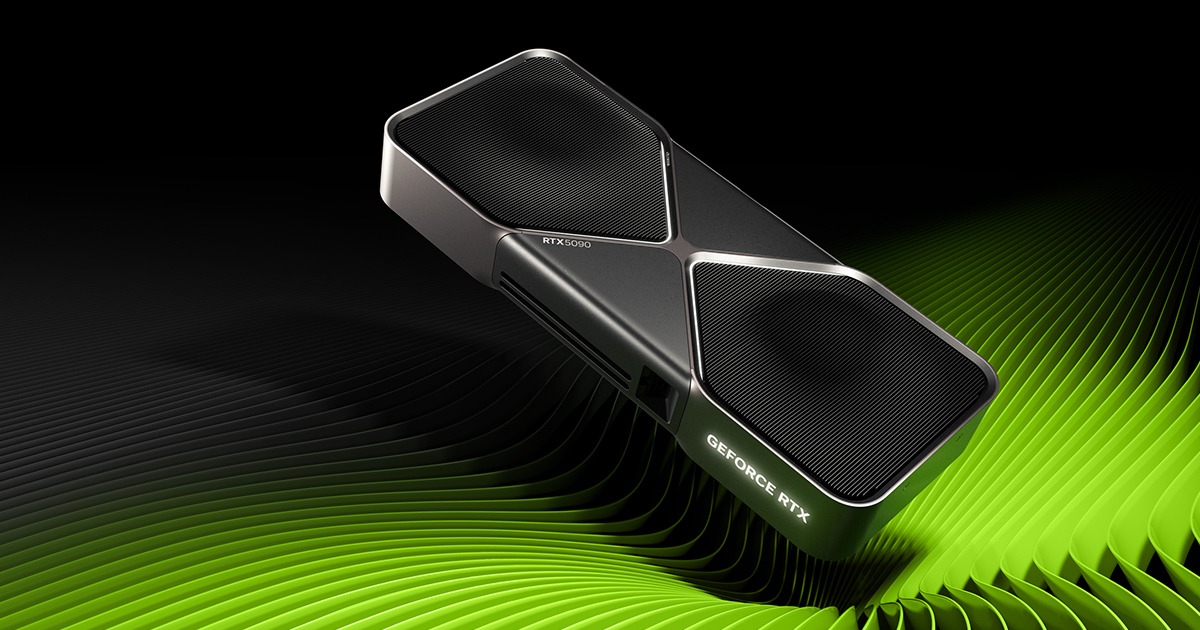
Unveiling the GeForce RTX 4090
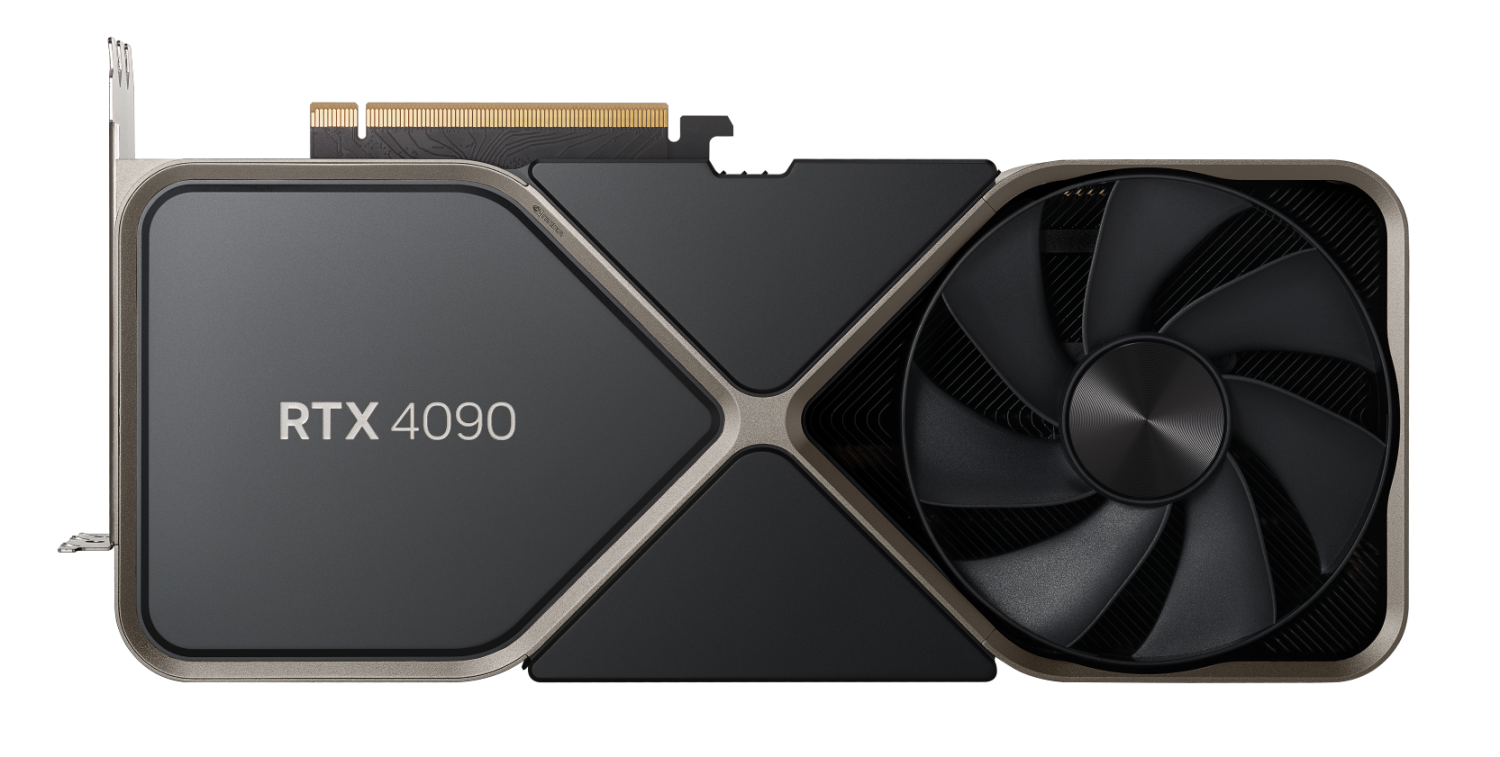
Launched as the undisputed king of its generation, the NVIDIA GeForce RTX 4090 is an engineering marvel. It is not merely an incremental upgrade but a generational leap that pushes the boundaries of what’s possible in real-time rendering, gaming, and professional applications. At its core, the RTX 4090 boasts a staggering number of CUDA cores, RT Cores, and Tensor Cores, far surpassing its predecessors. With 16,384 CUDA cores, 128 3rd-generation RT Cores, and 512 4th-generation Tensor Cores, alongside 24GB of GDDR6X memory on a 384-bit memory bus, its specifications alone paint a picture of immense processing power. These numbers translate into real-world performance that offers unprecedented frame rates at 4K resolution, even with demanding graphical settings and ray tracing enabled.
The Ada Lovelace Architecture Explained
The monumental performance gains of the RTX 40 Series, and particularly the RTX 4090, are fundamentally attributable to the new Ada Lovelace architecture. Named after Ada Lovelace, often considered the world’s first computer programmer, this architecture introduces several key innovations:
- New Streaming Multiprocessors (SMs): These are the building blocks of the GPU, and Ada Lovelace’s SMs deliver up to 2x performance and power efficiency compared to the previous generation’s Ampere architecture.
- 3rd-Gen RT Cores: Dedicated hardware for ray tracing is significantly enhanced, offering up to 2x ray tracing performance. This means games and applications can render more complex and realistic lighting, reflections, and shadows in real-time with less performance overhead.
- 4th-Gen Tensor Cores: These specialized AI processing units are crucial for NVIDIA’s Deep Learning Super Sampling (DLSS) technology. The new Tensor Cores deliver up to 2x AI performance, enabling the groundbreaking DLSS 3 with Frame Generation.
- Shader Execution Reordering (SER): A revolutionary innovation, SER dynamically reorders shading workloads to improve GPU utilization. In ray tracing, where rendering tasks are often chaotic and non-uniform, SER can dramatically boost performance, making complex ray-traced scenes run much faster.
- Dual AV1 Encoders: For content creators and streamers, the inclusion of two dedicated AV1 encoders is a significant upgrade. AV1 offers superior compression efficiency compared to H.264, resulting in higher quality video at lower bitrates, crucial for live streaming and video editing.
These architectural enhancements collectively enable the RTX 4090 to achieve performance levels previously thought unattainable in consumer-grade hardware.
Pushing Boundaries: Performance and Core Technologies
The NVIDIA GeForce RTX 4090 isn’t just about raw specifications; it’s about how these specifications translate into tangible improvements across various applications, from immersive gaming to demanding professional workloads.
Raw Power and Gaming Prowess
For gamers, the RTX 4090 redefines the ultra-high-fidelity experience. It consistently delivers triple-digit frame rates in the most graphically intensive titles at 4K resolution, even with all settings cranked to maximum. This level of performance ensures buttery-smooth gameplay, giving competitive advantages and a more immersive experience for single-player epics. Its sheer horsepower easily handles future titles, providing a significant degree of future-proofing for enthusiast gamers. The card excels not just in conventional rasterization but truly shines when combined with its advanced ray tracing capabilities.
DLSS 3 and Frame Generation: A Game Changer
Perhaps one of the most impactful innovations introduced with the Ada Lovelace architecture is DLSS 3, featuring Frame Generation. While previous iterations of DLSS (Deep Learning Super Sampling) used AI to upscale lower-resolution images to higher resolutions, effectively boosting frame rates without significant visual degradation, DLSS 3 takes this concept a step further.
Frame Generation is an AI-powered technology that creates entirely new frames in between traditionally rendered frames. By analyzing sequential frames and motion data, the GPU’s Tensor Cores predict and generate these interpolated frames, effectively doubling the frame rate in some scenarios. This means that even in CPU-bound scenarios, where traditional GPUs might struggle to push higher frame rates, DLSS 3 can still provide a substantial boost. This technology marks a pivotal moment in graphics rendering, as AI is now directly contributing to the generation of entire frames, leading to unprecedented fluidity and performance gains, particularly in ray-traced games.
Enhanced Ray Tracing Capabilities
Ray tracing, a rendering technique that simulates the physical behavior of light, has been a hallmark of NVIDIA’s RTX series since its inception. With the RTX 4090 and its 3rd-generation RT Cores combined with Shader Execution Reordering (SER), ray tracing performance sees dramatic improvements. Complex global illumination, realistic reflections, accurate shadows, and physically precise refractions can now be rendered with greater fidelity and less impact on frame rates. This brings a new level of realism to supported games and allows designers and artists to create breathtakingly lifelike scenes. The advancements mean that ray tracing is no longer a niche feature but a viable, high-performance rendering method for mainstream gaming and professional visualization.
Beyond Gaming: Professional Applications and AI
While the gaming prowess of the RTX 4090 is often highlighted, its advanced architecture and immense computational power extend far beyond entertainment, making it an invaluable tool for professionals.
Content Creation and 3D Rendering
For content creators, animators, video editors, and 3D artists, the RTX 4090 is a transformative piece of hardware. Its vast number of CUDA cores accelerates tasks in applications like Adobe Premiere Pro, DaVinci Resolve, Blender, Autodesk Maya, and 3ds Max. Rendering complex 3D scenes, running simulations, and encoding high-resolution video become significantly faster, drastically reducing production times. The dual AV1 encoders are particularly beneficial for streamers and video editors, allowing for higher quality output at smaller file sizes, streamlining workflows and improving the viewer experience. Real-time viewport performance in demanding 3D applications is smoother, enabling artists to iterate more quickly and precisely.
AI/ML Development and Data Science
The powerful 4th-generation Tensor Cores are not only crucial for DLSS 3 but also serve as a backbone for AI and machine learning development. Researchers and data scientists can leverage the RTX 4090 for accelerating training of neural networks, running complex AI models, and performing intricate data analysis. Its large VRAM capacity (24GB GDDR6X) is essential for handling massive datasets and larger AI models, reducing the need for expensive, specialized workstation GPUs for many tasks. This makes the RTX 4090 a versatile powerhouse, bridging the gap between high-end consumer hardware and professional AI accelerators for a broad range of scientific and development applications.
Market Position, Accessibility, and the Road Ahead
The RTX 4090’s position as the newest and most powerful NVIDIA consumer graphics card comes with its own set of considerations regarding price, availability, and its role in the broader technology landscape.
Price, Availability, and Value Proposition
As the top-tier flagship, the NVIDIA GeForce RTX 4090 commands a premium price. Its cost reflects the cutting-edge technology, unparalleled performance, and extensive R&D that goes into its creation. While an investment, for professionals whose livelihoods depend on computational speed or enthusiasts who demand the absolute best in gaming performance, the value proposition is clear. The significant boost in productivity for creators and the transformative gaming experience justify the expense for its target audience. Availability, while initially subject to typical new product demand spikes, has generally stabilized, allowing consumers to acquire these high-end cards.
The Evolving Graphics Landscape
The introduction of the RTX 40 series and the RTX 4090 has undoubtedly reshaped the competitive landscape. It forces competitors to innovate further, ultimately benefiting consumers with more powerful and efficient graphics solutions across the board. The emphasis on AI-powered upscaling and frame generation with DLSS 3 suggests a future where artificial intelligence plays an even more integral role in rendering and performance optimization, moving beyond raw silicon power alone. This trend is likely to continue, with future generations of GPUs incorporating even more sophisticated AI hardware and algorithms.

What’s Next for NVIDIA?
While the RTX 4090 currently reigns supreme, NVIDIA’s innovation pipeline is continuous. The company operates on a consistent release cadence, typically introducing new architectures and GPU generations every couple of years. Without official announcements, speculating on specific future products is challenging. However, we can anticipate continued advancements in power efficiency, further refinement of ray tracing capabilities, and even more sophisticated AI integration. The next generation will likely build upon the foundational successes of Ada Lovelace, pushing the boundaries of what GPUs can achieve in gaming, professional visualization, and AI acceleration even further, ensuring that the question of “what is the newest NVIDIA graphics card” remains an exciting and dynamic inquiry.
aViewFromTheCave is a participant in the Amazon Services LLC Associates Program, an affiliate advertising program designed to provide a means for sites to earn advertising fees by advertising and linking to Amazon.com. Amazon, the Amazon logo, AmazonSupply, and the AmazonSupply logo are trademarks of Amazon.com, Inc. or its affiliates. As an Amazon Associate we earn affiliate commissions from qualifying purchases.