
Purchasing a home is one of the most significant financial decisions an individual or family will ever make. It involves navigating a labyrinth of terms, conditions, and fees, many of which can seem obscure at first glance. Among these, the concept of “points” on a home loan often causes confusion. Far from being a mere footnote, understanding what points mean—and how they work—is crucial for making informed choices that can impact your long-term financial health. In essence, mortgage points are fees paid directly to the lender at closing in exchange for a lower interest rate or to cover specific loan origination costs. While they represent an upfront expense, strategically using points can lead to substantial savings over the life of your loan. This article will demystify mortgage points, explore their various types, analyze their financial implications, and provide insights into when paying them makes strategic sense for your personal finance journey.
Understanding Mortgage Points: The Basics
When you apply for a home loan, you’re not just borrowing money; you’re also engaging in a complex financial transaction with various associated costs. Mortgage points are a fundamental component of these costs, representing an upfront fee paid to the lender. These points are typically expressed as a percentage of the total loan amount.
Defining Discount Points
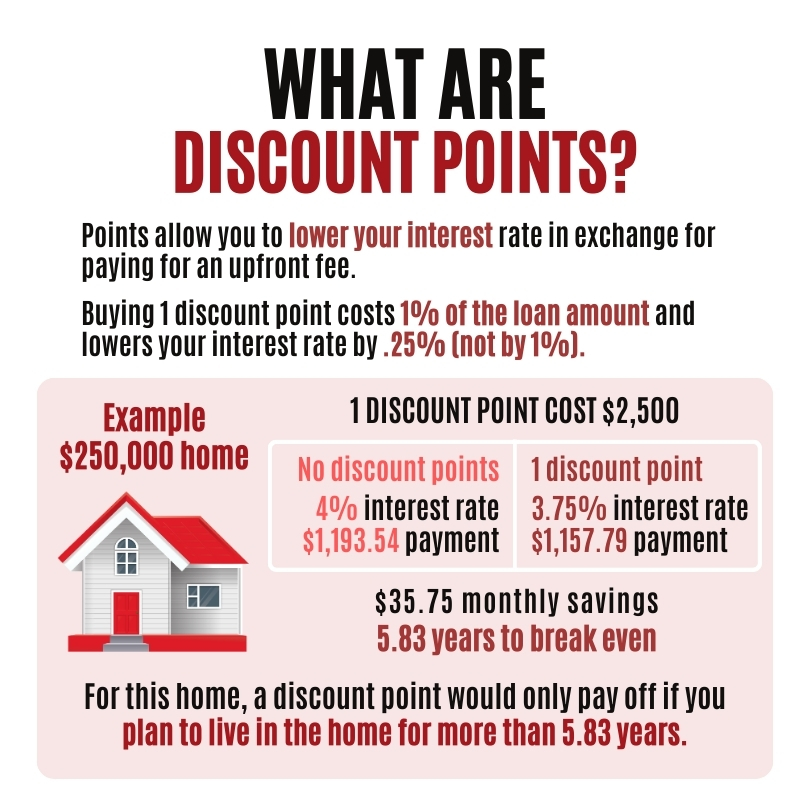
Discount points are perhaps the most commonly discussed type of mortgage point. These are fees paid by the borrower to the lender specifically to “buy down” the interest rate on the mortgage. Each discount point typically reduces the interest rate by a certain fraction, though the exact reduction varies by lender, market conditions, and the specific loan product. The more discount points you pay, the lower your interest rate will be. This upfront payment is essentially a trade-off: you pay more at closing to save money on interest over the life of the loan. For example, if you’re taking out a $300,000 loan, one discount point would cost you $3,000.
Defining Origination Points
In contrast to discount points, origination points are fees charged by the lender to cover the administrative costs of processing your loan application, underwriting the loan, and preparing the necessary paperwork. They are essentially a lender’s fee for doing business. While they don’t directly lower your interest rate in the same way discount points do, they are still expressed as a percentage of the loan amount. Some lenders may itemize these costs separately as “origination fees” or “processing fees,” while others might bundle them under “origination points.” It’s important to clarify with your lender exactly what any “origination points” cover, as they can sometimes be negotiable.
The Cost of a Point
Regardless of whether they are discount or origination points, the cost of a single point is always 1% of the total loan amount. So, on a $400,000 mortgage, one point would cost $4,000. Two points would cost $8,000. This straightforward calculation makes it easy to understand the direct upfront cost associated with paying points. What’s more complex is determining the value proposition for paying them, particularly for discount points, which ties directly into your interest rate and the long-term cost of your loan.
Why Lenders Offer Points
Lenders offer points as a flexible mechanism to structure loan products that appeal to a wider range of borrowers and financial situations. From the lender’s perspective, points represent either an immediate revenue stream (origination points) or a way to compensate for offering a lower, less profitable interest rate over time (discount points). This flexibility allows borrowers to customize their loan to better fit their financial strategy, whether that means prioritizing lower monthly payments or minimizing upfront closing costs. In a competitive market, offering various options, including different point structures, helps lenders attract customers.
How Mortgage Points Work: Discount vs. Origination
The functionality of mortgage points is best understood by dissecting their primary types and observing their direct impact on your loan terms. While both are paid upfront at closing, their purposes and effects on your overall loan structure differ significantly.
Lowering Your Interest Rate with Discount Points
The core function of discount points is to reduce your mortgage interest rate. When you pay a discount point, you are essentially pre-paying a portion of the interest that would otherwise accrue over the life of your loan. This upfront investment results in a lower annual percentage rate (APR) and, consequently, a smaller monthly mortgage payment. For example, if a lender offers a 7% interest rate with zero points, they might offer a 6.75% rate for one point, or a 6.5% rate for two points. The specific reduction in interest rate per point varies greatly by lender and market conditions, so it’s critical to obtain detailed quotes. This strategy is particularly appealing to borrowers who plan to stay in their home for an extended period, allowing them sufficient time to “break even” on the upfront cost of the points through the savings on their monthly payments.
Covering Lender Fees with Origination Points
Origination points function differently. Instead of directly impacting your interest rate, they are used to cover the various costs associated with processing and originating your loan. These can include administrative expenses, underwriting fees, and other charges incurred by the lender to get your loan approved and funded. While they don’t lower your interest rate, paying origination points can sometimes mean you avoid other, separately itemized closing costs. It’s crucial to scrutinize your Loan Estimate document to understand all fees involved. Some lenders may quote an interest rate with no origination points but a slightly higher rate, while others might offer a lower rate but include origination points. Comparing the total cost of the loan (including all fees and interest over time) is the only way to truly assess value.
Impact on Your Monthly Payment and Total Cost
The choice to pay points, especially discount points, has a direct and tangible impact on both your monthly mortgage payment and the total cost of your loan over its entire term. A lower interest rate achieved through discount points will reduce your monthly principal and interest payment, making your mortgage more affordable on a recurring basis. Over 15, 20, or 30 years, these seemingly small monthly savings can accumulate into tens of thousands of dollars.
However, it’s equally important to consider the upfront cost. Paying points increases the amount of cash you need to bring to closing. This can be a significant hurdle for some borrowers, especially first-time homebuyers who are already grappling with down payment requirements and other closing costs. Therefore, the decision revolves around balancing immediate financial outflow with long-term financial gain. A thorough analysis involves calculating the “break-even point” to determine how long it will take for the monthly savings from a lower interest rate to offset the initial cost of the points.
The Financial Implications: When Do Points Make Sense?
Deciding whether to pay mortgage points is a strategic financial decision that hinges on several factors, most notably your financial situation, your expected tenure in the home, and prevailing interest rates. It’s a calculated risk versus reward scenario that requires careful analysis.
Calculating Your Break-Even Point
The most critical calculation in deciding whether to pay discount points is determining your “break-even point.” This is the amount of time it will take for the savings from your lower monthly payment to equal the upfront cost of the points.
Formula:
- Total cost of points / (Monthly payment without points – Monthly payment with points) = Number of months to break even
For example, if two points cost $6,000 and reduce your monthly payment by $50, your break-even point would be 120 months, or 10 years ($6,000 / $50 = 120). If you plan to stay in the home for more than 10 years, paying the points could be a financially sound decision. If you expect to move or refinance sooner than 10 years, then paying points might not be worthwhile, as you won’t recoup your initial investment.

Considering Your Loan Term and Future Plans
Your expected tenure in the home is paramount. If you anticipate selling your home or refinancing your mortgage within a few years, paying points might not be advantageous. The longer you stay in the home with the lower interest rate, the more time you have to realize the savings and surpass your break-even point. Conversely, a shorter stay means you might lose money on the points. Similarly, if you plan to pay off your mortgage early, the long-term interest savings become less impactful, potentially diminishing the value of paying points.
The Role of Current Interest Rates
The prevailing interest rate environment significantly influences the attractiveness of paying points. When interest rates are very low, the reduction offered by discount points might be marginal, making the break-even period longer or the savings less compelling. However, when interest rates are high, even a small reduction achieved through points can lead to substantial monthly savings, potentially making the points a very attractive option, especially for long-term homeowners. Market fluctuations are a constant, so assessing points in the context of the current rate climate is essential.
Comparing APR vs. Interest Rate
When evaluating loan offers, it’s critical to compare the Annual Percentage Rate (APR) rather than just the stated interest rate. The APR provides a more comprehensive measure of the cost of borrowing because it includes the interest rate plus certain upfront fees, including points. A loan with a lower interest rate but high points might have a higher APR than a loan with a slightly higher interest rate and no points. The APR offers a standardized way to compare the true cost of different loan options, providing a clearer picture of which loan is genuinely more affordable over its term.
Weighing the Pros and Cons of Paying Points
Like any financial decision, opting to pay mortgage points comes with both advantages and disadvantages. A balanced perspective is crucial for making a choice that aligns with your individual financial goals and circumstances.
Advantages: Immediate Savings and Long-Term Value
The primary advantage of paying discount points is the reduction in your interest rate, which translates directly into lower monthly mortgage payments. This immediate saving in your monthly budget can free up cash for other financial goals or simply improve your cash flow. Over the long term, these monthly savings compound, leading to significant reductions in the total amount of interest paid over the life of the loan. For a 30-year mortgage, even a quarter-point reduction can equate to tens of thousands of dollars in savings. Furthermore, securing a lower fixed interest rate can provide stability and predictability in your housing costs, which is especially valuable in an environment of rising interest rates.
Disadvantages: Upfront Costs and Opportunity Cost
The most significant disadvantage is the substantial upfront cost associated with paying points. These funds must be paid at closing, adding to an already considerable sum that includes the down payment, other closing costs, and potentially legal fees. For many homebuyers, especially those with limited savings, this additional upfront expense can be a barrier or strain their financial resources, potentially delaying homeownership or forcing them to opt for a loan with a higher interest rate and no points.
Beyond the direct cost, there’s also the concept of “opportunity cost.” The money spent on points could otherwise be used for other investments, to build an emergency fund, or to pay down other high-interest debt. If the return on these alternative uses of funds is higher than the savings generated by paying points, then paying points might not be the most financially optimal decision. This highlights the need for a holistic view of your personal finance strategy.
Tax Deductibility of Points
A notable advantage for many homeowners is that discount points paid on a home loan can often be tax-deductible. If the points are genuinely used to reduce the interest rate (discount points) and meet certain IRS criteria, they can be deducted as prepaid interest. For a home purchase, these points are generally fully deductible in the year they are paid. For a refinance, they typically must be deducted over the life of the loan. Origination points, if they represent payment for services rather than interest, are usually not tax-deductible. It is always advisable to consult with a qualified tax professional to understand the specific implications for your situation, as tax laws can be complex and vary. The potential for tax deductions can significantly enhance the financial appeal of paying points, further offsetting the upfront cost.
Navigating Your Options: Deciding on Points
The decision to pay mortgage points is not one-size-fits-all. It requires a thoughtful evaluation of your personal financial health, future plans, and the specifics of the loan offers available to you. Making the right choice can lead to substantial savings and a more comfortable financial future.
Analyzing Your Financial Situation
Before considering points, assess your current financial standing. Do you have ample cash reserves beyond your down payment and other closing costs? Is your emergency fund fully stocked? Do you have any high-interest debts that could be paid off with the money you might spend on points? If your liquidity is tight, or if you have other pressing financial obligations, prioritizing cash flow by opting for a loan with no points (and a slightly higher interest rate) might be the more prudent choice. Conversely, if you have robust savings and no urgent need for those funds elsewhere, investing in points could be a wise long-term strategy. Your income stability and job security also play a role; a stable income makes long-term savings more predictable.
Comparing Loan Estimates from Multiple Lenders
The most effective way to make an informed decision about points is to solicit and meticulously compare Loan Estimates from several different lenders. By law, lenders are required to provide a standardized Loan Estimate form within three business days of receiving your loan application. This document clearly outlines the interest rate, APR, closing costs (including points), and estimated monthly payments.
When comparing, focus on:
- The stated interest rate and APR: The APR gives you the true annual cost of the loan, factoring in many of the upfront fees.
- The total cash to close: This figure includes all down payments and closing costs, including any points.
- The impact of different point structures: Ask lenders to provide scenarios with varying numbers of points (e.g., zero points, one point, two points) so you can directly compare the trade-off between upfront cost and monthly savings.
Don’t be afraid to negotiate. Lenders compete for your business and may be willing to adjust their offers.
The Value of Professional Financial Advice
Navigating the complexities of home loans and mortgage points can be challenging, especially for those new to the process. Engaging with a qualified financial advisor, mortgage broker, or trusted loan officer can provide invaluable guidance. These professionals can help you:
- Understand the nuances: They can explain the specific terms and conditions of different loan products and how points apply.
- Perform break-even analysis: They can help you accurately calculate your break-even point based on your expected tenure and financial goals.
- Compare offers objectively: They can provide an unbiased perspective on various loan estimates, helping you identify the best deal.
- Assess tax implications: They can offer general guidance on tax deductibility, though a tax professional should always be consulted for personalized advice.
Their expertise can clarify confusing aspects and ensure you make a decision that aligns with your broader financial plan, helping you avoid costly mistakes.
Negotiating with Your Lender
Remember that many aspects of a mortgage, including points, can be negotiable. Lenders want your business, and they often have some flexibility in their fee structures. Don’t simply accept the first offer. You can:
- Ask for a lower interest rate without points: If you prefer to minimize upfront costs, see if they can reduce the rate slightly without requiring points.
- Negotiate the cost of origination points: If a lender is charging origination points, inquire if these fees can be reduced or waived.
- Compare a “no-cost” loan: Some lenders offer “no-cost” loans where they cover all closing costs (including points) in exchange for a slightly higher interest rate. This might be a good option if you want to preserve your cash.
Being informed and prepared to negotiate can significantly impact the final terms of your loan and the overall cost of homeownership.
In conclusion, understanding what points mean on a home loan empowers you to make a more intelligent financial decision. Whether you choose to pay them or not, it should be a deliberate choice based on careful calculation and a clear understanding of your financial capacity and long-term objectives. By meticulously comparing options, calculating your break-even point, and seeking professional advice, you can structure a mortgage that truly serves your financial interests, laying a solid foundation for your homeownership journey.
aViewFromTheCave is a participant in the Amazon Services LLC Associates Program, an affiliate advertising program designed to provide a means for sites to earn advertising fees by advertising and linking to Amazon.com. Amazon, the Amazon logo, AmazonSupply, and the AmazonSupply logo are trademarks of Amazon.com, Inc. or its affiliates. As an Amazon Associate we earn affiliate commissions from qualifying purchases.