
Understanding the prime interest rate is fundamental to navigating the financial landscape, impacting everything from your credit card bills to the cost of a business loan. It serves as a benchmark for many lending institutions, directly influencing the borrowing costs for consumers and businesses alike. While the specific number is dynamic and fluctuates based on economic conditions and central bank policies, grasping its mechanics and implications is crucial for informed financial decisions.
Understanding the Prime Rate: A Core Financial Indicator
The prime interest rate is essentially the interest rate that commercial banks charge their most creditworthy corporate customers. It’s not a static figure but rather a moving target, reflective of broader economic currents and the monetary policy set by a nation’s central bank.
Definition and Calculation
In the United States, the prime rate is primarily determined by the federal funds rate target, which is set by the Federal Open Market Committee (FOMC) of the Federal Reserve. Typically, the prime rate is set at a spread of approximately 3 percentage points above the upper bound of the federal funds rate. For example, if the federal funds rate target is 5.00% to 5.25%, the prime rate would likely be 8.25%. This spread covers the bank’s operational costs, risk, and profit margin.
It’s important to note that while this is the standard calculation, individual banks are not legally bound to use this exact formula. However, competitive pressures and market expectations generally keep banks in line with this benchmark. It’s a rate offered to their most reliable borrowers, meaning individuals or businesses with lower credit scores or higher risk profiles will typically pay a higher rate than the prime rate.
The Federal Funds Rate Connection
The federal funds rate is the interest rate at which depository institutions (banks and credit unions) lend reserve balances to other depository institutions overnight, on an uncollateralized basis. The FOMC sets a target range for this rate, and by adjusting it, they influence the overall availability and cost of money in the economy.
When the Federal Reserve raises the federal funds rate, borrowing costs for banks increase, which in turn leads banks to raise their prime rate. Conversely, a reduction in the federal funds rate typically results in a decrease in the prime rate. This mechanism is the primary lever through which the Fed attempts to manage inflation, stimulate or cool economic growth, and maintain financial stability.
Why Banks Use It
Banks utilize the prime rate as a foundational reference point for a wide array of lending products. It simplifies the process of setting interest rates across various loan types by providing a consistent base. For less creditworthy borrowers, banks will add a “spread” or margin on top of the prime rate to account for the increased risk. This tiered approach allows banks to price risk effectively while maintaining a competitive edge for their preferred clients. Without a reliable benchmark like the prime rate, setting thousands of individual loan rates would be far more complex and less transparent.
Current Prime Rate Landscape
To ascertain the exact prime interest rate “right now,” one would typically consult financial news outlets, the websites of major banks, or the Federal Reserve’s official announcements. However, understanding the factors that dictate its current position and likely trajectory is more valuable than any single snapshot.
Where Does It Stand Today?
The prime rate reflects the prevailing monetary policy and economic conditions. In periods where the Federal Reserve is aggressively fighting inflation, they will likely raise the federal funds rate, leading to a higher prime rate. Conversely, during economic downturns or periods of low inflation, the Fed might lower the federal funds rate to stimulate borrowing and investment, resulting in a lower prime rate.
To find the current prime rate, financial publications and major bank websites provide up-to-date figures. For instance, the Wall Street Journal regularly publishes the U.S. prime rate. It’s crucial to remember that this rate can change relatively quickly in response to FOMC meetings and economic data releases.
Factors Influencing Fluctuations
Several key factors drive the Federal Reserve’s decisions regarding the federal funds rate, and by extension, the prime rate:
- Inflation: This is arguably the most significant driver. If inflation is high and persistent, the Fed is likely to raise rates to cool down the economy and bring prices under control. Higher rates make borrowing more expensive, which can reduce consumer demand and business investment, thereby alleviating inflationary pressures.
- Economic Growth: The strength of the economy, measured by indicators like GDP growth, employment figures, and consumer spending, also plays a critical role. A robust economy might encourage the Fed to raise rates to prevent overheating, while a stagnant or contracting economy might prompt rate cuts to spur activity.
- Unemployment Rate: The Fed has a dual mandate: to achieve maximum employment and stable prices. A very low unemployment rate, particularly if accompanied by wage growth that outpaces productivity, can contribute to inflationary pressures and influence rate hikes.
- Global Economic Conditions: International events, geopolitical tensions, and global economic trends can also indirectly influence the Fed’s decisions, as the U.S. economy is intertwined with the global market.
- Monetary Policy Statements: The forward guidance and statements from Federal Reserve officials provide insights into their future intentions and can shape market expectations, even before a formal rate change occurs.
Historical Context: A Brief Overview of Recent Trends
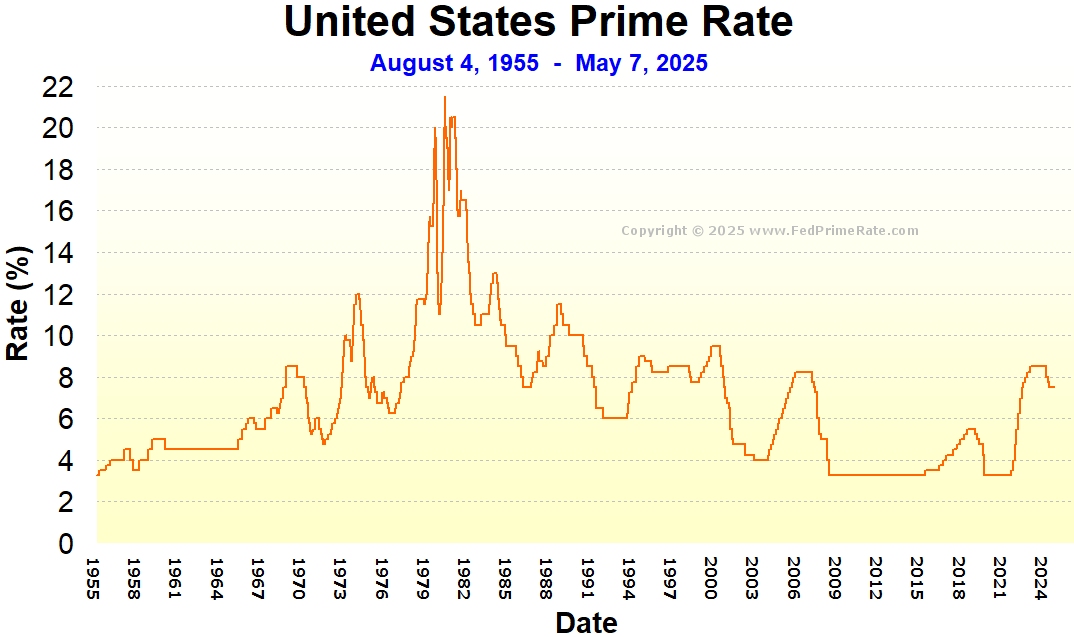
The prime rate has seen significant shifts over the past few decades. After the 2008 financial crisis, it remained at historic lows (around 3.25%) for an extended period, reflecting the Fed’s efforts to stimulate a struggling economy. This era of “cheap money” lasted for nearly a decade.
Beginning in late 2015, the Fed began a gradual series of rate hikes as the economy recovered, leading to a period where the prime rate steadily increased. This trend was briefly reversed during the COVID-19 pandemic when the Fed again slashed rates to support the economy. However, the subsequent surge in inflation in 2021-2022 prompted another aggressive series of rate increases, pushing the prime rate higher than it had been in over two decades. Understanding these historical patterns helps contextualize current rate movements and offers clues about potential future directions.
Impact on Your Finances: Borrowing and Saving

The prime rate is more than an abstract economic indicator; it has tangible effects on your personal and business finances, influencing both the cost of borrowing and the returns on your savings.
Variable-Rate Loans
Many consumer and business loans have interest rates tied directly to the prime rate.
- Credit Cards: The vast majority of credit cards have variable annual percentage rates (APRs) that are calculated as prime rate plus a margin. When the prime rate goes up, your credit card interest charges increase, making it more expensive to carry a balance.
- Home Equity Lines of Credit (HELOCs): HELOCs are almost universally variable-rate products tied to the prime rate. An increase in the prime rate translates directly to higher monthly payments for those utilizing their HELOC.
- Adjustable-Rate Mortgages (ARMs): While fixed-rate mortgages are not directly tied to the prime rate (they’re more influenced by bond yields), many ARMs adjust based on an index like the Secured Overnight Financing Rate (SOFR) which moves in tandem with the federal funds rate and thus the prime rate. This means ARM payments can increase significantly when the prime rate rises.
- Small Business Loans: Many lines of credit and certain term loans for small businesses are also structured with a variable rate tied to the prime rate, plus a margin based on the business’s creditworthiness.
Business Loans and Lines of Credit
For businesses, especially small to medium-sized enterprises, the prime rate is a critical factor in their cost of capital. A higher prime rate means higher interest expenses on existing variable-rate loans and more expensive new financing. This can impact profitability, limit expansion plans, and make inventory financing or working capital more costly. Businesses often monitor prime rate movements closely to make strategic decisions about borrowing, investment, and cash flow management.
Deposit Accounts and Savings Strategies
While a higher prime rate makes borrowing more expensive, it often translates into better returns for savers. Banks typically offer higher interest rates on savings accounts, money market accounts, and certificates of deposit (CDs) when the prime rate (and the federal funds rate) increases. This incentivizes saving and can offer a greater return on idle cash. For those with substantial savings, a rising rate environment can be beneficial, providing an opportunity to earn more interest income.
Strategic Implications for Businesses and Investors
Beyond individual loan payments, the prime rate has broader strategic implications for both businesses planning their future and investors managing their portfolios.
Business Expansion and Capital Planning
Businesses considering expansion, new equipment purchases, or significant projects must factor in the current and projected prime rate. A high prime rate can defer or scale back investment plans due to increased borrowing costs, making the hurdle rate for profitable projects higher. Conversely, a lower prime rate can stimulate investment and growth, as capital becomes cheaper. Companies often employ hedging strategies or lock in fixed rates when possible to mitigate interest rate risk, especially in volatile environments.
Investment Decisions and Market Reactions
Investors pay close attention to the prime rate and the Federal Reserve’s stance.
- Stock Market: Rising interest rates can sometimes cool the stock market. Higher borrowing costs reduce corporate profits, and the attractiveness of fixed-income investments (like bonds) increases, drawing money away from equities. Conversely, lower rates can fuel stock market growth.
- Bond Market: Bond prices and interest rates have an inverse relationship. When rates rise, new bonds are issued with higher yields, making existing lower-yield bonds less attractive, causing their prices to fall.
- Real Estate: Higher mortgage rates, driven by the prime rate’s influence on the broader interest rate environment, can cool housing markets by reducing affordability and buyer demand.
- Alternative Investments: The relative attractiveness of alternative investments can also shift based on the prime rate, as investors seek the best risk-adjusted returns across different asset classes.
Managing Debt in a Changing Rate Environment
For both individuals and businesses, proactively managing debt is crucial when the prime rate is fluctuating.
- Refinancing: When rates are falling, it might be an opportune time to refinance variable-rate debt into a lower fixed-rate loan, if available, to secure lower payments.
- Debt Consolidation: Consolidating high-interest, variable-rate debts (like credit card balances) into a single loan with a lower fixed rate can provide payment stability and reduce overall interest paid.
- Aggressive Payments: In a rising rate environment, making extra payments on variable-rate debt can significantly reduce the total interest paid over the life of the loan.
Navigating Future Prime Rate Movements
The prime rate is not a static number, and its future direction is subject to a complex interplay of economic forces and policy decisions. Staying informed and preparing for potential changes is key.
Monitoring Economic Indicators
Keep an eye on the economic data that influences the Federal Reserve’s decisions. Key indicators include:
- Inflation reports: Consumer Price Index (CPI) and Personal Consumption Expenditures (PCE).
- Employment data: Unemployment rate, non-farm payrolls, wage growth.
- Gross Domestic Product (GDP): Measures overall economic output.
- Consumer confidence and spending reports.
- Manufacturing and services indices.
Following the trends in these indicators can provide a forward-looking perspective on potential prime rate adjustments.
Preparing for Rate Hikes or Cuts
Proactive planning is essential. If rate hikes are anticipated, consider taking steps to mitigate their impact on your variable-rate debt, such as paying down balances, consolidating debt, or exploring fixed-rate alternatives. If rate cuts are expected, assess whether refinancing existing loans could lead to significant savings, or if locking in current high savings rates through CDs might be advantageous before they fall.

Seeking Professional Financial Advice
The intricacies of interest rate movements and their impact on personal or business finances can be complex. Consulting with a qualified financial advisor can provide personalized strategies tailored to your specific situation. They can help you assess your debt structure, investment portfolio, and overall financial goals to make informed decisions in response to changing prime rate environments. Their expertise can be invaluable in optimizing your financial health, whether rates are rising, falling, or holding steady.
aViewFromTheCave is a participant in the Amazon Services LLC Associates Program, an affiliate advertising program designed to provide a means for sites to earn advertising fees by advertising and linking to Amazon.com. Amazon, the Amazon logo, AmazonSupply, and the AmazonSupply logo are trademarks of Amazon.com, Inc. or its affiliates. As an Amazon Associate we earn affiliate commissions from qualifying purchases.