
For millions of service members, veterans, and eligible surviving spouses, the VA loan program represents one of the most significant and beneficial pathways to homeownership. Established to help those who have served our nation secure affordable housing, VA loans come with a host of advantages, most notably the ability to purchase a home with no down payment and no private mortgage insurance (PMI). However, understanding the intricacies of VA loan rates, what drives them, and how to secure the most favorable terms is crucial for anyone looking to leverage this invaluable benefit.
Unlike a fixed interest rate posted on a billboard, “today’s VA loan rate” is a dynamic figure, influenced by a complex interplay of global economic forces, national monetary policy, and individual borrower characteristics. This article will demystify VA loan rates, providing an insightful look into their mechanics, the factors that shape them, and practical strategies for securing the best possible financing for your next home.
Understanding the Foundation: What is a VA Loan?
Before diving into rates, it’s essential to grasp the fundamental nature of a VA loan. This isn’t a loan directly issued by the Department of Veterans Affairs (VA) itself. Instead, the VA guarantees a portion of the loan, which is originated and funded by private lenders like banks, credit unions, and mortgage companies. This guarantee reduces the risk for lenders, making them more willing to offer favorable terms to eligible borrowers.
Eligibility and Core Benefits
Eligibility for a VA loan is determined by service history and status. Generally, active-duty service members, veterans, National Guard members, Reservists, and certain surviving spouses may qualify. The core benefits that distinguish VA loans from conventional mortgages are:
- No Down Payment Requirement: For many eligible borrowers, 100% financing is available, eliminating the significant hurdle of saving for a large down payment.
- No Private Mortgage Insurance (PMI): Unlike conventional loans with less than 20% down, VA loans do not require PMI, which can save borrowers hundreds of dollars per month.
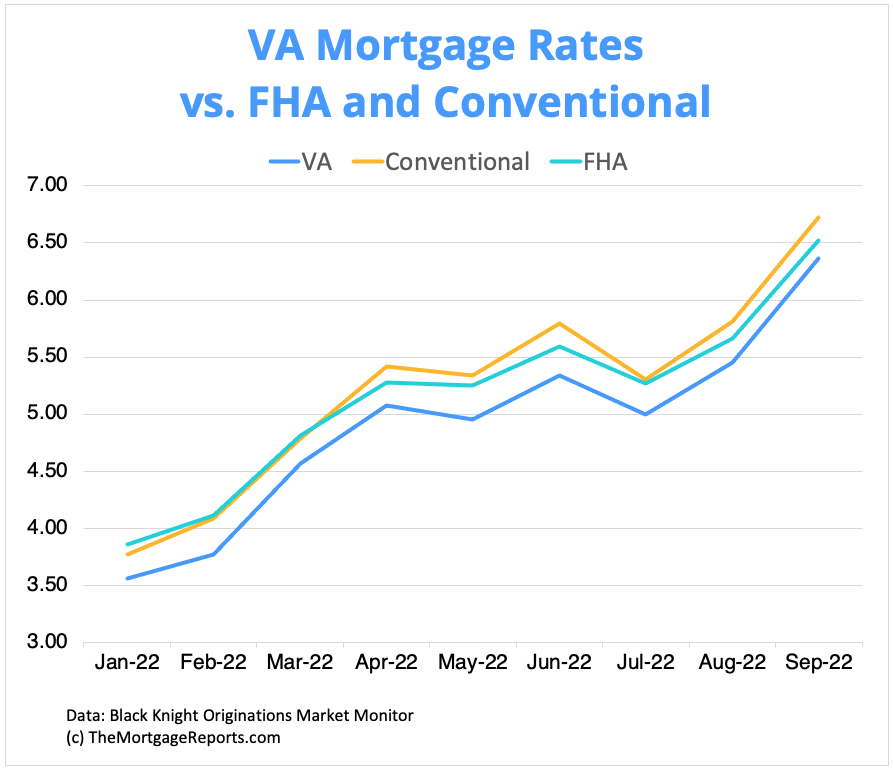
- Competitive Interest Rates: Due to the VA guarantee, lenders often offer VA loan rates that are competitive with, or even lower than, conventional loan rates.
- Limited Closing Costs: The VA limits what lenders can charge veterans in closing costs, and sellers are often permitted to pay certain closing costs on behalf of the buyer.
- No Prepayment Penalties: Borrowers can pay off their loan early without incurring extra fees.
The Government Guarantee, Not a Direct Loan
The VA’s role as a guarantor is pivotal. It provides a safety net for lenders, encouraging them to lend to a specific group of borrowers under advantageous terms. This mechanism allows for the unique benefits of the VA loan program, directly influencing the competitiveness of the rates offered. While the VA sets the general guidelines, individual lenders compete for your business, leading to variations in rates and fees. This competition is a critical factor in finding the best “today’s VA loan rate.”
The Dynamic Nature of VA Loan Rates
VA loan rates, like all mortgage rates, are in constant flux. They are not set daily by a single entity but rather respond to a complex web of economic indicators and market forces. Understanding these underlying dynamics is key to anticipating movements and making informed decisions.
Market Factors vs. Individual Factors
It’s crucial to differentiate between general market factors that influence overall rate trends and individual factors that determine your specific rate. Market factors dictate the prevailing interest rate environment—whether rates are generally high or low. Individual factors, such as your credit score and debt-to-income ratio, then fine-tune that general rate to arrive at the specific offer from a lender.
Key Economic Indicators at Play
Several macroeconomic indicators heavily influence mortgage rates, including those for VA loans:
- Inflation: The Federal Reserve’s primary tool to combat inflation is raising the federal funds rate, which can indirectly lead to higher mortgage rates across the board. When inflation is high, investors demand higher returns on fixed-income investments like mortgage-backed securities, pushing rates up.
- Federal Reserve Policy: While the Fed doesn’t directly set mortgage rates, its monetary policy decisions (like adjusting the federal funds rate or quantitative easing/tightening) have a profound impact on the broader financial market, including mortgage rates.
- Bond Market Performance: Mortgage rates are closely tied to the yields on mortgage-backed securities (MBS) and U.S. Treasury bonds. When bond yields rise, mortgage rates generally follow suit, and vice-versa.
- Economic Growth and Employment Data: Strong economic growth and low unemployment can signal potential inflation, leading to higher rates. Conversely, signs of an economic slowdown might push rates lower as investors seek safe-haven assets.
How VA Rates Compare to Conventional Mortgages
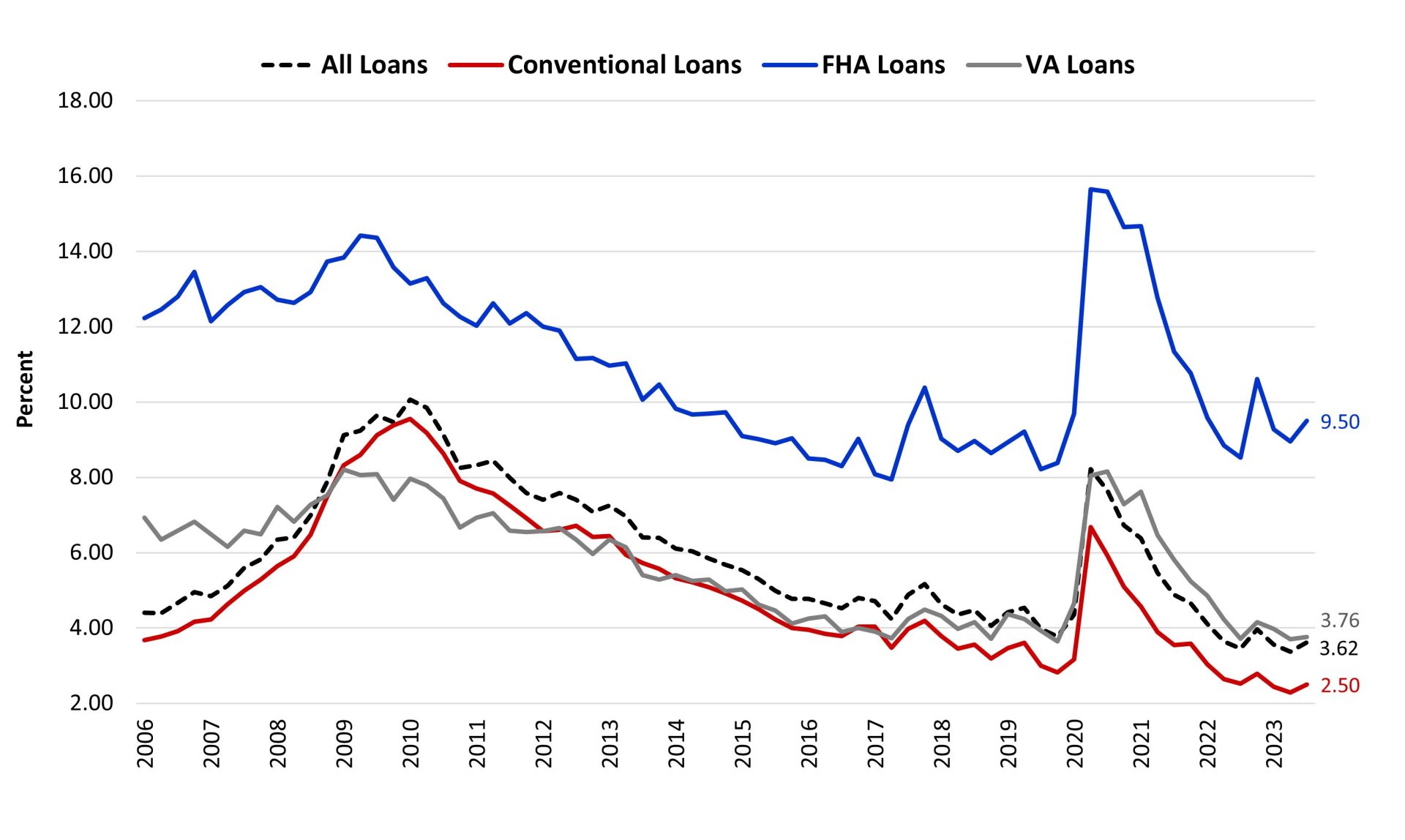
Generally, VA loan rates are highly competitive. In many scenarios, they can be lower than conventional mortgage rates, even for borrowers with excellent credit. This is largely due to the government guarantee mitigating risk for lenders. However, it’s not a universal rule. Market conditions and individual lender policies can cause slight variations. The key takeaway is that VA loans nearly always offer superior overall value when factoring in the no-down-payment and no-PMI benefits, even if the nominal interest rate is sometimes on par with, or marginally higher than, a conventional loan for a borrower with perfect credit and a substantial down payment.
Pinpointing Your Personalized VA Loan Rate
While understanding general market trends is important, your actual VA loan rate will be determined by a combination of these macro factors and specific details about your financial profile and the loan itself. Lenders assess risk based on these individual characteristics to provide a customized rate quote.
Your Credit Score: The Primary Determinant
Your credit score is arguably the most significant individual factor influencing your VA loan rate. Lenders use it as a snapshot of your financial responsibility and ability to repay debt.
- Higher Credit Score: Generally translates to a lower interest rate, as you’re perceived as a lower-risk borrower. Most lenders prefer a FICO score of 620 or higher for VA loans, but some may accept lower with compensatory factors.
- Lower Credit Score: May result in a slightly higher interest rate to offset the increased risk, or in some cases, difficulty securing a loan from certain lenders.
It’s vital to check your credit report well in advance of applying for a loan to identify and correct any errors.
Debt-to-Income Ratio and Loan-to-Value
- Debt-to-Income (DTI) Ratio: This ratio compares your total monthly debt payments to your gross monthly income. While the VA has specific DTI guidelines (often more flexible than conventional loans), a lower DTI ratio indicates a greater capacity to handle new debt, making you a more attractive borrower and potentially leading to a better rate.
- Loan-to-Value (LTV): For VA loans, the LTV can often be 100% since no down payment is required. While a larger down payment isn’t required to avoid PMI (a key VA benefit), if you do make a down payment, it can sometimes influence the funding fee (discussed later) and may even marginally affect the rate offered by some lenders, although its impact is less pronounced than on conventional loans.
Loan Term and Type (Fixed vs. Adjustable)
- Loan Term: The most common VA loan terms are 30-year fixed-rate and 15-year fixed-rate. Shorter terms (like 15 years) typically come with lower interest rates but higher monthly payments, as the lender’s risk exposure is shorter. Longer terms (30 years) offer lower monthly payments but usually at a slightly higher interest rate over the life of the loan.
- Fixed-Rate vs. Adjustable-Rate Mortgage (ARM): Most VA borrowers opt for fixed-rate mortgages, where the interest rate remains constant for the life of the loan. VA ARMs are also available, which typically start with a lower introductory rate that adjusts periodically based on a market index. While an ARM might offer a lower initial rate, it carries the risk of significant payment increases if interest rates rise. Most experts recommend fixed-rate VA loans for predictability and stability.
The Lender You Choose: A Critical Decision
Different lenders have varying overhead costs, risk appetites, and pricing strategies. This means that for the same borrower profile on the same day, you can receive different rate quotes from different lenders. Some lenders specialize in VA loans and may have more efficient processes or better pricing due to their volume. This highlights the importance of shopping around, which we’ll discuss next.
Navigating the Current Rate Landscape and Securing the Best Deal
Given the dynamic nature of VA loan rates, understanding the current environment and adopting smart strategies is paramount to securing the most favorable terms for your home financing.
General Trends and What to Expect Now (Acknowledge Variability)
As of late 2023 and early 2024, the general trend for mortgage rates, including VA loan rates, has been influenced by ongoing efforts to manage inflation. While rates have seen significant fluctuations, they remain elevated compared to the historically low levels experienced a few years ago. Expect a competitive but not historically low environment. The specific “today’s rate” can literally change by the hour, and will vary based on the lender and your individual profile. It’s crucial not to chase an exact number from an online average, but rather to focus on comparing personalized quotes.
The Power of Shopping Around
This cannot be stressed enough: Always compare offers from multiple lenders. Because lenders price VA loans differently, getting quotes from at least 3-5 different mortgage providers (banks, credit unions, and dedicated mortgage brokers) is the most effective way to ensure you’re getting the best possible rate and terms for your unique situation. This simple step can save you tens of thousands of dollars over the life of your loan. Don’t just look at the interest rate; compare the annual percentage rate (APR), which includes some fees, for a more comprehensive comparison.
Understanding the Loan Estimate and Closing Costs
Once you apply for a mortgage, lenders are legally required to provide a “Loan Estimate” within three business days. This document standardizes how lenders present loan terms and closing costs, making it easier to compare offers. Pay close attention to:
- Interest Rate: The stated rate.
- APR: The total cost of the loan, including some fees, expressed as an annual rate.
- Origination Charges: Fees charged by the lender for processing the loan.
- Third-Party Services: Costs for appraisals, title insurance, recording fees, etc.
- Cash to Close: The total amount you’ll need at closing, including down payment (if any), closing costs, and escrows.
Understanding these details allows for an apples-to-apples comparison between lenders and helps identify where costs might be hidden or inflated.
When to Lock In Your Rate
A rate lock guarantees that your interest rate will not change between the time you apply and the time you close, typically for a period of 30, 45, or 60 days.
- When Rates are Stable or Rising: If you find a rate you’re comfortable with and believe rates might rise, locking it in is a good strategy.
- When Rates are Volatile: A rate lock protects you from sudden upward swings.
- Consider a Float-Down Option: Some lenders offer a “float-down” option, allowing you to secure a lower rate if market rates drop significantly before closing, typically for an extra fee.
Timing your rate lock correctly involves balancing market predictions with your tolerance for risk.
Beyond the Rate: Essential Considerations for VA Borrowers
While the interest rate is a primary concern, several other components of a VA loan are vital to understand for a comprehensive view of your financing.
The VA Funding Fee Explained
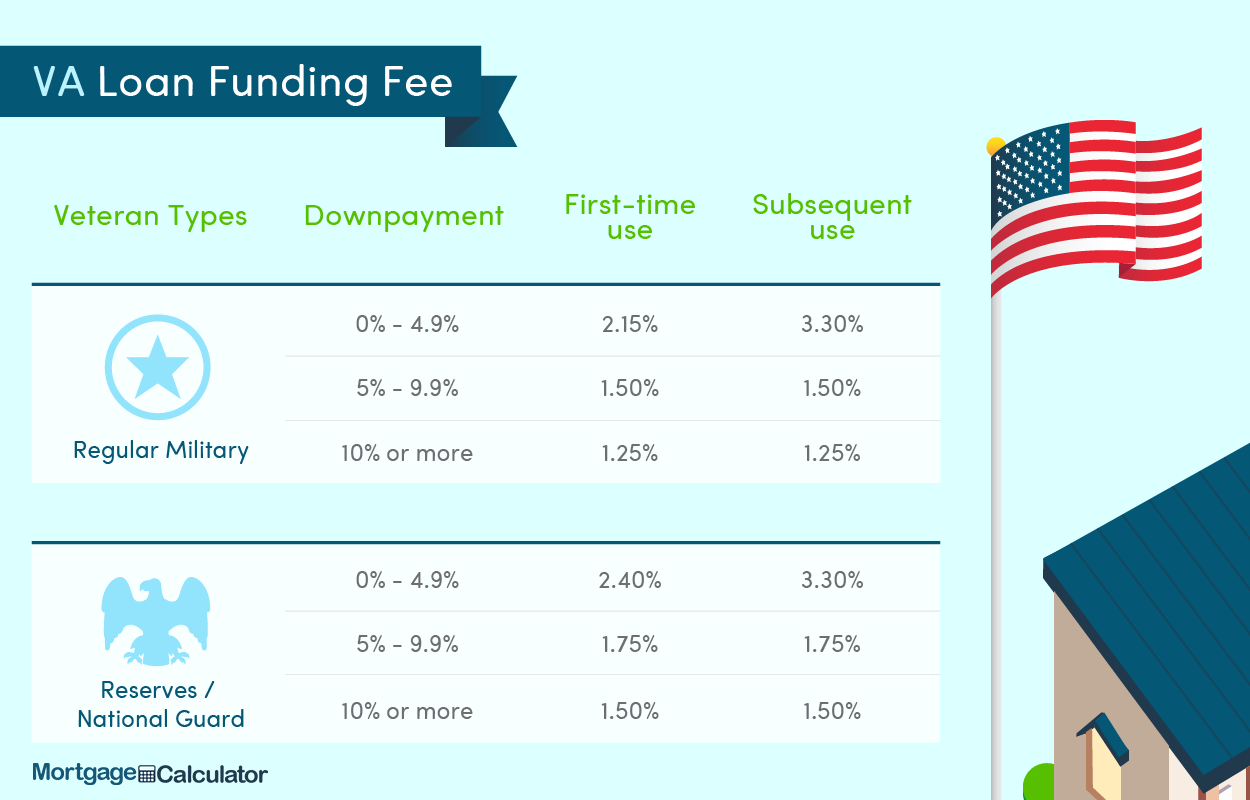
One unique aspect of VA loans is the VA Funding Fee. This is a one-time fee paid directly to the VA to help offset the cost of the program to taxpayers and reduce the risk to the VA. It varies based on your service type, whether you’re making a down payment, and if it’s your first time using the VA loan benefit.
- First-time use, no down payment: The fee is typically 2.15% of the loan amount.
- Subsequent use, no down payment: The fee increases to 3.3% of the loan amount.
- With a down payment (e.g., 5-10%): The fee can be reduced.
- Exemptions: Veterans receiving VA disability compensation, Purple Heart recipients, and surviving spouses receiving Dependency and Indemnity Compensation (DIC) are exempt from paying the funding fee.
The funding fee can be financed into the loan, increasing your loan amount but avoiding an upfront out-of-pocket cost.
Refinancing Your VA Loan: IRRRL and Cash-Out Options
VA loans also offer excellent refinancing options:
- Interest Rate Reduction Refinance Loan (IRRRL), or VA Streamline Refinance: This is a streamlined process for existing VA loan holders to refinance into a lower interest rate or convert an ARM to a fixed rate. It often requires less paperwork and no appraisal or credit underwriting, making it a quick and cost-effective way to improve your loan terms.
- VA Cash-Out Refinance: This allows eligible homeowners to refinance their existing mortgage (VA or conventional) into a new VA loan for a larger amount, pulling out equity in cash. This cash can be used for anything from home improvements to debt consolidation.
Both options come with their own set of eligibility requirements and funding fee structures.
The Value of a VA Loan Specialist
Navigating the nuances of VA loan rates and the program’s requirements can be complex. Working with a lender who specializes in VA loans and has a team of dedicated VA loan officers can make a significant difference. They understand the intricacies of eligibility, entitlement, funding fees, and specific VA guidelines, ensuring a smoother and more efficient process.
In conclusion, “today’s VA loan rate” is a moving target, influenced by global economics and personalized by your financial situation. By understanding these dynamics, actively shopping for the best terms, and leveraging the unique benefits of the VA loan program, eligible service members and veterans can confidently achieve their homeownership dreams with competitive and advantageous financing.
aViewFromTheCave is a participant in the Amazon Services LLC Associates Program, an affiliate advertising program designed to provide a means for sites to earn advertising fees by advertising and linking to Amazon.com. Amazon, the Amazon logo, AmazonSupply, and the AmazonSupply logo are trademarks of Amazon.com, Inc. or its affiliates. As an Amazon Associate we earn affiliate commissions from qualifying purchases.