
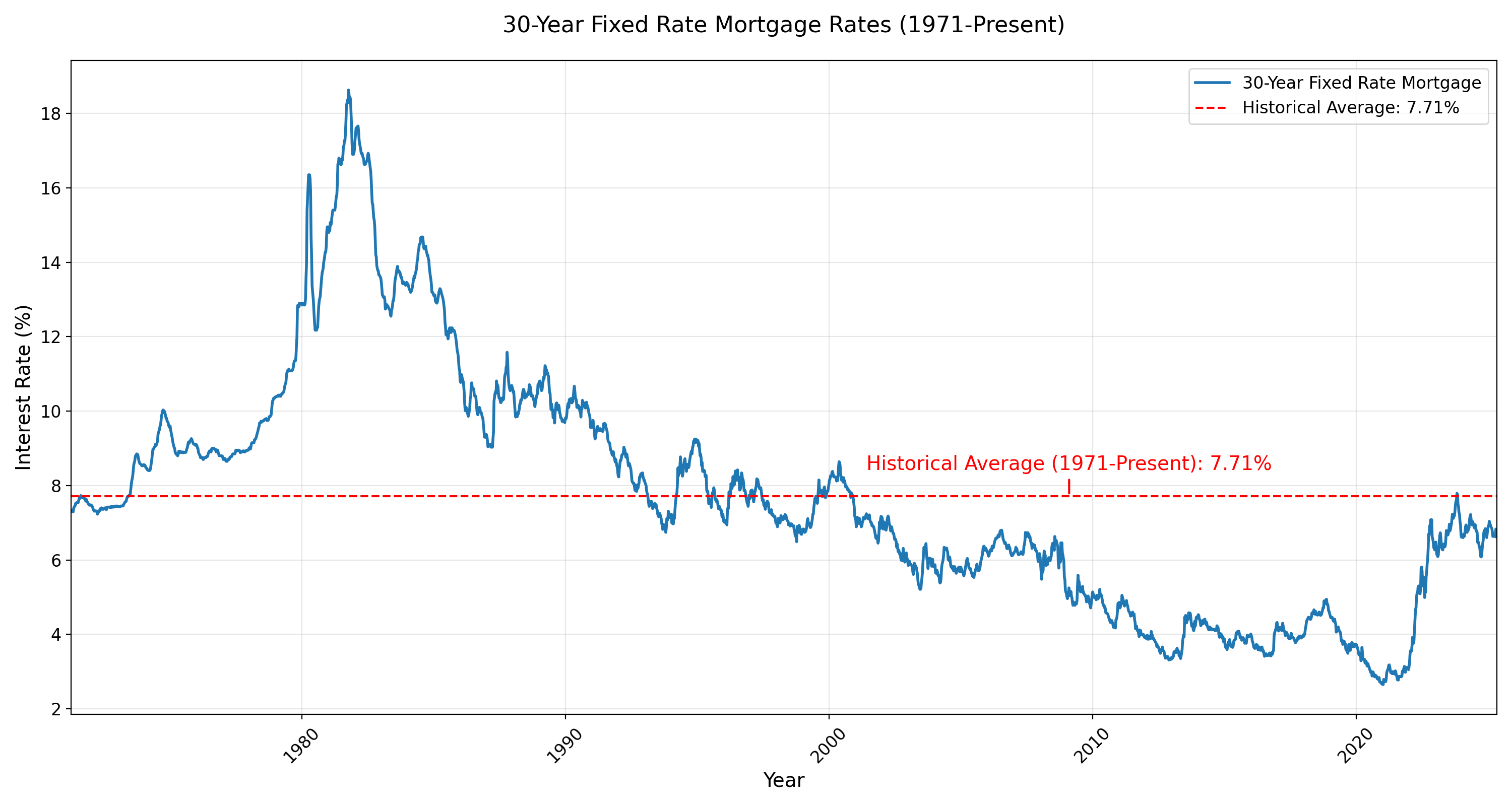
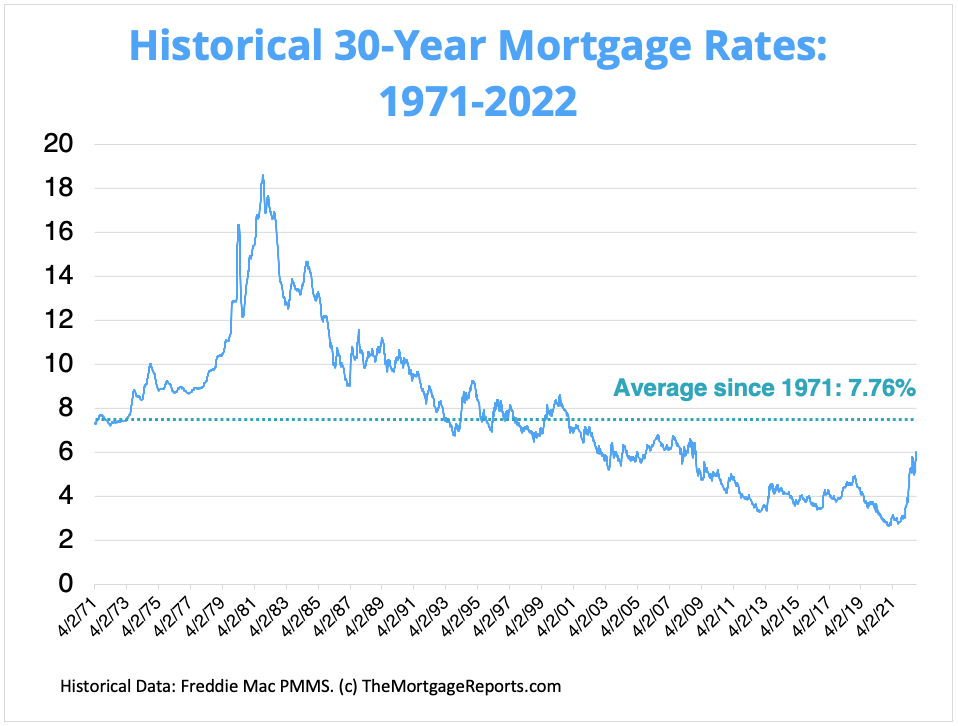
The 30-year fixed-rate mortgage stands as a cornerstone of the American housing market, a financing vehicle that has enabled generations of homeowners to achieve their dreams of property ownership. Its enduring popularity stems from its predictability: borrowers lock in an interest rate that remains constant for three decades, providing stable monthly payments immune to market fluctuations. However, “what are the 30-year mortgage rates?” is not a question with a single, static answer. These rates are dynamic, influenced by a complex interplay of economic indicators, Federal Reserve policies, global events, and individual borrower profiles. Understanding these underlying forces is paramount for anyone navigating the current housing landscape, whether you’re a first-time buyer, looking to refinance, or an experienced investor. This comprehensive guide delves into the current environment for 30-year mortgage rates, the factors that shape them, and strategies for securing the most favorable terms for your financial future.

Understanding the Landscape of 30-Year Fixed Mortgage Rates
The journey to homeownership often begins with understanding the financial instruments available, and the 30-year fixed-rate mortgage is undoubtedly the most common starting point. Its structure offers a unique blend of stability and long-term commitment that appeals to a wide demographic.
The Stability of Fixed Rates
The primary allure of a 30-year fixed-rate mortgage is its unwavering predictability. Once your loan closes, your interest rate is set for the entire 30-year term. This means your principal and interest payment remains the same every single month, regardless of what happens in the broader economy. For homeowners, this translates into invaluable budget stability, allowing for precise financial planning without the anxiety of fluctuating payments. This stability is particularly appealing during periods of economic uncertainty or when interest rates are projected to rise, providing a hedge against future market volatility. While the total interest paid over 30 years may be higher than with shorter-term loans or adjustable-rate mortgages, the peace of mind and predictable cash flow it offers often outweigh this consideration for many families.
Key Factors Influencing Current Rates
Mortgage rates do not exist in a vacuum; they are a direct reflection of broader economic conditions and financial market dynamics. Several powerful forces continually shape where 30-year rates stand on any given day:
- Inflation: This is arguably the most significant driver. Lenders charge interest to make a profit and to account for the erosion of money’s purchasing power over time. When inflation is high, the real return on a fixed-rate loan diminishes, so lenders demand higher interest rates to compensate. Conversely, low inflation typically allows for lower rates.
- Federal Reserve Policy: While the Federal Reserve doesn’t directly set mortgage rates, its actions have a profound indirect impact. When the Fed raises its benchmark federal funds rate, it generally makes borrowing more expensive across the board, which often translates to higher mortgage rates. Conversely, rate cuts aim to stimulate borrowing and economic activity. The Fed’s commentary and forecasts also heavily influence market expectations, which in turn affect rates.
- The 10-Year Treasury Yield: Mortgage rates are closely correlated with the yield on the 10-year U.S. Treasury bond. These bonds are seen as a low-risk investment, and mortgage-backed securities (which lenders sell to investors) compete with Treasuries for investor capital. If Treasury yields rise, mortgage rates typically follow suit to remain competitive.
- Economic Growth and Employment Data: A strong economy, characterized by robust job growth and GDP expansion, often leads to higher inflation expectations and subsequently higher interest rates. Conversely, signs of economic slowdown or recession can push rates down as investors seek the safety of bonds, driving yields lower.
- Housing Market Activity: Supply and demand within the housing market can also exert some influence. A highly competitive market with strong buyer demand might see lenders adjust rates to manage their pipeline, though this is less of a primary driver than the macroeconomic factors.
How Lenders Determine Your Specific Rate
While the national average provides a benchmark, the actual rate you receive will be highly individualized. Lenders assess your risk profile based on several critical financial metrics:
- Credit Score: A higher credit score (e.g., FICO score typically above 740) signals to lenders that you are a responsible borrower with a history of timely payments, qualifying you for the most favorable rates. Lower scores indicate higher risk and will result in higher rates.
- Debt-to-Income (DTI) Ratio: This ratio compares your total monthly debt payments (including the new mortgage payment) to your gross monthly income. A lower DTI (ideally below 36-43%) demonstrates that you have sufficient income to manage your debts, making you a less risky borrower.
- Down Payment and Loan-to-Value (LTV) Ratio: A larger down payment reduces the amount you need to borrow and lowers the loan-to-value ratio (the loan amount relative to the home’s value). A lower LTV signifies less risk for the lender, often leading to better rates and potentially avoiding private mortgage insurance (PMI).
- Loan Type: While we’re focusing on conventional 30-year fixed, government-backed loans like FHA, VA, and USDA loans have specific requirements and can sometimes offer more competitive rates or terms for eligible borrowers, despite potentially higher upfront costs or mortgage insurance.
- Loan Term: Shorter terms, like a 15-year fixed mortgage, typically come with lower interest rates than 30-year terms because the lender’s money is tied up for a shorter period.
Navigating the Current Market: What to Expect
The mortgage market is a living entity, constantly shifting and reacting to a barrage of information. Staying informed is crucial for making timely and advantageous decisions.
Daily Fluctuations and Trends
Mortgage rates can and do change daily, sometimes even multiple times within a single day. These fluctuations are often triggered by the release of key economic data (like inflation reports, job numbers, or consumer confidence indices), pronouncements from the Federal Reserve, or significant geopolitical events. While daily changes might seem minor, they can accumulate to make a tangible difference in your monthly payment over 30 years. It’s important to monitor these trends, especially when you are actively in the market for a mortgage, to understand if rates are generally trending up, down, or sideways. Tools like online rate trackers and financial news outlets can provide real-time updates and expert analysis.
Comparing Different Rate Types (Briefly)
While the 30-year fixed is our focus, it’s beneficial to understand its context by briefly acknowledging other options. Adjustable-Rate Mortgages (ARMs), for instance, offer a lower initial interest rate for a set period (e.g., 5, 7, or 10 years) before adjusting periodically based on a market index. While an ARM might seem attractive due to lower initial payments, it introduces payment uncertainty after the fixed period. The 30-year fixed, in contrast, prioritizes long-term payment stability over short-term savings, making it the preferred choice for borrowers who plan to stay in their homes for extended periods and desire predictable budgeting. Shorter-term fixed mortgages (e.g., 15-year) offer lower overall interest costs and faster equity build-up, but come with significantly higher monthly payments.
The Impact of Global and Domestic Economic News
Economic news, whether it’s a surprising inflation figure from the Bureau of Labor Statistics, an unexpected statement from the European Central Bank, or a geopolitical conflict, can send ripples through financial markets, directly influencing mortgage rates. For example, a strong jobs report might signal a robust economy, potentially leading to higher inflation and subsequent rate increases. Conversely, news of an economic slowdown or increased global instability might lead investors to seek safer assets like U.S. Treasury bonds, driving their yields down and, consequently, lowering mortgage rates. Staying attuned to these broader economic narratives, even if just through major headlines, helps contextualize current rate movements and offers insight into potential future trends.
Strategies for Securing the Best 30-Year Mortgage Rate
Finding the optimal 30-year mortgage rate requires more than just passive observation; it demands proactive engagement and strategic planning. Your diligence can translate into significant savings over the life of the loan.
Improving Your Financial Profile
Before you even start shopping for lenders, take steps to polish your financial standing. This is perhaps the most impactful strategy for securing a lower rate:
- Boost Your Credit Score: Pay bills on time, reduce credit card balances, avoid opening new lines of credit, and correct any errors on your credit report. A higher credit score directly correlates with lower interest rates.
- Lower Your Debt-to-Income Ratio: Pay down existing debts, especially high-interest credit card balances or personal loans. A lower DTI ratio reassures lenders of your ability to manage additional mortgage payments.
- Increase Your Down Payment: The more you put down, the less you need to borrow, which reduces the lender’s risk and can lead to a more favorable LTV ratio and potentially a better rate. A 20% down payment is often the benchmark to avoid private mortgage insurance (PMI).
- Build Your Savings/Emergency Fund: While not directly affecting your rate, having a healthy financial cushion demonstrates stability to lenders and provides peace of mind for you as a homeowner.
The Power of Shopping Around
Never settle for the first quote you receive. Mortgage rates and fees can vary significantly between different lenders, even on the same day.
- Get Multiple Quotes: Contact at least three to five different lenders – including large banks, credit unions, and independent mortgage brokers. Each will have different pricing structures, overheads, and risk appetites.
- Compare Apples to Apples: When comparing offers, don’t just look at the interest rate. Focus on the Annual Percentage Rate (APR), which includes the interest rate plus certain closing costs and fees, giving you a more accurate picture of the total cost of borrowing. Also, consider points (upfront fees paid to reduce the interest rate) and other closing costs.
- Utilize Mortgage Brokers: Mortgage brokers act as intermediaries, working with multiple lenders to find you the best deal. They can often access wholesale rates that might not be available directly to consumers.
Deciphering the Loan Estimate
Once you apply for a mortgage, lenders are legally required to provide you with a Loan Estimate within three business days. This standardized form is crucial for comparison:
- APR vs. Interest Rate: Understand the difference. The interest rate determines your monthly principal and interest payment, while the APR reflects the total cost of the loan over its term, including interest and certain fees.
- Closing Costs: Scrutinize all closing costs, which can include origination fees, appraisal fees, title insurance, and other charges. These can amount to 2-5% of the loan amount. Compare these line by line across different Loan Estimates.
- Points: Understand if you are paying “points” (discount points) to lower your interest rate, and calculate if the long-term savings justify the upfront cost. Conversely, “lender credits” might increase your rate but reduce closing costs.
Considering a Rate Lock
Once you’ve found an appealing rate, consider locking it in. A rate lock guarantees that your interest rate will not change between the time you “lock” and the closing date, typically for 30, 45, or 60 days.
- When to Lock: If you believe rates are poised to rise, locking in can protect you. If rates are trending downward, you might hold off, but this carries the risk that they could unexpectedly climb.
- What it Means: Understand the duration of the lock and any associated fees. If your closing is delayed beyond the lock period, you may have to pay an extension fee or accept the prevailing market rate.
The Long-Term Financial Implications of a 30-Year Mortgage
A 30-year mortgage is more than just a loan; it’s a significant long-term financial commitment that profoundly impacts your personal wealth, budget, and future financial flexibility. Understanding these implications is crucial for prudent decision-making.
Affordability and Monthly Payments
The primary benefit of a 30-year mortgage is its impact on affordability. By spreading the repayment over an extended period, the monthly principal and interest payments are significantly lower compared to shorter-term loans (like a 15-year fixed mortgage). This reduced monthly burden makes homeownership accessible to a wider range of borrowers, freeing up cash flow for other essential expenses, savings, or investments. However, it’s critical to ensure that even these lower payments comfortably fit within your budget, allowing for property taxes, homeowner’s insurance, potential HOA fees, and maintenance costs without straining your finances.
Total Cost Over Time
While the 30-year mortgage offers lower monthly payments, it comes with a trade-off: a higher total cost of interest over the life of the loan. Due to the extended repayment period, interest accrues for a longer duration, meaning you will pay significantly more in total interest compared to a 15-year mortgage for the same loan amount. It’s essential to review an amortization schedule, which breaks down how much of each payment goes towards principal and interest over the loan’s term. While this higher total interest is a consideration, for many, the benefits of greater monthly cash flow and the ability to invest surplus funds elsewhere often outweigh this difference.
The Role of Refinancing
The 30-year mortgage journey is not always a straight line. Market conditions change, and so do individual financial situations. Refinancing offers a powerful tool to adapt:
- When It Makes Sense: If mortgage rates drop significantly after you’ve secured your initial loan, refinancing to a lower rate can reduce your monthly payments or decrease the total interest paid over the remaining term.
- Other Refinancing Goals: Refinancing can also be used to change the loan term (e.g., from a 30-year to a 15-year to pay off the loan faster), switch from an adjustable-rate mortgage to a fixed-rate, or perform a cash-out refinance to tap into home equity for other financial needs.
- Costs of Refinancing: Be mindful that refinancing involves new closing costs, similar to your original purchase. It’s crucial to calculate the break-even point to determine how long it will take for the savings from the lower rate to offset these upfront costs.
Building Equity and Wealth
Despite the longer repayment period and higher total interest, a 30-year fixed mortgage remains a powerful vehicle for building long-term wealth. Every payment contributes, however slowly at first, to reducing your principal and building equity in your home. Over time, as your loan balance decreases and property values potentially appreciate, your equity grows. This equity can be a significant source of wealth, providing a financial safety net, access to future borrowing (e.g., home equity loans), or a substantial nest egg upon sale. For many, homeownership is the largest single investment they will make, and the 30-year mortgage facilitates this wealth-building process by making it more accessible and manageable over the long haul.
Financial Tools and Resources for Mortgage Seekers
Navigating the mortgage market can feel overwhelming, but a wealth of tools and professional resources are available to simplify the process and empower you to make informed decisions.
Online Mortgage Calculators
Before you even speak to a lender, online mortgage calculators are invaluable. These tools allow you to:
- Estimate Monthly Payments: Input a potential loan amount, interest rate, and term (30 years) to instantly see estimated principal and interest payments.
- Assess Affordability: Reverse calculations can help you determine how much house you can afford based on your desired monthly payment.
- Compare Scenarios: Experiment with different interest rates, down payments, and even the impact of property taxes and insurance to understand how these variables affect your total housing cost.
- Amortization Schedules: Many calculators also provide an amortization schedule, illustrating how your payments are allocated to principal and interest over the loan’s lifetime.
Consulting a Mortgage Professional
While online research is crucial, the personalized guidance of a mortgage professional is often indispensable.
- Mortgage Brokers: These independent professionals work with multiple lenders. They can compare various loan products and rates on your behalf, often finding options you might not discover on your own. They can be particularly helpful for complex financial situations.
- Direct Lenders (Banks and Credit Unions): Applying directly to a bank or credit union might offer a more streamlined process if you’re already a customer, and they can sometimes offer specific in-house programs.
- Loan Officers: Regardless of where you apply, a knowledgeable loan officer can explain different loan products, guide you through the application process, help you understand your Loan Estimate, and answer specific questions about your financial situation. Their expertise can save you time and potential missteps.
Government-Backed Programs
For certain individuals, government-backed mortgage programs can offer more flexible qualification criteria, lower down payments, and sometimes more favorable rates than conventional loans:
- FHA Loans: Insured by the Federal Housing Administration, these loans require lower credit scores and down payments (as little as 3.5%) compared to conventional loans, making them popular for first-time homebuyers. However, they come with mandatory mortgage insurance premiums.
- VA Loans: Guaranteed by the U.S. Department of Veterans Affairs, these loans are available to eligible veterans, active-duty service members, and surviving spouses. They often require no down payment and no private mortgage insurance, making them an extremely attractive option.
- USDA Loans: Backed by the U.S. Department of Agriculture, these loans are designed for low-to-moderate income borrowers in eligible rural areas. They also typically require no down payment.
In conclusion, understanding “what are the 30-year mortgage rates” goes beyond simply looking up a number. It involves grasping the economic forces at play, meticulously reviewing your own financial profile, proactively shopping for the best terms, and leveraging available resources and professional guidance. While the stability and affordability of a 30-year fixed mortgage make it an excellent choice for many, a well-informed approach ensures you secure a rate that aligns with your financial goals and contributes positively to your long-term wealth.
aViewFromTheCave is a participant in the Amazon Services LLC Associates Program, an affiliate advertising program designed to provide a means for sites to earn advertising fees by advertising and linking to Amazon.com. Amazon, the Amazon logo, AmazonSupply, and the AmazonSupply logo are trademarks of Amazon.com, Inc. or its affiliates. As an Amazon Associate we earn affiliate commissions from qualifying purchases.