
The seemingly simple question, “How many flights per day in the US today?”, belies a profoundly complex reality. This isn’t a static number plucked from thin air; it’s a dynamic, real-time metric, a testament to one of the most sophisticated and interconnected technological ecosystems on the planet. Every take-off, every landing, every mid-air trajectory across the vast American sky is meticulously tracked, managed, and optimized by an invisible web of hardware, software, AI, and communication systems. To understand “how many,” we must delve into the “how” – the technological backbone that transforms countless individual movements into a cohesive, measurable daily rhythm of air travel.

From the moment an airline schedules a flight months in advance to the instant a plane touches down, a constant stream of data is generated, analyzed, and acted upon. This article will explore the technological marvels that enable us to know, with remarkable accuracy, the daily pulse of US aviation, showcasing the innovation that keeps our skies safe, efficient, and ceaselessly busy.
The Digital Orchestration of US Airspace: A Symphony of Systems
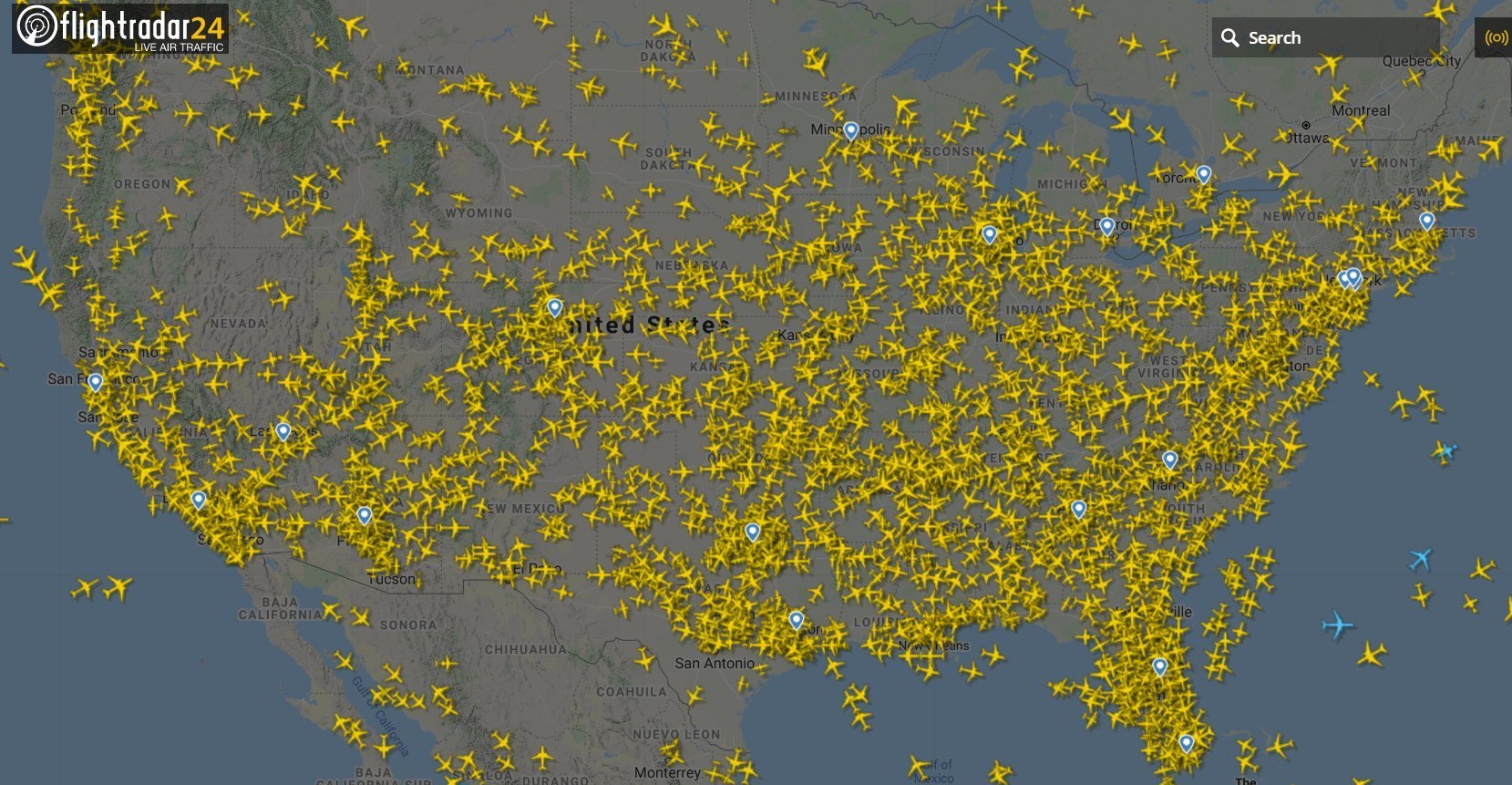
The sheer volume of air traffic in the US—often exceeding 45,000 flights on a typical day, including commercial, cargo, military, and general aviation—necessitates an unparalleled level of digital orchestration. This complex ballet is managed by a blend of governmental and private sector technological prowess, working in unison to ensure safe and efficient operations.
Air Traffic Control (ATC) Systems: The Nerve Center
At the heart of US air traffic management lies the Federal Aviation Administration (FAA)’s Air Traffic Control system. This isn’t a single entity but a layered network comprising En Route Centers (ARTCCs), Terminal Radar Approach Control (TRACONs), and Airport Traffic Control Towers (ATCTs). Each component relies heavily on cutting-edge technology:
- Radar Systems: A ubiquitous and fundamental technology, radar arrays continuously scan the skies, providing controllers with real-time positional data of aircraft. Modern systems use primary radar (detecting aircraft from reflected signals) and secondary radar (interrogating aircraft transponders for identity, altitude, and speed data). The evolution from analog to digital radar has dramatically improved resolution and reliability.
- Communication Systems: Secure and reliable voice and data communication between pilots and controllers are paramount. This involves a mix of VHF radio, satellite communication (SATCOM) for oceanic or remote areas, and digital data link systems like ACARS (Aircraft Communications Addressing and Reporting System) that transmit routine messages, weather data, and operational updates without voice interaction.
- Automation Systems: Sophisticated software platforms are the backbone of ATC. Systems like ERAM (En Route Automation Modernization) for ARTCCs and STARS (Standard Terminal Automation Replacement System) for TRACONs integrate radar data, flight plans, weather information, and communication logs onto a single screen for controllers. These systems provide conflict alerts, trajectory predictions, and decision support tools, augmenting human capabilities to manage high-density traffic. The ongoing NextGen initiative aims to further transition from ground-based radar to satellite-based tracking (ADS-B), enabling more precise, efficient, and direct flight paths.
Flight Tracking and Data Aggregation Platforms
While ATC systems are for active management, a host of other platforms exist to aggregate, analyze, and disseminate flight data to a wider audience. These services contribute significantly to our ability to quantify “how many flights per day.”
- ADS-B (Automatic Dependent Surveillance-Broadcast): A cornerstone of NextGen, ADS-B is a surveillance technology where aircraft determine their position via satellite navigation and periodically broadcast it, enabling both ATC and other aircraft to receive position and velocity information. This technology provides much more precise and frequent updates than traditional radar, especially in areas previously lacking radar coverage. The FAA mandated ADS-B Out for most aircraft operating in controlled airspace by 2020.
- Data Aggregators: Companies like FlightAware, FlightStats, and government entities like the FAA (via its System Wide Information Management, or SWIM program) collect vast amounts of raw data from ADS-B receivers, radar feeds, airline operational systems, and air navigation service providers globally. This data is then processed, harmonized, and presented through user-friendly interfaces, offering insights into live flight maps, historical flight data, and aggregated statistics like daily flight counts.
- APIs and Third-Party Applications: The aggregated flight data is often made available through Application Programming Interfaces (APIs), allowing developers to build custom applications. From travel booking sites that display real-time flight status to aviation enthusiast apps that track specific aircraft, these third-party tools leverage the core data to provide diverse functionalities, including contributing to the overall understanding of daily flight volumes.
Airline Operational Control (AOC) Software
Airlines themselves operate highly sophisticated internal systems that are critical to managing their daily operations and generating the data points that feed into the national flight count.
- Flight Operations Software: These platforms manage everything from crew scheduling and rostering (ensuring pilots and flight attendants are legal and available), to fleet assignment, maintenance scheduling, and real-time flight following. They integrate with external data sources like weather forecasts and ATC advisories to make dynamic adjustments.
- Gate and Ground Operations Management: Software is used to optimize gate assignments, coordinate ground support services (fueling, baggage handling, catering), and track aircraft turnaround times, all of which directly impact flight punctuality and the efficient flow of daily operations. The data generated here, combined with flight plan data, is crucial for tracking each leg of a flight’s journey.
AI and Advanced Analytics: Predicting, Optimizing, and Enhancing Flight Operations
The sheer volume, velocity, and variety of aviation data make it an ideal playground for Artificial Intelligence (AI) and advanced analytics. These technologies are no longer futuristic concepts; they are integral to current operations, constantly refining how “how many flights per day” are managed and understood.
Predictive Analytics for Flight Scheduling and Delay Management
One of AI’s most impactful applications is its ability to forecast and mitigate operational disruptions.
- Proactive Delay Prediction: AI models analyze vast datasets including historical flight data, real-time weather patterns (temperature, wind, precipitation), air traffic control advisories, airport congestion metrics, and even social events. By identifying patterns and correlations, these models can predict potential delays hours or even days in advance with remarkable accuracy. This allows airlines to proactively adjust schedules, re-route flights, or reassign resources, minimizing the ripple effect of disruptions.
- Optimized Scheduling: Beyond predicting delays, AI is used to create more robust and efficient flight schedules from the outset. By simulating millions of scenarios and factoring in a multitude of variables – aircraft availability, crew resting rules, maintenance windows, gate availability – AI can generate schedules that maximize aircraft utilization, improve on-time performance, and reduce operational costs.
Optimizing Routes and Fuel Efficiency
Fuel is often an airline’s largest operating expense. AI and advanced algorithms play a crucial role in minimizing consumption and environmental impact.
- Dynamic Route Optimization: Rather than relying solely on pre-defined flight corridors, AI-powered systems can continuously analyze real-time conditions (wind speeds and direction, thunderstorm activity, restricted airspace, air traffic density) to recommend dynamic, optimized flight paths. These “flexible routing” strategies can shave minutes off flight times and significantly reduce fuel burn, directly impacting the economics and environmental footprint of daily operations.
- Descent and Ascent Optimization: AI helps pilots and ATC optimize climb and descent profiles. For instance, “optimal descent profiles” aim for continuous descent, minimizing engine thrust and reducing fuel consumption and noise pollution during approach.
- Weight and Balance Calculation: Algorithms optimize aircraft loading to ensure proper weight distribution, which directly affects fuel efficiency and aircraft performance.
Maintenance, Repair, and Overhaul (MRO) Predictive Technologies
Ensuring the airworthiness of thousands of aircraft daily is paramount. AI is transforming aircraft maintenance from a reactive to a predictive discipline.
- Sensor Data Analysis (IoT): Modern aircraft are equipped with hundreds of sensors that continuously monitor the health and performance of critical components (engines, landing gear, avionics). This Internet of Things (IoT) data is streamed in real-time or downloaded after flights.
- Predictive Maintenance Models: AI algorithms analyze this sensor data to identify subtle anomalies or degradation patterns that indicate potential failures before they occur. Instead of adhering to fixed maintenance schedules or waiting for a component to break, airlines can now schedule maintenance precisely when it’s needed, optimizing aircraft uptime, reducing costly unscheduled repairs, and enhancing safety. This directly ensures more aircraft are available for daily operations.
The Journey of Data: From Sensor to Screen
Understanding “how many flights per day” is fundamentally about data. The journey of this data, from its raw capture to its presentation on a user’s screen, is a testament to sophisticated networking, processing, and visualization technologies.
Real-time Data Acquisition and Transmission
Every flight is a moving data generator.
- Onboard Systems: Aircraft avionics suites constantly collect data on position, altitude, speed, engine performance, system health, and more. This data is critical for both the flight crew and ground operations.
- Transmission Technologies: Data is transmitted via various means:
- ADS-B: As mentioned, broadcasts positional data directly.
- ACARS (Aircraft Communications Addressing and Reporting System): A digital datalink system that uses VHF radio or satellite to transmit short messages between aircraft and ground stations, often for operational status, weather reports, and engine performance monitoring.
- Satellite Communication (SatCom): Provides global coverage, essential for oceanic flights, enabling high-bandwidth data exchange for flight planning, passenger Wi-Fi, and critical system monitoring.
- Ground-based Radar and Transponders: The foundational method for ATC surveillance, with transponders on aircraft responding to ground radar interrogations.
The volume and velocity of this data are staggering, with each flight generating gigabytes of information.
Cloud Infrastructure and Big Data Processing
Handling this enormous, continuous influx of diverse data requires robust infrastructure.
- Cloud Computing: Aviation data, from flight plans to weather models and maintenance logs, is increasingly stored and processed in scalable cloud environments. Cloud infrastructure offers the elasticity to handle peak data loads, the geographical distribution for resilience, and the computing power for complex analytics without massive upfront capital investment in on-premise data centers.
- Big Data Technologies: Tools like Hadoop and Spark are employed to manage and analyze petabytes of historical and real-time aviation data. These technologies enable efficient data warehousing, querying, and the extraction of insights that inform everything from operational decision-making to long-term strategic planning.
User Interfaces and Applications: Demystifying Air Travel
Ultimately, this complex data needs to be presented in an understandable and actionable format for various stakeholders.
- ATC Consoles: Controllers interact with highly specialized graphical user interfaces that display flight trajectories, weather overlays, conflict alerts, and communication logs in real-time. These interfaces are designed for rapid interpretation and decision-making under high pressure.
- Cockpit Displays: Modern “glass cockpits” feature integrated displays that present pilots with navigational charts, flight plans, engine parameters, weather radar, and even synthetic vision systems, often leveraging augmented reality to enhance situational awareness.
- Airline Operations Centers (AOCs): In AOCs, large display walls and specialized workstations provide a comprehensive overview of an airline’s entire network, showing the status of every flight, aircraft, and crew member.
- Public-facing Applications: For passengers and aviation enthusiasts, mobile apps and websites like FlightAware or airport authority portals distill this complex data into user-friendly formats—showing flight status, gate information, estimated arrival times, and real-time aircraft positions on a map. These applications leverage powerful APIs to access and display curated data, making the invisible world of aviation visible.
Cybersecurity in the Connected Airspace: Protecting the Digital Core
As aviation becomes increasingly digital and interconnected, the importance of cybersecurity cannot be overstated. A cyberattack on critical aviation infrastructure could have catastrophic consequences, impacting safety, security, and the ability to maintain the “flights per day” rhythm.
Safeguarding Critical Aviation Infrastructure
The entire ecosystem – from ground-based ATC systems to onboard avionics and airline operational networks – represents a vast attack surface.
- ATC System Protection: Ensuring the integrity and availability of radar, communication, and automation systems is paramount. Any disruption could lead to severe delays, unsafe conditions, or even airspace closures. This involves robust network segmentation, intrusion detection systems, and continuous vulnerability assessments.
- Navigation Aids: Technologies like GPS (Global Positioning System) and instrument landing systems (ILS) are critical for navigation. Protecting these systems from jamming, spoofing, or denial-of-service attacks is a top priority, often involving redundant systems and advanced encryption.
- Ground Operations: Systems controlling baggage handling, fueling, gate assignments, and passenger processing are also targets. A successful attack here could paralyze airport operations and significantly impact the daily flight count.
Data Integrity and Privacy
Beyond operational systems, the vast amounts of data generated also require stringent protection.
- Ensuring Accuracy: The integrity of flight data (flight plans, aircraft status, weather information) is crucial for safe navigation and operational efficiency. Malicious alteration of this data could lead to disastrous outcomes. Cryptographic techniques and robust data validation processes are essential.
- Protecting Sensitive Information: Passenger data (personal identifiable information, payment details), airline proprietary operational data, and national security-related flight information all need to be protected from breaches, espionage, and misuse. Compliance with regulations like GDPR and stringent internal security policies are vital.
Proactive Threat Detection and Response
The aviation industry employs advanced cybersecurity measures to defend against evolving threats.
- Security Information and Event Management (SIEM): SIEM systems collect and analyze security logs from across the entire IT infrastructure, using AI and machine learning to detect anomalous activities and potential threats in real-time.
- Threat Intelligence: Sharing threat intelligence across government agencies (e.g., DHS, FAA) and industry partners is crucial for staying ahead of sophisticated adversaries.
- Incident Response Teams: Dedicated cybersecurity teams are on standby to rapidly detect, contain, and remediate cyber incidents, minimizing their impact on operations and safety. Regular drills and simulations are conducted to test readiness.
Future Horizons: Innovation Steering Tomorrow’s Skies
The technology behind managing “how many flights per day” is not static; it’s an arena of continuous innovation. The future promises even more sophisticated systems, expanding capacity, enhancing safety, and potentially redefining air travel itself.
NextGen and Beyond: Evolving Air Traffic Management
The FAA’s NextGen initiative, which has been in implementation for years, represents a foundational shift towards a more efficient and satellite-centric air traffic control system.
- Performance-Based Navigation (PBN): Allows aircraft to fly more precise, shorter, and predictable routes, reducing congestion and fuel burn.
- System Wide Information Management (SWIM): A national information sharing platform that provides real-time aviation data to authorized users, fostering unprecedented situational awareness and collaborative decision-making across all stakeholders. Future iterations will build upon SWIM to integrate even more data sources and analytics, creating a truly unified operational picture.
- Advanced Flow Management: Sophisticated algorithms and AI will further optimize the flow of air traffic across the entire national airspace system, dynamically adjusting to demand, weather, and operational constraints to prevent bottlenecks before they occur.
Autonomous Flight and Urban Air Mobility (UAM)
The prospect of autonomous aircraft and new forms of air mobility introduces profound technological challenges and opportunities.
- Uncrewed Aircraft Systems (UAS) Integration: Integrating drones and larger uncrewed cargo aircraft into shared airspace alongside traditional crewed flights requires new ATC paradigms, advanced sense-and-avoid technologies, and secure communication links, all powered by AI and automation.
- eVTOL (Electric Vertical Take-Off and Landing) Aircraft: The rise of eVTOLs for urban air mobility necessitates the development of entirely new air traffic management systems (UTM – UAS Traffic Management or UAM Traffic Management). These systems will need to manage thousands of low-altitude, short-range flights, often operating from vertiports, requiring high levels of automation, precision navigation, and real-time conflict resolution algorithms.
- AI as Co-Pilot and Beyond: While fully autonomous commercial passenger flights are still a distant prospect, AI is increasingly assisting pilots with workload reduction, anomaly detection, and decision support, paving the way for eventual advancements in autonomy.
Quantum Computing and AI for Ultra-Complex Optimization
Looking further ahead, emerging technologies could revolutionize aviation’s optimization capabilities.
- Quantum Computing: While still in its early stages, quantum computing holds the potential to solve optimization problems currently intractable for even the most powerful classical supercomputers. This could lead to unprecedented levels of efficiency in global air traffic management, hyper-optimized flight paths that consider every variable in real-time, and superior resilience planning.
- Advanced AI for Risk Assessment: Future AI models, potentially leveraging quantum algorithms, could perform ultra-complex risk assessments, predicting maintenance needs, weather impacts, and even human factors with extreme precision, further enhancing safety and operational reliability.

Conclusion
The question “How many flights per day in US today?” is far more than a simple numerical query; it’s an invitation to explore the breathtaking scope and sophistication of modern technological infrastructure. Each daily flight count—a number that fluctuates with demand, weather, and myriad other factors—is a living testament to an intricate digital web: advanced Air Traffic Control systems, robust data aggregation platforms, intelligent airline operational software, and the transformative power of AI and predictive analytics.
The seamless flow of air traffic, the precision of navigation, the continuous monitoring of aircraft health, and the rapid dissemination of critical information are all products of relentless technological innovation. As we look to the future, with the advent of autonomous flight, urban air mobility, and ever more powerful computing, technology will continue to be the primary force shaping our skies, ensuring that the rhythm of daily flights remains safe, efficient, and accessible, continually pushing the boundaries of what’s possible in the age of flight.
aViewFromTheCave is a participant in the Amazon Services LLC Associates Program, an affiliate advertising program designed to provide a means for sites to earn advertising fees by advertising and linking to Amazon.com. Amazon, the Amazon logo, AmazonSupply, and the AmazonSupply logo are trademarks of Amazon.com, Inc. or its affiliates. As an Amazon Associate we earn affiliate commissions from qualifying purchases.