
Accessing your bank account number is a fundamental aspect of managing your personal finances. While it’s not something you need to reference daily, it becomes crucial for various financial transactions and administrative tasks. Understanding where and how to securely retrieve this vital piece of information from Bank of America is key to efficient financial management and protecting your assets.
Why You Might Need Your Bank of America Account Number
Your bank account number serves as a unique identifier for your specific account within Bank of America. It’s distinct from your debit card number and is essential for a range of financial operations that extend beyond routine purchases. Knowing why and when you might need it helps you anticipate these situations and act proactively.
Setting Up Direct Deposit
Perhaps the most common reason individuals need their account number is for setting up direct deposit with their employer. This ensures your paycheck is deposited directly and automatically into your Bank of America account, bypassing physical checks and accelerating fund availability. Government benefits, such as Social Security, also often require your account number for direct deposit.
Initiating Wire Transfers
Whether you’re sending a large sum of money domestically or internationally, or receiving one, a wire transfer typically requires your full account number, in addition to Bank of America’s routing number. Wire transfers are often used for significant transactions like real estate down payments, vehicle purchases, or international remittances.
Linking External Accounts
Many individuals manage finances across multiple institutions. To link an external bank account, investment platform, or peer-to-peer payment service (like PayPal or Venmo) to your Bank of America account, you’ll generally need both your Bank of America account number and routing number. This allows for seamless transfers between your different financial holdings.
Paying Bills or Setting Up Automatic Payments
While many billers allow you to pay using a debit card or by providing a routing and account number through their online portals, some legacy systems or specific payment types might still request your full account number. Setting up recurring automatic payments for mortgages, utilities, or loan repayments often leverages this information for consistent, hassle-free transactions.
International Transactions
Receiving funds from overseas, particularly if the sender is using a method other than a direct international wire to your debit card, will almost certainly necessitate your Bank of America account number, along with the SWIFT/BIC code, to ensure the funds reach the correct destination.
Reconciling Statements or Applying for Loans
In some instances, when communicating with Bank of America customer service about a complex transaction or dispute, they may ask for your account number to quickly locate and verify your specific account details. Similarly, when applying for certain types of loans, especially from third-party lenders who need to verify your primary banking relationship, providing your account number may be required during the application process.
Safest and Most Reliable Methods to Find Your Account Number
Retrieving your account number should always be done through secure, verified channels. Bank of America offers several convenient and secure methods to access this information.
Bank of America Online Banking Platform
The online banking portal is often the quickest and most secure way to find your full account number. It leverages robust encryption and authentication protocols to protect your sensitive data.
- Step 1: Log In Securely. Navigate to the official Bank of America website (www.bankofamerica.com) and log in using your User ID and Passcode. Always ensure you are on the legitimate site, checking for “https://” and the padlock icon in the browser’s address bar.
- Step 2: Select Your Account. Once logged in, you’ll see a summary of your accounts (checking, savings, credit cards, etc.). Click on the specific account (e.g., your primary checking account) for which you need the account number.
- Step 3: Access Account Details. Look for a section or link titled “Account Details,” “Account Info,” “Information & Services,” or similar. The exact wording might vary slightly depending on recent website updates.
- Step 4: Locate Your Account Number. Within the account details, you should find your full account number clearly displayed. For security, Bank of America may initially display only the last few digits and require you to click an icon (like an eye or a “show” button) to reveal the full number. You may also need to enter a one-time verification code sent to your registered phone or email to view the complete number.
Bank of America Mobile App
The Bank of America mobile app offers a convenient way to manage your finances on the go, including accessing your account number. The app provides a secure, encrypted environment for banking transactions.
- Step 1: Open and Log In. Launch the Bank of America mobile app on your smartphone or tablet. Log in using your User ID and Passcode, or via biometric authentication (fingerprint, face ID) if enabled.
- Step 2: Navigate to Accounts. From the main dashboard, tap on the specific account (e.g., your checking or savings account) whose number you need.
- Step 3: View Account Information. Look for an option like “Account Details,” “Details,” or “Information.” This is usually accessible from the account summary screen.
- Step 4: Reveal Account Number. Similar to online banking, the app may initially show a masked version of your account number. Tap on it, or an accompanying icon, to reveal the full number. You might be prompted for additional authentication for security.
Note: While the mobile app is convenient, some versions or specific accounts might only display the last few digits of your account number for security reasons, making online banking the more reliable option for full number retrieval.
Your Physical Checkbook or Deposit Slips
If you have a checkbook or deposit slips for your Bank of America checking account, your account number is printed on them. This is a traditional and always available method, provided you have these items readily accessible.
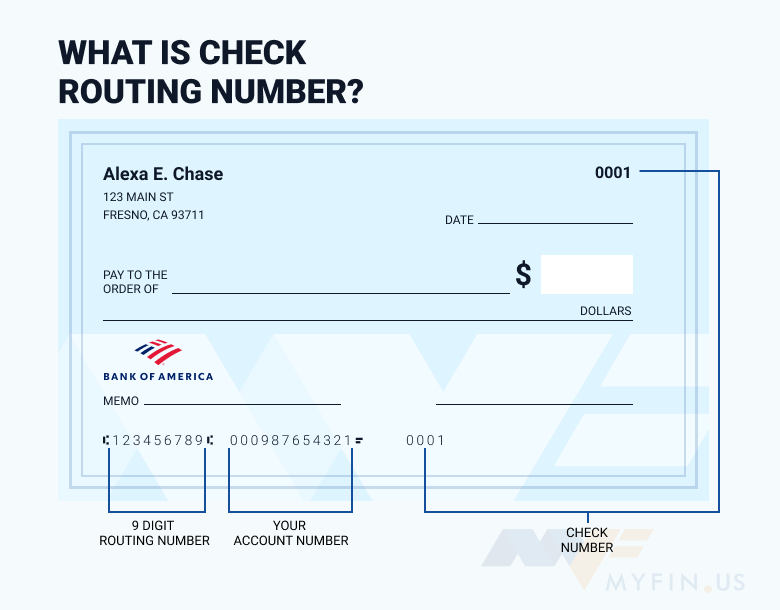
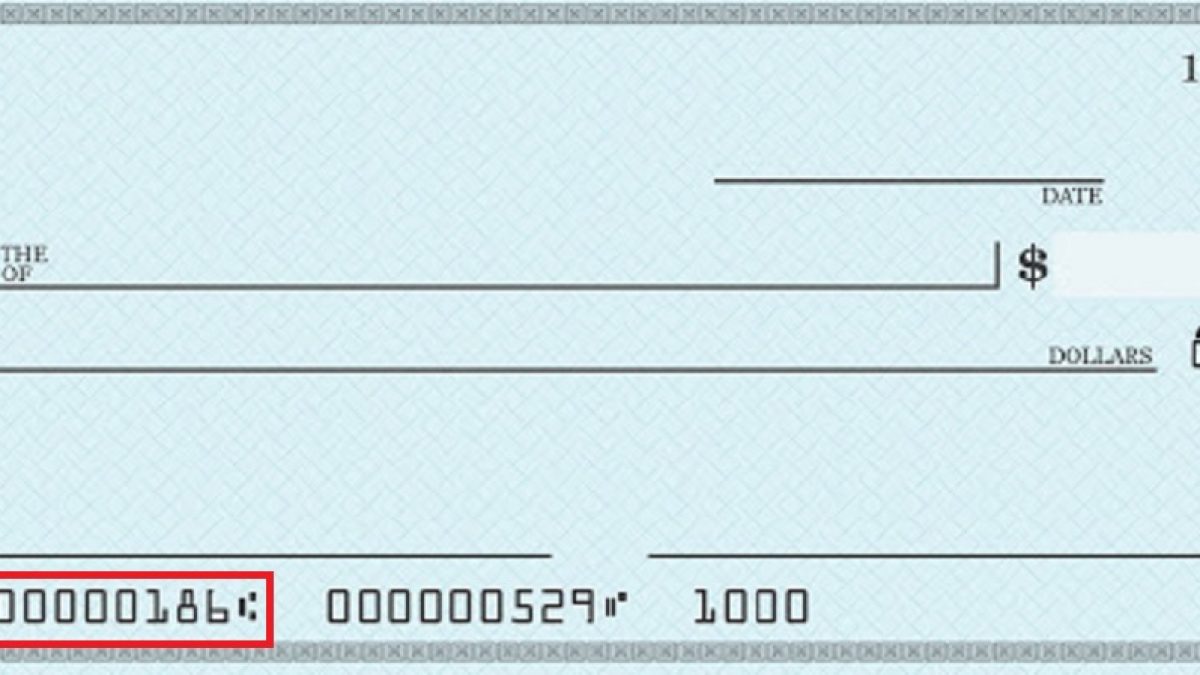
- Locating on a Check: Look at the bottom of any check. You’ll see a series of numbers printed in magnetic ink (MICR line). These numbers are typically arranged as follows:
- The first set of nine digits is your routing number.
- The second set of numbers (usually 10 to 12 digits, but can vary) is your account number.
- The final set is the check number.
- Locating on a Deposit Slip: A deposit slip will also have your routing and account numbers printed at the bottom, in the same order as on a check.
Important Security Note: Since your account number is physically present on checks and deposit slips, it’s crucial to store these documents securely to prevent unauthorized access.
Your Monthly Bank Statements
Your monthly bank statements, whether physical or digital, are reliable sources for your account number.
- Physical Statements: If you receive paper statements, your full account number is typically printed near the top of the statement, often next to your name and address, or within the account summary section.
- Digital Statements: You can access digital versions of your statements through Bank of America’s online banking platform.
- Step 1: Log in to your Bank of America online banking account.
- Step 2: Navigate to the “Statements & Documents” section, usually found under the “Accounts” or “Services” menu.
- Step 3: Select the account and the specific statement you wish to view. Most recent statements will be available.
- Step 4: Open the PDF statement. Your account number will be visible on the statement, typically near the top. You can then download or print it if needed.
Alternative Methods and What to Avoid
While the self-service methods listed above are generally preferred, there are situations where you might need to contact the bank directly. It’s equally important to know what methods to strictly avoid for security reasons.
Contacting Bank of America Customer Service
If you are unable to access your account number through online banking, the mobile app, or physical documents, or if you simply prefer speaking to a representative, you can contact Bank of America customer service.
- Phone Call: Call the main Bank of America customer service number, which can be found on their official website (usually 1-800-432-1000 for general inquiries). Be prepared for a thorough verification process. The representative will ask you several security questions to confirm your identity, such as your full name, address, date of birth, Social Security Number digits, or recent transaction details. Have your ID and account-related information handy.
- Secure Messaging: Some banks offer secure messaging within their online banking portal. If Bank of America provides this, you can send a message requesting your account number. Since you’re already logged in, the verification process is typically less intensive.
Visiting a Bank of America Branch
For in-person assistance, you can visit any Bank of America financial center. This is often the most secure method for sensitive inquiries as it involves face-to-face identity verification.
- Preparation: Bring a valid form of government-issued photo identification (e.g., driver’s license, passport). It’s also helpful to have your debit card or any other account-related documentation to expedite the process.
- Process: A bank representative will assist you after verifying your identity. They can look up your account details and provide you with the full account number.
What Not to Do: Beware of Scams and Unsecured Channels
Your bank account number is highly sensitive information. It’s crucial to exercise extreme caution and only use official, secure channels when retrieving or sharing it.
- Never Share via Unsolicited Communication: Bank of America will never ask you for your full account number (or password, or full Social Security Number) via unsolicited email, text message, or pop-up ads. Any such request is a phishing attempt.
- Avoid Unverified Websites: Be wary of third-party websites or services that claim to provide your account information. Always go directly to www.bankofamerica.com or use the official mobile app.
- Public Wi-Fi: Avoid accessing sensitive financial information, including your account number, over unsecured public Wi-Fi networks. These networks can be vulnerable to eavesdropping. If you must, use a Virtual Private Network (VPN).
- Unsecured Documents: Do not write your account number down and leave it in an easily accessible, unsecured location. Shred old statements or documents containing your account number before discarding them.
Understanding Your Account Number vs. Routing Number
It’s common to confuse your account number with your routing number, but they serve distinct purposes. Both are crucial for financial transactions.
The Routing Number Explained
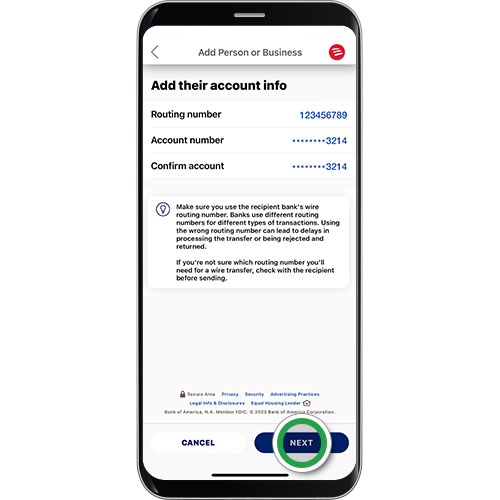
Bank of America’s routing number (also known as an ABA routing transit number) is a nine-digit code that identifies your financial institution in a transaction. It tells other banks where to send or receive money. Bank of America has different routing numbers depending on the state where you opened your account and the type of transaction. For instance, there’s one routing number for direct deposits/ACH transfers and another for wire transfers. You can find your specific routing number on your checks, within online banking, or by contacting the bank.
The Account Number Explained
Your account number, as discussed, is a unique string of digits that identifies your specific individual account within Bank of America. While the routing number directs funds to Bank of America, the account number ensures those funds go into your particular checking or savings account.
Why Both Are Crucial
For most electronic fund transfers, such as direct deposits, ACH payments, and wire transfers, both your bank’s routing number and your specific account number are required. The routing number ensures the funds reach the correct bank, and the account number ensures they are credited to the correct individual account at that bank. Providing incorrect numbers can lead to delays, returned payments, or even funds being sent to the wrong recipient.
Best Practices for Securing Your Financial Information
Beyond just knowing how to find your account number, adopting robust security practices is paramount for protecting all your financial data.
Strong Passwords and Two-Factor Authentication
Always use strong, unique passwords for your online banking accounts. Combine uppercase and lowercase letters, numbers, and symbols. Enable two-factor authentication (2FA) wherever possible. This adds an extra layer of security, requiring a code from your phone or email in addition to your password.
Regularly Monitoring Your Accounts
Periodically review your bank statements and transaction history through online banking or the mobile app. Look for any unauthorized transactions or suspicious activity. Report discrepancies to Bank of America immediately.
Being Wary of Unsolicited Communication
Be skeptical of any unexpected emails, texts, or calls asking for personal or financial information. Bank of America will never ask for your full account number, password, or PIN via these channels. Verify the sender’s identity before responding or clicking links.
Secure Document Storage
Store physical checks, bank statements, and any documents containing your account number in a secure place, such as a locked drawer or safe. When discarding old documents, shred them to prevent identity theft. For digital documents, ensure your computer or device is password-protected and uses up-to-date antivirus software.
By understanding where to find your Bank of America account number securely and implementing these best practices, you can confidently manage your financial affairs while safeguarding your sensitive information.
aViewFromTheCave is a participant in the Amazon Services LLC Associates Program, an affiliate advertising program designed to provide a means for sites to earn advertising fees by advertising and linking to Amazon.com. Amazon, the Amazon logo, AmazonSupply, and the AmazonSupply logo are trademarks of Amazon.com, Inc. or its affiliates. As an Amazon Associate we earn affiliate commissions from qualifying purchases.