
Amazon, a name synonymous with online shopping, has grown far beyond its initial vision as an online bookseller. Today, it stands as a colossal economic force, a multifaceted entity whose tentacles reach into nearly every aspect of digital and physical commerce. The sheer scale and diversity of its operations make the question of “how does Amazon earn money?” incredibly complex, yet fascinating. It’s not merely about selling products; it’s a meticulously engineered ecosystem designed to generate revenue through a virtuous cycle of customer engagement, technological innovation, and relentless diversification. To truly understand Amazon’s financial engine, one must delve into its core revenue streams, each a significant business in its own right, strategically interwoven to create an unparalleled economic machine.
The E-commerce Powerhouse: Retail Dominance
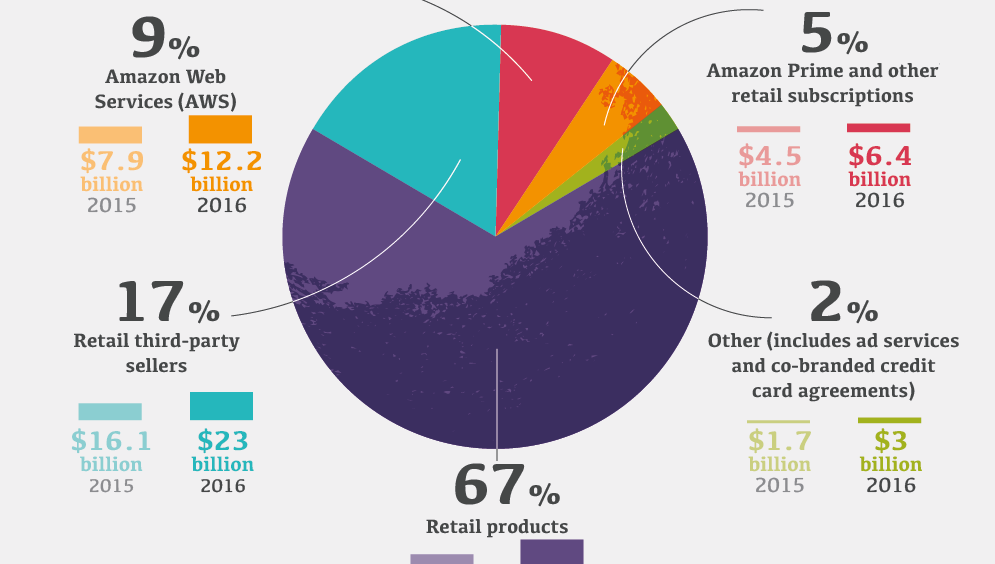
At its heart, Amazon remains an e-commerce giant, but even within this seemingly straightforward model, its revenue generation is nuanced, extending far beyond direct product sales. The company has mastered the art of leveraging its vast platform, not just for its own inventory but as a marketplace for millions of other businesses.
Online Store Sales: The First-Party Foundation
The most visible way Amazon earns money is through its direct sales of products. This involves Amazon purchasing inventory from manufacturers and distributors, stocking it in its massive network of fulfillment centers, and then selling it directly to consumers through its website and app. This first-party retail model, while operating on often razor-thin margins due to fierce competition and continuous investment in pricing, provides the foundational volume and customer traffic that underpins many of Amazon’s other lucrative ventures. The sheer scale of its operations, coupled with sophisticated logistics and supply chain management, allows Amazon to offer competitive pricing and an unparalleled selection, driving repeat purchases and maintaining its market dominance. From electronics to groceries, apparel to home goods, the diversity of products sold directly ensures a broad appeal and constant flow of transactions.
Third-Party Seller Services: The Marketplace Machine
Perhaps more financially significant than its direct sales is Amazon’s role as a marketplace for third-party sellers. This segment has blossomed into a high-margin business, where Amazon acts as a facilitator, charging various fees for the services it provides.
- Commissions: For every item sold by a third-party seller on its platform, Amazon takes a percentage cut, known as a referral fee or commission. These percentages vary by product category but represent a substantial, scalable revenue stream as millions of sellers compete for visibility on the world’s largest online marketplace.
- Fulfillment by Amazon (FBA): Many third-party sellers opt into FBA, where Amazon handles the storage, picking, packing, shipping, customer service, and returns for their products. This service is a logistical marvel, enabling small businesses to leverage Amazon’s world-class fulfillment network. In return, Amazon charges fees based on storage volume and shipping weight, turning its logistical infrastructure into a profit center. FBA not only generates direct income but also enhances the overall customer experience by ensuring fast, reliable delivery, regardless of whether the product is sold by Amazon directly or a third party.
- Seller Advertising: As the marketplace became increasingly crowded, Amazon introduced advertising services specifically for third-party sellers. These include sponsored product listings, sponsored brands, and display ads that allow sellers to pay to promote their products and increase their visibility within Amazon’s search results and product pages. This pay-per-click model has become an incredibly lucrative source of revenue, leveraging the high purchase intent of Amazon’s user base.
Subscription Services: The Prime Ecosystem
Amazon Prime is much more than just a convenience; it’s a brilliant stroke of financial engineering that locks customers into Amazon’s ecosystem, fostering loyalty and driving higher spending. Subscribers pay an annual or monthly fee to access a suite of benefits:
- Free Expedited Shipping: This core benefit significantly reduces friction for purchases, encouraging members to buy more frequently from Amazon.
- Prime Video: A vast library of streaming movies and TV shows, including original content, directly competes with services like Netflix. While it’s an entertainment offering, its primary financial role within Amazon is as a powerful customer retention tool for Prime.
- Prime Music, Gaming, and Exclusive Deals: Additional perks like ad-free music streaming, free games via Prime Gaming, and exclusive discounts further enhance the value proposition, making Prime membership an indispensable part of many consumers’ lives.
The recurring revenue from Prime subscriptions is stable and predictable, but its true financial impact comes from the behavioral changes it induces: Prime members spend significantly more on Amazon’s platform than non-members, making them Amazon’s most valuable customers.
Cloud Computing Leadership: Amazon Web Services (AWS)
While many associate Amazon primarily with retail, its most profitable and strategically vital division is Amazon Web Services (AWS). Launched in 2006, AWS provides on-demand cloud computing platforms and APIs to individuals, companies, and governments on a metered pay-as-you-go basis. It has revolutionized the technology industry and become an indispensable backbone for countless businesses worldwide.
Infrastructure as a Service (IaaS): The Digital Utility
AWS’s foundational offerings include Infrastructure as a Service (IaaS), providing virtualized computing resources. This includes:
- Compute Power: Services like EC2 (Elastic Compute Cloud) allow customers to rent virtual servers, scaling their computing capacity up or down as needed, without the upfront capital expenditure of owning physical hardware.
- Storage: Services like S3 (Simple Storage Service) offer highly scalable and durable object storage for data of all types, from website assets to backups.
- Databases: Managed database services such as Amazon RDS (Relational Database Service) and DynamoDB (NoSQL database) abstract away the complexities of database management, allowing businesses to focus on their applications.
AWS generates revenue by charging for the actual usage of these resources – data stored, data transferred, CPU cycles consumed, etc. This utility-like model offers immense flexibility and cost savings for businesses, from startups to Fortune 500 companies, making AWS the undisputed leader in the cloud infrastructure market with substantial profit margins.
Platform as a Service (PaaS) & Software as a Service (SaaS): Beyond Infrastructure
Beyond basic infrastructure, AWS offers a vast array of higher-level services, allowing businesses to offload even more operational complexities:
- Machine Learning and AI Tools: Services like Amazon SageMaker for building, training, and deploying machine learning models, and pre-built AI services for voice recognition (Lex), image analysis (Rekognition), and natural language processing (Comprehend). These cater to the growing demand for intelligent applications.
- Internet of Things (IoT): Tools for connecting and managing IoT devices securely and at scale.
- Developer Tools: Services for application deployment, monitoring, and management.
These PaaS and SaaS offerings add further layers of value, allowing businesses to innovate faster and more efficiently. The revenue from AWS’s diverse service portfolio has grown exponentially, often surpassing the operating income of Amazon’s entire North American retail segment, proving its critical role as the company’s financial engine and strategic asset.
Digital Advertising Empire: Beyond E-commerce
While Google and Meta (Facebook) traditionally dominated the digital advertising landscape, Amazon has emerged as a formidable third player. Its advertising business leverages its unique position at the point of purchase, offering advertisers unprecedented access to consumers with high commercial intent.
Sponsored Products and Brands: Intent-Based Advertising
Amazon’s primary advertising revenue comes from sponsored listings directly on its retail platform.
- Sponsored Products: These are cost-per-click (CPC) ads that appear prominently in search results and on product detail pages. Sellers bid on keywords, and their products are displayed to relevant shoppers. The effectiveness is high because these ads target users who are actively searching for products to buy.
- Sponsored Brands: These ads promote a brand’s portfolio of products and link to a custom landing page or store page within Amazon. They help brands increase awareness and drive traffic to their Amazon storefronts.
This highly effective advertising model allows Amazon to monetize its vast customer traffic and detailed shopping data, providing measurable ROI for advertisers and contributing significantly to Amazon’s bottom line, often with higher profit margins than retail sales.
Display Advertising and DSP: Expanding Reach
Beyond its own platform, Amazon has also developed a robust display advertising network.

- Amazon DSP (Demand-Side Platform): This allows advertisers to programmatically buy display and video ads on Amazon’s owned-and-operated sites (like IMDb, Twitch, and Amazon’s myriad content sites) and across third-party websites and apps. Leveraging Amazon’s rich first-party shopping data, advertisers can target highly specific audiences, making these campaigns incredibly effective for brand awareness and driving sales both on and off Amazon.
This expansion into broader display advertising positions Amazon as a direct competitor to traditional digital ad platforms, capitalizing on its unique data insights into consumer purchasing behavior to offer highly relevant and effective ad placements.
Diversified Revenue Streams: Expanding the Empire
Amazon’s strategy for earning money is characterized by constant experimentation and diversification. It doesn’t rely on just one or two major pillars but continuously explores new markets and services.
Entertainment Content: Engaging the Audience
While Prime Video is a core component of the Prime subscription, Amazon’s investments in entertainment are substantial and multifaceted.
- Amazon Studios: Producing original movies and TV series not only enhances Prime Video’s appeal but also serves as a strategic play for intellectual property and potential licensing opportunities.
- Twitch: Acquired in 2014, Twitch is the leading live-streaming platform for gamers and increasingly for other content creators. It generates revenue through subscriptions, advertising, and bits (a virtual currency for tipping streamers). Twitch strengthens Amazon’s digital media ecosystem and provides another avenue for advertising.
- Amazon Music: Competing with Spotify and Apple Music, Amazon Music offers various tiers, including a free ad-supported version, a Prime-included tier, and an unlimited premium subscription. This expands Amazon’s recurring revenue base and complements its device ecosystem.
These entertainment ventures aim to capture consumer attention, fostering deeper engagement with the Amazon brand and creating opportunities for cross-promotion across its services.
Devices and Hardware: Gateways to Services
Amazon is a significant player in consumer electronics, but its devices are rarely meant to be standalone profit centers. Instead, they serve as powerful gateways to Amazon’s services and content.
- Kindle e-readers: Drive sales of digital books and magazines.
- Echo smart speakers (with Alexa): Promote Amazon Music, smart home services, and voice shopping.
- Fire TV sticks and tablets: Provide access to Prime Video, third-party apps, and a range of digital content.
Revenue from device sales themselves is a minor component compared to the long-term value generated by locking users into Amazon’s content and service ecosystem, where the real money is made through subscriptions, digital purchases, and data collection.
Physical Stores & Groceries: Bridging Online and Offline
Recognizing that a significant portion of retail still happens offline, Amazon has strategically expanded into physical retail:
- Whole Foods Market: Acquired in 2017, this high-end grocery chain provides Amazon with a physical footprint, a supply chain for perishable goods, and a valuable source of data on in-store purchasing habits. It also serves as a hub for Amazon Fresh and Prime Now deliveries.
- Amazon Go & Amazon Fresh: Innovative cashier-less convenience stores and specialized grocery delivery services expand Amazon’s reach into the daily needs of consumers, offering new avenues for direct sales and data collection.
These physical ventures are about extending Amazon’s reach, optimizing last-mile delivery, and experimenting with new retail formats, ultimately driving overall sales and market share.
Other Ventures: Future Growth Engines
Amazon is constantly incubating and investing in new businesses, some of which could become major revenue streams in the future:
- Amazon Pharmacy: A direct-to-consumer pharmacy service, leveraging its logistics network to disrupt the healthcare industry.
- Project Kuiper: Amazon’s ambitious initiative to deploy a large constellation of low Earth orbit satellites to provide broadband internet access globally, potentially competing with Starlink and opening up new markets for internet services.
- Logistics & Transportation: Beyond FBA, Amazon is building out its own extensive logistics network (Amazon Air, delivery vans), which could eventually offer third-party shipping services, competing with FedEx and UPS.
These ventures demonstrate Amazon’s long-term vision and its willingness to invest heavily in new areas, always with an eye toward creating new, scalable profit centers.
The Synergistic Business Model: A Virtuous Cycle
The true genius of Amazon’s financial strategy lies not just in its individual revenue streams but in how they synergistically reinforce one another, creating a formidable virtuous cycle.
Interconnectedness of Services: Fueling Growth
- Prime fuels retail: Prime membership reduces friction, leading to more frequent purchases.
- Retail fuels advertising: More sellers and products on the platform mean more competition for visibility, driving advertising revenue.
- AWS fuels everything: AWS provides the scalable, cost-effective infrastructure that powers Amazon’s entire e-commerce, advertising, and entertainment empire, while also being a massive profit center itself.
- Devices fuel content: Echo, Kindle, and Fire TV devices drive consumption of Amazon Music, Prime Video, and digital books.
- Content fuels Prime: Exclusive shows and movies enhance Prime’s value, encouraging subscriptions.
This interconnectedness means that investment in one area often benefits multiple others, creating efficiencies and reducing customer acquisition costs across the ecosystem.
Data Leverage and Customer Lock-in: The Hidden Asset
Amazon collects an astonishing amount of data on consumer behavior, from shopping habits and search queries to viewing preferences and voice commands. This data is a hidden asset, constantly refined and leveraged to:
- Optimize product recommendations: Driving higher conversion rates.
- Personalize advertising: Making ads more relevant and effective.
- Inform product development: Identifying market gaps and popular trends.
- Improve logistics and pricing: Enhancing efficiency and competitiveness.
This data, combined with the convenience and value offered by Prime, creates a powerful “lock-in” effect. The more a customer uses Amazon’s services, the more integrated they become into the ecosystem, making it increasingly difficult and less appealing to switch to competitors. This customer stickiness is a fundamental driver of Amazon’s sustained financial success.
Conclusion
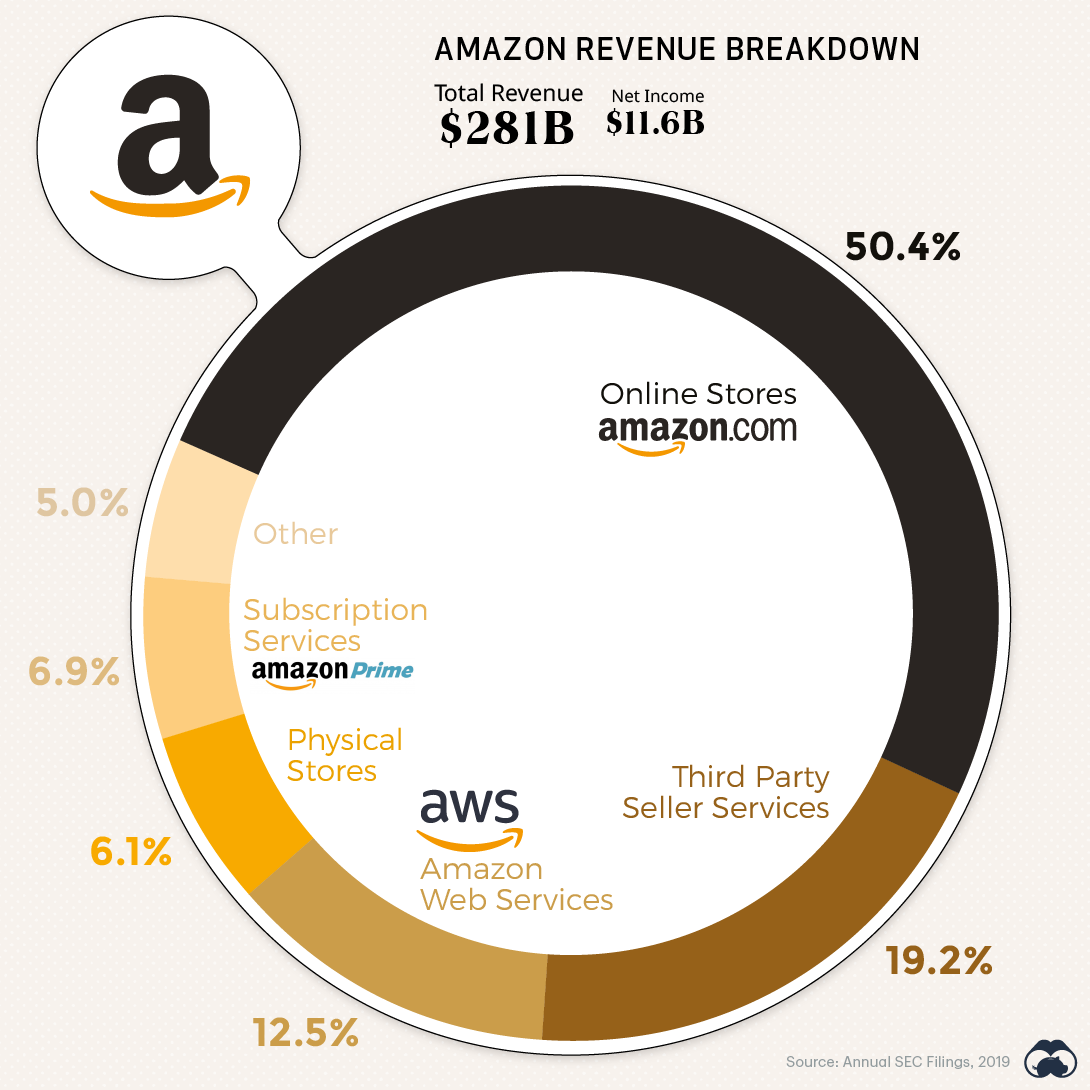
Amazon’s journey from an online bookseller to a global titan is a masterclass in diversified revenue generation and strategic ecosystem building. It earns money not from a single source, but from a meticulously orchestrated network of highly profitable businesses, each reinforcing the others. From the razor-thin margins of direct retail to the booming profitability of AWS, the high-growth advertising segment, and the sticky recurring revenue of Prime subscriptions, Amazon has cultivated an unparalleled financial engine. Its relentless focus on customer obsession (which often translates into customer lock-in), technological innovation, and aggressive market expansion across multiple sectors ensures that “how Amazon earns money” is a continuously evolving story of financial prowess and strategic dominance. Its business model serves as a potent reminder that in the modern economy, true wealth is built not just on products, but on platforms, services, and an interconnected web of recurring value.
aViewFromTheCave is a participant in the Amazon Services LLC Associates Program, an affiliate advertising program designed to provide a means for sites to earn advertising fees by advertising and linking to Amazon.com. Amazon, the Amazon logo, AmazonSupply, and the AmazonSupply logo are trademarks of Amazon.com, Inc. or its affiliates. As an Amazon Associate we earn affiliate commissions from qualifying purchases.