
Amazon (AMZN) stands as a colossus in the modern economy, a company whose name has become synonymous with e-commerce, cloud computing, and digital innovation. For many aspiring investors, the idea of owning a piece of this global powerhouse is highly appealing, offering potential exposure to continued growth and market leadership. However, navigating the world of stock investment, even for a blue-chip company like Amazon, requires a clear understanding of market dynamics, personal financial goals, and the practical steps involved. This comprehensive guide aims to demystify the process, providing insights into how to approach investing in Amazon stock, from initial research to portfolio management.
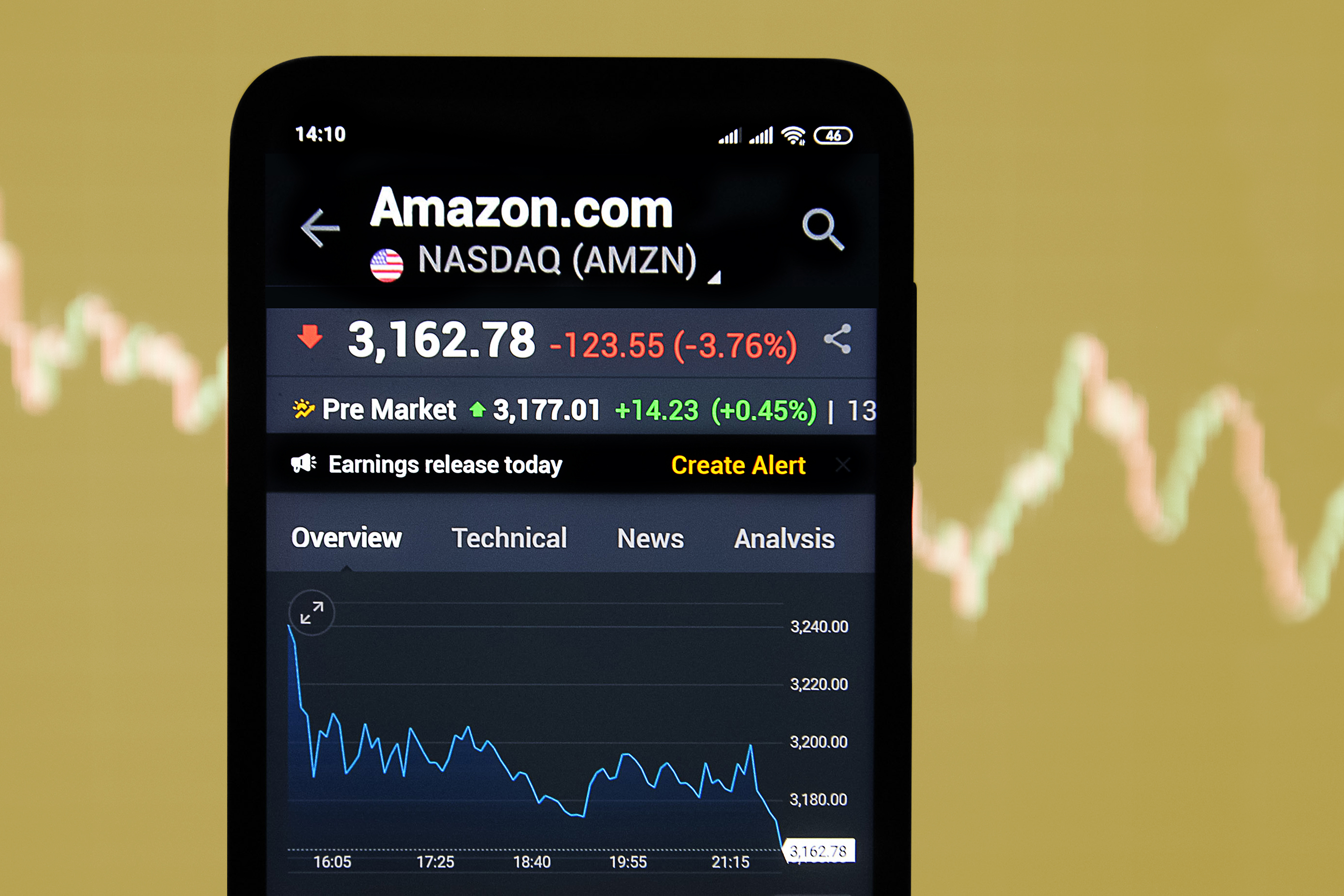
Understanding Amazon as an Investment Vehicle
Before committing capital, a thorough understanding of what you’re investing in is paramount. Amazon is far more than just an online store; it’s a multi-faceted enterprise with diverse revenue streams and a track record of relentless innovation.
A Brief Overview of Amazon’s Business Model
Amazon’s business model is remarkably expansive, built on several pillars that collectively drive its immense market capitalization. The most recognizable segment is its e-commerce platform, which includes online retail sales, third-party seller services, and subscriptions like Amazon Prime. This segment benefits from a vast global customer base, an efficient logistics network, and a constantly expanding product catalog.
Beyond retail, Amazon Web Services (AWS) is perhaps its most profitable and fastest-growing division. AWS is the leading cloud computing platform globally, providing on-demand cloud computing platforms and APIs to individuals, companies, and governments. Its robust infrastructure powers countless businesses and applications, making it a critical component of the digital economy.
Furthermore, Amazon has significant stakes in digital advertising, leveraging its extensive user data and retail platform to offer highly targeted ad solutions. Other ventures include physical stores (Whole Foods Market, Amazon Go), digital content and entertainment (Prime Video, Amazon Music, Twitch), and innovative technologies like Alexa and autonomous vehicles (Zoox). This diversification provides multiple avenues for growth and a degree of resilience against downturns in any single sector.
Key Growth Drivers and Future Prospects
Amazon’s future growth hinges on several powerful drivers. The continued global shift towards e-commerce, especially in emerging markets, provides a perpetual tailwind for its retail operations. The relentless expansion of cloud computing ensures sustained demand for AWS services, as more businesses migrate their operations to the cloud and require scalable, reliable infrastructure.
Innovation remains a core tenet of Amazon’s strategy. Investments in artificial intelligence, machine learning, robotics, and logistics automation are constantly improving efficiency and opening new market opportunities. The company’s focus on customer experience, combined with its vast ecosystem of products and services, creates a powerful network effect that reinforces its market dominance. Future prospects also include further penetration into healthcare, financial services, and even space exploration, demonstrating a long-term vision that extends far beyond its current offerings.
Evaluating Amazon’s Historical Performance
Examining Amazon’s historical stock performance reveals a remarkable trajectory of growth, reflecting its successful execution and market expansion. Over the past two decades, AMZN shares have delivered substantial returns for long-term investors, outperforming broader market indices for extended periods. However, it’s crucial to remember that past performance is not indicative of future results. The stock has also experienced periods of volatility and significant pullbacks, like any other equity. Understanding these patterns, including its recovery capabilities after downturns, offers valuable context for prospective investors. Factors such as revenue growth, profitability trends (especially from AWS), and market sentiment have historically influenced its stock price movements.
Essential Steps Before Investing
Before you open a brokerage account and place an order, a foundational preparation phase is critical. This involves introspection about your own financial situation and diligent research into the investment itself.
Defining Your Investment Goals and Risk Tolerance
Every investment decision should be anchored to your personal financial goals. Are you saving for retirement, a down payment, or simply looking to grow your wealth over the long term? Your objectives will dictate your investment horizon and strategy. Equally important is understanding your risk tolerance. Amazon, despite its size, is still a growth stock that can exhibit significant price swings. Are you comfortable with the possibility of substantial short-term losses for the potential of long-term gains? Or do you prefer more stable, less volatile investments? A clear understanding of your capacity for risk will help you determine the appropriate allocation of your portfolio to a stock like AMZN.
Conducting Due Diligence: Researching AMZN
Investing without thorough research is akin to gambling. For Amazon, due diligence involves more than just looking at the stock chart. You should dive into the company’s financial statements (income statements, balance sheets, cash flow statements) to assess its revenue growth, profitability, debt levels, and cash generation. Read the company’s annual reports (10-K) and quarterly reports (10-Q) filed with the SEC, which provide detailed insights into its operations, risks, and management’s outlook.
Furthermore, keep abreast of industry trends, competitive landscape analysis, and regulatory developments that could impact Amazon. Monitor news from reputable financial media outlets and analyst reports. Pay attention to management’s guidance on future earnings and strategic initiatives. This comprehensive research will provide a holistic view of Amazon’s intrinsic value and potential risks.
Deciding on an Investment Strategy (Long-term vs. Short-term)
With your goals and research in hand, you must decide on an investment strategy.
Long-term investing in Amazon typically involves holding the stock for several years, riding out short-term market fluctuations with the belief that the company’s underlying business will continue to grow and its stock price will appreciate over time. This approach often aligns with a “buy and hold” philosophy and aims to capitalize on Amazon’s innovation and market expansion.
Short-term trading, on the other hand, involves buying and selling stocks rapidly to profit from immediate price movements. This strategy is significantly riskier, requires constant monitoring, advanced analytical skills, and often relies on technical analysis rather than fundamental business performance. For most individual investors, especially those new to the market, a long-term perspective on a company like Amazon is generally recommended.
Practical Ways to Invest in Amazon Stock
Once you’ve done your homework and solidified your strategy, it’s time to execute. There are several direct and indirect methods to gain exposure to Amazon stock.
Direct Stock Purchase Through a Brokerage Account
The most straightforward way to invest in Amazon is to open an investment brokerage account. Many reputable online brokers offer user-friendly platforms, competitive fees (often commission-free trades for stocks and ETFs), and access to extensive research tools. After opening and funding your account, you can search for Amazon using its ticker symbol (AMZN) and place a buy order. You can typically choose between a market order (to buy at the current market price) or a limit order (to buy at a specific price or better). For beginners, a market order is often simpler for liquid stocks like Amazon, but limit orders offer more control.
Investing via Exchange-Traded Funds (ETFs) or Mutual Funds
For investors who prefer diversification or have a smaller initial capital, investing in Amazon indirectly through Exchange-Traded Funds (ETFs) or Mutual Funds is an excellent option. Many technology-focused ETFs, growth-oriented mutual funds, or even broad market index funds (like those tracking the S&P 500) will have Amazon as one of their top holdings.
- ETFs trade like stocks on exchanges, offering instant diversification across numerous companies or sectors, often with lower expense ratios than actively managed mutual funds.
- Mutual Funds are professionally managed portfolios of stocks, bonds, or other investments. While they can offer expert management, they often come with higher fees and are traded only once per day after market close.
Investing through these funds allows you to own a fractional share of Amazon as part of a larger, diversified portfolio, reducing the single-stock risk while still participating in Amazon’s potential growth.
Considering Fractional Shares for Smaller Investments
Amazon’s stock price can be substantial, making it challenging for some investors to buy even a single share outright. Fortunately, many online brokers now offer fractional shares. This innovative feature allows you to invest a specific dollar amount into a stock, buying a fraction of a share rather than a whole one. For example, if Amazon’s stock is $1500 per share, you could invest $150 and own 0.1 shares. This democratizes investing, making high-priced stocks accessible to investors with smaller budgets, allowing them to participate in the growth of companies like Amazon without needing large sums of capital.
Managing Your Amazon Investment
Investing is not a one-time event; it’s an ongoing process of monitoring, evaluation, and adjustment. Effective management of your Amazon investment can significantly impact its long-term success.
Monitoring Performance and Market Trends
Regularly monitor Amazon’s stock performance, but avoid daily obsessing over minor fluctuations. Focus on the bigger picture: its quarterly earnings reports, strategic announcements, and relevant industry news. Pay attention to broader market trends, economic indicators, and interest rate changes, as these can influence even the strongest companies. Understand that stock prices are affected by a multitude of factors, and short-term volatility is normal. Your long-term conviction should be based on Amazon’s fundamental business health and growth prospects, not fleeting market sentiment.
Rebalancing Your Portfolio
Over time, Amazon’s share of your total investment portfolio might grow (or shrink) significantly due to its performance. Portfolio rebalancing is the process of adjusting the weights of assets in your portfolio back to your original target allocations. For instance, if Amazon’s stock performs exceptionally well and now constitutes a much larger percentage of your portfolio than you initially intended, you might consider selling a portion of your AMZN shares to reduce your exposure to a single stock and reinvest the proceeds into other assets that are underweight. This helps manage risk and ensures your portfolio remains aligned with your long-term goals and risk tolerance.
Understanding Tax Implications of Stock Investments
Investing in stocks like Amazon comes with tax implications that vary by jurisdiction. In most countries, profits from selling shares are subject to capital gains tax. If you sell a stock you’ve held for less than a year, the gains are typically taxed at your ordinary income rate (short-term capital gains). If you hold it for over a year, they are often taxed at a lower, more favorable long-term capital gains rate. Dividends, though rare for growth companies like Amazon, are also typically taxable. It is crucial to consult with a qualified tax advisor to understand the specific tax laws relevant to your situation and to plan your investment strategies accordingly to optimize after-tax returns. Proper record-keeping of all your investment transactions is essential for accurate tax reporting.
Potential Risks and Considerations
While Amazon offers compelling investment potential, no investment is without risk. Acknowledging and understanding these risks is a critical part of informed decision-making.
Market Volatility and Sector-Specific Risks
Amazon’s stock price, like all equities, is subject to market volatility. Broader economic downturns, geopolitical events, or shifts in investor sentiment can lead to significant price drops, even for fundamentally sound companies. Additionally, Amazon operates within highly competitive and rapidly evolving sectors (e-commerce, cloud computing, advertising). Any significant disruption, such as a major technological breakthrough by a competitor, a shift in consumer preferences, or a slowdown in digital adoption, could impact its growth trajectory. Investors must be prepared for the possibility of short-to-medium term fluctuations that may not always align with the company’s underlying business performance.
Competition and Regulatory Scrutiny
Amazon faces intense competition across all its business segments from established giants (e.g., Walmart, Microsoft, Google, Alibaba) and nimble startups. The relentless drive for innovation and market share means Amazon must constantly invest and adapt to maintain its edge. Furthermore, due to its immense market power, Amazon is under increasing regulatory scrutiny globally. Concerns about antitrust, data privacy, labor practices, and monopolistic behavior could lead to fines, forced divestitures, or operational restrictions that might negatively impact its business model and profitability. These regulatory headwinds represent a significant, ongoing risk factor.

Diversification as a Risk Management Strategy
Investing all your capital into a single stock, no matter how strong the company, concentrates your risk. A fundamental principle of sound investing is diversification. By spreading your investments across various companies, industries, and asset classes (stocks, bonds, real estate), you can mitigate the impact of poor performance from any single investment. While Amazon may be a compelling part of your portfolio, it should ideally be one component of a broader, well-diversified strategy that aligns with your overall financial goals and risk tolerance. Diversification does not guarantee profits or protect against losses, but it is a powerful tool for managing risk and enhancing portfolio resilience.
In conclusion, investing in Amazon stock offers an opportunity to participate in the growth of one of the world’s most innovative and influential companies. However, success requires a diligent approach rooted in research, strategic planning, and ongoing management, all while maintaining a clear understanding of your financial goals and the inherent risks involved. By following these principles, investors can navigate the complexities of the market with greater confidence and purpose.
aViewFromTheCave is a participant in the Amazon Services LLC Associates Program, an affiliate advertising program designed to provide a means for sites to earn advertising fees by advertising and linking to Amazon.com. Amazon, the Amazon logo, AmazonSupply, and the AmazonSupply logo are trademarks of Amazon.com, Inc. or its affiliates. As an Amazon Associate we earn affiliate commissions from qualifying purchases.