
Apple Inc. (AAPL) is not just a technology behemoth; it is a financial marvel, consistently ranking among the most valuable companies globally. For investors, economists, and even casual observers, understanding “what Apple is worth” goes far beyond a simple stock price. It encapsulates a complex interplay of market capitalization, intrinsic value, future growth prospects, and its pervasive influence on global finance and economy. This article delves into the multifaceted dimensions of Apple’s valuation, exploring its financial underpinnings, economic ripple effects, and what its colossal worth signifies for investors and the broader market.

Unpacking the Colossal Market Capitalization
At the heart of Apple’s perceived worth is its market capitalization, a figure that frequently oscillates and has, at various points, surpassed the staggering $3 trillion mark. This number, while seemingly abstract, is a direct reflection of investor confidence and the company’s financial might.
The Mechanics of Market Cap: Share Price and Outstanding Shares
Market capitalization is calculated by multiplying a company’s current share price by the total number of its outstanding shares. For Apple, with millions of shares actively traded on public exchanges, this calculation yields an immense figure. When Apple’s stock price rises, so does its market cap, and vice-versa. This metric serves as a quick snapshot of a company’s size and is a key indicator for institutional and individual investors alike. A high market cap often suggests stability and broad market acceptance, making a company like Apple a significant component of major stock market indices such as the S&P 500 and the NASDAQ Composite. Its movements heavily influence the performance of these benchmarks, highlighting its systemic importance in the financial ecosystem.
Apple’s Journey to Trillion-Dollar Status: A Historical Perspective
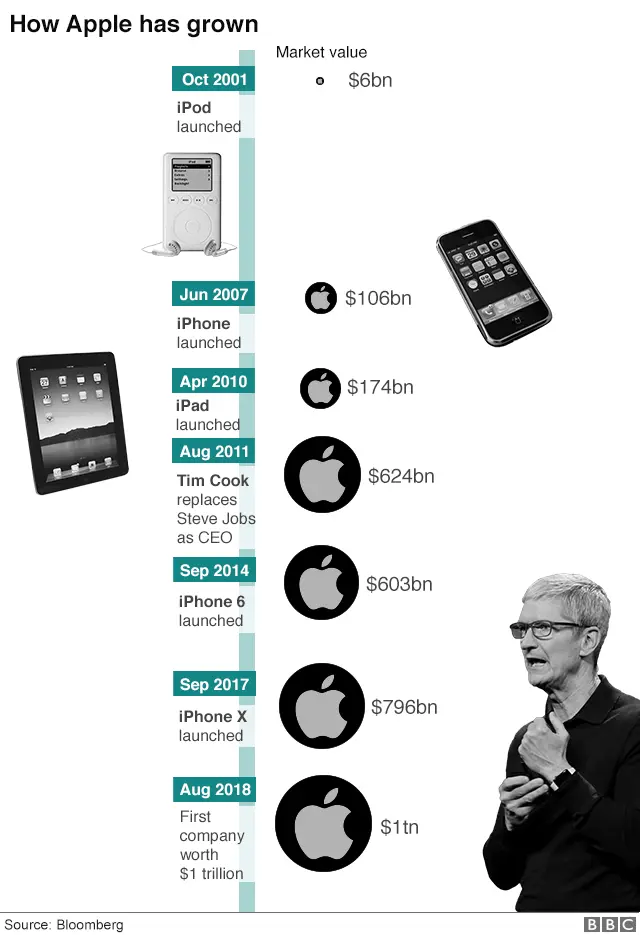
Apple’s ascent to the pinnacle of market valuation is a testament to consistent innovation, strategic market expansion, and robust financial management. It became the first U.S. company to achieve a $1 trillion market cap in August 2018, a mere 38 years after its initial public offering. This milestone was followed by its breaching the $2 trillion mark in August 2020 and, historically, the $3 trillion threshold in January 2022. This trajectory wasn’t linear; it involved navigating economic downturns, intense competition, and evolving consumer preferences. Key drivers included the transformative success of the iPhone, the expansion into a high-margin services segment, and a relentless focus on brand loyalty and ecosystem integration. This historical journey underscores not just product success but also astute financial engineering, including share buyback programs that reduce outstanding shares, thereby boosting earnings per share and, potentially, stock price.
Beyond Market Cap: Understanding Apple’s Intrinsic Value
While market capitalization provides a real-time market assessment, a comprehensive understanding of Apple’s worth requires examining its intrinsic value – the true value of the company, irrespective of short-term market fluctuations. This involves a deep dive into its financial health, growth drivers, and its commitment to shareholder returns.
Financial Health Indicators: Revenue, Profitability, and Cash Flow
Apple’s financial statements offer a window into its operational efficiency and economic strength. Consistently generating hundreds of billions in annual revenue, it maintains enviable profit margins, often exceeding 25% for net income. These figures are fueled by strong product sales, particularly the iPhone, and a rapidly growing services segment that includes Apple Music, iCloud, the App Store, and Apple TV+. Furthermore, Apple is a prodigious generator of free cash flow – the cash left over after operating expenses and capital expenditures. This massive cash hoard provides strategic flexibility, enabling investments in research and development, acquisitions, and substantial returns to shareholders. Investors analyze these indicators to gauge the company’s ability to sustain growth, weather economic storms, and fund future initiatives. A healthy balance sheet, marked by relatively low debt and significant cash reserves, further reinforces its financial fortress.
Growth Drivers: Product Innovation, Services Expansion, and Global Reach
Apple’s intrinsic value is propelled by several enduring growth engines. At its core is product innovation, with new iterations of the iPhone, Mac, iPad, and Apple Watch consistently captivating consumers. Beyond hardware, the burgeoning services division is a critical growth driver. With over a billion active subscriptions across its platforms, this segment provides recurring revenue streams with higher profit margins, diversifying Apple’s revenue base away from hardware cyclicality. Geographically, Apple’s global reach, particularly its penetration into emerging markets like India, offers significant untapped potential. These regions, with growing middle classes and increasing smartphone adoption, represent future avenues for both hardware sales and services subscriptions. The combination of these factors paints a picture of a company with strong fundamental drivers for continued expansion.
Shareholder Returns: Dividends and Share Buybacks
A significant aspect of Apple’s financial strategy involves returning capital to shareholders, which enhances its worth from an investor’s perspective. Apple initiated a dividend program in 2012, providing regular cash payouts to shareholders. While its dividend yield might not be the highest, its consistent growth signals financial stability and confidence. More impactful, however, are its aggressive share buyback programs. By repurchasing its own shares from the open market, Apple reduces the number of outstanding shares, which typically boosts earnings per share (EPS) and can lead to an increase in the stock price, thereby enhancing shareholder value. These actions underscore Apple’s commitment to delivering tangible returns to its investors, a crucial element in determining its holistic financial worth.
The Broader Economic Ripple Effect of Apple’s Valuation
Apple’s immense worth isn’t confined to its balance sheets; it sends significant ripples throughout the global economy, impacting everything from stock market dynamics to employment and consumer behavior. Its financial weight makes it an economic barometer and a critical player in global trade and finance.
Impact on Stock Market Indices and Investor Sentiment
Given its gargantuan market capitalization, Apple holds a substantial weighting in major stock market indices. For instance, it often represents one of the largest components of the S&P 500. Consequently, Apple’s stock performance significantly influences the overall direction of the broader market. A strong quarter for Apple can uplift the entire S&P 500, while a downturn can exert downward pressure. This dominance means that investor sentiment towards Apple can become a proxy for wider market confidence. Large institutional investors, mutual funds, and ETFs often hold significant stakes in Apple, making its performance critical to their portfolio returns and, by extension, to millions of individual investors who invest through these vehicles.
Supply Chain Economics: A Global Network of Dependencies
Apple’s operations span a complex, global supply chain involving hundreds of thousands of workers across numerous countries. Its worth is intrinsically tied to the efficiency and resilience of this network. From chip manufacturers in Taiwan to assembly plants in China and component suppliers in Vietnam and the U.S., Apple’s demand fuels entire industries. This creates millions of direct and indirect jobs globally and generates substantial economic activity. Any disruption to Apple’s production—be it from geopolitical tensions, natural disasters, or pandemics—can have far-reaching economic consequences, affecting not only its own profitability but also the financial health of countless supplier companies and the livelihoods of their employees. This interconnectedness highlights Apple’s role as an anchor tenant in the global manufacturing and logistics ecosystem.
Consumer Spending and Disposable Income Dynamics
The demand for Apple’s premium products also reflects broader trends in consumer spending and disposable income. The willingness of consumers to pay high prices for iPhones, Macs, and other Apple devices indicates economic health in many markets. Apple’s product launches often drive surges in consumer expenditure, influencing retail sales figures and reflecting consumer confidence. Moreover, the “Apple effect” can be seen in the accessories market, the app economy, and even in the secondhand device market, all of which contribute to economic activity. Its products become status symbols and essential tools, integrating deeply into the fabric of modern life and influencing how individuals allocate their personal finances.
Investing in Apple: A Perspective for Different Portfolios
For those considering “what Apple is worth” from an investment standpoint, its characteristics make it a unique proposition, fitting into diverse investment strategies, from conservative blue-chip holdings to growth-oriented portfolios.
Apple as a “Blue Chip” Stock: Stability vs. Growth
Apple is widely considered a quintessential “blue chip” stock – a financially sound company with a long history of stable earnings and reliable performance. Its massive market cap, strong brand, and consistent profitability offer a degree of stability that appeals to conservative investors and those seeking long-term capital appreciation with reduced volatility. While it may not offer the explosive growth potential of smaller, emerging tech companies, its steady innovation and expansion into new services provide a balance of stability and continued, albeit more moderate, growth. For many, Apple represents a cornerstone investment, a company expected to endure and prosper for decades.
Diversification Strategies: How Apple Fits into a Balanced Portfolio
Even for growth-oriented investors, Apple plays a crucial role in diversification. Its presence in a portfolio can balance out riskier, high-growth investments. As a company with broad market exposure and diverse revenue streams (hardware, software, services), it offers a degree of resilience against sector-specific downturns. Financial advisors often recommend including large-cap, established companies like Apple to provide a foundation of stability within a diversified portfolio, especially for long-term objectives like retirement planning or wealth accumulation. Its relative financial strength can help buffer against market downturns, preserving capital while still participating in overall market growth.
Long-Term vs. Short-Term Investment Horizons
Investing in Apple often comes with the recommendation for a long-term horizon. Its intrinsic value compounds over years through innovation, market expansion, and consistent financial performance. While short-term traders might seek to capitalize on quarterly earnings reports or new product launch buzz, the true “worth” of an Apple investment is typically realized over several years, benefiting from dividend reinvestment, share price appreciation, and the power of compounding. For those looking to build wealth over decades, Apple’s historical performance and strong fundamentals make a compelling case for a buy-and-hold strategy, aligning with principles of sound personal finance and strategic investing.
The Future of Apple’s Worth: Challenges and Opportunities
Forecasting Apple’s future worth involves considering both the potential headwinds it faces and the significant opportunities it aims to seize. Its ability to navigate these will define its valuation in the coming years.
Regulatory Scrutiny and Geopolitical Headwinds
As one of the world’s largest companies, Apple faces increasing regulatory scrutiny across multiple jurisdictions, particularly concerning antitrust issues related to its App Store policies, data privacy, and market dominance. Potential fines, forced changes to business practices, or even divestitures could impact its profitability and valuation. Geopolitical tensions, particularly between the U.S. and China, also pose a significant risk given Apple’s deep manufacturing ties to the region and its substantial consumer market there. Supply chain disruptions, tariffs, or restrictions on market access could weigh heavily on its financial performance and, consequently, its market worth. Managing these complex external factors will be critical for sustaining its value.
Emerging Technologies and Competitive Landscape
The tech landscape is constantly evolving, with new technologies like augmented reality (AR), virtual reality (VR), and advanced AI presenting both opportunities and threats. Apple is actively investing in these areas, as evidenced by its Vision Pro headset, but competition is fierce from other tech giants like Meta, Google, and Microsoft. Apple’s ability to innovate and successfully commercialize its ventures into these nascent fields will be crucial for maintaining its competitive edge and opening up new revenue streams that justify its premium valuation. Failure to adapt or innovate could see its market share and intrinsic value erode over time, highlighting the perpetual need for strategic foresight and execution.

The Role of Innovation in Sustaining Value
Ultimately, the future “worth” of Apple hinges on its continued capacity for groundbreaking innovation. From its origins with the Apple II and Macintosh to the iPod, iPhone, and Apple Watch, Apple has repeatedly demonstrated an unparalleled ability to redefine product categories and create new markets. The next wave of innovation, whether it be in health tech, autonomous vehicles, or immersive computing, will be pivotal. Sustaining its creative culture, attracting top talent, and translating cutting-edge research into consumer-loved products and services will ensure that Apple not only maintains its colossal worth but potentially expands it, continuing its legacy as a financial and technological titan. Its ongoing commitment to research and development, coupled with its vast financial resources, positions it well to tackle future challenges and capitalize on emerging opportunities, cementing its place as a cornerstone of global financial markets.
aViewFromTheCave is a participant in the Amazon Services LLC Associates Program, an affiliate advertising program designed to provide a means for sites to earn advertising fees by advertising and linking to Amazon.com. Amazon, the Amazon logo, AmazonSupply, and the AmazonSupply logo are trademarks of Amazon.com, Inc. or its affiliates. As an Amazon Associate we earn affiliate commissions from qualifying purchases.