
Apple Inc. stands as an undisputed titan in the global economy, a technological innovator whose products define generations and whose financial heft reshapes markets. The question “how much is Apple worth?” is not merely an inquiry into a number; it’s a deep dive into the mechanisms of modern finance, corporate valuation, and the immense power wielded by a truly global enterprise. For investors, financial analysts, and even curious onlookers, understanding Apple’s worth provides a crucial lens into the broader economic landscape, revealing the confluence of cutting-edge technology, unparalleled brand loyalty, and masterful financial strategy.

Apple’s valuation is a dynamic, multifaceted figure, constantly shifting with market sentiment, product cycles, and global economic currents. It transcends simple accounting, encompassing a complex interplay of tangible assets, colossal revenue streams, and an array of intangible strengths that collectively position it as one of the most valuable companies in human history. To truly grasp Apple’s financial magnitude, we must dissect the core metrics, explore the hidden drivers of its value, analyze the myriad influences on its market standing, and consider what this unparalleled worth signifies for investors.
The Core Metrics of Apple’s Financial Might
At the heart of any company’s worth are its fundamental financial indicators. For Apple, these numbers are not just large; they are astronomical, reflecting a scale of operation and profitability that few entities in history have ever achieved. Understanding these core metrics is the first step in comprehending the true extent of Apple’s financial power.
Market Capitalization: The King of Valuation
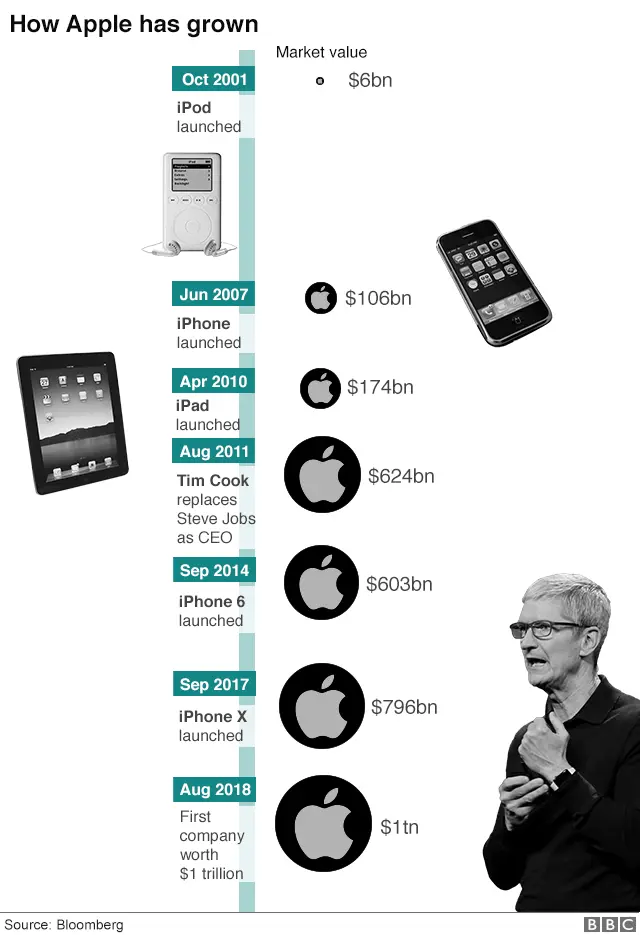
Market capitalization, or “market cap,” is arguably the most cited metric when discussing a company’s worth. It is calculated by multiplying the total number of outstanding shares by the current share price. For Apple, this figure has been nothing short of historic. Apple was the first publicly traded company to reach a market cap of $1 trillion in 2018, then $2 trillion in 2020, and even briefly touched $3 trillion at various points, repeatedly setting new benchmarks for corporate valuation. This figure represents the market’s collective assessment of the company’s value at a given moment. It’s a powerful indicator of investor confidence and Apple’s perceived future earnings potential. The sheer scale of Apple’s market cap not only positions it as a leader but also gives it significant weight in major stock indices, influencing broader market movements and investment strategies for countless funds and portfolios globally.
Revenue and Profitability: The Engine Room
Behind the market cap are the engines of revenue and profitability. Apple consistently reports quarterly revenues that dwarf the GDPs of many nations, often exceeding $100 billion in peak quarters. These revenues are generated across a diverse portfolio, predominantly from its iconic product lines—iPhones, Macs, iPads, and wearables like the Apple Watch and AirPods—but increasingly from its burgeoning Services segment. What sets Apple apart is not just the volume of sales, but its exceptional profitability. The company maintains impressive gross margins, leveraging its premium pricing strategy, efficient supply chain, and immense purchasing power. Net profits regularly soar into the tens of billions of dollars each quarter, fueling its massive cash reserves and enabling significant shareholder returns through dividends and share buybacks. This consistent, robust profitability is a cornerstone of its valuation, demonstrating its ability to translate market dominance into tangible financial gains.
Cash Reserves and Balance Sheet Strength
Apple’s balance sheet is a fortress of financial strength, characterized by staggering amounts of cash and marketable securities. The company frequently holds hundreds of billions of dollars in cash and equivalents, a testament to its cash-generating capabilities. This immense liquidity provides Apple with unparalleled financial flexibility. It can fund ambitious research and development projects, make strategic acquisitions without external financing, weather economic downturns, and consistently return capital to shareholders. These cash reserves are not merely idle funds; they represent optionality and resilience, allowing Apple to innovate, expand, and navigate competitive pressures with remarkable autonomy. A strong balance sheet, coupled with relatively low debt for a company of its size, significantly de-risks the investment, making it attractive to a wide spectrum of investors seeking stability and long-term value.
Beyond the Numbers: Intangible Assets Driving Value
While market cap, revenue, and cash are quantifiable, a significant portion of Apple’s worth is derived from intangible assets that are harder to measure but profoundly impactful. These non-physical elements create a moat around its business, differentiating it from competitors and cementing its financial dominance.
Brand Equity and Customer Loyalty
Apple’s brand is arguably its most potent intangible asset. Valued as one of the most powerful and recognizable brands globally, Apple has cultivated an almost cult-like following. This isn’t just about recognition; it’s about deep emotional connection, perceived quality, and a premium status that allows Apple to command higher prices than competitors for comparable (or even sometimes technically inferior) specifications. This unparalleled brand equity translates directly into customer loyalty, creating an ecosystem lock-in where users are often hesitant to switch to other platforms. The seamless integration across Apple devices (iPhone, Mac, iPad, Watch) and services reinforces this loyalty, generating recurring revenue and ensuring a stable customer base. This fervent loyalty is a significant contributor to its stable cash flows and enduring profitability, directly impacting its long-term valuation.
Innovation and Intellectual Property
Apple’s relentless pursuit of innovation, encapsulated in its vast portfolio of patents and proprietary technologies, is another cornerstone of its value. From its custom-designed silicon (like the A-series and M-series chips) that power its devices, to its intuitive operating systems (iOS, macOS, watchOS), and groundbreaking designs, Apple invests heavily in R&D. This innovation allows it to create differentiated products that set industry standards, attract new customers, and maintain a competitive edge. Its intellectual property provides legal protection for its unique technologies and designs, safeguarding its market position and allowing it to extract premium value from its innovations. The market values Apple not just for what it produces today, but for its proven capacity to innovate and create the next generation of desirable products and services.
Ecosystem and Services Revenue Growth
Historically, Apple’s revenues were heavily reliant on iPhone sales. While the iPhone remains critical, the company has strategically diversified its revenue streams, particularly through its high-margin Services segment. This ecosystem includes the App Store, Apple Music, iCloud, Apple Pay, Apple TV+, Apple Arcade, and various warranty services. The value of this ecosystem is immense: it provides recurring revenue, deepens customer engagement, and creates a powerful network effect. The services segment has consistently demonstrated double-digit growth, often outperforming hardware sales in terms of percentage growth. Its margins are generally higher than hardware, making it a key driver of overall profitability and a significant factor in investor perception of Apple’s future growth prospects. The stickiness of these services enhances the lifetime value of each customer, making Apple’s valuation more resilient and less susceptible to the cyclical nature of hardware upgrades.
What Influences Apple’s Valuation?

Apple’s immense worth is not static; it is a dynamic reflection of numerous internal and external factors. Understanding these influences is crucial for anyone monitoring its financial health and investment potential.
Global Economic Conditions and Consumer Spending
As a purveyor of premium consumer electronics, Apple’s performance is intrinsically linked to global economic conditions and consumer discretionary spending. Economic downturns, inflation, rising interest rates, or geopolitical instability can temper consumer confidence, leading to slower sales of iPhones, Macs, and other devices. Conversely, periods of robust economic growth and increasing disposable income tend to boost Apple’s sales, especially in emerging markets. Macroeconomic headwinds like supply chain disruptions, currency fluctuations, and raw material costs also directly impact Apple’s production capabilities, pricing strategies, and ultimately, its bottom line. The company’s global footprint means it is exposed to diverse economic cycles, requiring agile adaptation to maintain its revenue targets and profitability.
Product Cycles and Innovation Pipeline
Apple’s valuation is heavily influenced by its product release cycles and the perceived strength of its innovation pipeline. Major product launches, particularly new iPhone generations, often precede spikes in sales and investor enthusiasm. The market constantly scrutinizes Apple for “the next big thing.” While new iPhones consistently sell well, the pressure to innovate and introduce entirely new product categories (like the Apple Watch previously, or potentially augmented/virtual reality devices such as Vision Pro) is immense. Any perceived slowdown in innovation or lukewarm reception to new products can lead to investor concern and a dip in valuation. Conversely, groundbreaking new offerings or significant advancements in existing lines can trigger substantial surges in its market cap, reflecting increased optimism about future revenue streams.
Supply Chain Resilience and Geopolitical Factors
Given its massive scale of manufacturing, primarily in Asia, Apple’s supply chain resilience is a critical factor influencing its valuation. Disruptions due to natural disasters, pandemics, labor shortages, or geopolitical tensions (e.g., US-China trade relations) can severely impact production, leading to product shortages, delayed launches, and lost sales. The ability of Apple’s management to diversify its supply chain, negotiate favorable terms with suppliers, and navigate complex international trade policies directly affects its operational efficiency and financial performance. Investor confidence often hinges on Apple’s perceived ability to mitigate these risks and ensure a consistent flow of products to market.
Regulatory Scrutiny and Competitive Landscape
As a dominant player in multiple tech sectors, Apple faces increasing regulatory scrutiny worldwide. Concerns over anti-competitive practices, app store policies, data privacy, and market power could lead to significant fines, forced changes in business models, or even breakups, all of which would negatively impact its valuation. Additionally, the competitive landscape is ever-evolving. While Apple enjoys a strong position, it constantly faces challenges from formidable rivals in smartphones (Samsung, Google), computing (Microsoft, Google), and streaming services (Netflix, Amazon). The market assesses Apple’s ability to maintain its competitive edge, innovate ahead of rivals, and adapt to regulatory pressures as crucial components of its long-term financial health.
Investing in Apple: What it Means for Investors
For investors, Apple (AAPL) represents more than just a stock; it’s a barometer for the tech sector and a cornerstone for many institutional and individual portfolios. Its valuation dynamics offer valuable insights for investment decisions.
Stock Performance and Dividends
AAPL’s stock has delivered extraordinary returns over the past two decades, making it a darling for long-term growth investors. Beyond capital appreciation, Apple is also a significant dividend payer. While its dividend yield is not exceptionally high compared to some traditional “income” stocks, the sheer size of the company means its aggregate dividend payouts are enormous. Moreover, Apple has a history of increasing its dividends, making it attractive to investors seeking a combination of growth and steadily growing income. The company also regularly engages in massive share buyback programs, which reduce the number of outstanding shares and can boost earnings per share, further supporting the stock price.
Long-term Growth Prospects vs. Value Play
For many, Apple still embodies growth, particularly through the expansion of its Services segment into new markets, potential new hardware categories like AR/VR, and continued penetration in developing economies. Its vast cash reserves and strong R&D suggest a capacity for future innovation and market expansion. However, given its massive size, some analysts also view Apple as a “megacap value play.” Its stable cash flows, consistent profitability, strong balance sheet, and market dominance provide a degree of stability often associated with value stocks. Investors must weigh these perspectives, considering whether Apple’s growth trajectory can sustain its premium valuation or if its primary appeal now lies in its robust financial health and shareholder returns.
Diversification and Risk Considerations
While Apple is an undeniably powerful company, no investment is without risk. For individual investors, an over-reliance on a single stock, even one as strong as Apple, can lead to concentration risk. A significant portion of its valuation rests on continued consumer demand for its premium products, which could be sensitive to economic downturns or shifts in consumer preferences. Regulatory headwinds, intense competition, and geopolitical uncertainties also pose potential threats. Therefore, while Apple may be a strong component, it’s crucial to consider it within a diversified portfolio, balancing its strengths with other assets to mitigate potential risks and align with individual financial goals.
Conclusion
The question “how much is Apple worth?” unveils a complex tapestry woven from astronomical financial figures, groundbreaking innovation, an unyielding brand, and strategic financial management. Apple’s trillion-dollar-plus valuation is not merely a number on a screen; it represents the collective market assessment of its current financial performance, its formidable intangible assets, and its projected future potential. It is a testament to its leadership in technology, its unparalleled ability to generate and sustain profit, and its deep connection with a global customer base.
From its colossal market capitalization and staggering revenues to its impenetrable balance sheet and the priceless value of its brand and ecosystem, Apple stands as a monumental force in the financial world. While constantly subject to the whims of global economies, regulatory bodies, and competitive pressures, its enduring strength makes it a focal point for investors and a symbol of what modern corporate power can achieve. Understanding Apple’s worth is therefore not just about a single company, but about comprehending the intricate dynamics that shape global finance in the 21st century.
aViewFromTheCave is a participant in the Amazon Services LLC Associates Program, an affiliate advertising program designed to provide a means for sites to earn advertising fees by advertising and linking to Amazon.com. Amazon, the Amazon logo, AmazonSupply, and the AmazonSupply logo are trademarks of Amazon.com, Inc. or its affiliates. As an Amazon Associate we earn affiliate commissions from qualifying purchases.