
Navigating the landscape of car loans can often feel like deciphering a complex financial puzzle, with one of the most crucial pieces being the Annual Percentage Rate, or APR. Far more than just an interest rate, your car loan APR is a pivotal factor that determines the true cost of borrowing and significantly impacts your monthly payments and overall financial well-being. Understanding what constitutes a “typical” APR is not merely about knowing a number; it’s about recognizing the myriad variables that influence it and empowering yourself to secure the most favorable terms possible. This article delves into the intricacies of car loan APRs, dissecting the components, exploring the influencing factors, providing insights into typical ranges, and equipping you with strategies to drive away with the best deal.
Understanding APR: Beyond the Interest Rate
When you apply for a car loan, you’ll encounter two key terms: the interest rate and the Annual Percentage Rate (APR). While often used interchangeably in casual conversation, these two figures represent distinct aspects of your loan’s cost, with the APR offering a more comprehensive picture.
Defining APR and its Components
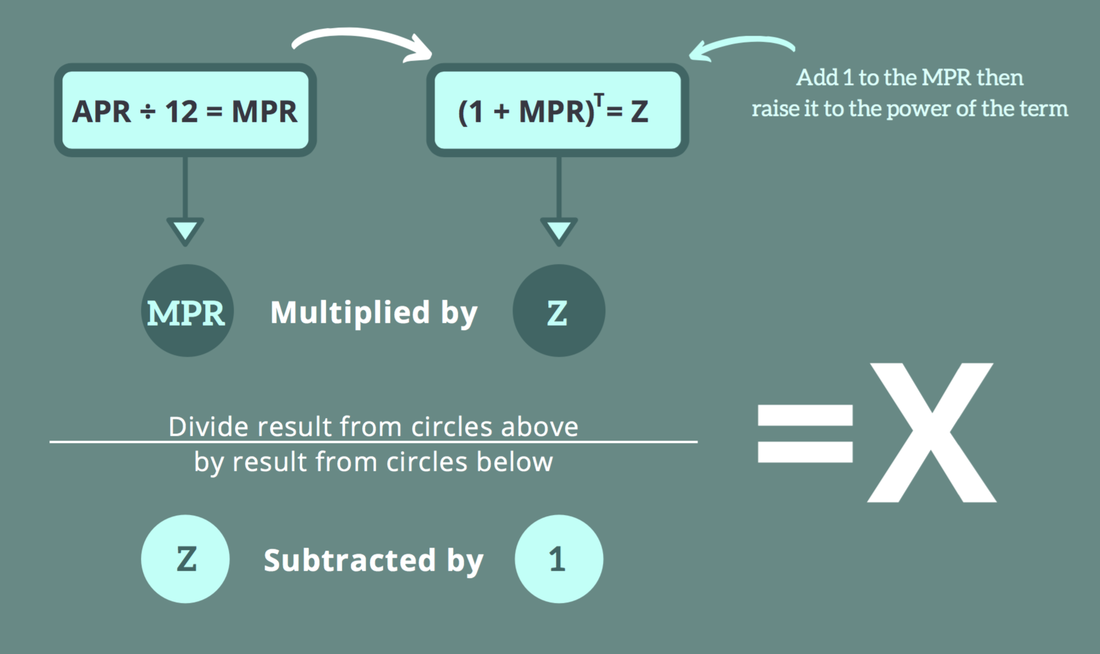
The interest rate is simply the percentage charged by the lender for borrowing the principal amount. It’s the core cost of the money itself. However, borrowing money often involves more than just the interest. This is where the Annual Percentage Rate (APR) comes into play. The APR is a broader measure of the total cost of borrowing, expressed as a yearly percentage. It encompasses not only the interest rate but also other fees and charges associated with the loan, amortized over the loan’s term. These additional costs can include origination fees, processing fees, documentation fees, and sometimes even credit report fees. By packaging these into a single percentage, the APR provides a standardized way to compare the true cost of different loans, as it accounts for all direct costs you pay to the lender over the course of a year. Without the APR, comparing offers from various lenders would be like comparing apples to oranges, as one lender might quote a lower interest rate but pile on higher fees.
Why APR Matters for Your Budget
The APR is arguably the most critical number to focus on when evaluating car loan offers because it directly dictates the total amount you will repay over the life of the loan. Even a seemingly small difference in APR can translate into hundreds, or even thousands, of dollars saved or spent over a typical 5-7 year car loan term.
Consider this: a $30,000 car loan over 60 months.
- At a 5% APR, your monthly payment would be approximately $566, and you’d pay roughly $3,960 in total interest.
- At a 8% APR, your monthly payment would jump to approximately $608, and your total interest paid would be around $6,480.
That 3 percentage point difference in APR adds over $40 to your monthly payment and an astounding $2,520 to the total cost of your car over five years. For most individuals, especially when budgeting for a significant purchase like a car, every dollar counts. A higher APR means a larger portion of your monthly payment goes towards covering the cost of borrowing rather than reducing the principal. This leaves less room in your budget for other essential expenses, savings, or even unforeseen car maintenance. Therefore, diligently seeking the lowest possible APR is a fundamental strategy for financially savvy car buyers.
Factors Influencing Your Car Loan APR
The question “what is typical APR on car loans?” doesn’t have a single, universal answer because countless variables conspire to shape the rate you’re ultimately offered. These factors are primarily designed to assess the lender’s risk in extending credit to you. Understanding them is key to influencing your own typical rate.
Credit Score: The Primary Driver
Your credit score is, without a doubt, the single most significant determinant of your car loan APR. Lenders use this three-digit number, primarily FICO scores, as a quick snapshot of your creditworthiness – your history of managing debt responsibly. A higher score signals lower risk to lenders, translating into more favorable interest rates.
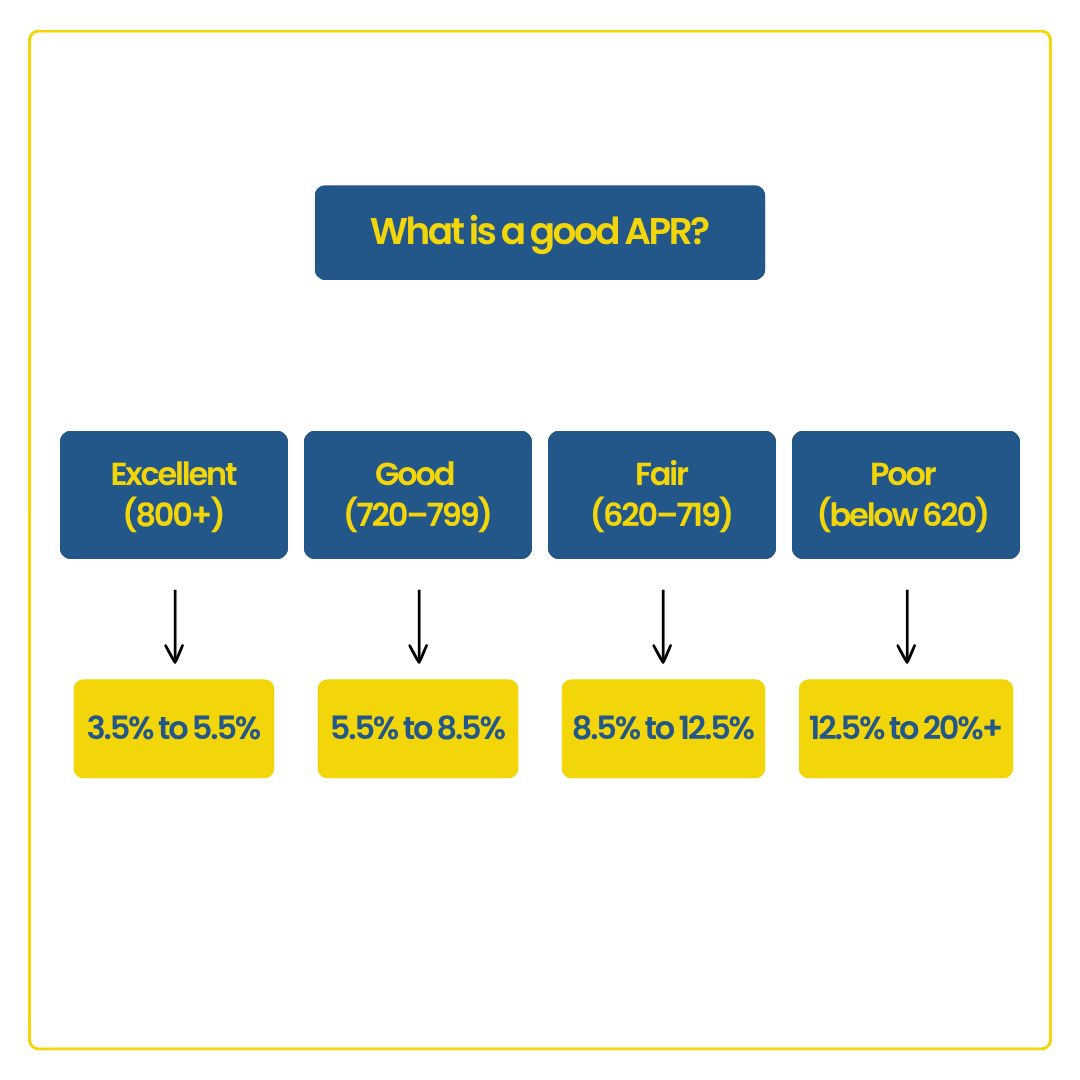
- Excellent Credit (780-850): Borrowers in this tier typically qualify for the lowest available rates, often ranging from 3% to 5% for new cars, and slightly higher for used.
- Good Credit (670-739): This is where most consumers fall. Rates for good credit typically range from 6% to 9% for new cars, and 7% to 11% for used.
- Fair Credit (580-669): Individuals with fair credit might face rates in the 10% to 15% range or higher, reflecting a moderate risk to lenders.
- Poor Credit (300-579): Borrowers with poor credit are considered high-risk and will often be quoted significantly higher APRs, potentially 15% to 25% or more, if they can secure a loan at all.
Loan Term Length
The length of your loan term also plays a crucial role. Shorter loan terms (e.g., 36 or 48 months) generally come with lower APRs because the lender’s money is at risk for a shorter period. However, shorter terms result in higher monthly payments. Conversely, longer loan terms (e.g., 72 or 84 months) often have higher APRs, despite their allure of lower monthly payments, because the prolonged risk period and increased potential for depreciation mean more uncertainty for the lender.
New vs. Used Car Loans
Lenders typically view new cars as less risky than used cars. New cars depreciate slower initially, have predictable maintenance schedules, and come with manufacturer warranties. As a result, new car loans generally have slightly lower APRs compared to used car loans. Used cars can be more unpredictable in terms of reliability and resale value, leading lenders to charge a higher premium (APR) to offset that increased risk.
Down Payment Amount
Making a substantial down payment reduces the amount you need to borrow, which, in turn, lowers the lender’s risk exposure. A larger down payment signals financial stability and reduces the loan-to-value (LTV) ratio, often resulting in a lower APR offer. Conversely, no down payment or a small down payment can lead to a higher APR.
Economic Conditions (Federal Reserve Rates)
Broader economic conditions, particularly interest rates set by central banks like the Federal Reserve, exert a significant influence. When the Fed raises its benchmark rates, it becomes more expensive for banks to borrow money, a cost that is then passed on to consumers in the form of higher APRs on loans, including car loans. During periods of economic growth or efforts to curb inflation, rates tend to be higher, while recessions or efforts to stimulate the economy might see lower rates.
Lender Type
The type of lender you choose can also affect your APR. Credit unions are often known for offering some of the most competitive rates due to their member-focused structure. Banks provide a wide range of rates, varying by institution and customer relationship. Online lenders are increasingly popular, offering competitive rates and streamlined application processes. Dealership financing can be convenient but may not always offer the best rates unless they have special promotional offers, as they often mark up the rates they get from third-party lenders. Shopping around among these different types is essential.
What Constitutes a “Typical” APR?
The concept of a “typical” APR on car loans is dynamic and multi-faceted, heavily influenced by the prevailing economic climate, the specific lender, and, most importantly, the individual borrower’s financial profile. While general ranges can be provided, it’s crucial to remember that what’s typical for one person might be entirely atypical for another.
Current Market Averages (New Cars)
In recent years, with economic shifts and interest rate adjustments, the landscape for car loan APRs has seen fluctuations. As of late 2023 and early 2024, for borrowers with excellent credit (780+), typical new car loan APRs have generally ranged from 5% to 7%. For those with good credit (670-739), the rates tend to fall between 7% and 10%. These figures can shift rapidly, however, based on the Federal Reserve’s monetary policy and the overall stability of the financial markets. It’s always advisable to check current national averages from reputable financial publications or data aggregators before seeking a loan.

Current Market Averages (Used Cars)
Used car loan APRs are almost consistently higher than those for new cars, reflecting the increased risk for lenders due to factors like potential depreciation, unknown maintenance history, and older technology. For borrowers with excellent credit, typical used car loan APRs might range from 7% to 9%. For those with good credit, rates typically fall within the 9% to 12% range. Borrowers with fair or poor credit will, unfortunately, see significantly higher rates, often well into the double digits. The age and mileage of the used car can also impact the specific rate, with older, higher-mileage vehicles sometimes attracting higher APRs.
The Impact of Credit Tiers on “Typical”
It cannot be stressed enough that “typical” is a highly personalized metric. For someone with a FICO score of 800, a 6% APR on a new car might be considered “typical” and even slightly high if they’ve shopped around. However, for an individual with a credit score of 620, securing a 12% APR on a used car might be considered “typical” for their credit tier, representing a successful outcome given their credit history. The concept of “typical” is thus directly proportional to your credit health. If your credit score is below 670, you should anticipate rates higher than the widely publicized averages, which often cater to prime borrowers.
Regional and Lender Variations
While national averages provide a benchmark, actual APRs can vary depending on your geographic location and the specific lender. Some states may have different lending laws or a more competitive lending environment, leading to slight variations. Furthermore, different lenders — from large national banks to local credit unions and online platforms — have varying risk appetites, overheads, and target customer bases, which influence their offered rates. A credit union, for instance, might be able to offer a lower APR to its members than a large commercial bank might offer to a non-customer. This variability underscores the critical importance of actively seeking quotes from multiple sources.
Strategies to Secure a Lower Car Loan APR
While many factors influencing your car loan APR are beyond immediate control, several proactive strategies can significantly improve your chances of securing a more favorable rate, potentially saving you thousands over the life of the loan.
Improve Your Credit Score
Since your credit score is the most significant factor, focusing on improving it is paramount.
- Pay Bills On Time: Payment history is the largest component of your credit score. Ensure all credit card, loan, and utility bills are paid before their due dates.
- Reduce Debt: Lowering your credit utilization (the amount of credit you’re using compared to your total available credit) can quickly boost your score. Pay down credit card balances.
- Check Your Credit Report: Regularly review your credit reports from Equifax, Experian, and TransUnion for errors. Dispute any inaccuracies, as they can unfairly depress your score.
- Limit New Credit Applications: Avoid applying for multiple new credit cards or loans in the months leading up to a car loan application, as each application can temporarily ding your score.
Shop Around for Lenders
Never take the first loan offer you receive, especially from a car dealership. Actively seek out pre-approvals from at least three to five different lenders before you even step foot on a car lot.
- Banks: Your current bank may offer competitive rates or special deals for existing customers.
- Credit Unions: Often known for competitive rates and personalized service due to their member-ownership structure.
- Online Lenders: Companies like LightStream, Capital One Auto Finance, and MyAutoLoan specialize in car loans and offer convenient online applications and competitive rates.
By having multiple pre-approvals in hand, you establish a baseline and gain leverage to negotiate the best possible APR, even with the dealership’s finance department. Multiple inquiries for the same type of loan within a short window (typically 14-45 days) are often treated as a single inquiry by credit bureaus, minimizing the impact on your score.
Make a Larger Down Payment
Putting down a substantial down payment immediately reduces the principal loan amount, which lowers the lender’s risk. A lower loan-to-value (LTV) ratio makes you a more attractive borrower, often qualifying you for a lower APR. Aim for at least 10-20% of the car’s purchase price, if possible. Even a slightly larger down payment can make a noticeable difference in your APR and overall loan cost.
Opt for a Shorter Loan Term (If Affordable)
While a longer loan term offers lower monthly payments, it almost always comes with a higher APR and significantly more interest paid over time. If your budget allows, choose the shortest loan term you can comfortably afford. A 36-month or 48-month loan, for instance, typically carries a lower APR than a 72-month or 84-month loan. This strategy not only saves you money on interest but also helps you pay off the car faster, reducing the risk of being “upside down” (owing more than the car is worth).
Consider Refinancing
If your credit score has improved significantly since you first took out your car loan, or if prevailing interest rates have dropped substantially, refinancing your car loan could be an excellent strategy to lower your APR. Refinancing involves taking out a new loan to pay off your existing car loan, ideally at a lower interest rate and potentially more favorable terms. This can reduce your monthly payments or the total amount of interest you pay over the remainder of the loan term. It’s often a smart move if you initially had fair credit and now have good or excellent credit.
Beyond the APR: Other Considerations
While securing the lowest possible APR is a primary goal, a truly astute financial decision involves looking beyond just that single percentage. A car loan is a significant commitment, and understanding the complete financial picture is crucial for long-term satisfaction and fiscal health.
Total Cost of the Loan
Focusing solely on the monthly payment or even just the APR can be misleading. Always calculate the total cost of the loan over its entire term. This means multiplying your monthly payment by the number of months in the loan to get the total amount you’ll repay, including both principal and interest. Sometimes, a slightly higher monthly payment with a shorter term and lower APR can result in a significantly lower total cost compared to a lower monthly payment stretched over a longer term with a higher APR. Many online loan calculators can help you visualize these differences. Don’t be swayed by low monthly payments if they mean paying thousands more in the long run.
Loan Terms and Conditions
Beyond the headline APR, thoroughly read and understand all the terms and conditions of your loan agreement.
- Prepayment Penalties: Check if there are any fees for paying off your loan early. Most car loans don’t have them, but it’s important to confirm, especially if you plan to make extra payments or refinance.
- Late Payment Fees: Understand the grace period and associated fees for missed or late payments.
- Required Insurance: Lenders will require full coverage insurance on a financed vehicle. Factor this into your budget.
- Additional Fees: Scrutinize the fine print for any hidden administrative fees, document fees, or other charges that might not be included in the APR but still add to your out-of-pocket expenses.
Budgeting for Car Ownership
A car loan is just one component of the overall cost of car ownership. Before committing to a loan, ensure you’ve budgeted for all associated expenses:
- Car Insurance: This is often a significant recurring cost, varying widely based on your vehicle, driving record, age, and location.
- Maintenance and Repairs: All cars require routine maintenance (oil changes, tire rotations) and inevitably, repairs. Set aside a fund for these.
- Fuel Costs: Consider your daily commute and the car’s fuel efficiency.
- Registration and Licensing Fees: Annual costs imposed by your state.
- Depreciation: While not an out-of-pocket cost, understanding how quickly your car loses value is important for future resale or trade-in.
A truly “affordable” car is one where the sum of your loan payment, insurance, fuel, and maintenance fits comfortably within your monthly budget, leaving room for other financial goals.
Conclusion
Understanding what constitutes a “typical” APR on car loans is a cornerstone of responsible vehicle financing. It’s not a fixed number but rather a spectrum influenced by your credit score, the loan term, the type of car, economic conditions, and the specific lender you choose. While current market averages can provide a useful benchmark (e.g., 5-7% for new cars with excellent credit, 7-9% for used cars), what’s “typical” for you will ultimately depend on your individual financial profile.
By taking proactive steps to improve your credit, diligently shopping around for lenders, making a solid down payment, and choosing an appropriate loan term, you empower yourself to secure the most favorable APR. Remember to always look beyond just the monthly payment and consider the total cost of the loan and all associated car ownership expenses. Armed with this knowledge, you can confidently navigate the car loan market, making an informed decision that aligns with your financial goals and helps you drive away with not just a new car, but also peace of mind.
aViewFromTheCave is a participant in the Amazon Services LLC Associates Program, an affiliate advertising program designed to provide a means for sites to earn advertising fees by advertising and linking to Amazon.com. Amazon, the Amazon logo, AmazonSupply, and the AmazonSupply logo are trademarks of Amazon.com, Inc. or its affiliates. As an Amazon Associate we earn affiliate commissions from qualifying purchases.