
The name “Tesla” today often conjures images of sleek electric vehicles, innovative battery technology, and the bold entrepreneurial spirit of Elon Musk. However, long before the multi-billion dollar corporation, there was a man whose genius ignited the very foundations of modern electrical engineering and foresaw a future of wireless communication and automation that we are only now fully realizing. That man was Nikola Tesla, and understanding the trajectory of his life, culminating in his death, is crucial to appreciating the profound technological legacy he left behind.
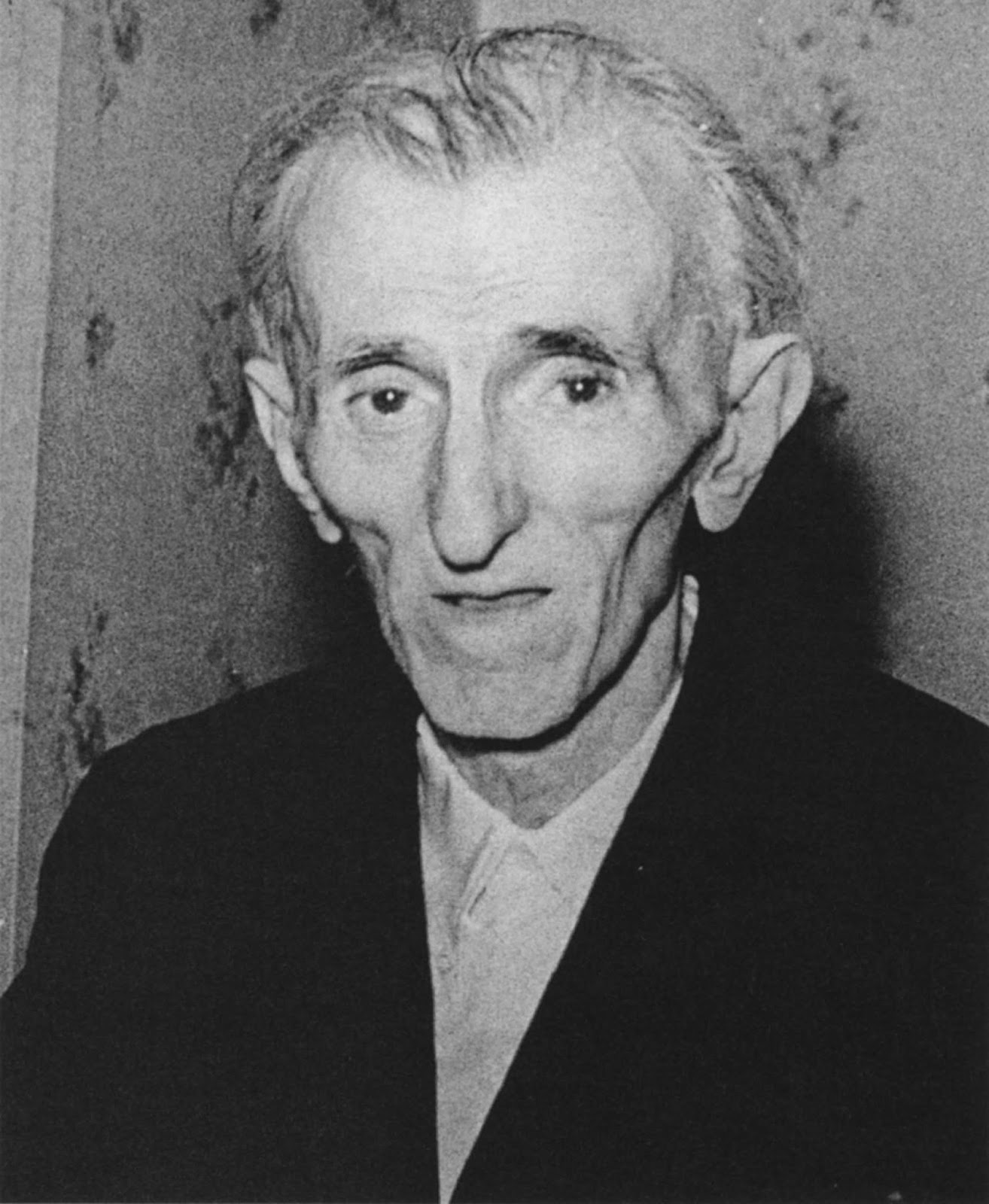
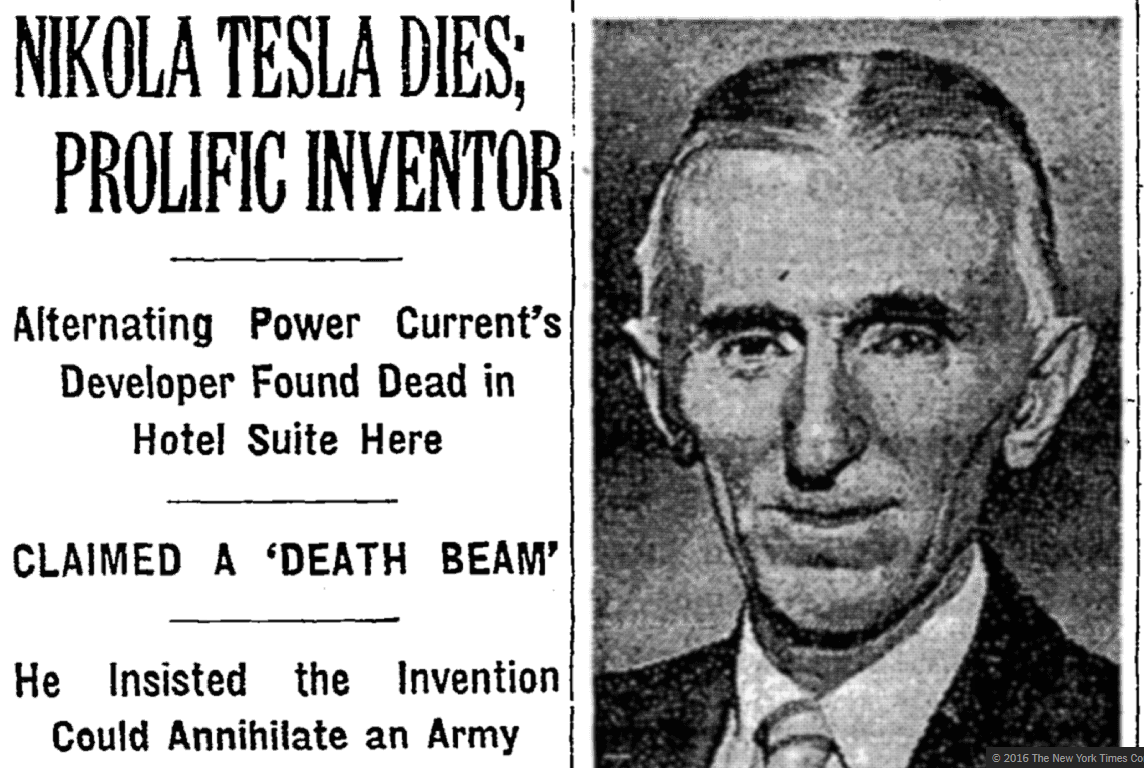
Nikola Tesla passed away on January 7, 1943, at the age of 86, in his room at the Hotel New Yorker in New York City. His death marked the end of an era for one of history’s most prolific and often misunderstood inventors. But to simply state the date of his passing is to miss the vibrant, often tumultuous, and endlessly innovative journey that defined his existence and indelibly shaped the technological landscape of the 20th and 21st centuries. His story is not merely one of historical fact but a testament to the enduring power of vision in the realm of technology.
A Spark of Genius: Nikola Tesla’s Early Life and Vision
Tesla’s journey from a small village in the Austro-Hungarian Empire to the bustling scientific epicenters of Europe and America is a saga of intellectual curiosity meeting unparalleled ambition. His early life was characterized by an insatiable hunger for knowledge and an uncanny ability to visualize complex machinery in his mind, a trait that would become his hallmark.
Serbian Roots and European Education
Born on July 10, 1856, in Smiljan, present-day Croatia, to Serbian parents, Nikola Tesla displayed an extraordinary aptitude for mathematics and physics from a young age. His father, an Orthodox priest, initially wished for Nikola to follow in his footsteps, but his mother, Djuka Mandic, herself an ingenious inventor of household appliances, recognized and encouraged his scientific inclinations. Tesla’s early schooling revealed a photographic memory and an ability to calculate advanced mathematics mentally, an asset that would serve him well in his later engineering feats.
His formal education began at the Realschule in Karlovac, followed by studies at the Polytechnic Institute in Graz, Austria, and the University of Prague. It was during these formative years that Tesla’s interest in electricity blossomed. He was captivated by the demonstrations of direct current (DC) dynamos and motors but also began to harbor doubts about the efficiency and practicality of DC systems for long-distance power transmission. These initial ponderings would lay the groundwork for his revolutionary insights into alternating current.
The Dawn of Electrical Innovation: Early Patents and Concepts
After his university studies, Tesla worked in Budapest and Paris, gaining practical experience in the nascent electrical industry. His pivotal moment came in 1882 in Budapest, where, while walking in a park with a friend, the concept of the rotating magnetic field came to him in a flash of inspiration. This principle, which he sketched in the sand, was the foundation for his alternating current (AC) motor – a device that would eventually supersede Edison’s DC motor in virtually every practical application.
Tesla’s move to the United States in 1884, initially to work for Thomas Edison, marked a new chapter. Though his collaboration with Edison was short-lived due to differing philosophies and a dispute over payment, it propelled him into the American technological arena. By 1887, Tesla had established his own laboratory and secured numerous patents for his AC motor and power transmission system. These early concepts, born from profound theoretical understanding and relentless experimentation, were not merely incremental improvements but paradigm shifts that promised to electrify the world more efficiently and economically than ever before. He wasn’t just inventing gadgets; he was architecting the very infrastructure of future societies.
The Alternating Current Revolution and Beyond
Tesla’s name is inextricably linked with the “War of the Currents,” a dramatic technological and commercial struggle that pitted his alternating current system against Thomas Edison’s direct current. Beyond this famous conflict, however, lay a vast landscape of innovation where Tesla pioneered technologies that were decades, even a century, ahead of their time.
The War of the Currents: DC vs. AC
The late 19th century saw a fierce battle over which electrical distribution system would power the future. Thomas Edison championed direct current (DC), which, while simple to generate and useful for local distribution, suffered from significant voltage drops over distance, requiring power stations every few miles. Tesla, with the backing of industrialist George Westinghouse, advocated for alternating current (AC), a system capable of transmitting electricity efficiently over vast distances using transformers to step up and step down voltage.
The “War of the Currents” was a contentious period, characterized by public demonstrations (some unfortunately staged to demonize AC as dangerous by Edison’s allies) and intense lobbying. Yet, the inherent technological superiority of AC ultimately prevailed. Tesla’s polyphase AC system and induction motor provided a practical, robust, and cost-effective means of delivering electricity to homes and industries worldwide. The success of the Niagara Falls hydroelectric project, which utilized Tesla’s AC generators to power Buffalo, New York, was a monumental triumph that solidified AC’s dominance and literally electrified the industrial age. This foundational technology remains the backbone of our global power grids today, a direct and undeniable legacy of Tesla’s genius.
Radio, Remote Control, and Wireless Power: Technologies Ahead of Their Time
While the AC system was perhaps his most impactful contribution, Tesla’s inventiveness spanned far wider. He conceptualized and demonstrated technologies that would seem futuristic even today. In 1898, at Madison Square Garden, he famously demonstrated a radio-controlled boat, navigating it remotely in a pool. This wasn’t merely a toy; it was the birth of remote control technology, a precursor to everything from garage door openers and TV remotes to drones and advanced robotics.
Even more audacious were his experiments with wireless power transmission. At his Colorado Springs laboratory around the turn of the century, Tesla conducted groundbreaking research on transmitting electrical energy through the air without wires. He aimed to create a global wireless power system, envisioning a world where electricity could be accessed anywhere, much like radio waves. Although his ambitious Wardenclyffe Tower project, intended to be a global wireless power and communication station, ultimately failed due to a lack of funding, his theoretical work and preliminary experiments laid conceptual groundwork for future wireless charging technologies and even some aspects of modern telecommunications. His vision extended beyond simple power; he believed in the potential for global information exchange, essentially foreshadowing the internet.
Foreshadowing Modern Tech: From Robotics to Renewable Energy
Tesla’s insights weren’t limited to electricity. He imagined and described devices that resemble modern smartphones, satellite communication systems, and even radar. His work on “teleautomatics”—a term he coined for remote control—was a direct ancestor of modern robotics and automation. He envisioned a future where machines would perform tasks, freeing humanity for more intellectual pursuits.
Furthermore, Tesla was a staunch advocate for renewable energy sources, long before the term became commonplace. He recognized the finite nature of fossil fuels and promoted harnessing power from natural phenomena like waterfalls (as at Niagara) and even the Earth’s natural resonant frequencies. His holistic approach to technology, considering its societal and environmental implications, makes him a prophetic figure in the ongoing discourse around sustainable technology and smart grids. He wasn’t just an inventor; he was a futurist who understood the systemic impact of technological change.
The Later Years: Solitude, Vision, and Unfulfilled Dreams
Despite his monumental contributions, Tesla’s later life was marked by increasing solitude, financial struggles, and a gradual retreat from mainstream scientific circles. His visions grew more expansive, sometimes bordering on the fantastical for his contemporaries, leading to a perception that he was eccentric, even mad.
Challenges, Funding, and the Price of Innovation
Tesla’s greatest challenge was often securing consistent funding for his increasingly ambitious projects. Unlike Edison, who was a shrewd businessman, Tesla was primarily an inventor and a visionary. He struggled with the commercialization aspect of his inventions, often being exploited or losing control of his patents. His grand dreams, such as the Wardenclyffe Tower, required enormous capital, and investors often shied away when quick profits weren’t evident or when his concepts seemed too far-fetched for immediate practical application.
The lack of consistent financial backing meant many of his later, potentially revolutionary, ideas remained undeveloped or theoretical. He envisioned a “World System” of wireless communication and power, but the financial realities of the early 20th century were not aligned with such a philanthropic and infrastructure-heavy endeavor. His brilliance was undeniable, but his business acumen, or lack thereof, proved to be a significant impediment to seeing all his visions come to fruition.
The Secluded Inventor: Continuing Research in Isolation
As he aged, Tesla became more reclusive, preferring the company of pigeons to people. He continued to conduct experiments and fill notebooks with elaborate designs and theories, often working into the early hours. He lived for decades in various New York hotels, moving from one to another when bills accumulated. His daily routine became highly regimented, driven by obsessive-compulsive tendencies, yet his mind remained acutely sharp, perpetually engaged with scientific problems and future possibilities.

In this self-imposed isolation, Tesla explored concepts like inter-planetary communication, anti-gravity, and even a “teleforce” weapon (often sensationalized as a “death ray”), which he claimed could end all wars. While some of these ideas stretched the boundaries of known physics, they underscored his unwavering belief in the potential of technology to reshape human civilization. His isolation, while perhaps detrimental to his personal well-being, allowed for unbridled intellectual exploration, free from the commercial pressures that often dictate research agendas.
Unpatented Visions: Concepts Left Undiscovered
A significant tragedy of Tesla’s later life is that many of his most advanced ideas either remained in his head or were documented in private notes and never fully developed or patented. The sheer volume and complexity of his unpatented work hint at a treasure trove of technological insights that might have accelerated progress in various fields.
He often worked without fully disclosing his methods, partly due to paranoia about industrial espionage and partly due to his unique mental processes. After his death, many of his papers and belongings were seized by the U.S. government, some remaining classified for decades. The full extent of his final visions and their potential impact on technology may never be entirely known, leaving a tantalizing glimpse into what could have been.
The Final Chapter: Tesla’s Passing and Posthumous Recognition
Nikola Tesla’s death, though unheralded by the public at the time, slowly gave way to a burgeoning recognition of his unparalleled contributions to technology. The circumstances of his passing, coupled with the eventual unveiling of his immense legacy, paint a picture of an inventor who transcended his era.
The Date and Circumstances of His Death
As mentioned earlier, Nikola Tesla died on January 7, 1943. He was found two days later by a maid, having requested that a “Do Not Disturb” sign be placed on his door. The official cause of death was coronary thrombosis. He had been living alone for years, often surviving on little more than milk and biscuits, and was known for his eccentricities, including communicating with pigeons he fed in Central Park.
Despite his solitary end, Tesla was not entirely forgotten at the time of his death. Tributes poured in from dignitaries and scientists, including Nobel laureates, who recognized the significance of his work. New York City Mayor Fiorello LaGuardia delivered a eulogy, and a state funeral was held in his honor. His passing coincided with World War II, a period when the importance of technology and innovation was acutely felt, further underscoring the relevance of his life’s work.
The Slow Burn of Recognition: From Obscurity to Icon
For a time after his death, Tesla’s name faded somewhat from public consciousness, eclipsed by figures like Edison. However, as the 20th century progressed, and particularly in recent decades, there has been a significant resurgence of interest in his life and work. Historians of technology, engineers, and popular culture have increasingly recognized him as a true giant of innovation.
This posthumous recognition has been fueled by several factors: the declassification of some of his papers, a deeper historical analysis of the “War of the Currents” that highlighted his pivotal role, and a growing appreciation for his pioneering work in areas like radio and remote control. Modern technology has caught up to many of his visions, making his foresight all the more striking. From being an obscure figure known primarily to electrical engineers, Tesla has transformed into a cultural icon, symbolizing unconventional genius and relentless pursuit of the future.
His Enduring Digital and Electrical Footprint
Tesla’s influence is pervasive, even if often unseen. Every time we plug in an appliance, turn on a light, or use any device powered by the electrical grid, we are interacting with his fundamental designs. His name lives on not just in the corporate entity Tesla, Inc., but also in the unit of magnetic flux density, the “tesla” (T), a testament to his foundational contributions to physics and electromagnetism.
Beyond the AC motor, his conceptual work on wireless communication is echoed in everything from Wi-Fi and Bluetooth to satellite navigation systems. His pioneering ideas on robotics and automation find contemporary expression in artificial intelligence and autonomous systems. Tesla’s footprint is not just historical; it is an active and dynamic force shaping the digital and electrical world we inhabit every day.
Tesla’s Technological Echo: Impact on 21st-Century Innovation
Nikola Tesla’s death in 1943 did not mark the end of his influence; rather, it ushered in a period of slow but sure recognition of his lasting impact on global technology. Today, his ideas resonate more powerfully than ever, serving as blueprints and inspirations for many of the cutting-edge innovations that define the 21st century.
Powering Our World: The Indispensable AC System
The most tangible and widespread aspect of Tesla’s legacy is the alternating current (AC) electrical system. More than a century after the “War of the Currents,” AC remains the dominant method for power generation, transmission, and distribution worldwide. From massive hydroelectric dams to suburban power lines, the principles of his polyphase AC system ensure that homes, businesses, and industries have access to the electricity needed to run everything from data centers to smart homes.
Without Tesla’s AC motor and transmission innovations, industrialization would have proceeded at a much slower pace, limited by the inefficiencies of DC. His work made possible the vast, interconnected power grids that fuel global economies, directly enabling the proliferation of electronic devices and advanced manufacturing techniques that are cornerstones of modern technology.
The Wireless Future: From Wi-Fi to Electric Vehicles
Tesla’s groundbreaking work on wireless communication and power transmission has found astonishing parallels in contemporary technology. His vision of a global information system, communicating without wires, is essentially a prophecy of the internet and wireless communication technologies like Wi-Fi, Bluetooth, and cellular networks. Every time a smartphone connects to a network or a smart device communicates with a hub, it taps into a lineage that can be traced back to Tesla’s early experiments and theories.
Furthermore, the very concept of electric vehicles, particularly their reliance on efficient electric motors and advanced battery management, owes a conceptual debt to Tesla. While he didn’t invent the EV, his work on AC motors laid the groundwork for the powerful and efficient drivetrains that propel modern electric cars. His earlier thoughts on harnessing free energy and global power distribution also subtly influence the ongoing research into wireless charging for EVs and renewable energy integration into smart grids.
AI and Automation: Tesla’s Prescient Vision
Tesla was a pioneer in what he termed “teleautomatics,” essentially the birth of remote control and the conceptual precursor to robotics and artificial intelligence. His radio-controlled boat demonstration in 1898 was not just a marvel; it was a profound statement about the future of automation. He envisioned machines performing complex tasks, guided by remote human control or even by their own “intelligence.”
Today’s advancements in robotics, drones, and especially artificial intelligence, echo Tesla’s early contemplations. The ability of machines to sense, process information, and act autonomously, whether in factories, self-driving cars, or intelligent personal assistants, springs from the fundamental idea that technology can extend human capabilities and intelligence beyond direct physical interaction. Tesla’s foresight into the potential of automation continues to inspire engineers and scientists pushing the boundaries of AI.
A Legacy of Inspiration for Future Innovators
Ultimately, Nikola Tesla’s life and death serve as a potent source of inspiration for future generations of innovators. His unyielding belief in the power of imagination, his relentless pursuit of scientific truth, and his unwavering conviction that technology could uplift humanity continue to resonate. He reminds us that true innovation often requires looking beyond the immediate, challenging established norms, and daring to dream on a grand scale.
His story is a powerful lesson in the importance of fundamental research, the struggle between pure scientific pursuit and commercial viability, and the long arc of recognition for truly transformative ideas. Tesla died in relative obscurity, but his technological spirit lives on, shaping the present and guiding the future, a testament to the enduring power of a singular mind to electrify the world.
aViewFromTheCave is a participant in the Amazon Services LLC Associates Program, an affiliate advertising program designed to provide a means for sites to earn advertising fees by advertising and linking to Amazon.com. Amazon, the Amazon logo, AmazonSupply, and the AmazonSupply logo are trademarks of Amazon.com, Inc. or its affiliates. As an Amazon Associate we earn affiliate commissions from qualifying purchases.