
Navigating the labyrinthine world of taxation can often feel like a daunting challenge, but for the financially astute, it presents a significant opportunity. Far from advocating for tax evasion, which is both illegal and unethical, understanding how to legally lower your tax burden is a cornerstone of sound personal and business finance. It’s about smart planning, diligent record-keeping, and strategic decision-making that aligns with current tax laws and your financial goals. By optimizing your tax position, you can retain more of your hard-earned money, accelerate your savings, and build wealth more efficiently. This comprehensive guide will delve into actionable strategies and insights to help individuals and businesses effectively reduce their tax liabilities, ensuring your financial health is robust and your future secure.
Foundational Principles of Smart Tax Planning
Effective tax planning isn’t a once-a-year event; it’s an ongoing process that requires vigilance and understanding. Before diving into specific deductions and credits, it’s crucial to establish a strong foundation of knowledge and practices.
Understand Your Tax Bracket and Obligations
The U.S. tax system operates on a progressive scale, meaning different portions of your income are taxed at different marginal rates. Understanding your current tax bracket is paramount, as it dictates the tax rate applied to your last dollar of income earned. Beyond federal income tax, you must also account for state income taxes (if applicable), local taxes, capital gains taxes, and self-employment taxes. Familiarity with these various obligations allows you to anticipate your tax bill and plan accordingly, identifying opportunities to shift income or defer taxes to lower brackets in future years. Knowing the difference between your marginal tax rate (the rate on your last dollar earned) and your effective tax rate (the total tax paid divided by total income) provides a clearer picture of your overall tax burden.
Keep Meticulous Records
The bedrock of any successful tax-reduction strategy is impeccable record-keeping. Without proper documentation, even the most legitimate deductions and credits can be challenged or denied. This means retaining receipts for business expenses, charitable contributions, medical costs, and any other expenditures that could potentially be tax-deductible. Organize your bank statements, investment account statements, pay stubs, and prior-year tax returns. Digital archiving solutions, cloud storage, or even simple, well-labeled folders can make tax season significantly less stressful and help you substantiate your claims if audited. Accurate records also empower you to make informed financial decisions throughout the year, anticipating potential tax savings or liabilities.
Stay Informed on Tax Law Changes
Tax laws are not static; they are subject to frequent changes, often influenced by legislative action. What was deductible last year might not be this year, and new credits or incentives could emerge. Staying informed through reputable financial news sources, tax publications, or advisories from your tax professional is vital. Major legislative changes, such as those related to the Child Tax Credit, retirement plan contributions, or business expensing rules, can significantly impact your tax planning strategies. Proactive monitoring allows you to adapt your financial behavior to new regulations, ensuring you always leverage the most current benefits available and avoid costly missteps.
Leveraging Deductions and Credits for Individuals
For most individuals, the primary avenues for lowering taxes revolve around maximizing available deductions and credits. While both reduce your tax liability, they do so in fundamentally different ways.
Maximize Standard vs. Itemized Deductions
A deduction reduces your taxable income, meaning you pay tax on a smaller portion of your earnings. You generally have a choice between taking the standard deduction (a fixed amount set by the IRS) or itemizing your deductions. Itemizing is beneficial when your qualifying expenses exceed the standard deduction amount. Common itemized deductions include:
- Mortgage Interest: Interest paid on your home mortgage (up to certain limits).
- State and Local Taxes (SALT): A combined deduction for property taxes and either state/local income taxes or sales taxes, capped at $10,000 per household.
- Medical and Dental Expenses: Unreimbursed expenses exceeding a certain percentage of your Adjusted Gross Income (AGI).
- Charitable Contributions: Donations to qualified charitable organizations, which can be cash or property.
- Certain Investment Interest Expenses: Interest paid on money borrowed to invest.
Regularly assessing whether itemizing or taking the standard deduction is more advantageous based on your annual expenses is a critical step in tax optimization.
Explore Tax Credits
Unlike deductions, which reduce your taxable income, tax credits directly reduce the amount of tax you owe, dollar for dollar. A $1,000 credit reduces your tax bill by $1,000. This makes credits incredibly powerful tools for lowering your overall tax liability. Many credits are “nonrefundable,” meaning they can reduce your tax liability to zero, but you won’t get a refund for any excess. Some, however, are “refundable,” meaning you could receive money back even if you owe no tax. Key credits to investigate include:
- Child Tax Credit (CTC): A significant credit for parents with qualifying children.
- Earned Income Tax Credit (EITC): For low-to-moderate income working individuals and families.
- Education Credits: Such as the American Opportunity Tax Credit or Lifetime Learning Credit, for qualified higher education expenses.
- Saver’s Credit (Retirement Savings Contributions Credit): For low- and moderate-income individuals contributing to retirement accounts.
- Energy-Efficient Home Improvement Credit: For making certain energy-saving upgrades to your home.
Thoroughly reviewing your eligibility for various credits can lead to substantial tax savings.
Optimize Contributions to Tax-Advantaged Accounts
One of the most effective strategies for long-term tax reduction involves contributing to accounts specifically designed with tax benefits. These accounts not only help you save for future goals but also reduce your current taxable income or provide tax-free growth.
- Retirement Accounts (401(k), IRA, SEP IRA, SIMPLE IRA):
- Traditional 401(k)s and IRAs: Contributions are often tax-deductible in the year they are made, reducing your current taxable income. Investments grow tax-deferred until retirement when withdrawals are taxed as ordinary income.
- Roth IRAs (and Roth 401(k)s): Contributions are made with after-tax dollars, but qualified withdrawals in retirement are entirely tax-free. This is particularly advantageous if you expect to be in a higher tax bracket in retirement.
- SEP and SIMPLE IRAs: Excellent options for self-employed individuals or small business owners, offering higher contribution limits than traditional IRAs.
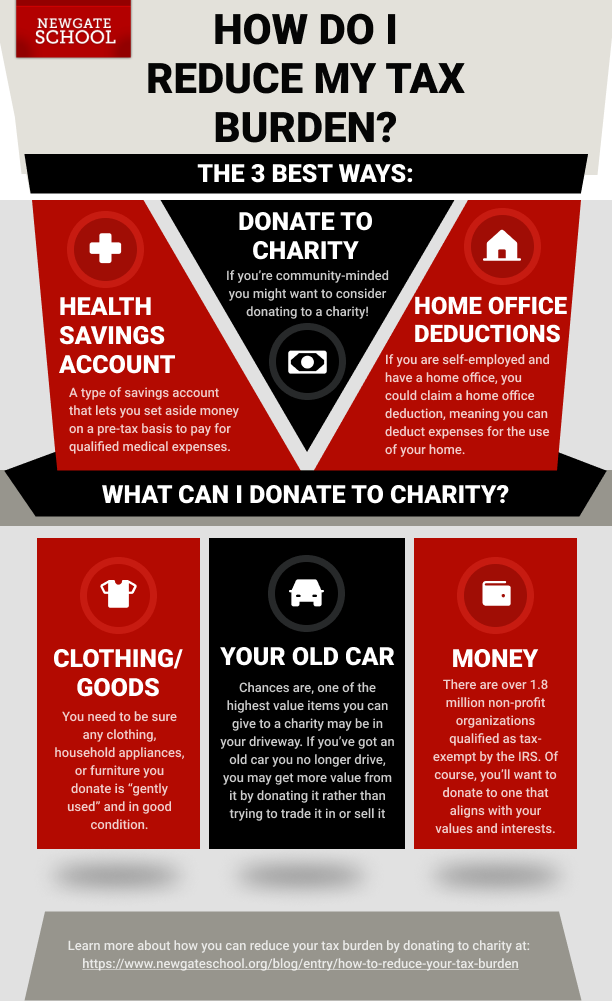
- Health Savings Accounts (HSAs): Often referred to as having a “triple tax advantage.” Contributions are tax-deductible, the money grows tax-free, and qualified withdrawals for medical expenses are also tax-free. HSAs can also serve as an additional retirement savings vehicle, as withdrawals for non-medical expenses after age 65 are taxed like a traditional IRA.
- 529 Plans: While contributions are not federally tax-deductible, earnings grow tax-free, and withdrawals for qualified educational expenses (tuition, fees, room and board, books) are also tax-free. Many states offer a state income tax deduction for contributions to their 529 plans.
Maximizing contributions to these accounts is a powerful way to reduce your current tax bill while simultaneously investing in your future.
Strategic Considerations for Business Owners and Self-Employed Individuals
For those running businesses or working as independent contractors, the opportunities for tax reduction are often more expansive and complex, requiring careful planning around business structure and expense management.
Optimize Business Structure
The legal structure of your business significantly impacts how your income is taxed.
- Sole Proprietorship/Partnership: Income “passes through” directly to the owner’s personal tax return and is subject to self-employment taxes (Social Security and Medicare).
- Limited Liability Company (LLC): Offers liability protection and can elect to be taxed as a sole proprietorship, partnership, S-Corp, or C-Corp.
- S-Corporation: Income passes through to owners, avoiding corporate-level tax. Crucially, owners can pay themselves a “reasonable salary” (subject to payroll taxes) and take the remaining profits as distributions, which are not subject to self-employment tax. This can lead to substantial tax savings on self-employment taxes.
- C-Corporation: Subject to corporate income tax. Profits are taxed at the corporate level, and then again when distributed to shareholders as dividends (double taxation). However, C-Corps have certain unique deductions and benefits, and corporate tax rates can sometimes be lower than individual rates.
Choosing the right structure requires careful consideration of your income, growth projections, and liability concerns, often best done with the guidance of a tax professional.

Deduct Legitimate Business Expenses
Operating a business incurs numerous expenses, many of which are tax-deductible, reducing your net taxable business income. It’s crucial that these expenses are “ordinary and necessary” for your business. Common deductions include:
- Office Expenses: Supplies, rent, utilities, internet, phone.
- Travel and Meals: Business-related travel (airfare, lodging) and a percentage of business meals.
- Home Office Deduction: If you use a portion of your home exclusively and regularly for business, you can deduct a percentage of your housing costs (mortgage interest, property taxes, utilities, insurance).
- Equipment and Software: Purchases of computers, machinery, and specialized software.
- Professional Development: Education, training, conferences directly related to your business.
- Marketing and Advertising: Costs associated with promoting your business.
- Employee Benefits: Contributions to employee health insurance, retirement plans.
Diligent record-keeping for all business expenses is paramount to fully leverage these deductions.
Utilize Retirement Plans for Small Businesses
Self-employed individuals and small business owners have access to powerful retirement plans that allow for much higher tax-deductible contributions than individual IRAs.
- SEP IRA (Simplified Employee Pension): Easy to set up and administer, allowing contributions of up to 25% of compensation (or 20% of net self-employment earnings) up to a significant annual maximum.
- SIMPLE IRA (Savings Incentive Match Plan for Employees): Suitable for businesses with up to 100 employees, requiring employer contributions but offering lower administrative costs than a 401(k).
- Solo 401(k) (or Individual 401(k)): Designed for self-employed individuals with no full-time employees (other than a spouse). This plan allows you to contribute both as an employee and an employer, potentially leading to very high tax-deductible contributions.
These plans not only provide significant tax breaks but also serve as excellent vehicles for personal retirement savings.
Long-Term Tax Planning and Investment Strategies
Effective tax reduction isn’t just about the current tax year; it involves a long-term perspective, especially when it comes to investments and wealth transfer.
Capital Gains Tax Management
Capital gains are profits from the sale of assets like stocks, bonds, or real estate. The tax rate on these gains depends on how long you held the asset.
- Short-Term Capital Gains: On assets held for one year or less, taxed at your ordinary income tax rate.
- Long-Term Capital Gains: On assets held for more than one year, typically taxed at lower preferential rates (0%, 15%, or 20% depending on your income).
Strategies include holding investments for longer than a year to qualify for lower long-term rates and tax-loss harvesting, where you sell investments at a loss to offset capital gains and potentially a limited amount of ordinary income.
Estate Planning and Gift Taxes
For those with substantial assets, managing estate and gift taxes is a critical component of long-term tax planning. The federal estate tax applies to estates above a very high exemption amount, but state estate or inheritance taxes can apply at lower thresholds. Strategies include:
- Annual Gift Tax Exclusion: You can gift a certain amount each year (e.g., $18,000 in 2024) to as many individuals as you wish without incurring gift tax or using up your lifetime exclusion. This can strategically reduce the size of your taxable estate.
- Utilizing the Lifetime Gift and Estate Tax Exemption: This allows you to give away or leave a substantial amount of assets without federal estate or gift tax.
- Trusts: Various types of trusts can be used to manage and transfer assets in a tax-efficient manner, provide for heirs, and protect assets from creditors.
Professional guidance from an estate planner is crucial for navigating these complex areas.
Consider Tax-Efficient Investments
Beyond tax-advantaged accounts, certain types of investments themselves offer tax benefits.
- Municipal Bonds: Interest earned on qualifying municipal bonds is often exempt from federal income tax and, sometimes, state and local taxes if you reside in the issuing state. This can be particularly attractive for investors in higher tax brackets.
- Exchange-Traded Funds (ETFs) and Tax-Managed Mutual Funds: These typically have lower turnover rates than actively managed mutual funds, which can result in fewer capital gains distributions passed on to investors, thus deferring taxes.
- Growth Stocks vs. Income Stocks: Investing in growth stocks that reinvest earnings (leading to capital appreciation) rather than high-dividend income stocks (which generate taxable income) can defer tax liability until the asset is sold.
Tailoring your investment portfolio with tax efficiency in mind can significantly boost your after-tax returns over time.
The Role of Professional Guidance
While this article provides a broad overview of tax-lowering strategies, the complexity of tax law and the unique nature of individual financial situations underscore the importance of professional advice.
When to Hire a Tax Professional
It’s highly advisable to consult with a tax professional in various scenarios:
- Complex Financial Situations: If you own a business, have significant investments, rental properties, or foreign income.
- Major Life Changes: Marriage, divorce, birth of a child, purchasing a home, starting a business, or receiving a large inheritance.
- High Income or Wealth: To ensure compliance and optimize strategies for complex portfolios and wealth management.
- Navigating Audits or Disputes with the IRS: A professional can represent you and provide expert advice.
- Simply Wanting Peace of Mind: Ensuring you’re compliant and not missing any potential savings.
A qualified professional can save you not only money but also significant time and stress.

Benefits of a CPA or Enrolled Agent
A Certified Public Accountant (CPA) or an Enrolled Agent (EA) brings invaluable expertise to your tax planning.
- In-depth Knowledge of Tax Law: They stay current on all federal and state tax laws, deductions, and credits, identifying opportunities you might overlook.
- Strategic Planning: They can help you develop a year-round tax strategy, not just prepare your annual return, aligning tax decisions with your overall financial goals.
- Audit Representation: In the unfortunate event of an audit, a professional can represent you and handle communications with tax authorities.
- Accuracy and Compliance: They ensure your returns are accurate and compliant, minimizing the risk of penalties or future issues.
Investing in professional tax advice is often an investment that pays for itself many times over through maximized savings and mitigated risks.
Proactive and informed tax planning is an indispensable component of sound financial health. By understanding the foundational principles, strategically leveraging deductions and credits, optimizing business structures, and adopting long-term investment strategies, individuals and businesses can significantly reduce their tax liabilities. Remember, the goal is not to avoid taxes, but to pay only what is legally required, thereby freeing up more capital for savings, investments, and personal aspirations. Continuously educate yourself, maintain diligent records, and do not hesitate to seek the expertise of a qualified tax professional to ensure you are always making the most tax-efficient decisions for your unique financial landscape.
aViewFromTheCave is a participant in the Amazon Services LLC Associates Program, an affiliate advertising program designed to provide a means for sites to earn advertising fees by advertising and linking to Amazon.com. Amazon, the Amazon logo, AmazonSupply, and the AmazonSupply logo are trademarks of Amazon.com, Inc. or its affiliates. As an Amazon Associate we earn affiliate commissions from qualifying purchases.