
Navigating the complexities of tax law can often feel like a daunting task, yet understanding and implementing strategic tax reduction techniques is fundamental to optimizing personal and business finances. Reducing your overall tax bill isn’t about evasion; it’s about intelligent planning, leveraging available deductions and credits, and making informed financial decisions throughout the year. This guide delves into actionable strategies that individuals, investors, and business owners can employ to keep more of their hard-earned money.
Foundational Tax Planning Strategies
Effective tax reduction begins with a solid understanding of your financial landscape and proactive planning. It’s not a once-a-year event but an ongoing process that benefits from consistent attention.

Understanding Your Taxable Income
The first step in reducing your tax bill is to accurately identify what constitutes your taxable income. This isn’t just your gross salary; it includes various sources such as investment gains, business profits, interest, and even some government benefits. Understanding these sources allows you to identify areas where income can be deferred, recharacterized, or structured in a more tax-efficient manner. For example, certain fringe benefits offered by employers might be non-taxable, reducing your overall taxable compensation. By meticulously tracking all income streams, you gain clarity on your tax exposure and can better plan for adjustments.
Maximizing Deductions and Credits
Deductions and credits are the bedrock of tax reduction. While both lower your tax liability, they do so in different ways. Deductions reduce your taxable income, effectively lowering the amount of income subject to tax. Credits, on the other hand, directly reduce the amount of tax you owe, dollar for dollar.
- Standard vs. Itemized Deductions: For many, taking the standard deduction is simpler and sufficient. However, if your itemized deductions (such as mortgage interest, state and local taxes, medical expenses above a certain threshold, and charitable contributions) exceed the standard deduction amount, itemizing can lead to significant savings. Keep meticulous records of all eligible expenses throughout the year.
- Common Credits: A myriad of tax credits exist, targeting various situations from education expenses (e.g., American Opportunity Tax Credit, Lifetime Learning Credit) to family support (e.g., Child Tax Credit, Child and Dependent Care Credit) and energy-efficient home improvements. Eligibility for credits often depends on income levels and specific criteria, making it crucial to research which ones apply to your circumstances. Don’t overlook lesser-known credits that might be relevant, such as credits for adoption or electric vehicle purchases.
Importance of Accurate Record-Keeping
Without diligent record-keeping, even the most astute tax planner will struggle. Maintaining organized records of income, expenses, charitable donations, medical bills, investment trades, and other relevant financial activities is paramount. Digital tools and apps can simplify this process, categorizing transactions and storing digital receipts. Accurate records not only ensure you claim all eligible deductions and credits but also provide a robust defense in the event of an audit, protecting you from potential penalties and interest.
Leveraging Retirement Accounts for Tax Savings
Retirement accounts are powerful tools for building wealth and simultaneously reducing your current tax burden. Their tax advantages stem from either tax-deferred growth or tax-free withdrawals in retirement.
Traditional vs. Roth IRAs and 401(k)s
The choice between traditional and Roth retirement accounts hinges on your current and projected future tax brackets.
- Traditional Accounts (IRAs and 401(k)s): Contributions to traditional IRAs and 401(k)s are often tax-deductible in the year they are made, reducing your current taxable income. The investments grow tax-deferred, meaning you don’t pay taxes on earnings until you withdraw the funds in retirement. This is particularly advantageous if you expect to be in a lower tax bracket during retirement than you are currently.
- Roth Accounts (IRAs and 401(k)s): Contributions to Roth accounts are made with after-tax dollars, meaning they are not tax-deductible. However, qualified withdrawals in retirement are entirely tax-free. This option is generally more beneficial if you anticipate being in a higher tax bracket during retirement or if you want to diversify your tax exposure in retirement.
Maximizing contributions to these accounts up to the annual limits should be a cornerstone of any tax reduction strategy, especially if your employer offers a matching contribution to a 401(k), which is essentially free money on top of the tax benefits.
Health Savings Accounts (HSAs) as a Triple-Tax Advantage
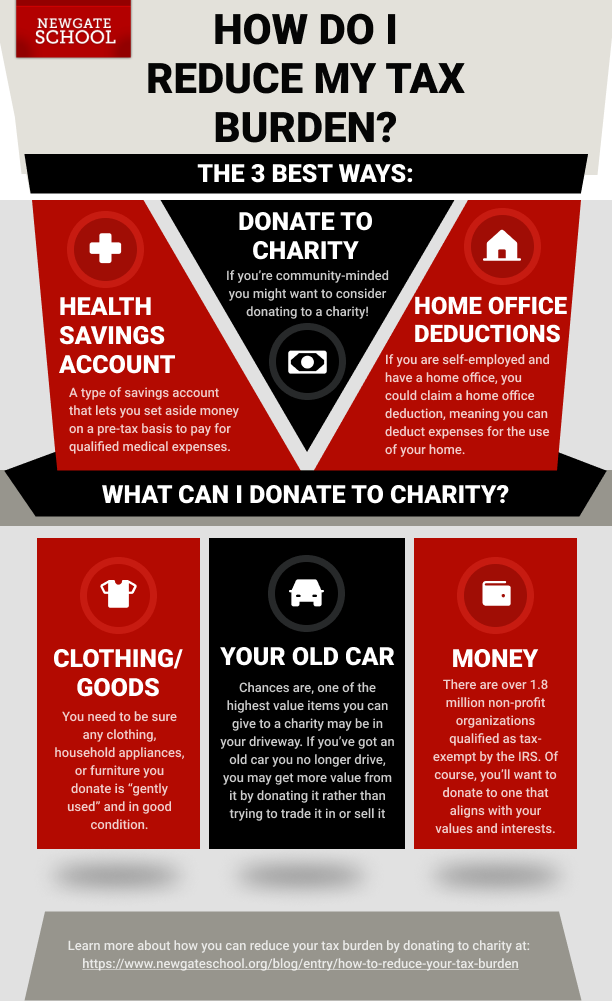
Health Savings Accounts (HSAs) are often hailed as the most tax-advantaged investment vehicle available, but they are only accessible to individuals enrolled in a high-deductible health plan (HDHP). HSAs offer a unique “triple-tax advantage”:
- Tax-Deductible Contributions: Contributions are tax-deductible (or pre-tax if made through payroll deduction), lowering your taxable income.
- Tax-Free Growth: The money in the account grows tax-free.
- Tax-Free Withdrawals: Qualified withdrawals for medical expenses are entirely tax-free.
Furthermore, after age 65, HSA funds can be withdrawn for any purpose without penalty, though non-medical withdrawals will be subject to ordinary income tax, much like a traditional IRA. This makes HSAs an excellent supplemental retirement savings vehicle once healthcare needs are met.
Self-Employed Retirement Options (SEP IRA, Solo 401(k))
For self-employed individuals and small business owners, specialized retirement plans offer significantly higher contribution limits than traditional IRAs, providing robust tax-deferral opportunities.
- SEP IRA (Simplified Employee Pension Individual Retirement Account): Easy to set up and administer, a SEP IRA allows self-employed individuals to contribute a substantial portion of their net self-employment earnings (up to 25% of compensation, with an annual cap). Contributions are tax-deductible.
- Solo 401(k) (Individual 401(k)): A Solo 401(k) combines employee and employer contributions, allowing for even higher deferrals. As an “employee,” you can contribute up to the standard 401(k) employee deferral limit, plus an additional “employer” contribution of up to 25% of your net self-employment earnings. This structure often allows for the largest possible contributions and thus the greatest tax deferral for solo entrepreneurs.
Strategic Investment Decisions to Minimize Tax
Beyond retirement accounts, how you manage your taxable investments can significantly impact your annual tax bill. Tax-aware investing is a critical component of maximizing after-tax returns.
Tax-Loss Harvesting
Tax-loss harvesting involves selling investments at a loss to offset capital gains and, potentially, a limited amount of ordinary income. If you realize capital losses that exceed your capital gains, you can deduct up to $3,000 of those losses against your ordinary income each year, carrying forward any remaining losses to future tax years. This strategy should be executed carefully, adhering to the “wash sale rule,” which prevents you from repurchasing a substantially identical security within 30 days before or after the sale.
Tax-Efficient Investment Vehicles
Certain investment vehicles are inherently more tax-efficient, particularly for investments held in taxable accounts.
- Municipal Bonds: Interest earned on municipal bonds is generally exempt from federal income tax and, often, from state and local taxes if you reside in the issuing state. This makes them attractive for high-income earners seeking to reduce their taxable income.
- Exchange-Traded Funds (ETFs): ETFs are often more tax-efficient than actively managed mutual funds. Their structure typically results in fewer capital gains distributions to shareholders, as they often use an “in-kind” redemption process that allows them to dispose of low-basis shares without triggering taxable events for the fund.
- Growth Stocks vs. Income Stocks: While income-generating investments like REITs or high-dividend stocks can provide regular cash flow, they also generate taxable income each year. Growth stocks, which focus on appreciation rather than dividends, defer taxable events until the shares are sold, allowing for greater compounding over time.
Understanding Capital Gains Taxes and Holding Periods
The duration for which you hold an investment has a direct impact on its tax treatment.
- Short-Term Capital Gains: Gains from assets held for one year or less are taxed at your ordinary income tax rate, which can be as high as 37%.
- Long-Term Capital Gains: Gains from assets held for more than one year are taxed at preferential rates (0%, 15%, or 20% for most taxpayers, depending on income).
Strategically holding investments for longer than a year whenever feasible can significantly reduce your tax liability on investment profits, allowing more of your returns to compound.
Business and Self-Employment Tax Reduction Tactics
For business owners and self-employed individuals, a distinct set of strategies can lead to substantial tax savings, requiring careful planning and adherence to IRS regulations.
Deductible Business Expenses
Virtually every legitimate expense incurred “for the purpose of carrying on a trade or business” is deductible. This includes, but is not limited to:
- Home Office Deduction: If you use a portion of your home exclusively and regularly for business, you can deduct a percentage of your home expenses (rent/mortgage interest, utilities, insurance, repairs).
- Business Travel and Meals: Travel expenses for business are deductible, and a portion of business meals (currently 50% for most, though 100% for 2021-2022 for restaurants) can be claimed.
- Equipment and Software: Purchases of business equipment, software, and supplies are deductible. Accelerated depreciation methods, like Section 179 expensing or bonus depreciation, allow you to deduct the full cost of certain assets in the year they are placed in service, rather than depreciating them over several years.
- Professional Development: Education, courses, and certifications directly related to maintaining or improving skills for your current business are often deductible.
Maintaining detailed records for all business expenses is crucial for substantiating these deductions.
Entity Selection for Tax Optimization
The legal structure of your business significantly impacts how you are taxed.
- Sole Proprietorship: Simple to set up, but profits are taxed directly on your personal income tax return (Schedule C) and are subject to self-employment taxes (Social Security and Medicare).
- LLC (Limited Liability Company): Provides liability protection. For tax purposes, an LLC is typically a “pass-through” entity, taxed as a sole proprietorship (single-member LLC) or partnership (multi-member LLC) by default. However, an LLC can elect to be taxed as an S-corporation or C-corporation.
- S-Corporation: An S-Corp can offer significant tax savings for profitable businesses. Owners pay themselves a “reasonable salary” (subject to payroll taxes) and take the remaining profits as distributions, which are not subject to self-employment taxes. This can lead to substantial FICA tax savings.
- C-Corporation: C-corps are subject to corporate income tax on their profits. Any dividends paid to shareholders are then taxed again at the shareholder level (double taxation). While often less favorable for small businesses due to double taxation, C-corps can be advantageous in specific scenarios, such as for businesses that plan to reinvest heavily in growth or attract venture capital.
Consulting with a tax professional to determine the optimal entity structure for your specific business circumstances is highly recommended.
Qualified Business Income (QBI) Deduction
Introduced by the Tax Cuts and Jobs Act of 2017, the Qualified Business Income (QBI) deduction, also known as the Section 199A deduction, allows eligible self-employed individuals and small business owners to deduct up to 20% of their qualified business income. This deduction is available to owners of pass-through entities (sole proprietorships, partnerships, S-corporations, and certain trusts and estates). The deduction is subject to various limitations based on taxable income, the type of business, and the amount of W-2 wages paid by the business, or the unadjusted basis of qualified property held by the business. Understanding the rules and thresholds is critical to maximizing this valuable deduction.
Proactive Planning and Professional Guidance
Successfully reducing your tax bills is an ongoing process that benefits from foresight and expert advice.
Regular Tax Bill Reviews
Don’t wait until tax season to review your financial situation. Conduct periodic reviews throughout the year to assess your income, expenses, and potential tax implications. Adjustments to withholding, estimated tax payments, or investment strategies can be made proactively, avoiding surprises and optimizing your position come April 15th. Major life events—marriage, children, new job, home purchase, starting a business—all have significant tax implications and warrant immediate review.
The Value of a Qualified Tax Professional
While self-preparation tools are excellent for many, the complexity of tax law, especially for investors and business owners, often necessitates professional guidance. A qualified Certified Public Accountant (CPA) or Enrolled Agent (EA) can:
- Identify obscure deductions and credits you might miss.
- Advise on the most tax-efficient business structure.
- Help with complex investment tax strategies.
- Represent you in the event of an audit.
- Provide year-round tax planning advice tailored to your specific situation.
The fees for such services are often deductible as a business expense or, in some cases, as an itemized deduction.

Staying Informed on Tax Law Changes
Tax laws are not static; they frequently change due to new legislation, court rulings, and IRS guidance. Staying informed about these changes is crucial for effective tax planning. Subscribing to financial news outlets, professional tax publications, or newsletters from your tax advisor can help you remain abreast of developments that could impact your tax strategy. Proactive adaptation to new rules allows you to capitalize on new opportunities and avoid pitfalls.
By consistently applying these strategies and seeking professional guidance when needed, you can systematically reduce your overall tax bills, retain more of your earnings, and build a stronger financial future.
aViewFromTheCave is a participant in the Amazon Services LLC Associates Program, an affiliate advertising program designed to provide a means for sites to earn advertising fees by advertising and linking to Amazon.com. Amazon, the Amazon logo, AmazonSupply, and the AmazonSupply logo are trademarks of Amazon.com, Inc. or its affiliates. As an Amazon Associate we earn affiliate commissions from qualifying purchases.