
In the intricate world of personal finance, your account and routing numbers are the bedrock upon which most transactions are built. These seemingly simple strings of digits are the digital DNA of your bank account, facilitating everything from direct deposits to automated bill payments. Yet, despite their critical importance, many individuals find themselves scrambling to locate these numbers precisely when they need them most – whether setting up a new utility bill, receiving a paycheck, or initiating a significant transfer.
Understanding what these numbers are, why they matter, and, most importantly, where to find them, is a fundamental aspect of financial literacy. This guide will demystify the process, offering a comprehensive walkthrough of the most reliable methods to locate your essential banking information, ensuring you’re always prepared for any financial interaction. We’ll delve into traditional methods, leverage the power of digital banking, and even touch upon the crucial security considerations that accompany handling such sensitive data. Equip yourself with this knowledge, and navigate your financial life with newfound confidence and efficiency.

Understanding Your Financial Identifiers: Account and Routing Numbers
Before we dive into the “how-to,” it’s essential to grasp the fundamental nature and purpose of these two critical financial identifiers. While often discussed together, they serve distinct yet complementary roles in the banking ecosystem.
What is a Routing Number? The ABA Transit Number Explained
A routing number, also known as an ABA (American Bankers Association) routing transit number, is a nine-digit code that identifies your financial institution in the United States. Think of it as your bank’s specific address within the vast network of the U.S. banking system. When money is transferred, the routing number ensures that the funds are directed to the correct bank. Each bank, and sometimes even specific branches or types of accounts within a bank, can have a unique routing number. These numbers are public and are primarily used for domestic transactions, including direct deposits, wire transfers, and automated clearing house (ACH) payments.
The first four digits typically identify the Federal Reserve Bank district where the institution is located, the next four identify the financial institution itself, and the final digit is a checksum digit used for error detection. This standardized format ensures accuracy and efficiency in payment processing across the nation.
What is an Account Number? Your Unique Account ID
Your account number is a unique identifier assigned to your specific bank account. Unlike the routing number, which identifies your bank, the account number points directly to your individual checking or savings account within that institution. These numbers vary in length, typically ranging from 10 to 12 digits, but can sometimes be longer or shorter depending on the bank. It’s the unique address for your personal funds.
When combined with the routing number, the account number forms a complete pathway for money to move into or out of your specific account. Because it is unique to you and your funds, your account number is considered highly sensitive information and must be protected diligently. It is the key that unlocks access to your money, making its secure handling paramount.
Why Are These Numbers Crucial for Financial Transactions?
These two numbers, working in tandem, are the backbone of modern financial transactions. Without them, the seamless movement of money that we often take for granted would be impossible.
- Direct Deposit: Your employer needs both your routing and account number to deposit your paycheck directly into your bank account.
- Automated Bill Payments: Setting up recurring payments for utilities, loans, or subscriptions often requires these numbers to allow the payee to debit funds from your account.
- Wire Transfers: For faster, often larger, domestic and international money transfers, both numbers are essential to ensure the funds reach the correct recipient and account.
- Electronic Funds Transfers (EFTs): Any electronic movement of money, from peer-to-peer payments to online purchases, often relies on these underlying identifiers.
- Tax Refunds: The IRS uses these numbers to directly deposit your tax refund into your chosen account.
In essence, these numbers are the coordinates that ensure your money lands precisely where it’s supposed to, making them indispensable for virtually every electronic financial interaction.
Common Methods for Locating Your Numbers
While digital banking has become the norm, several traditional and easily accessible methods remain highly effective for finding your account and routing numbers. These methods often serve as a reliable fallback, particularly when digital access might be inconvenient or unavailable.
The Humble Checkbook: Your Primary Source
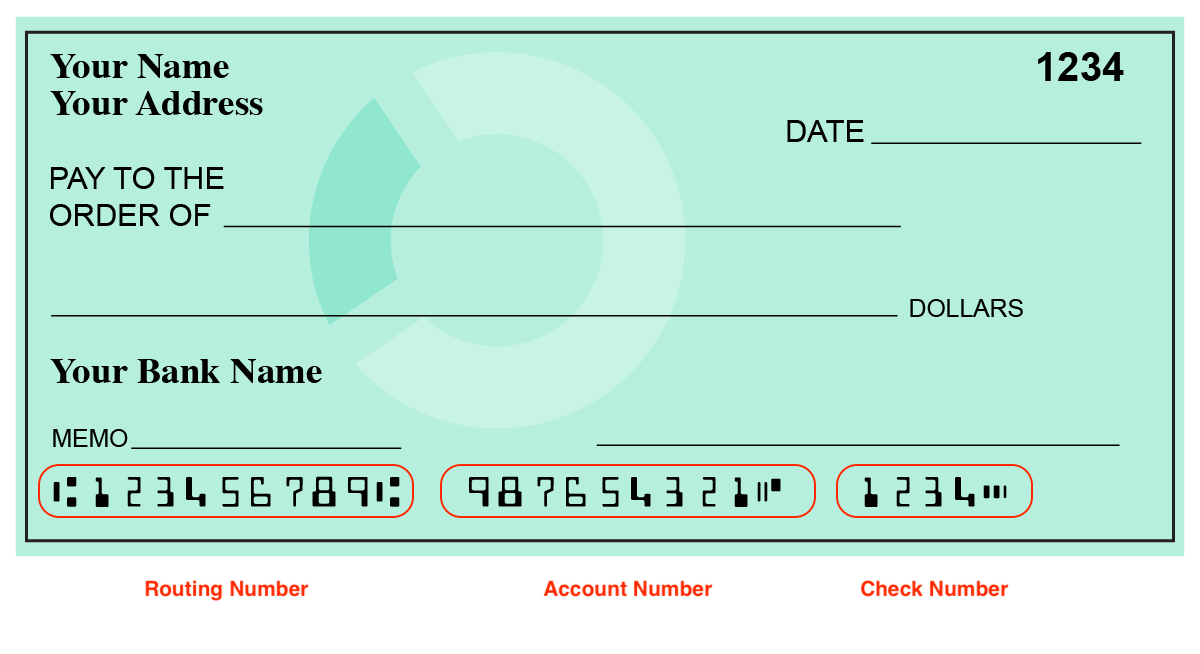
For those who still use checks, your checkbook is perhaps the most straightforward and traditional place to find both your routing and account numbers. Look at the bottom of any personalized check:
- Routing Number: This is typically the first set of nine digits on the far left.
- Account Number: This is usually the second set of numbers, located in the middle.
- Check Number: The third set of numbers, on the far right, is the check number itself.
It’s crucial to distinguish between these. The routing number is always nine digits. If you have different types of checks (e.g., business vs. personal), confirm that the routing number on the check corresponds to the account you need information for, as some banks might have different routing numbers for different account types or regions.
Bank Statements: Digital and Paper Copies
Your monthly bank statements, whether physical copies mailed to your home or digital versions accessed online, are another reliable source.
- Paper Statements: Scan your paper statements for a section clearly labeled “Account Number” and “Routing Number.” These are typically found near the top, often alongside your name and address, or within a dedicated “Account Information” section.
- Digital Statements: If you receive e-statements, log into your online banking portal (which we’ll cover in more detail next) and navigate to the section for viewing your statements. The information will be presented similarly to a paper statement. This method offers the convenience of immediate access without needing to wait for mail.
Bank statements are particularly useful as they provide a comprehensive overview of your account activity, confirming that you are indeed looking at the correct account’s details.
Direct Deposit Forms or Enrollment Documents
When you first set up direct deposit with your employer or for government benefits, you typically complete a form that requires your bank account and routing number. If you kept a copy of this form, it would be an excellent reference point. Similarly, if you’ve set up direct debit for a loan or recurring bill payment, any confirmation or enrollment documents from that setup process might also contain this information. These documents are usually designed to clearly display these numbers to ensure accuracy during the setup process. This method requires a bit of foresight in document retention but can be a quick solution if you have an organized filing system.
Digital Avenues: Leveraging Online and Mobile Banking
In today’s digital age, your financial institution’s online portal and mobile app are often the quickest and most convenient ways to access your account and routing numbers. These platforms are designed for ease of access and offer secure environments for managing your finances.
Navigating Your Online Banking Portal
Most banks prominently display your account information within their online banking platforms. The exact steps can vary slightly between institutions, but the general path is similar:
- Log In: Access your bank’s official website and log in using your secure credentials (username and password, potentially with multi-factor authentication).
- Select Account: Once logged in, navigate to the specific checking or savings account for which you need the numbers. You might see a list of all your accounts.
- Find Account Details/Information: Look for options like “Account Details,” “Account Information,” “View Account,” or similar links associated with your chosen account. These are often found next to the account balance or in a drop-down menu.
- Locate Numbers: Within the account details, you should find both your routing number and your full account number clearly displayed. Some banks might require an additional click or two, or even re-entry of your password, to reveal the full account number for security reasons.
Many online portals also have a dedicated “Direct Deposit Information” or “Wire Transfer Instructions” section, which will explicitly state the routing and account numbers needed for these specific transactions.
Using Your Bank’s Mobile App
Mobile banking apps offer an equally convenient, if not more streamlined, experience for on-the-go access to your financial details.
- Log In: Open your bank’s official mobile app and log in using your credentials (often with biometric authentication like fingerprint or face ID for speed).
- Select Account: Tap on the specific account (checking or savings) you need information for.
- Access Details: Look for an icon or menu option such as a gear, three dots, “Details,” “Account Info,” or a direct link near the account balance.
- View Numbers: Similar to online banking, your routing and account numbers will be displayed. Again, some apps might mask parts of your account number or require an additional verification step before showing the full digits for security.
Mobile apps are particularly useful for quick look-ups when you’re away from your computer or don’t have a physical checkbook handy.
Automated Phone Banking Services
While less common for direct number retrieval, some automated phone banking systems might provide routing numbers through their menu options, especially for general inquiries. However, they are less likely to provide your full account number without speaking to a representative due to security protocols. If you’re struggling with other methods, this could be a last resort for the routing number, but you’d likely still need to speak to a person for the account number.
Security Considerations When Accessing Your Information
Your account and routing numbers are gateways to your money. As such, their security is paramount. While finding them needs to be convenient, it must never compromise the safety of your financial assets.
Protecting Your Login Credentials
The most fundamental step in securing your banking information is to protect your online and mobile banking login details.
- Strong, Unique Passwords: Use complex passwords that combine letters, numbers, and symbols, and never reuse passwords across multiple sites.
- Multi-Factor Authentication (MFA): Always enable MFA (e.g., a code sent to your phone, fingerprint scan) if your bank offers it. This adds an extra layer of security, making it much harder for unauthorized individuals to access your account even if they have your password.
- Beware of Public Wi-Fi: Avoid accessing your banking portals on unsecured public Wi-Fi networks, as these can be vulnerable to eavesdropping. If necessary, use a Virtual Private Network (VPN) for added protection.
Verifying Secure Connections (HTTPS)
Whenever you access your bank’s website, ensure the connection is secure. Look for “https://” at the beginning of the website address (the “s” stands for secure) and a padlock icon in your browser’s address bar. This indicates that your communication with the bank’s server is encrypted, protecting your data from interception. Never enter login credentials or sensitive information on a site that does not display these security indicators.
Beware of Phishing Scams and Impersonation
Scammers frequently attempt to trick individuals into revealing their banking information through phishing emails, texts, or phone calls.
- Be Skeptical: Never click on suspicious links in emails or texts purporting to be from your bank.
- Verify Senders: Always verify the sender’s identity. Banks will never ask for your full account number, password, or PIN via email or unsolicited phone calls.
- Direct Contact: If you receive a suspicious communication, contact your bank directly using the official phone number from their website or your bank statement, not a number provided in the suspicious message.
While these numbers are necessary for legitimate transactions, sharing them indiscriminately is risky. Only provide them to trusted entities, such as your employer, legitimate billers, or government agencies.
When You Can’t Find Them: What to Do Next
Despite all the methods available, there might be rare occasions when you simply cannot locate your account and routing numbers through your usual means. In such scenarios, your bank remains your ultimate resource.
Contacting Your Bank Directly
If you’ve exhausted all other avenues, the most secure and reliable next step is to contact your bank’s customer service.
- Official Channels: Use the customer service phone number listed on your bank’s official website, a recent bank statement, or the back of your debit card. Avoid numbers found through a quick web search, as these can sometimes be fraudulent.
- Verification: Be prepared to answer several security questions to verify your identity. This might include your full name, address, date of birth, social security number (or parts of it), and answers to personal security questions. Banks have stringent protocols to ensure they are speaking with the legitimate account holder before providing sensitive information.
- Specific Request: Clearly state that you need your checking or savings account number and routing number. They will guide you through the process.
This method guarantees accurate information directly from the source and ensures the highest level of security.
Visiting a Local Branch
For those who prefer face-to-face interaction or if phone contact proves difficult, visiting a local branch of your bank is an excellent option.
- Bring ID: Always bring a valid government-issued photo ID (e.g., driver’s license, passport) to the branch. This is essential for identity verification.
- Speak to a Teller or Customer Service Representative: Inform them that you need your account and routing numbers. They will be able to retrieve this information for you after verifying your identity.
- Request Written Confirmation: It’s often a good idea to ask for the numbers to be written down or printed for you, so you have a physical record.
A branch visit provides an immediate and verified solution, especially if you have complex account needs or prefer direct assistance.
Alternative Verification Methods
In some unique situations, particularly when setting up direct deposit with employers, they might offer alternative verification methods if you don’t have your numbers readily available. For instance, some employers might accept a voided check as proof of account information. While not a method for finding the numbers themselves, it’s a way to provide them without needing to memorize or look up the digits individually. Always check with the requesting party if such alternatives are acceptable.

Conclusion
Your account and routing numbers are more than just digits; they are the fundamental coordinates that enable your participation in the modern financial system. From ensuring your paycheck lands safely in your account to automating your monthly bills, these numbers are indispensable. Understanding their purpose and knowing precisely where and how to find them empowers you with financial autonomy and peace of mind.
By familiarizing yourself with your checkbook, bank statements, online banking portals, and mobile apps, you can quickly and securely access this vital information whenever the need arises. Remember, while convenience is key, security must always be paramount. Protect your login credentials, be wary of scams, and when in doubt, always turn to your bank’s official channels for assistance. Mastering the art of finding your account and routing numbers is a small but significant step toward a more organized, secure, and efficient financial life.
aViewFromTheCave is a participant in the Amazon Services LLC Associates Program, an affiliate advertising program designed to provide a means for sites to earn advertising fees by advertising and linking to Amazon.com. Amazon, the Amazon logo, AmazonSupply, and the AmazonSupply logo are trademarks of Amazon.com, Inc. or its affiliates. As an Amazon Associate we earn affiliate commissions from qualifying purchases.