
In the intricate world of personal finance, secure payment methods are paramount, especially when dealing with substantial sums. Among the various instruments available, the cashier’s check stands out as a reliable option, backed by the issuing financial institution itself. For customers of Chase, one of the largest retail banks in the United States, understanding the mechanics, costs, and benefits of obtaining a cashier’s check is crucial for managing their financial transactions effectively. This guide delves into the specifics of acquiring a cashier’s check from Chase, shedding light on the associated fees, the process involved, and why this particular payment method often remains a preferred choice for high-value exchanges.

Understanding the Cost: Chase’s Cashier’s Check Fees
When considering a cashier’s check from Chase, the first question on most people’s minds revolves around the cost. Like many financial services, obtaining a cashier’s check typically incurs a fee, but this can vary based on your relationship with the bank and the type of account you hold.
Standard Fees for Non-Account Holders and Basic Accounts
For individuals who do not hold a Chase checking or savings account, or for those with more basic account types that do not include fee waivers, Chase generally charges a standard fee for a cashier’s check. This fee is a service charge for the bank’s guarantee of funds and the administrative effort involved in issuing the check. While specific amounts can change and are always best confirmed directly with Chase, historically, this fee has been in the range of $8 to $10 per cashier’s check. It’s important to remember that this fee is per check, so if you need multiple cashier’s checks, each will incur its own charge. This charge is deducted directly from the account you use to fund the check or must be paid upfront.
Waiving Fees for Eligible Chase Account Holders
One of the significant advantages of being a valued Chase customer is the potential for fee waivers on various banking services, including cashier’s checks. Chase offers several checking account tiers, and higher-tier accounts often come with preferential treatment. For instance, customers with a Chase Premier Plus Checking℠ account, Chase Sapphire℠ Checking account, or Chase Private Client checking account typically enjoy fee waivers for cashier’s checks. These premium accounts often require meeting certain balance thresholds or maintaining specific investment relationships with the bank. The rationale behind these waivers is to reward customer loyalty and incentivize them to consolidate their banking relationship with Chase, making financial tools like cashier’s checks more accessible and cost-effective for their everyday and high-value transactions. Always check your specific account’s terms and conditions or speak with a Chase representative to confirm your eligibility for fee waivers.
Factors Influencing Cost and Account Benefits
The actual cost you pay for a cashier’s check at Chase isn’t just about your account type; it’s also about understanding the broader benefits of your banking relationship. For many, the decision to maintain a premium checking account isn’t solely based on cashier’s check fees but rather a suite of benefits, including higher interest rates, reduced ATM fees, dedicated customer service, and other financial planning tools. However, for those who frequently require guaranteed funds, the fee waiver for cashier’s checks can represent a tangible saving over time. It underscores the importance of regularly reviewing your banking needs against the features and costs of your current accounts and considering whether upgrading to a different account tier might be financially advantageous in the long run.
Why Choose a Cashier’s Check? The Role of Guaranteed Funds
Beyond the cost, understanding the fundamental purpose and advantages of a cashier’s check is key to appreciating its value as a financial instrument. Its primary appeal lies in the guarantee of funds, offering a level of security unmatched by personal checks.
Ensuring Payment Security for Large Transactions
The most compelling reason to use a cashier’s check is the absolute assurance of payment it provides. Unlike a personal check, which can bounce if the payer’s account has insufficient funds, a cashier’s check is drawn directly from the bank’s own funds after the payer has already paid the bank the full amount. This means the bank assumes responsibility for the payment, guaranteeing to the payee that the funds are available and will be honored. This makes cashier’s checks indispensable for large transactions where the recipient requires absolute certainty of payment. Common scenarios include down payments on real estate purchases, car sales between private parties, significant rental deposits, or even certain legal settlements. The payee can proceed with confidence, knowing the check will clear.
Distinguished from Personal Checks and Money Orders
To fully grasp the security of a cashier’s check, it’s helpful to contrast it with other common payment methods:
- Personal Checks: These are drawn on the payer’s personal account and are only as good as the funds available in that account. They carry the risk of bouncing, making them unsuitable for transactions where a guaranteed payment is critical.
- Money Orders: Money orders, often issued by post offices or convenience stores, are prepaid and offer a degree of security similar to a cashier’s check for smaller amounts. However, they typically have lower maximum limits (e.g., $1,000) compared to cashier’s checks, which can be issued for much larger sums, making them impractical for high-value transactions. Additionally, while guaranteed, the issuer of a money order might not have the same level of financial backing or verification procedures as a major bank.
- Certified Checks: A certified check is another secure option. With a certified check, the bank verifies that the funds are available in the payer’s account and then ‘certifies’ the check, typically by stamping it. The funds are then often frozen in the payer’s account to ensure they remain available until the check clears. While secure, a certified check is still drawn on the payer’s account, whereas a cashier’s check is drawn on the bank’s own funds, often seen as an even higher level of assurance by some recipients.
Situations Requiring Guaranteed Funds
The demand for guaranteed funds arises in various situations where trust between parties might be limited, or the financial implications of a failed payment are severe. This includes:
- Real Estate Transactions: Buying or selling a home almost always involves cashier’s checks for earnest money deposits, down payments, or closing costs.
- Vehicle Purchases: When buying a car from a private seller, a cashier’s check eliminates the risk for the seller that a personal check might bounce after they’ve handed over the title.
- Business-to-Business Payments: In certain B2B contexts, especially for initial transactions or large purchases, a vendor might request a cashier’s check.
- Legal Settlements: Funds issued through legal proceedings often utilize cashier’s checks to ensure the recipient receives the full, guaranteed amount.
- International Transactions: While wire transfers are common, for some cross-border payments, a cashier’s check might be preferred due to its physical nature and trackability, though wire transfers offer immediate settlement.
The Process of Obtaining a Cashier’s Check from Chase
Acquiring a cashier’s check from Chase is a straightforward process, primarily conducted in person at a branch. While the specific steps are simple, having the correct information and documentation prepared in advance can expedite the transaction.
Required Documentation and Information
Before heading to a Chase branch, ensure you have the following ready:
- Valid Photo Identification: As a measure against fraud and to comply with banking regulations, Chase will require a government-issued photo ID (e.g., driver’s license, passport) to verify your identity.
- Account Information: You’ll need the account number from which the funds for the cashier’s check will be drawn. This is usually a checking or savings account.
- Payee Information: Crucially, you must have the full and correct legal name of the person or entity the check is being made out to (the payee). Mistakes here can lead to delays or the need for a new check.
- Exact Amount: Know the precise amount the cashier’s check needs to be issued for. Once issued, the amount cannot be changed.
- Memo (Optional but Recommended): While not always strictly required, including a memo (e.g., “Down Payment for 123 Main St”) can be helpful for both your records and the payee’s.
In-Branch Procedures
The process generally unfolds as follows:
- Visit a Chase Branch: Cashier’s checks must be obtained in person at a Chase bank branch. They cannot be ordered online or through the mobile app due to the requirement for identity verification and the physical issuance of the check.
- Speak with a Teller or Personal Banker: Inform the bank representative that you wish to obtain a cashier’s check.
- Provide Details: Present your ID, account information, the payee’s name, and the exact amount of the check.
- Funds Deduction: The bank will then verify the availability of funds in your account and deduct the check amount, plus any applicable fees, directly from your checking or savings account. If you are not a Chase account holder, you would typically pay cash for the check and the fee.
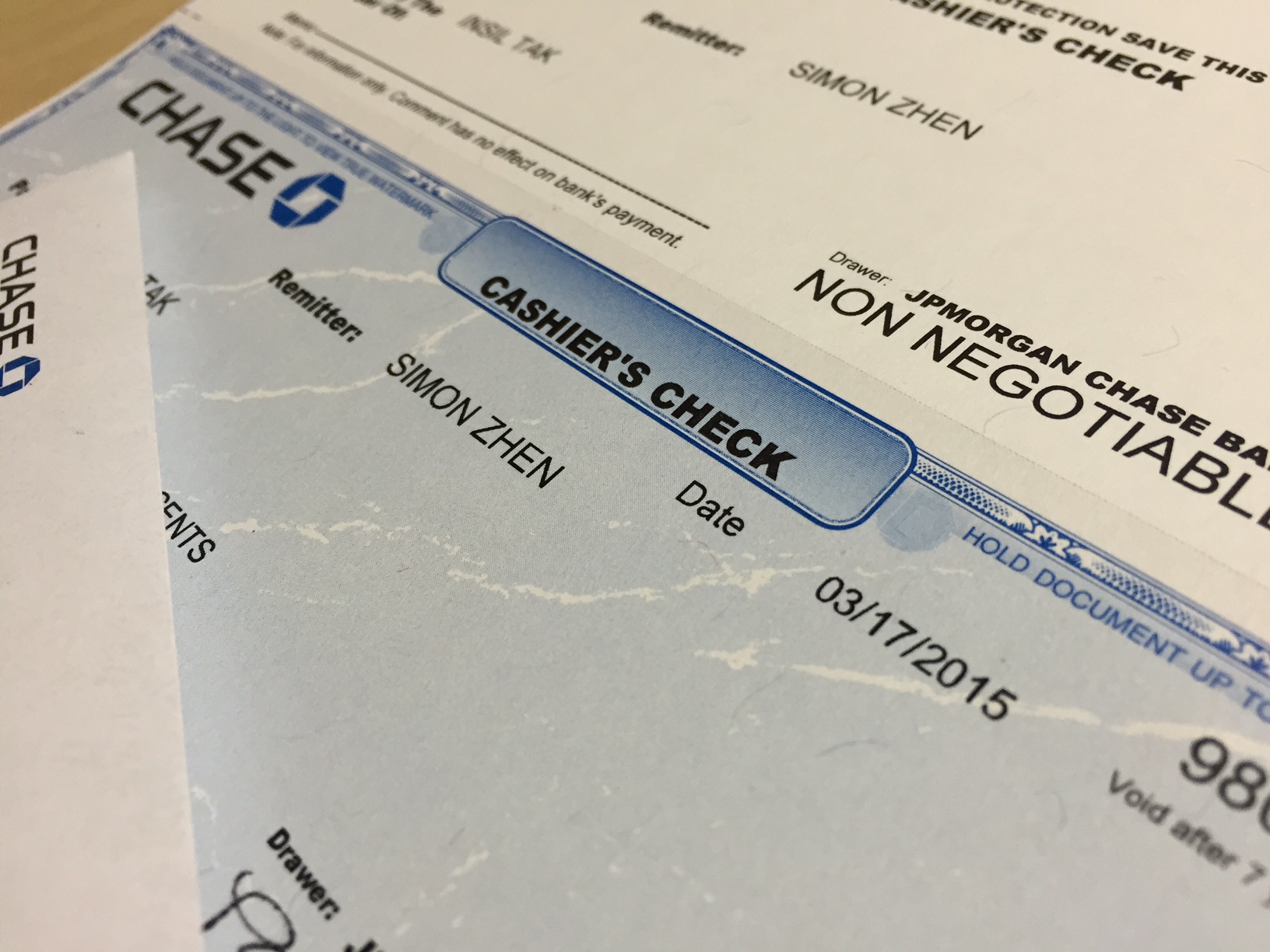
- Issuance of Check: Once the transaction is processed, the bank will print and issue the cashier’s check. It will bear the bank’s name as the drawer, your name as the remitter, the payee’s name, the amount, and a unique check number.
- Review and Sign: Always review the check carefully before leaving the branch to ensure all details are correct. While you don’t typically sign a cashier’s check as the drawer (the bank is the drawer), you might be asked to sign a transaction slip acknowledging the issuance.
Funding the Cashier’s Check
Cashier’s checks are essentially prepaid. When you request one, the funds are immediately withdrawn from your Chase checking or savings account. This is the mechanism that allows the bank to guarantee the payment. This immediate deduction ensures that the funds are indeed available and secured before the check is even printed, eliminating the possibility of insufficient funds when the payee attempts to deposit or cash it. For this reason, it’s imperative to ensure your account has sufficient funds to cover both the check amount and any associated fees before initiating the process.
Navigating Alternatives and Best Practices
While cashier’s checks offer unparalleled security for certain transactions, they are not the only option. Understanding alternatives and adopting best practices can further enhance your financial security and efficiency.
Exploring Other Secure Payment Methods
Depending on the specific circumstances, other payment methods might be more suitable or convenient:
- Wire Transfers: For immediate and direct transfer of funds between bank accounts, a wire transfer is often the fastest and most secure electronic option. They are irreversible once processed, providing a high level of security, and are frequently used for international transactions or time-sensitive domestic payments. However, they typically incur higher fees than cashier’s checks.
- Certified Checks: As discussed, certified checks also guarantee funds, as the bank certifies the payer’s account has the money and freezes it. They are similar in security to cashier’s checks but might be viewed slightly differently by some recipients due to being drawn on the payer’s account rather than the bank’s.
- ACH Transfers (Automated Clearing House): For regular, non-urgent electronic payments, ACH transfers are a low-cost option. They are widely used for direct deposits, bill payments, and transfers between bank accounts, though they typically take 1-3 business days to clear.
- Escrow Services: For extremely large transactions, especially in real estate, an independent escrow service might hold funds and documents until all conditions of a sale are met, adding another layer of security and impartiality.
The choice among these alternatives often comes down to the amount, urgency, cost, and the recipient’s preference.
Verifying a Cashier’s Check (Preventing Fraud)
While cashier’s checks are generally secure, they are not entirely immune to fraud. Counterfeit cashier’s checks are a common scam, often used to overpay a seller and ask for a refund of the difference. If you are the recipient of a cashier’s check, especially from an unfamiliar source or for an unexpectedly large amount, it is crucial to verify its authenticity before depositing or taking action based on it.
- Contact the Issuing Bank Directly: The most reliable way to verify a cashier’s check is to contact the issuing bank (in this case, Chase) directly. Use the phone number from Chase’s official website or the back of your own Chase debit card, not a number printed on the check itself, as fraudsters may print fake numbers.
- Provide Check Details: Provide the bank with the check number, payer’s name (remitter), and the exact amount to confirm its legitimacy.
- Be Patient: Even a legitimate cashier’s check can take a few business days to fully clear, especially if it’s for a large sum or from an out-of-state bank. Do not release goods or services until you are certain the funds have been confirmed and are available in your account.
Important Considerations for Payees and Payers
- Record Keeping: Always keep meticulous records of any cashier’s check transaction, including the check number, amount, date, payee, and a copy of the check if possible.
- Lost or Stolen Checks: If a cashier’s check is lost or stolen, immediately contact Chase. There’s a formal process, which can be lengthy, involving an indemnity agreement that often requires a waiting period (e.g., 90 days) before a replacement or refund can be issued, as the bank must protect itself from the original check being cashed.
- Deposit Immediately: Payees should deposit cashier’s checks promptly to ensure timely clearance and minimize the risk of issues.
Maximizing Value: Tips for Chase Customers
For existing Chase customers, leveraging your banking relationship can significantly impact the cost and convenience of using cashier’s checks and other financial services.
Leveraging Account Benefits to Avoid Fees
Regularly review the benefits associated with your specific Chase checking account. If you frequently need cashier’s checks or other services that incur fees, consider whether upgrading to a premium account tier (like Chase Premier Plus Checking℠ or Chase Sapphire℠ Checking) might be financially beneficial. While these accounts may have higher minimum balance requirements or monthly service fees, the cumulative savings from waived fees for cashier’s checks, money orders, ATM fees, and potentially other services could outweigh the costs. Engage with a Chase personal banker to discuss your banking habits and explore account options that best suit your financial needs. They can provide personalized advice on how to maximize your account’s value and minimize fees.

When to Opt for a Cashier’s Check vs. Other Options
Making an informed decision about payment methods is a cornerstone of sound personal finance. A cashier’s check is ideal when:
- Guaranteed Funds are Non-Negotiable: The recipient absolutely requires assured payment for a significant sum.
- Fraud Prevention is a High Priority: For transactions with unknown parties, the bank’s backing offers an important layer of security.
- The Amount Exceeds Money Order Limits: For amounts above typical money order thresholds, a cashier’s check becomes the go-to physical instrument.
Conversely, consider alternatives when:
- Speed is Critical: Wire transfers are faster for immediate electronic settlement.
- Lower Fees are Preferred for Smaller Amounts: ACH transfers or even personal checks (for trusted, smaller transactions) can be cheaper.
- Regular, Recurring Payments: Online bill pay or ACH transfers are more efficient for consistent payments.
By carefully assessing each transaction’s requirements against the features and costs of available payment methods, Chase customers can make optimal financial decisions, ensuring both security and cost-effectiveness. The cashier’s check, while carrying a nominal fee for some, remains an indispensable tool in the financial arsenal, particularly when the certainty of payment is paramount.
aViewFromTheCave is a participant in the Amazon Services LLC Associates Program, an affiliate advertising program designed to provide a means for sites to earn advertising fees by advertising and linking to Amazon.com. Amazon, the Amazon logo, AmazonSupply, and the AmazonSupply logo are trademarks of Amazon.com, Inc. or its affiliates. As an Amazon Associate we earn affiliate commissions from qualifying purchases.