
Deciding to close a bank account is often a significant financial decision, driven by a variety of personal and financial motivations. Whether you’re consolidating accounts, seeking better banking features, relocating, or simply streamlining your finances, understanding the proper procedure to close your Chase checking account is crucial for a smooth and stress-free transition. This guide will walk you through the necessary steps, important considerations, and best practices to ensure your account closure is handled efficiently and without any unwelcome surprises.
As one of the largest financial institutions in the United States, Chase offers a wide range of services, and while opening an account is straightforward, closing one requires a methodical approach to prevent financial disruptions. Rushing the process can lead to issues such as bounced payments, unexpected fees, or difficulties with linked financial services. Therefore, a clear understanding of the process is not just convenient but an essential part of responsible personal finance management.
Navigating the Decision: Why Close Your Account?
Before initiating the closure of your Chase checking account, it’s beneficial to reflect on the underlying reasons. This introspection can help you confirm that closing the account is indeed the best path forward and prepares you for any subsequent financial adjustments. Understanding the ‘why’ can also guide your actions during the closure process itself, ensuring you address all pertinent aspects.
Common Reasons for Account Closure
Individuals opt to close their checking accounts for a multitude of reasons, each carrying its own set of implications:
- High Maintenance Fees: Perhaps your account no longer meets the criteria for waiving monthly service fees, and these charges are eroding your balance unnecessarily. Finding a bank with lower or no fees, or an account type better suited to your transaction habits, is a common motivator.
- Dissatisfaction with Services: You might be unhappy with Chase’s customer service, branch accessibility, online banking features, or mobile app functionality. The evolving digital landscape means consumers often seek banks that align with their tech-savvy lifestyles and provide seamless digital experiences.
- Relocation: Moving to a new state or country often necessitates establishing banking relationships with institutions that have a stronger local presence or are more convenient in your new environment.
- Seeking Better Interest Rates or Benefits: While checking accounts aren’t primarily for earning high interest, some competitors offer more attractive rates, cashback rewards, or other perks that Chase’s standard checking accounts may not provide.
- Consolidation of Accounts: Many individuals find themselves with multiple checking accounts, which can complicate financial tracking and management. Consolidating to fewer accounts can simplify budgeting and oversight.
- Personal Financial Strategy Shift: Your financial goals may have evolved. For example, you might be shifting towards a specific type of credit union, an online-only bank, or a bank that offers a more integrated suite of services tailored to a new life stage.
Financial Implications of Closing an Account
While the decision to close an account might seem purely administrative, it can have subtle financial implications that warrant careful consideration:
- Impact on Credit Score (Indirectly): Closing a checking account itself does not directly impact your credit score, as checking accounts are not typically reported to credit bureaus. However, if the account is closed with a negative balance that goes to collections, or if linked overdraft protection is tied to a credit line that is then defaulted on, it could indirectly affect your credit. Maintaining good standing with all financial institutions is paramount.
- Linked Services and Relationships: Your checking account is often the hub for numerous financial activities. It might be linked to a Chase savings account, credit card, investment account, or loan. It could also serve as the primary account for automatic bill payments, direct deposits, and third-party payment apps (e.g., PayPal, Venmo). Disconnecting these ties requires meticulous planning to avoid disruptions to your financial ecosystem.
- Transaction History and Record Keeping: Once an account is closed, accessing past statements and transaction history can become more challenging, though banks typically retain records for several years. For tax purposes, budgeting reviews, or personal financial audits, having access to these records is essential. Therefore, proactive archiving of statements before closure is a wise financial habit.
Understanding these implications reinforces the need for a structured approach rather than an impulsive decision. A well-executed account closure ensures continuity in your financial life and protects your financial well-being.
Prudent Preparations: Safeguarding Your Financial Transition
The most critical phase of closing your Chase checking account isn’t the act of closing itself, but the preparatory steps taken beforehand. These actions are designed to prevent financial inconvenience, safeguard your funds, and ensure all linked services transition smoothly to a new banking arrangement. This foresight is a cornerstone of robust personal financial management.
Transferring Funds and Settling Debts
Before you can close an account, it must have a zero balance. This typically means moving all funds out and ensuring no pending debits or credits remain.
- Transferring Funds: The simplest method is usually an electronic transfer to another account you own at Chase or another financial institution. You can initiate this via online banking or the mobile app, or by visiting a branch. For larger sums, wire transfers might be an option, though they often incur fees. Alternatively, you could withdraw the remaining balance in cash or request a cashier’s check, especially if the amount is substantial. Always ensure the receiving account is fully functional before initiating transfers.
- Settling Outstanding Debts: Verify that all checks you’ve written have cleared and that any pending debit card transactions have posted. If you have an outstanding loan or credit card payment linked to this checking account, ensure it’s paid off or re-routed to a different account. Leaving insufficient funds in the account for pending transactions could lead to overdraft fees or, worse, the bank refusing to close the account until all debts are settled.
Updating Automatic Payments and Direct Deposits
This step is arguably the most crucial to prevent financial disruptions. Your checking account is likely the hub for regular incoming and outgoing transactions.
- Automatic Bill Payments: Create a comprehensive list of all recurring payments linked to your Chase checking account. This includes utility bills, loan payments, subscriptions (streaming services, gym memberships), insurance premiums, and any scheduled transfers. Contact each service provider individually and update your payment information to your new account. It’s advisable to do this well in advance of the closure date and monitor your new account to ensure payments are successfully debited.
- Direct Deposits: If your salary, government benefits, or other regular income streams are direct-deposited into your Chase account, notify your employer or the paying entity of your new bank account details. Provide them with your new account and routing numbers. Allow ample time for this change to take effect, as it can sometimes take one or two pay cycles. Consider keeping your Chase account open for a little longer after updating, just in case a payment is routed to the old account by mistake.
Reviewing Linked Services and Third-Party Connections
Beyond direct deposits and automatic payments, your checking account may be integrated with various other financial tools and services.
- Investment Accounts: If your Chase checking account is linked to an investment platform (e.g., brokerage accounts, robo-advisors), ensure you update the bank information for deposits and withdrawals.
- Peer-to-Peer Payment Apps: Services like PayPal, Venmo, Zelle (which Chase also uses), Cash App, or similar platforms often link directly to your checking account. Update these apps with your new banking details to avoid transaction failures.
- Digital Wallets: If your debit card associated with the Chase account is stored in Apple Pay, Google Pay, or other digital wallets, remember to remove it.
Securing Essential Account Statements and Records
Maintaining thorough financial records is a hallmark of good personal finance.
- Download or Print Statements: Before closure, access your online banking portal and download or print at least the last 12-24 months of account statements. Some financial advisors recommend keeping records for up to seven years for tax purposes. These statements can be vital for tax preparation, budgeting reviews, resolving disputes, or applying for loans where proof of income or assets is required.
- Transaction History: Save a comprehensive transaction history from the online portal. This provides a detailed record of all debits and credits.
- Proof of Closure: Request written confirmation from Chase once the account is closed. This serves as official documentation that you no longer hold the account, which can be useful for future financial dealings or disputes.
By diligently completing these preparatory steps, you significantly mitigate the risks associated with account closure and set yourself up for a smooth financial transition.
Your Options for Account Closure: A Step-by-Step Guide
Chase, like most major banks, offers several avenues for closing a checking account. The method you choose will depend on your preference for in-person interaction, urgency, and the complexity of your account situation. Regardless of the method, ensure you have photo identification and your account number readily available.
In-Person Closure at a Chase Branch
Closing your account in person is often the most straightforward and recommended method, especially if you have a remaining balance that needs to be handled or if you anticipate needing to discuss specific account details.
- Visit a Branch: Locate your nearest Chase branch. It’s advisable to go during off-peak hours to minimize wait times.
- Speak with a Banker: Inform the banker that you wish to close your checking account. They will typically ask for your account number and a form of identification (e.g., driver’s license, passport).
- Address Remaining Funds: If there’s a balance, the banker can facilitate its transfer to another account, provide you with a cashier’s check, or issue cash.
- Confirmation: The banker will process the closure and provide you with a confirmation number or a printed statement showing a zero balance and account closure. This is your immediate proof of closure.
- Benefits: This method offers immediate confirmation, the ability to ask questions directly, and ensures all issues are resolved on the spot. It’s particularly useful if you have linked accounts or complex situations.
Closing Your Account via Phone
For those who prefer not to visit a branch, closing your account over the phone is a viable alternative.
- Contact Customer Service: Call Chase customer service at the number provided on the back of your debit card or on their official website.
- Account Verification: Be prepared to go through a rigorous identity verification process, which may include providing your account number, Social Security number, date of birth, and answering security questions.
- Balance Handling: Discuss with the representative how you wish to handle any remaining balance. They can typically arrange an electronic transfer to another account you specify (which you’ve likely linked during the preparation phase) or mail you a check.
- Request Confirmation: Ask for a confirmation number or for a written confirmation of the account closure to be mailed to you.
- What to Expect: This method might involve longer wait times and requires patience during the verification process. Ensure you clearly understand how your funds will be disbursed and when you can expect confirmation.
Online Closure (Limitations)
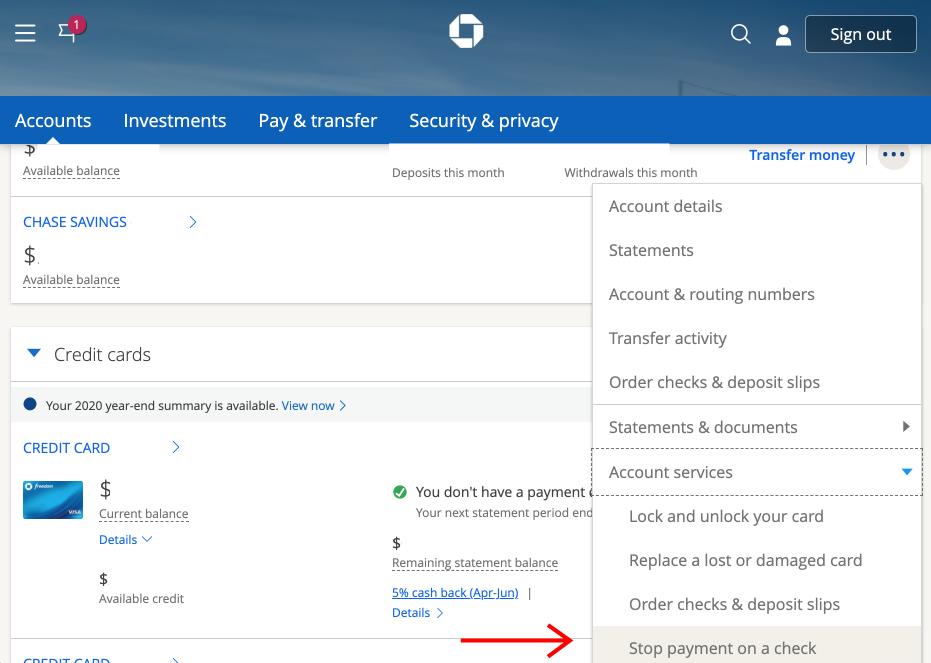
While many banking tasks can be performed online, directly closing a checking account through Chase’s online portal or mobile app is generally not an option for security reasons and to ensure proper fund disbursement and identity verification. Most banks prefer a more direct interaction (in-person or phone) for account closures to minimize fraud and ensure all loose ends are tied up. If you attempt to find an online closure option and cannot, refer to the in-person or phone methods.
Mailing a Written Request (Specific Situations)
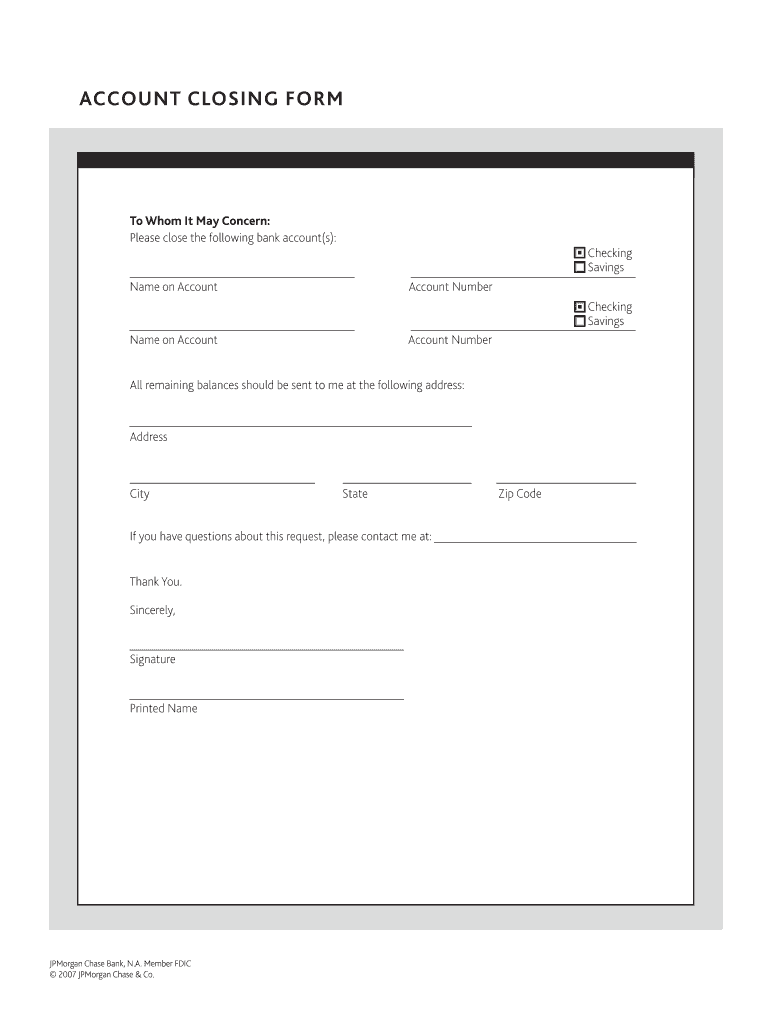
In some less common scenarios, such as living abroad or being unable to access a branch or phone, a written request might be an option, though it’s typically the slowest and least preferred method due to potential delays and security concerns.
- Compose a Letter: Clearly state your intention to close the account, include your full name, account number, last four digits of your Social Security number, and contact information.
- Instructions for Balance: Provide clear instructions on how to disburse any remaining balance (e.g., transfer to a specified account, mail a check to a specific address).
- Notarization: Consider having the letter notarized for added security and authenticity.
- Send by Certified Mail: Mail the letter via certified mail with a return receipt requested. This provides proof that Chase received your request.
- Follow Up: Be prepared to follow up with Chase via phone or secure messaging to confirm receipt and processing of your request.
- Considerations: This method is subject to postal delays and requires careful attention to detail. It should generally be used only when other, more direct methods are not feasible.
Choosing the right method for you, coupled with thorough preparation, will make the account closure process as seamless as possible, allowing you to focus on your new financial arrangements.
Post-Closure Checklist: Ensuring a Smooth Transition
Closing your Chase checking account isn’t merely the final interaction with the bank; it extends to the subsequent steps you take to confirm the closure and manage your financial profile. This post-closure checklist helps ensure that the transition is truly complete and free of lingering issues, reinforcing sound financial stewardship.
Verifying Account Status and Zero Balance
The most critical step post-closure is to confirm that the account has indeed been closed and holds a zero balance.
- Request Written Confirmation: As mentioned earlier, always request a written confirmation of closure from Chase. This official document is your definitive proof that the account is no longer active. It should indicate the date of closure and confirm a zero balance.
- Check Your New Bank Statements: Monitor your new bank account to ensure all expected direct deposits are arriving and automatic payments are being debited successfully. This indirect verification can provide peace of mind that the switch has been fully executed.
- Contact Chase (If Needed): If you don’t receive written confirmation within a reasonable timeframe (e.g., 2-4 weeks) or if you have any doubts, don’t hesitate to call Chase customer service to verify the account status.
Handling Outstanding Checks and Pending Transactions
Even after you’ve initiated closure, there’s a small window where previously written checks or pending transactions could still impact the account.
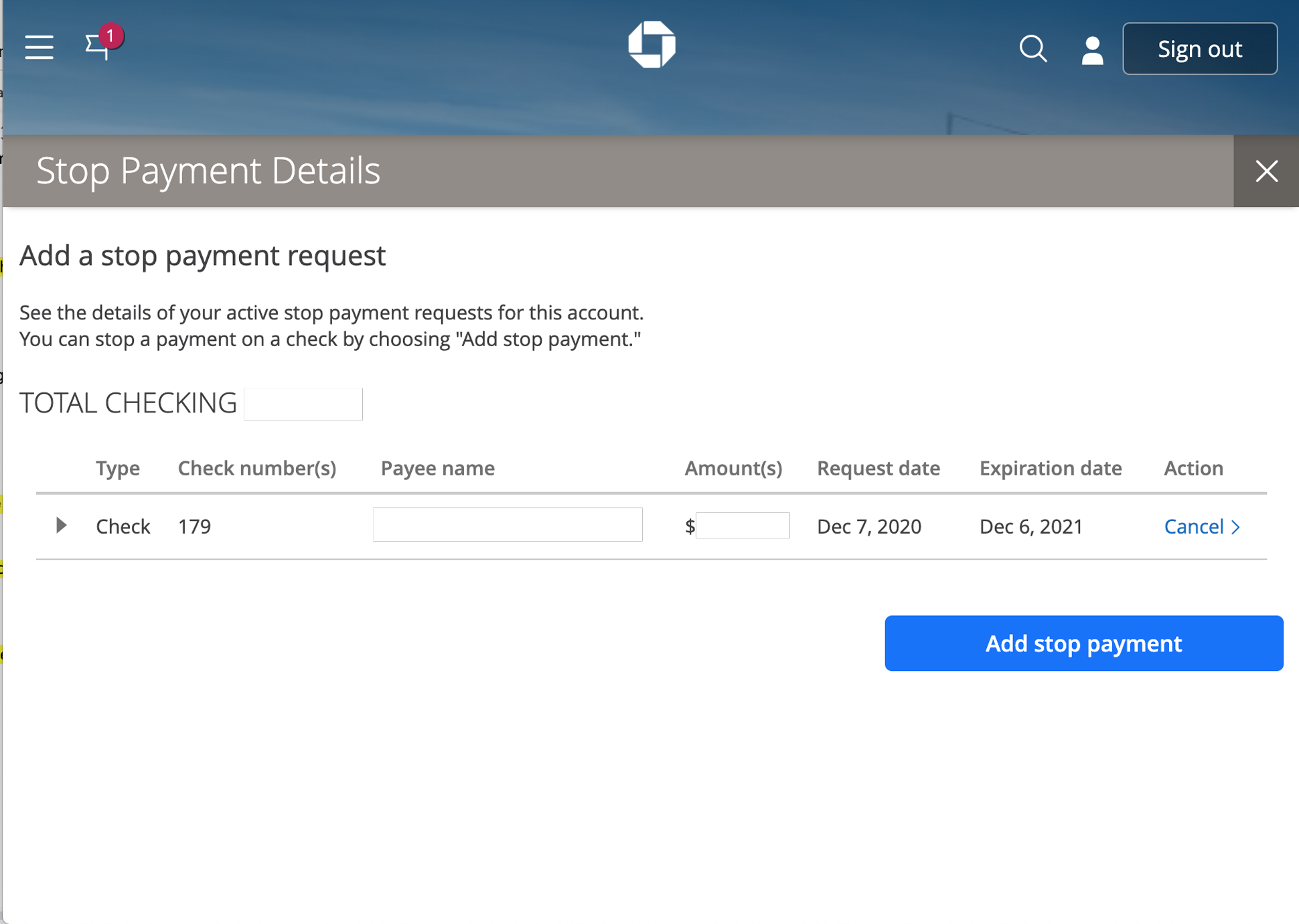
- Outstanding Checks: If you’ve written checks that haven’t yet cleared, it’s imperative to ensure funds are available to cover them or to make alternative arrangements with the payee. Ideally, all checks should clear before you close the account. If a check is presented after closure, it will likely bounce, potentially incurring fees for you and the payee, and could lead to negative remarks from the bank.
- Pending Debit Transactions: Sometimes, debit card transactions can take a few days to post. Ensure all your recent debit card purchases have cleared the account before its final closure. This prevents potential overdrafts or issues with merchants.
The Importance of Keeping Records
Maintaining detailed records of your financial interactions is a fundamental principle of effective personal finance.
- File Confirmation and Statements: Keep the official closure confirmation letter and any downloaded or printed statements in a secure location. These documents are invaluable for future reference, tax purposes, or in the rare event of a dispute.
- Track Communication: If you communicated with Chase via phone or secure messaging, note down dates, times, names of representatives, and summaries of discussions. This detailed log can be beneficial if any follow-up is required.
- Retention Period: Financial experts often recommend keeping bank statements and closure documents for at least seven years, aligning with IRS guidelines for tax-related records.
What to Do with Your Debit Card and Checks
Once your account is officially closed, proper disposal of your old banking instruments is essential for security.
- Shred Debit Card: Physically destroy your old Chase debit card. Cut through the magnetic strip and chip multiple times to render it unusable. Do not simply throw it in the trash, as this poses a security risk.
- Shred Unused Checks: Similarly, shred any unused checks associated with the closed account. These checks are now invalid and could be used fraudulently if they fall into the wrong hands.
- Digital Deletion: Remove your Chase debit card details from any online shopping sites, digital wallets (Apple Pay, Google Pay), and subscription services where it might have been stored.
By meticulously following this post-closure checklist, you can rest assured that your Chase checking account closure is handled comprehensively, minimizing any potential for future financial headaches and ensuring your transition to new banking arrangements is truly seamless.
Beyond Closure: Future Financial Planning and Alternatives
Closing a checking account isn’t just an end; it’s often a catalyst for new beginnings in your financial journey. It provides an opportunity to reassess your banking needs, explore new financial tools, and refine your overall personal finance strategy. Thinking beyond the immediate act of closure can lead to more optimal financial management in the long run.
Exploring New Banking Relationships
The decision to close an account often stems from a desire for better features, lower fees, or improved service. Use this opportunity to carefully select your next banking partner.
- Identify Your Priorities: What truly matters to you in a bank? Is it a strong digital presence, numerous physical branches, low or no fees, high interest rates on savings, integration with budgeting tools, or specialized customer service?
- Research Alternatives: Investigate various types of financial institutions. This could include:
- Online-only banks: Often offer higher interest rates and lower fees due to reduced overhead.
- Credit Unions: Member-owned, typically offering competitive rates and a community-focused approach.
- Local banks: May provide more personalized service and a deep understanding of local needs.
- Other large national banks: If you’re seeking a different branch network or specific features not offered by Chase.
- Compare Features and Fees: Create a checklist to compare monthly maintenance fees, ATM fees, overdraft fees, minimum balance requirements, mobile app functionality, customer support options, and any perks like cashback or rewards programs.
- Account Opening Process: Understand the requirements for opening a new account, which typically include identification, proof of address, and an initial deposit.
Managing Your Financial Profile Post-Closure
While closing a checking account doesn’t directly impact your credit score, how you manage your finances immediately before and after can have ripple effects.
- Monitor Your Credit Report: Regularly check your credit report for any inaccuracies or unexpected entries. While rare, a mismanaged account closure could theoretically lead to issues if, for example, an overdraft went unpaid and was sent to collections.
- Update All Financial Records: Ensure all your personal financial management software, budgeting apps, and tax preparation tools are updated with your new banking information.
- Maintain an Emergency Fund: As you transition funds, ensure your emergency fund remains accessible and adequately stocked. Unexpected delays or issues during the transfer process should not leave you financially vulnerable.
When to Consider Downgrading or Modifying Instead of Closing
Sometimes, closing an account might be an overly drastic step. Chase offers various checking account types, and downgrading or modifying your existing account might be a better solution if your needs have simply changed.
- Downgrading Account Type: If high fees are the primary concern, inquire if you can switch to a lower-tier checking account with fewer features but also lower or no monthly fees. For example, moving from a premium checking account to a basic checking account might eliminate fees if you can meet simpler requirements.
- Changing Account Features: You might be able to remove specific features you no longer need, or add new ones, without fully closing the account.
- Maintaining a Relationship: If you have other valuable relationships with Chase (e.g., credit cards, mortgages, investment accounts), maintaining a checking account, even a basic one, might preserve benefits or simplify account management across their ecosystem.
By thoroughly evaluating your banking needs and exploring all available options, you can ensure that the decision to close your Chase checking account is not just a necessary step but a strategic move that enhances your overall financial health and aligns with your long-term goals. Responsible financial management is an ongoing process, and each banking decision plays a vital role in shaping your financial future.
aViewFromTheCave is a participant in the Amazon Services LLC Associates Program, an affiliate advertising program designed to provide a means for sites to earn advertising fees by advertising and linking to Amazon.com. Amazon, the Amazon logo, AmazonSupply, and the AmazonSupply logo are trademarks of Amazon.com, Inc. or its affiliates. As an Amazon Associate we earn affiliate commissions from qualifying purchases.