
In an economic landscape where every dollar counts, consumers and businesses alike are perpetually seeking avenues for savings and value. Costco Wholesale stands as a formidable contender in this pursuit, operating on a unique membership-based model that requires an upfront annual fee to access its warehouse of products and services. For many, this annual charge represents a critical financial decision point: is the investment in a Costco membership a prudent one, capable of delivering tangible returns and savings that outweigh its cost? This article delves into the intricacies of Costco’s membership structure, breaking down the fees, the value proposition, and the financial calculus involved in deciding if a Costco membership aligns with your personal or business financial strategy.

Costco’s business model is fundamentally different from traditional retailers. Instead of relying solely on product markups, a significant portion of its profit is derived from membership fees. This allows the company to offer highly competitive pricing on a vast array of goods, from groceries and electronics to gasoline and prescription drugs. Consequently, understanding the membership fee is not merely about knowing a number; it’s about evaluating an investment into a potential ecosystem of savings and exclusive benefits that can significantly impact a household’s or business’s bottom line.
Understanding Costco’s Membership Structure and Current Fees
Costco primarily offers two tiers of individual/household membership, along with a business-focused option, each designed to cater to varying levels of spending and benefit realization. Each tier presents a distinct financial commitment and an accompanying set of advantages, making the choice a strategic one for the financially savvy consumer.
The Gold Star Membership: Your Entry Point to Bulk Savings
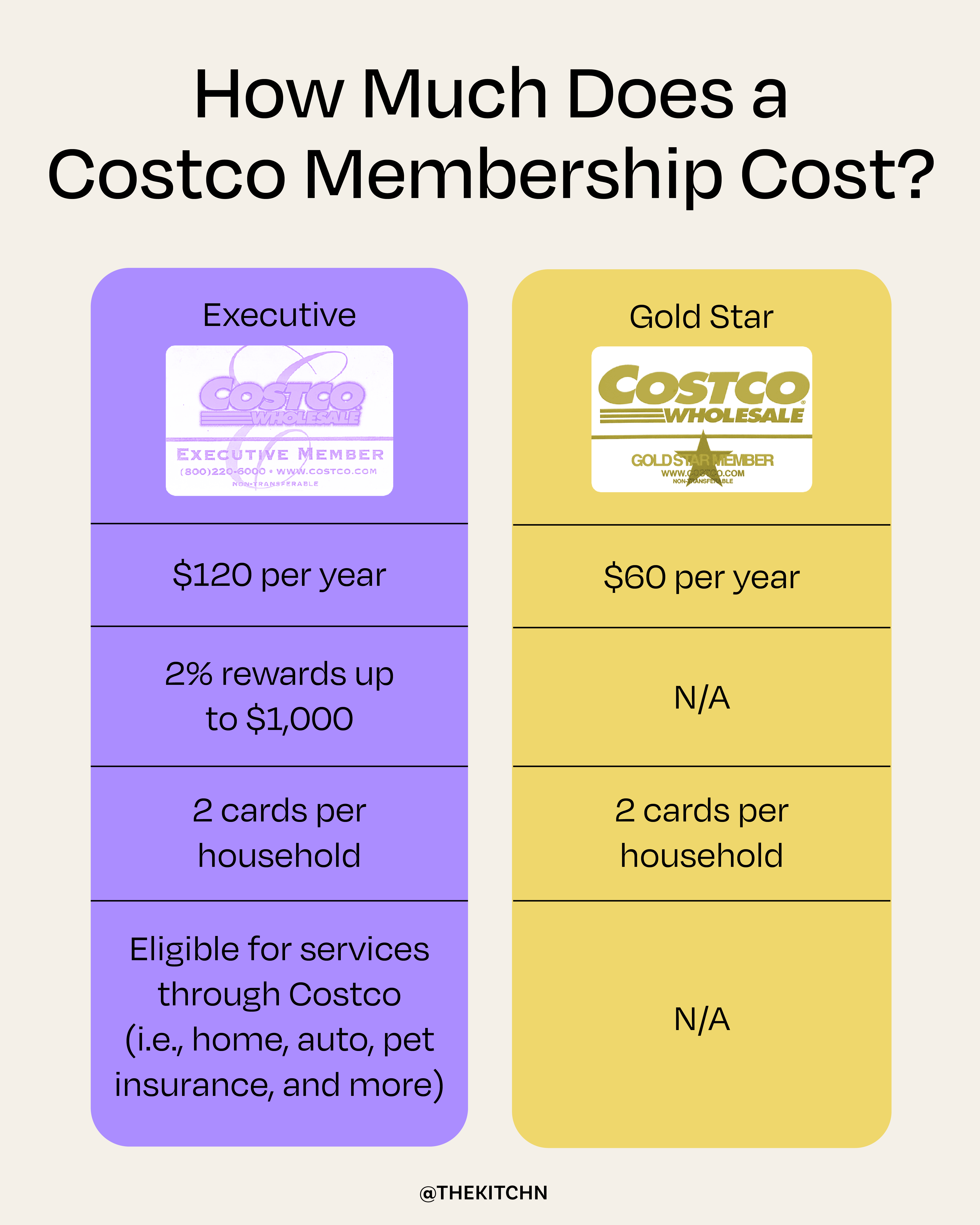
The Gold Star Membership is Costco’s most basic and widely adopted tier, serving as the gateway for individuals and households to access the warehouse. For a standard annual fee, currently $60 in the United States, members receive a membership card that grants entry to all Costco warehouses worldwide and allows them to make purchases. This fee is a fixed investment, irrespective of how much or how little a member spends throughout the year.
This tier is ideal for those who are new to Costco and wish to explore its offerings without a higher upfront commitment, or for individuals and smaller families whose purchasing volume might not justify the enhanced benefits of a higher tier. The financial appeal here lies in the direct savings on everyday goods, which can quickly offset the $60 fee if a member regularly purchases items like groceries, household essentials, or gasoline at Costco’s often lower prices. The direct savings accumulated on these purchases represent the primary return on investment for Gold Star members. It’s a straightforward transaction: pay an access fee, save on purchases.
The Executive Membership: Unlocking Enhanced Rewards and Value
For those who anticipate significant spending at Costco, the Executive Membership presents a compelling financial argument. Priced at $120 annually in the United States, this tier doubles the cost of the Gold Star Membership but offers a substantial incentive: an annual 2% Executive Reward on most eligible Costco and Costco.com purchases. This reward is issued as a certificate that can be redeemed for merchandise or cash at any Costco warehouse.
The financial calculus for the Executive Membership is more nuanced. To break even on the additional $60 cost (compared to Gold Star), an Executive Member needs to spend at least $3,000 annually ($60 / 0.02 = $3,000). Any spending above this threshold translates directly into net savings. For instance, a household spending $6,000 annually at Costco would earn a $120 reward, effectively recouping the entire Executive membership fee and delivering the benefits of the higher tier at no net cost. Beyond the 2% reward, Executive members also often receive additional benefits, such as larger discounts on certain Costco services (e.g., travel, business services), further enhancing the financial value proposition. This tier transforms the membership fee from a mere access charge into an investment vehicle, where higher spending yields a direct financial return.
Business Membership: Tailored for Commercial Needs
While often similar in cost to the Gold Star or Executive tiers (e.g., $60 for Gold Star Business, $120 for Executive Business), the Business Membership is specifically designed for business owners. It allows businesses to purchase products for resale and offers the ability to add authorized users (at an additional cost per user), facilitating purchasing for multiple employees. Business members can also typically apply for a sales tax exemption if they have a valid resale certificate.
From a business finance perspective, this membership provides direct access to bulk goods at wholesale prices, which can significantly reduce operational costs for small businesses, restaurants, or home-based enterprises. The ability to buy in large quantities at competitive prices directly impacts profit margins and inventory management. The Executive Business Membership offers the same 2% reward, making it an even more attractive option for businesses with high procurement volumes, turning procurement into a profit-generating activity through the reward system.
The Financial Calculus: Is a Costco Membership a Savvy Investment?
Deciding whether to invest in a Costco membership transcends simply looking at the annual fee. It requires a detailed financial calculus, weighing potential savings against the upfront cost and aligning it with individual or business spending habits.
Weighing the Annual Fee Against Potential Savings
The core of the financial argument for a Costco membership rests on its ability to generate savings that exceed the annual fee. For a Gold Star member, the $60 fee must be offset by direct price reductions on purchases. Consider a family that spends $100 per week on groceries. If Costco offers a 10% average saving on these groceries compared to a traditional supermarket, they save $10 per week, or $520 annually. In this scenario, the $60 membership fee is recouped in just six weeks, with the remaining $460 being pure savings.
Beyond groceries, Costco is renowned for its competitive pricing on gasoline, which can represent significant savings for commuters. A typical driver saving $0.20 per gallon and filling up 15 gallons per week saves $3 per week, or $156 annually. Add savings on prescription medications, optical services, or even large-ticket items like electronics or appliances during sales, and the $60 fee quickly becomes a modest entry ticket to substantial financial benefits. The key is to honestly assess your current spending patterns and identify categories where Costco is likely to offer superior value.
The Power of the 2% Executive Reward
The Executive Membership’s 2% reward fundamentally alters the financial equation. It transforms the membership from a pure cost center into a potential profit center. As established, spending $3,000 annually generates a $60 reward, offsetting the additional cost of the Executive tier. However, for households or businesses with higher spending, the rewards can be substantial.
Imagine a small business that spends $15,000 annually on office supplies, snacks, and other operational necessities at Costco. Their 2% Executive Reward would amount to $300. After deducting the $120 membership fee, the business realizes a net financial gain of $180, in addition to the inherent savings from Costco’s competitive pricing. For a large family that spends $8,000 annually on groceries, household goods, and other purchases, the Executive Reward would be $160, resulting in a net gain of $40 ($160 reward – $120 fee). This mechanism directly incentivizes higher spending within the Costco ecosystem, making the Executive tier particularly attractive for consistent, high-volume purchasers.
Beyond Groceries: Unexpected Financial Perks
Costco’s financial value extends beyond its warehouse aisles. The membership grants access to a suite of ancillary services that often come with significant cost advantages:
- Gasoline: Often priced significantly lower than surrounding gas stations, leading to substantial savings for frequent drivers.
- Pharmacy: Competitive pricing on prescription medications, often beating many insurance co-pays for certain drugs.
- Optical Services: Discounted eye exams, glasses, and contact lenses.
- Travel Services: Exclusive deals on vacation packages, cruises, rental cars, and hotels, which can lead to hundreds, if not thousands, of dollars in savings on travel expenses.
- Car Buying Program: Partnerships with dealerships offering pre-negotiated, often below-MSRP, pricing on new and used vehicles.
- Business Services: Discounts on payment processing, payroll services, and bottled water delivery for business members.
These “hidden” financial perks often go overlooked in the initial assessment but can contribute significantly to the overall return on investment of a Costco membership, cementing its place as a comprehensive financial tool.
Navigating the Membership Process and Maximizing Your Investment

Once the financial decision has been made, understanding the practical aspects of joining and strategically utilizing the membership ensures you fully realize its value.
How to Join: Seamless Onboarding for Financial Access
Joining Costco is a straightforward process. Prospective members can sign up either in person at any Costco warehouse membership desk or online via Costco.com. In either case, you’ll need to provide identification and payment for the annual fee. If signing up in person, you’ll receive your membership card on the spot. Online sign-ups typically involve a temporary membership number for immediate online shopping, with the physical card mailed to you or picked up at the warehouse.
The ease of access is a key part of the value proposition. Within minutes, you can gain entry to a vast retail ecosystem designed to save you money. For businesses, additional documentation like a resale license or business tax ID might be required to qualify for certain business-specific benefits, reinforcing the financial legitimacy of the membership.
Renewal Strategies: Sustaining Your Savings Journey
Costco memberships are renewed annually. Members can opt for automatic renewal, which ensures uninterrupted access and continues their savings journey without a lapse. Alternatively, renewals can be processed manually online, in-warehouse, or by mail. It’s an opportune time each year to reassess your membership tier. If your spending habits have changed, perhaps an upgrade to Executive or a downgrade to Gold Star might be a more financially optimal choice.
For Executive members, the annual 2% reward certificate is typically mailed a few months before the renewal date, serving as a timely reminder of the tangible benefits received and aiding in the decision to renew or reconsider the tier. This financial feedback mechanism is crucial for members to continuously evaluate their investment.
Smart Shopping Strategies to Maximize Membership Value
Having a membership is one thing; leveraging it for maximum financial benefit is another. Here are key strategies:
- Buy in Bulk Wisely: While bulk buying is a hallmark of Costco, it’s essential to only purchase items you will consume or use before they expire. Overbuying perishable goods can lead to waste, negating any initial savings. This requires careful budgeting and inventory management at home.
- Utilize Coupons and Sales: Costco regularly issues coupon books and has online-only deals. Pay attention to these promotions to stack savings on top of already competitive prices.
- Price Check: Don’t assume everything at Costco is the cheapest. For certain items, especially smaller quantities or niche products, other retailers might offer better prices. Use your Costco membership for its strengths.
- Leverage Ancillary Services: Actively use the gas station, pharmacy, optical, and travel services if they meet your needs. These are often where some of the biggest non-grocery savings are found.
- Shop with a List: To prevent impulse buys and overspending, always shop with a detailed list. The warehouse environment is designed to encourage discovery, which can be detrimental to a strict budget.
By adopting these smart shopping habits, members can transform their annual fee into a highly efficient financial tool, consistently delivering returns through reduced spending and maximized rewards.
The Broader Financial Impact and Considerations
While the financial benefits of a Costco membership are clear for many, it’s also important to consider its broader impact on your financial habits and suitability for different economic situations.
Understanding the Opportunity Cost of Membership
Every financial decision comes with an opportunity cost. While a Costco membership offers savings, it also ties you to one retailer. This means you might miss out on specific deals or unique products at other stores. For some, the upfront $60 or $120 fee might be better spent on other investments or immediate needs, especially if their spending habits don’t align with bulk purchases or if they live far from a warehouse. The “cost” isn’t just the fee, but also the potential savings you don’t achieve by shopping elsewhere or the initial capital that could have been used differently.
Furthermore, the allure of bulk buying can sometimes lead to overspending or purchasing items that eventually go to waste, inadvertently increasing your overall expenditure despite per-unit savings. A critical self-assessment of your purchasing discipline is essential.
Who Benefits Most from a Costco Membership?
The financial benefits of a Costco membership are not universal. Certain demographics and lifestyles are particularly well-suited:
- Large Families: High consumption of groceries and household goods makes bulk buying highly efficient and cost-effective.
- Small Businesses: Access to wholesale pricing for operational supplies, inventory, and business services can significantly improve profit margins.
- Individuals with Specific High-Volume Needs: People who frequently buy gas, have multiple prescriptions, or regularly purchase large-ticket items like electronics or tires.
- Frugal Shoppers with Storage: Those who are disciplined about their purchases, can store bulk items, and actively seek out deals.
Conversely, individuals living alone, those with limited storage space, or those who rarely cook might find the membership less financially beneficial.
The Long-Term Value Proposition: More Than Just Discounts
Beyond immediate financial savings, a Costco membership offers long-term value that contributes to overall financial well-being:
- Quality Assurance: Costco is known for its commitment to quality products, often offering premium brands or high-quality house brands (Kirkland Signature) at competitive prices. This reduces the risk of purchasing inferior goods, saving money on replacements.
- Generous Return Policy: Costco’s industry-leading return policy (often full refunds without a time limit, with some exceptions) provides financial peace of mind. It mitigates the risk of buyer’s remorse, ensuring your investment in products is protected.
- Brand Trust: The consistent value, quality, and customer service build trust, making Costco a reliable financial partner for many families and businesses.
These less tangible benefits contribute to a sense of financial security and satisfaction, making the membership a comprehensive value proposition that extends beyond just the numbers on a receipt.
Conclusion: A Prudent Financial Decision for Many
The Costco membership fee, whether $60 for Gold Star or $120 for Executive, is more than just an entry ticket; it’s an investment. Like any investment, its prudence hinges on a careful financial calculus, weighing the upfront cost against the potential for savings, rewards, and exclusive services. For individuals and businesses whose spending habits align with bulk purchasing, who utilize the range of services, and who employ smart shopping strategies, a Costco membership can be a remarkably effective financial tool, delivering significant returns that far outweigh its annual fee.
The Executive Membership, in particular, offers a clear path to financial gain through its 2% reward program, transforming the fee into a mechanism for earning back a portion of your spending. Ultimately, deciding “what is the Costco membership fee” is not just about its dollar amount, but about understanding its potential to unlock a world of financial savings and enhance your purchasing power in today’s economy. For many, it’s a strategically sound investment that pays dividends throughout the year.
aViewFromTheCave is a participant in the Amazon Services LLC Associates Program, an affiliate advertising program designed to provide a means for sites to earn advertising fees by advertising and linking to Amazon.com. Amazon, the Amazon logo, AmazonSupply, and the AmazonSupply logo are trademarks of Amazon.com, Inc. or its affiliates. As an Amazon Associate we earn affiliate commissions from qualifying purchases.