
In the landscape of global retail, few organizations command as much respect from financial analysts and institutional investors as Costco Wholesale Corporation. While the company is often lauded for its membership model and treasury-like cash flow, the true engine behind its multi-billion dollar valuation is its massive workforce. Understanding how many employees Costco has is not merely a matter of census; it is a critical exploration of labor efficiency, operational overhead, and the strategic allocation of human capital in a low-margin industry.
As of the most recent fiscal reports, Costco employs approximately 316,000 people globally. This figure represents a diverse workforce spanning warehouse operations, logistics, corporate administration, and ancillary services such as travel and pharmacy. For investors and business finance professionals, this number is a fundamental metric used to calculate revenue per employee, a key indicator of organizational health and operational prowess.

Analyzing the Scale of Costco’s Global Workforce
The growth of Costco’s workforce has been remarkably consistent, mirroring its physical expansion across North America, Europe, and Asia. Out of the roughly 316,000 employees, approximately 207,000 are based in the United States, with the remaining 109,000 distributed across international markets including Canada, Mexico, the United Kingdom, Japan, and China.
Full-Time vs. Part-Time Distribution
From a business finance perspective, the ratio of full-time to part-time employees is a significant variable in predicting long-term liability and insurance costs. Unlike many of its retail competitors who rely heavily on a “lean” part-time model to avoid paying benefits, Costco maintains a relatively high percentage of full-time staff. Roughly 60% of the workforce is full-time, a strategic choice that stabilizes the company’s internal economy.
This distribution allows for better scheduling predictability and minimizes the administrative costs associated with high-frequency hiring. For the finance department, a stable full-time workforce means more predictable payroll forecasts and lower volatility in the company’s “Selling, General, and Administrative” (SG&A) expenses.
Geographic Density and Labor Markets
The concentration of Costco’s workforce follows its warehouse footprint. In the United States, the workforce is heavily concentrated in high-traffic regions where the membership model thrives. However, the international expansion—specifically in high-growth markets like China—presents a different financial profile. Labor laws and benefit mandates vary wildly across these borders, requiring Costco’s finance teams to manage a complex web of international payroll compliance and currency risk.
The Financial Impact of Human Capital: Why Labor Costs Matter to Investors
In the retail sector, labor is usually the largest controllable expense. Most discount retailers view labor as a cost to be minimized. Costco, however, treats labor as a capital investment. This philosophy, often called “Efficiency Wage Theory,” suggests that paying above-market wages results in higher productivity and lower supervision costs, which ultimately boosts the bottom line.
Revenue Per Employee: The Gold Standard of Efficiency
When evaluating the financial efficiency of a 316,000-person workforce, the “Revenue Per Employee” metric is illuminating. Costco consistently outperforms its peers in this category. While a standard big-box retailer might generate $200,000 to $300,000 in revenue per employee, Costco often generates upwards of $700,000.
This is achieved through a combination of high-volume sales and a minimalist operational style. Because Costco stocks only about 4,000 SKUs (compared to 100,000+ at a typical supermarket), its employees are more efficient at stocking, inventory management, and point-of-sale processing. From a corporate finance standpoint, this high revenue-to-labor ratio justifies the company’s higher-than-average wage structure.
Impact on SG&A Expenses
Costco’s SG&A expenses are among the lowest in the retail industry, typically hovering around 9% to 10% of total revenue. For comparison, many competitors see SG&A figures north of 15% or 20%. Even though Costco pays its employees more per hour, the sheer volume of sales and the efficiency of the workers keep the total labor cost percentage remarkably low. This operational leverage is a primary reason why Costco can maintain razor-thin margins on its products while still delivering significant value to shareholders.
Retention and Efficiency: The Hidden Profits in Employee Loyalty
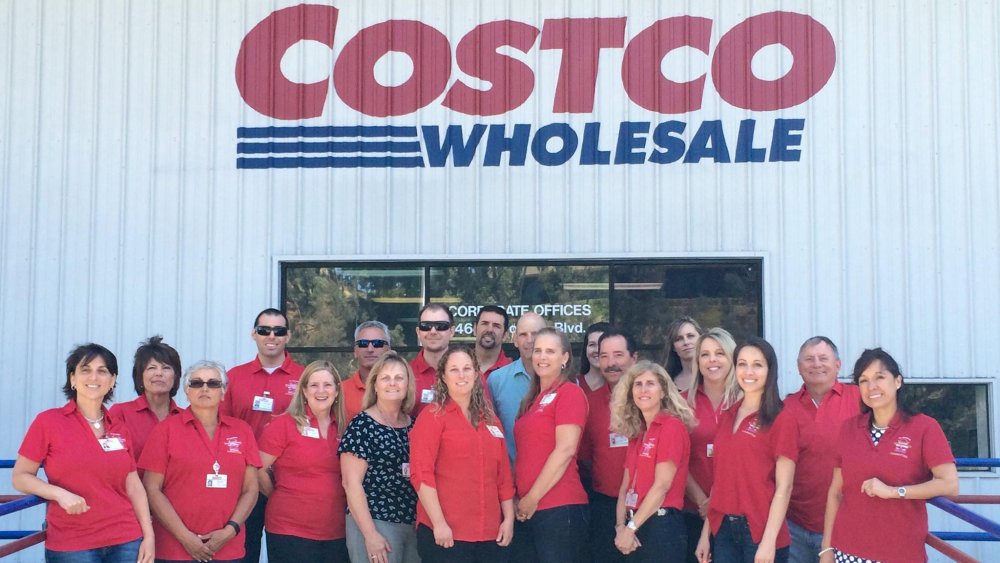
One of the most significant financial drains on a retail business is employee turnover. The cost of recruiting, onboarding, and training a new retail associate can range from $2,000 to $5,000 per person. With 316,000 employees, even a moderate turnover rate can lead to hundreds of millions of dollars in “silent” losses.
Industry-Leading Turnover Rates
In an industry where 100% annual turnover is not uncommon, Costco boasts a retention rate that is the envy of the business world. For employees who have been with the company for more than one year, the turnover rate is often reported to be less than 10%.
This stability provides a massive financial cushion. By retaining employees, Costco preserves institutional knowledge and maintains high levels of customer service, which directly correlates to membership renewal rates—the lifeblood of the company’s profit model. From a personal finance perspective for the workers, the “Costco path” offers a rare middle-class trajectory in retail, which further cements this loyalty.
The Financial Benefit of Benefits
Costco provides comprehensive health insurance and retirement benefits to a majority of its workforce, including many part-time staffers. While this appears as a heavy line item on the balance sheet, it functions as a risk-mitigation strategy. Healthy, financially secure employees are less likely to take unplanned leave or suffer from burnout. For the business analyst, these benefits are an investment in “operational continuity.”
By subsidizing healthcare and offering 401(k) matching, Costco reduces the long-term volatility of its labor pool. This makes the company’s future earnings more predictable, which in turn leads to a higher P/E (Price-to-Earnings) ratio as investors are willing to pay a premium for that stability.
Scaling the Workforce: Future Projections and Financial Growth
As Costco continues to open 20 to 30 new warehouses per year, its headcount is projected to grow. However, the way Costco scales its workforce is different from the “gig economy” or highly automated models seen in modern e-commerce.
The Role of Automation vs. Human Capital
While companies like Amazon are investing heavily in robotics to replace human labor, Costco’s model remains stubbornly human-centric. The company’s financial leadership has identified that the “treasure hunt” experience—where customers discover unexpected deals in the aisles—is driven by human interaction and warehouse organization that machines cannot yet replicate.
Therefore, as the headcount approaches the 350,000 mark in the coming years, the capital expenditure will likely remain focused on people rather than purely on automation. For investors, this means that Costco’s growth is directly tied to its ability to hire and train quality staff at scale.
Dividend Sustainability and Labor Overhead
Costco is known for its occasional special dividends and consistent dividend growth. A common question among financial skeptics is whether increasing labor costs (driven by minimum wage hikes or inflation) will eventually eat into these shareholder payouts.
The historical data suggests otherwise. Because Costco’s business model is predicated on high volume and membership fees, it can absorb labor cost increases more effectively than its competitors. Membership fees, which have nearly a 100% profit margin, act as a financial buffer. This allows Costco to raise wages to remain competitive in tight labor markets without immediately slashing its dividend or capital expenditure budgets.

Conclusion: The Workforce as a Strategic Financial Asset
In the final analysis, the 316,000 employees of Costco represent more than just a payroll liability; they are the company’s most significant competitive advantage. By maintaining a massive, highly efficient, and loyal workforce, Costco has created a virtuous cycle that benefits both the employee and the investor.
From a business finance perspective, the “Costco model” proves that high labor standards are not antithetical to high profit margins. Instead, they are the foundation of them. As the company continues to expand its global footprint, the management of this vast human capital will remain the most critical factor in determining the stock’s performance and the company’s long-term financial viability. For those tracking the “Money” behind the brand, the number of employees is a vital sign of a company that understands the true value of its people.
aViewFromTheCave is a participant in the Amazon Services LLC Associates Program, an affiliate advertising program designed to provide a means for sites to earn advertising fees by advertising and linking to Amazon.com. Amazon, the Amazon logo, AmazonSupply, and the AmazonSupply logo are trademarks of Amazon.com, Inc. or its affiliates. As an Amazon Associate we earn affiliate commissions from qualifying purchases.