
In the rapidly evolving landscape of digital finance, platforms like Cash App have become indispensable tools for millions, simplifying everything from peer-to-peer payments to direct deposits and even stock trading. Yet, a fundamental question often arises for users and curious onlookers alike: “What bank is Cash App under?” This seemingly simple query delves into the intricate web of partnerships that define the modern FinTech industry, revealing how innovative technology companies collaborate with traditional financial institutions to deliver cutting-edge services. Understanding this relationship is not just about identifying a name; it’s crucial for comprehending how user funds are safeguarded, the regulatory framework governing these platforms, and the very nature of digital banking in the 21st century.
Unlike traditional banks, which hold a federal or state charter allowing them to directly engage in banking activities, FinTech companies like Cash App operate as technology providers facilitating financial services. They leverage existing banking infrastructure through strategic partnerships. This symbiotic relationship allows FinTechs to innovate rapidly and reach broad audiences without the immense regulatory burden and capital requirements of becoming a fully-fledged bank, while providing chartered banks with new revenue streams and an expanded digital footprint. For Cash App users, knowing the underlying banking partners offers transparency, instills confidence, and clarifies critical aspects like FDIC insurance coverage. This article will dissect the banking relationships underpinning Cash App, illuminate the implications for its users, and explore the broader significance of the FinTech-bank partnership model in shaping our financial future.
The Core Banking Partners Behind Cash App
Cash App, a product of Block, Inc. (formerly Square, Inc.), does not possess its own banking license. Instead, it relies on agreements with federally insured banks to offer its financial services. This is a standard practice in the FinTech industry, allowing for a division of labor where the FinTech focuses on user experience and technology, and the bank handles the regulated financial activities.
Sutton Bank: The Primary Issuer
For a significant portion of its services, particularly the issuance of the Cash Card (a Visa debit card), Sutton Bank plays a pivotal role. Sutton Bank is a state-chartered bank headquartered in Attica, Ohio, and is a member of the Federal Deposit Insurance Corporation (FDIC). When you receive a Cash Card, it is issued by Sutton Bank in conjunction with Cash App. This partnership enables Cash App to provide users with a physical card that can be used for purchases anywhere Visa debit cards are accepted, as well as for ATM withdrawals.
The relationship extends beyond card issuance. Sutton Bank also holds the funds for many Cash App users. When you load money onto your Cash App balance, or receive a direct deposit, those funds are often held in pooled accounts at Sutton Bank, identifiable as belonging to Cash App users. This arrangement is critical because it ensures that your funds are held by an FDIC-insured institution, providing a layer of protection that a non-bank FinTech cannot offer independently.
Lincoln Savings Bank: Expanding Services
While Sutton Bank has been a long-standing partner, Cash App has also expanded its banking relationships to include Lincoln Savings Bank. Based in Reinbeck, Iowa, Lincoln Savings Bank is also an FDIC-insured institution. This diversification in banking partners allows Cash App greater flexibility and capacity to scale its services. For instance, Lincoln Savings Bank is often involved in facilitating certain direct deposit functionalities and other financial services offered through the Cash App platform.
The presence of multiple banking partners reflects a strategic approach by FinTech companies to ensure redundancy, manage regulatory compliance across various product offerings, and support growth. It also helps distribute the operational load and financial responsibility, making the overall system more robust. For the end-user, this generally means a seamless experience, but it’s important to recognize that different services within Cash App might be underpinned by different banking partners.
The Role of Sponsored Banks in FinTech
The model employed by Cash App is often referred to as a “sponsored bank” or “bank-as-a-service” (BaaS) model. In this setup, a FinTech company integrates with a chartered bank’s core banking systems via Application Programming Interfaces (APIs). The FinTech handles the customer-facing application, marketing, and much of the operational support, while the sponsor bank manages the actual accounts, payment processing, and regulatory compliance on the banking side.
This model is a cornerstone of the modern FinTech ecosystem. It allows innovative startups and technology giants alike to enter the financial services market without the significant barriers to entry associated with obtaining a banking charter. For banks, it represents an opportunity to modernize their infrastructure, reach new customer segments, and generate new revenue streams from partnerships. It’s a mutually beneficial relationship that has driven much of the financial innovation we see today, allowing for rapid deployment of services like digital wallets, instant payments, and integrated budgeting tools.
Why This Partnership Model Matters for Users
Understanding the underlying banking partnerships of FinTech platforms like Cash App is not merely an academic exercise; it has tangible implications for users regarding the safety, security, and functionality of their funds. The relationship with chartered banks directly impacts critical aspects like deposit insurance and the regulatory oversight governing the services provided.
Understanding FDIC Insurance
The Federal Deposit Insurance Corporation (FDIC) is an independent agency of the United States government that protects depositors of insured banks and thrift institutions against the loss of their deposits if an FDIC-insured bank fails. Critically, the FDIC only insures deposits held directly at a chartered bank, not funds held by a non-bank FinTech company. This is where the partnership with Sutton Bank and Lincoln Savings Bank becomes paramount.
When funds are loaded onto your Cash App balance, they are generally held in pooled accounts at one of these FDIC-insured partner banks. While these funds are held in the bank’s name, they are earmarked for Cash App users. As long as your funds are indeed held by an FDIC-insured institution, they are typically protected up to the standard maximum deposit insurance amount, which is currently $250,000 per depositor, per insured bank, for each account ownership category. This protection applies even if Cash App itself were to face financial difficulties, as the funds are legally held by the bank.
How Your Funds are Protected
The protection mechanism works by ensuring that the funds are “pass-through” FDIC insured. This means that while Cash App holds the relationship with you, the ultimate holder of your funds is an FDIC-insured bank. In the unlikely event that Sutton Bank or Lincoln Savings Bank were to fail, the FDIC would step in to ensure that eligible deposits held on behalf of Cash App users are returned up to the insurance limit.
It’s crucial for users to verify that their specific FinTech service partner clearly states its FDIC insurance coverage through a partner bank. Cash App, like other reputable FinTechs, makes this information accessible, assuring users that their balances benefit from the same federal insurance as deposits in traditional bank accounts. Without such a partnership, funds held directly by a non-bank FinTech would not have this federal protection, placing them at greater risk in the event of the company’s insolvency.
Implications for Direct Deposits and Spending
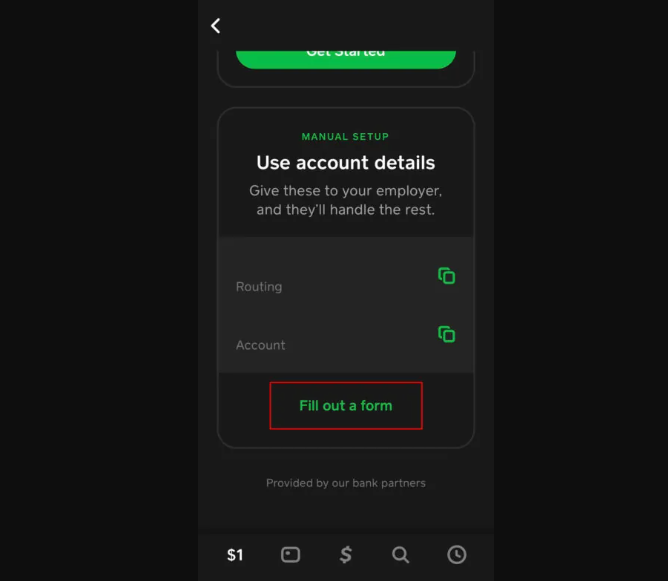
The banking partnerships also enable crucial functionalities like direct deposits and the use of the Cash Card. For direct deposits, Cash App provides users with an account and routing number. These numbers are not generated by Cash App itself but are provided by its partner banks (Sutton Bank or Lincoln Savings Bank) for the sole purpose of facilitating direct deposits into your Cash App balance. This allows users to receive paychecks, government benefits, or tax refunds directly into their Cash App account, effectively mimicking a traditional bank account’s capabilities.
Similarly, the Cash Card, issued by Sutton Bank, allows users to spend their Cash App balance at point-of-sale terminals and withdraw cash from ATMs. The card leverages the existing Visa network, giving it widespread acceptance. This integration means that while the front-end experience is entirely Cash App, the backend processing, settlement, and regulatory compliance for these transactions are handled by the partner bank, ensuring adherence to established financial regulations and security protocols. For users, this translates to convenience without sacrificing the regulatory safeguards provided by chartered financial institutions.
Cash App: A FinTech, Not a Traditional Bank
Understanding the distinction between a FinTech platform like Cash App and a traditional chartered bank is fundamental to appreciating its operational model, regulatory environment, and the services it can legally offer. This differentiation is at the heart of the “what bank is Cash App under” question.
Distinguishing Between FinTechs and Chartered Banks
A chartered bank is a financial institution that has obtained a license (or charter) from a state or federal government to conduct banking activities, such as accepting deposits, making loans, and offering various financial services directly to the public. These institutions are heavily regulated, subject to strict capital requirements, consumer protection laws, and oversight by agencies like the FDIC, Federal Reserve, and Office of the Comptroller of the Currency (OCC). They are the ultimate custodians of customer funds and bear the full legal and regulatory responsibility for all banking operations.
A FinTech (Financial Technology) company, on the other hand, is primarily a technology company that uses innovative software and algorithms to improve or automate financial services. FinTechs typically do not hold banking charters. Instead, they partner with chartered banks to provide services that would otherwise require a banking license. Cash App is a prime example: it provides a user-friendly app, facilitates transactions, and manages the customer interface, but the actual banking functions (holding deposits, issuing cards, processing payments) are carried out by its partner banks. This allows FinTechs to focus on user experience and rapid innovation, leaving the heavy regulatory and infrastructural lift to their banking partners.

The Operational Advantages of FinTech
This hybrid model offers several operational advantages for FinTechs like Cash App. Firstly, it allows for agility and rapid product development. Without the bureaucratic overhead and stringent regulatory approval processes that banks face for every new feature, FinTechs can iterate quickly, test new services, and bring them to market faster. This responsiveness to user needs is a key differentiator in the competitive digital landscape.
Secondly, FinTechs often have a lower cost structure. They don’t need to maintain a vast network of physical branches, complex legacy IT systems, or large compliance departments dedicated solely to banking regulations. By outsourcing core banking functions to partner banks, Cash App can focus its resources on technology development, marketing, and customer support, potentially leading to lower fees or more feature-rich services for users.
Finally, the focus on technology allows FinTechs to deliver a superior user experience. From intuitive mobile apps to instant notifications and integrated financial tools, Cash App prioritizes convenience and accessibility. This digital-first approach resonates with modern consumers who expect seamless, on-demand services directly from their smartphones, something traditional banks have often struggled to fully replicate.
Regulatory Landscape and Consumer Protection
Despite not being banks themselves, FinTechs are not unregulated. They operate within a complex regulatory landscape that involves various federal and state laws. For instance, FinTechs dealing with money transmission are often subject to state money transmitter licenses and federal anti-money laundering (AML) and know-your-customer (KYC) regulations, enforced by agencies like the Financial Crimes Enforcement Network (FinCEN).
Furthermore, because FinTechs partner with chartered banks, they indirectly fall under the regulatory umbrella of those banks. Regulators examine the partnerships between banks and third-party FinTech providers to ensure that banks are not offloading their regulatory responsibilities and that consumer protection standards are maintained. This means that while Cash App itself isn’t directly regulated by the OCC or FDIC in the same way a bank is, its partner banks are, and they are accountable for the services delivered through Cash App. This dual layer of oversight—direct regulation of FinTech activities and indirect regulation through bank partnerships—aims to protect consumers while fostering innovation in the financial sector.
The Mechanics of Cash App’s Financial Services
Delving into the practical application of Cash App’s banking partnerships reveals how core financial services are delivered to users. These mechanics illustrate the seamless integration between the FinTech’s front-end user experience and the back-end infrastructure provided by its banking partners.
Issuing the Cash Card
The Cash Card is a tangible representation of Cash App’s partnership with Sutton Bank. When a user requests a Cash Card, the request is processed through Cash App’s system but ultimately fulfilled and issued by Sutton Bank, which is a licensed issuer on the Visa network. This means the card carries the Visa branding and functions like any other Visa debit card.
The funds accessible via the Cash Card are drawn from the user’s Cash App balance, which, as established, is held in pooled accounts at Sutton Bank or Lincoln Savings Bank. Every time a user makes a purchase or ATM withdrawal with their Cash Card, the transaction is routed through the Visa network to Sutton Bank for authorization and settlement. Sutton Bank then debits the corresponding amount from the user’s allocated balance. This entire process occurs in milliseconds, providing the user with instant access to their funds while adhering to banking regulations and payment network rules.
Facilitating Direct Deposits and Peer-to-Peer Transfers
Cash App has become a popular platform for direct deposits, allowing users to receive their paychecks, tax refunds, or government benefits directly into their accounts. To enable this, Cash App provides users with unique account and routing numbers. These are not Cash App’s own banking credentials but are provided by its partner banks (primarily Sutton Bank and Lincoln Savings Bank) to route Automated Clearing House (ACH) transfers.
When an employer or government agency initiates a direct deposit using these numbers, the funds are sent via the ACH network directly to the partner bank. The bank then credits the corresponding amount to the user’s specific Cash App balance. This mechanism allows Cash App to offer a service traditionally exclusive to banks, making it a viable alternative for users who prefer to manage their finances entirely through the app.
Peer-to-peer (P2P) transfers, the initial cornerstone of Cash App’s popularity, also rely on this underlying banking infrastructure. When a user sends money to another, the transaction is processed through Cash App’s system and often involves the partner banks. Funds might move from one pooled account to another within the partner bank, or if the money is sent to an external bank account, it will be routed through the ACH network to the recipient’s bank. While the user experiences an instant transfer within the app, the actual settlement of funds between banks can take a day or two, though Cash App often “fronts” the money to the recipient to make it appear instantaneous.
Managing Balances and Withdrawals
The balance displayed in a user’s Cash App account represents their share of the funds held in the pooled accounts at the partner banks. Cash App’s robust internal ledger system tracks each user’s individual balance, ensuring accuracy and proper allocation of funds. When a user decides to cash out their balance to an external bank account, Cash App initiates an ACH transfer from the partner bank to the specified recipient bank. Standard transfers are free but take 1-3 business days, while instant transfers, which incur a small fee, leverage faster payment rails where available, or are fronted by Cash App, drawing on its own liquidity.
For ATM withdrawals, the Cash Card functions identically to any other debit card. When a user withdraws cash, the transaction is authorized by Sutton Bank (the card issuer), which then debits the user’s Cash App balance. The physical cash is provided by the ATM operator, and the transaction is settled through the Visa network. This seamless integration ensures that Cash App users have flexible access to their digital funds, whether through spending, transferring, or withdrawing physical cash, all underpinned by the reliability and regulatory compliance of its banking partners.
Navigating the Future of Digital Banking
The partnership model exemplified by Cash App and its underlying banks is not just a current trend; it represents a fundamental shift in how financial services are delivered and consumed. As technology continues to evolve, so too will the dynamics between FinTechs and traditional financial institutions, shaping the future of digital banking.
The Evolution of Bank-as-a-Service (BaaS)
The BaaS model, where banks open up their infrastructure to FinTechs via APIs, is rapidly evolving. We are seeing banks move beyond simply holding deposits and issuing cards to offering more sophisticated banking functionalities as a service. This includes things like lending-as-a-service, compliance-as-a-service, and even wealth management tools that FinTechs can integrate directly into their platforms. This deeper integration allows FinTechs to offer an even broader range of services, blurring the lines between what was once exclusively a bank’s domain and a FinTech’s innovation.
For users, this evolution means more holistic financial solutions available through a single, convenient app. Instead of managing multiple accounts across different institutions, a user might find a FinTech platform capable of handling checking, savings, investments, and even small loans, all powered by various underlying bank partners. The future points towards an increasingly interconnected financial ecosystem where services are modular and delivered seamlessly, often without the user ever needing to directly interact with the traditional bank providing the backend.
Enhanced Security Measures in FinTech
As FinTech platforms handle increasingly sensitive financial data, enhanced security measures are paramount. While the partner banks handle the ultimate security of the funds via FDIC insurance and robust banking security protocols, FinTechs like Cash App invest heavily in protecting user data, preventing fraud, and securing transactions at the application level. This includes advanced encryption, multi-factor authentication, biometric security, and sophisticated fraud detection algorithms.
The collaboration between FinTechs and banks also extends to security. Information sharing and coordinated efforts to combat financial crime are becoming more common, creating a stronger defense against cyber threats. As regulations like GDPR and CCPA become more prevalent globally, data privacy and security will remain a critical focus, ensuring that user information and funds are protected throughout the entire digital financial journey.
Consumer Trust and Financial Literacy in the Digital Age
The proliferation of FinTech services necessitates a greater emphasis on consumer trust and financial literacy. For users to fully embrace digital banking, they need to understand how their money is protected, who is responsible for various aspects of the service, and the terms and conditions associated with their accounts. FinTechs and their banking partners have a shared responsibility to clearly communicate these details.
Building trust in an environment where the “bank” is often unseen requires transparency. Platforms like Cash App must continue to educate users on their operational model, their banking partners, and the safeguards in place. As digital finance becomes the norm, financial literacy will extend beyond understanding traditional banking products to include navigating the nuances of FinTech partnerships, cryptocurrency, and other emerging financial technologies. The question “what bank is Cash App under?” is therefore more than a technical inquiry; it’s a gateway to understanding the bedrock of trust in our increasingly digital financial lives.
aViewFromTheCave is a participant in the Amazon Services LLC Associates Program, an affiliate advertising program designed to provide a means for sites to earn advertising fees by advertising and linking to Amazon.com. Amazon, the Amazon logo, AmazonSupply, and the AmazonSupply logo are trademarks of Amazon.com, Inc. or its affiliates. As an Amazon Associate we earn affiliate commissions from qualifying purchases.