
Understanding your Social Security benefit is a cornerstone of effective retirement planning. For millions of Americans, these monthly payments represent a significant, often critical, source of income during their non-working years. However, the exact amount you’ll receive isn’t always straightforward. It’s determined by a complex formula that considers your earnings history, your age when you claim benefits, and several other factors. Demystifying this calculation is crucial for making informed decisions about your financial future, helping you forecast your retirement income, and strategizing how to potentially maximize what you receive. This guide will break down the process, providing clarity on how your Social Security benefit is determined and what steps you can take to estimate your future payments.

Understanding the Foundation: What is Social Security?
Before diving into the intricacies of calculation, it’s essential to grasp the fundamental nature of Social Security. It’s more than just a retirement program; it’s a comprehensive social insurance system designed to provide financial protection to millions of Americans.
The Purpose of Social Security
Social Security was established in 1935 as a response to the Great Depression, initially primarily focusing on providing a safety net for retired workers. Over time, its scope expanded to include disability benefits for those unable to work, survivor benefits for families of deceased workers, and even supplemental income for low-income seniors and people with disabilities through programs like Supplemental Security Income (SSI), though this article focuses on the earned retirement benefit. The core idea is that current workers pay into the system through payroll taxes (FICA taxes), and those funds are used to pay benefits to current retirees, people with disabilities, and survivors. It operates on a “pay-as-you-go” system, rather than a fully funded individual savings account. For many, Social Security benefits provide a foundational income stream that complements personal savings, pensions, and other investments, ensuring a baseline level of financial security in retirement.
Who is Eligible for Benefits?
Eligibility for Social Security retirement benefits is primarily based on your work history. To qualify, you must earn “credits” by working and paying Social Security taxes. In 2024, you earn one credit for every $1,730 in earnings, up to a maximum of four credits per year. Most people need 40 credits, which typically translates to 10 years of work, to be eligible for retirement benefits. Once you’ve accumulated 40 credits, you are “fully insured” and eligible to receive benefits when you meet the age requirements. Beyond the basic eligibility, the amount you receive is directly tied to your lifetime earnings, making a comprehensive understanding of the calculation process vital.
Key Factors Influencing Your Benefit Amount
Several critical factors intertwine to determine your specific Social Security benefit amount. Understanding these variables is the first step toward accurately estimating your future income.
Your Earnings History: The Core Component
Your earnings history is arguably the most significant factor in your Social Security benefit calculation. The Social Security Administration (SSA) looks at your entire career, specifically focusing on your highest 35 years of indexed earnings. Why “indexed”? Because a dollar earned in 1980 is worth less than a dollar earned in 2020 due to inflation. The SSA “indexes” your past earnings to account for changes in average wages over time, bringing them up to near current-dollar equivalents. If you have fewer than 35 years of earnings, the missing years will be recorded as zeros in your calculation, which can significantly reduce your benefit. This highlights the importance of consistent employment throughout your working life, even if some years are part-time or low-income, as any earnings are generally better than none in the calculation.
Full Retirement Age (FRA) Defined
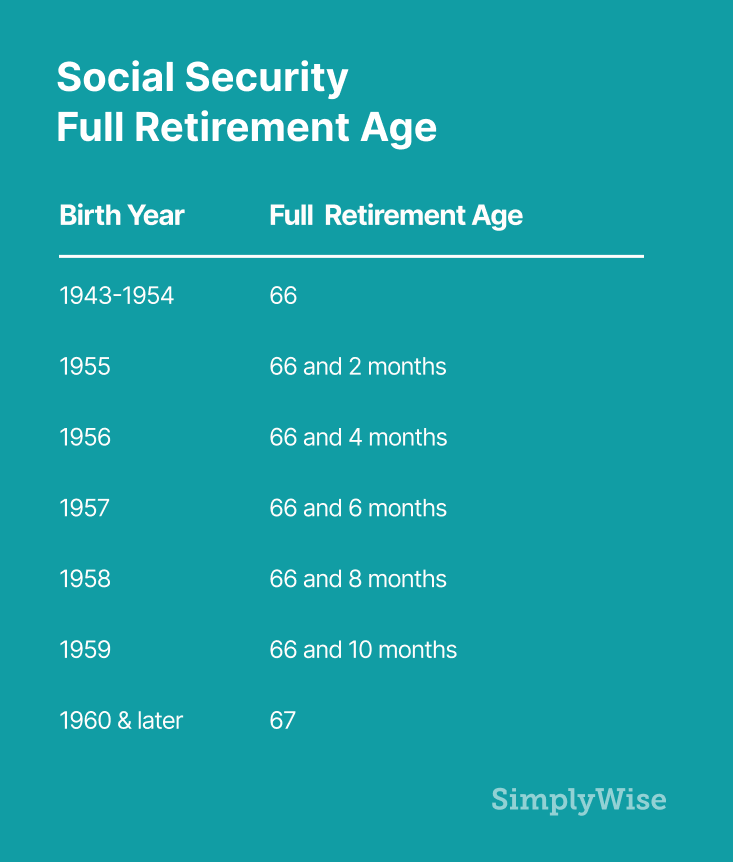
Your Full Retirement Age (FRA) is a crucial benchmark in the Social Security system. It’s the age at which you are entitled to receive 100% of your Primary Insurance Amount (PIA) – the benefit calculated from your earnings history. FRA is not a fixed age for everyone; it depends on your birth year. For those born in 1943 through 1954, FRA is 66. It gradually increases by a few months for those born between 1955 and 1959, reaching 67 for anyone born in 1960 or later. Claiming benefits before your FRA results in a permanent reduction, while delaying benefits past your FRA can permanently increase them. Knowing your specific FRA is vital for strategic claiming decisions.
The Impact of Claiming Age: Early vs. Delayed
The age at which you decide to start receiving Social Security benefits has a profound and permanent impact on your monthly payment.
Claiming Early (as early as age 62)
You can begin receiving Social Security retirement benefits as early as age 62. However, if you claim before your Full Retirement Age (FRA), your monthly benefit will be permanently reduced. The reduction rate is approximately 5/9 of 1% for each month you claim early, up to 36 months. If you claim more than 36 months early, the reduction is 5/12 of 1% per month. For someone with an FRA of 67, claiming at 62 means a permanent reduction of about 30%. While this provides income sooner, it translates to a significantly smaller check each month for the rest of your life. This option is often considered by those who need the income, face health issues, or cannot work longer.
Delaying Benefits (up to age 70)
Conversely, delaying your Social Security benefits past your FRA can substantially increase your monthly payment. For each year you delay claiming beyond your FRA, up to age 70, you earn “Delayed Retirement Credits” (DRCs). These credits increase your annual benefit by 8% per year (or 2/3 of 1% per month). This means that if your FRA is 67 and you delay claiming until age 70, your monthly benefit will be 124% of your Primary Insurance Amount – a permanent increase of 32%. There’s no additional benefit to delaying past age 70, so it’s generally not advisable to wait beyond that point. Delaying can be a powerful strategy for individuals who are in good health, can afford to wait, or want to maximize their guaranteed income stream in later life.
The Calculation Process: A Step-by-Step Guide
The SSA uses a multi-step process to transform your earnings history into your monthly benefit amount. While the SSA performs these calculations, understanding the steps provides crucial insight.
Step 1: Calculating Your Average Indexed Monthly Earnings (AIME)
The first step is to calculate your Average Indexed Monthly Earnings (AIME).
- Identify Your Highest 35 Years: The SSA reviews your entire earnings record and selects your 35 highest earning years.
- Index Your Earnings: Each year’s earnings (up to the Social Security taxable maximum) are indexed to reflect the general increase in wages over time. This makes past earnings comparable to recent ones. For instance, earnings from 1980 are adjusted upwards to reflect what that income would be worth in a more recent year (typically two years before your eligibility year, i.e., age 60).
- Sum and Divide: The indexed earnings from your highest 35 years are summed up and then divided by 420 (the number of months in 35 years). This yields your AIME. A higher AIME directly translates to a higher potential benefit.
Step 2: Determining Your Primary Insurance Amount (PIA)
Once your AIME is established, the SSA calculates your Primary Insurance Amount (PIA). This is the benefit you would receive if you claimed exactly at your Full Retirement Age (FRA). The PIA is determined using a progressive formula with “bend points.”
- Bend Points: The AIME is divided into three segments using “bend points” that are updated annually. For those turning 62 in 2024, the bend points are $1,174 and $7,078.
- PIA Formula:
- 90% of the first segment of your AIME (up to the first bend point).
- 32% of your AIME between the first and second bend points.
- 15% of your AIME above the second bend point.
The amounts from these three segments are added together to produce your PIA. This progressive formula means that lower-income earners receive a higher percentage of their average earnings back as benefits compared to higher-income earners, reflecting Social Security’s goal of providing a social safety net.
Step 3: Adjustments for Claiming Age
The final step is to adjust your PIA based on your claiming age relative to your Full Retirement Age (FRA).
- Claiming Before FRA: If you claim before your FRA, your PIA is reduced by a certain percentage for each month you claim early, as detailed in the “Claiming Early” section.
- Claiming at FRA: If you claim exactly at your FRA, you receive 100% of your PIA.
- Claiming After FRA: If you delay claiming past your FRA (up to age 70), your PIA is increased by Delayed Retirement Credits (DRCs), as detailed in the “Delaying Benefits” section.
This adjusted amount is your actual monthly Social Security benefit.
Accessing Your Social Security Statement and Using Calculators
While understanding the manual calculation process is valuable, the SSA provides user-friendly tools to help you estimate your benefit with greater accuracy.
Your Online Social Security Account
The most powerful tool at your disposal is your personal “my Social Security” account. Creating an account on the SSA website (ssa.gov) is free and highly recommended. Through this portal, you can:
- Access Your Social Security Statement: This statement provides a detailed record of your earnings history, an estimate of your future benefits at different claiming ages (62, FRA, and 70), and estimates for disability and survivor benefits. It’s a personalized snapshot of your Social Security future.
- Verify Your Earnings Record: It’s crucial to periodically check your earnings record for accuracy. Errors can occur, and correcting them early can prevent significant issues when you eventually apply for benefits.
- Get Personalized Estimates: The online account provides dynamic estimates that update as your earnings change, offering a more precise picture than general calculators.
Official SSA Calculators and Resources
Beyond your personal account, the SSA website offers various calculators that allow you to explore different scenarios:
- Retirement Estimator: This tool lets you plug in different retirement ages and future earnings assumptions to see how your benefit changes. It’s excellent for “what if” scenarios.
- Benefit Calculators: The SSA provides a detailed suite of calculators, including those for specific situations like Windfall Elimination Provision (WEP) or Government Pension Offset (GPO), which affect those with non-covered pensions.
- Publications and Guides: The SSA website is a treasure trove of information, with numerous publications explaining benefits, eligibility, and special rules in plain language.
Third-Party Financial Planning Tools
Many reputable financial planning websites and software also incorporate Social Security benefit estimators. While these can be helpful for holistic retirement planning, it’s always best to cross-reference their estimates with the official SSA tools, as the SSA has the most accurate data regarding your personal earnings history. Financial advisors also often have sophisticated software that can integrate your Social Security benefits into a broader retirement income strategy.
Maximizing Your Social Security Benefits and Financial Planning
Understanding the calculation is only half the battle; the other half is leveraging that knowledge to make strategic decisions that can enhance your retirement security.
Strategies for Increasing Your AIME
Since your AIME is based on your highest 35 years of indexed earnings, one direct way to boost your benefit is to maximize your earnings during your working years, especially those years that fall within your highest 35.
- Work Longer: If you have fewer than 35 years of substantial earnings, continuing to work even part-time in your later career can replace years of zero or low earnings, significantly increasing your AIME.
- Boost Income in Peak Earning Years: Focus on increasing your income during your prime earning years. Every dollar earned up to the Social Security taxable maximum contributes to your future benefit.
- Avoid Gaps in Employment: While life happens, minimizing long gaps in employment can prevent “zero” years from diluting your AIME.
The Importance of Spousal and Survivor Benefits
Social Security isn’t just about individual benefits. It also provides crucial protections for families.
- Spousal Benefits: If you are married, divorced, or widowed, you may be eligible for benefits based on your spouse’s (or ex-spouse’s) earnings record, even if you never worked or had low earnings. A spouse can receive up to 50% of the primary earner’s PIA if they claim at their own FRA. Strategic claiming by one spouse can significantly impact the combined household benefit.
- Survivor Benefits: Should a worker pass away, eligible family members (e.g., widow(er)s, minor children, dependent parents) may receive survivor benefits, providing essential financial support during a difficult time. Understanding these benefits is crucial for comprehensive family financial planning.

Integrating Social Security into Your Retirement Plan
Social Security should be viewed as one component of your overall retirement income strategy, not the sole source.
- Holistic View: Combine your estimated Social Security benefits with your personal savings (401k, IRA, brokerage accounts), pensions, and other income streams to get a complete picture of your retirement income.
- Longevity Planning: Social Security provides inflation-adjusted income for life, making it an excellent hedge against longevity risk. Understanding its value helps you determine how much risk you can take with other investments.
- Tax Considerations: A portion of Social Security benefits may be taxable, depending on your “provisional income.” Factor this into your tax planning for retirement.
- Consult a Financial Advisor: A qualified financial advisor can help you integrate your Social Security claiming strategy with your broader financial goals, optimizing your entire retirement portfolio. They can model various scenarios (e.g., claiming early vs. delaying, spousal strategies) to help you make the most informed decision for your unique situation.
Calculating your Social Security benefit might seem daunting at first, but by breaking it down into its core components – earnings history, FRA, AIME, PIA, and claiming age adjustments – it becomes a manageable and empowering process. By actively monitoring your Social Security statement and utilizing the SSA’s resources, you can gain clarity and confidence in your financial future, ensuring this vital benefit plays its optimal role in your retirement security.
aViewFromTheCave is a participant in the Amazon Services LLC Associates Program, an affiliate advertising program designed to provide a means for sites to earn advertising fees by advertising and linking to Amazon.com. Amazon, the Amazon logo, AmazonSupply, and the AmazonSupply logo are trademarks of Amazon.com, Inc. or its affiliates. As an Amazon Associate we earn affiliate commissions from qualifying purchases.