
The question, “how much money is in Social Security,” resonates deeply with millions of Americans, from current retirees relying on their monthly benefits to young workers diligently contributing through payroll taxes. It’s a question that touches upon personal financial security, national fiscal responsibility, and the very fabric of our social contract. Far from being a simple ledger entry, the financial health of Social Security is a complex interplay of demographics, economic performance, and legislative policy. Understanding the system’s finances requires looking beyond the headline figures of its trust funds to grasp the mechanisms of its funding, the pressures it faces, and the ongoing dialogue about its long-term sustainability.
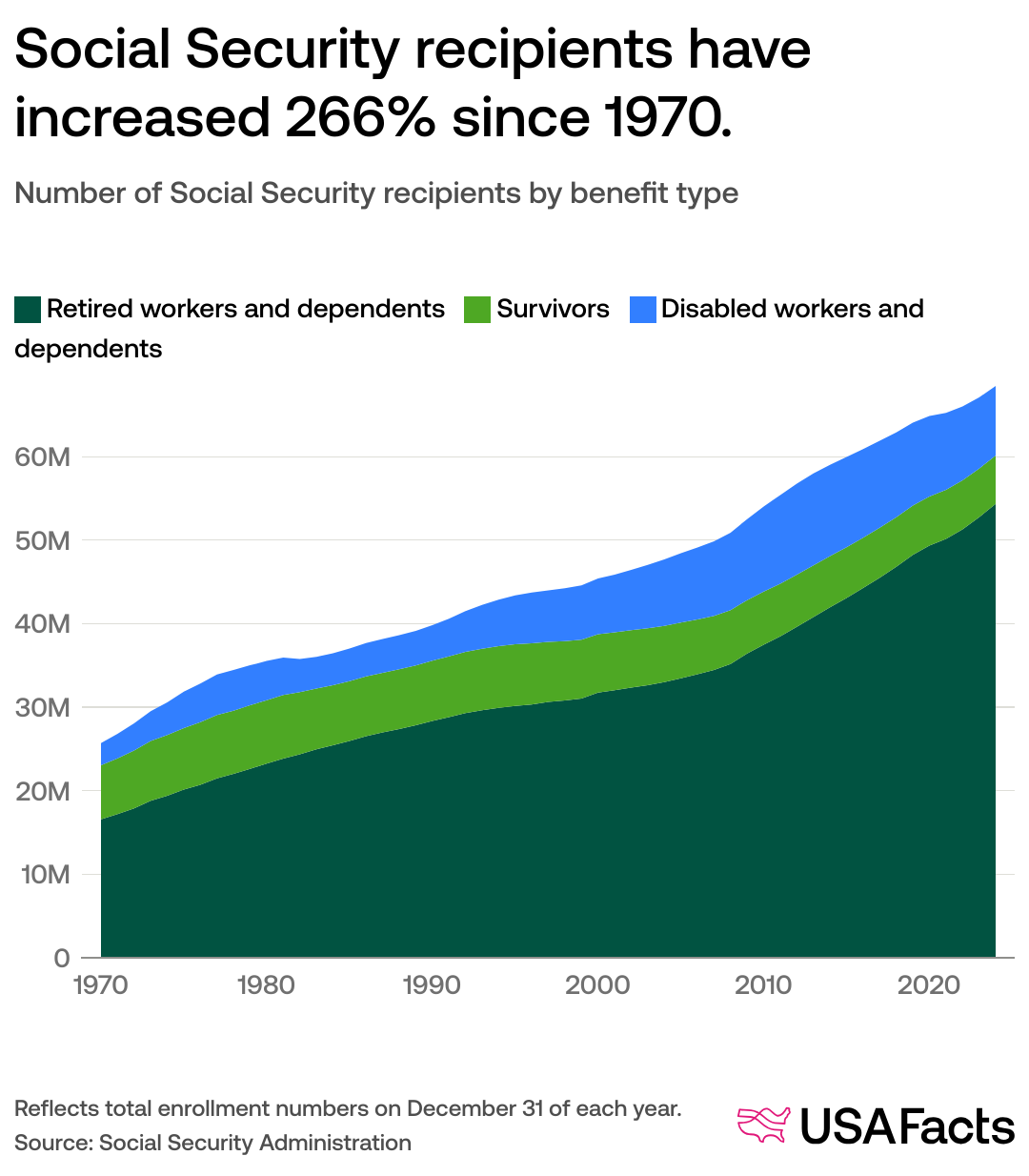
Social Security is not a traditional savings account where individuals’ contributions are held separately for their future use. Instead, it operates primarily as a “pay-as-you-go” system, where the taxes paid by today’s workers largely fund the benefits of today’s retirees and other beneficiaries. The money not immediately needed for current payments accumulates in trust funds, invested in special interest-bearing U.S. Treasury securities. These trust funds serve as a crucial reserve, providing a buffer against economic fluctuations and demographic shifts. The health of these funds, and the projections for their future, dictate the national conversation around Social Security’s ability to fulfill its promises to future generations. Delving into the details reveals not a system on the brink of collapse, but one facing significant demographic challenges that necessitate thoughtful and timely policy adjustments to ensure its enduring solvency.
Deconstructing the Social Security Trust Funds: The Headline Numbers
When people ask “how much money is in Social Security,” they are often referring to the balance of its two primary trust funds: the Old-Age and Survivors Insurance (OASI) Trust Fund and the Disability Insurance (DI) Trust Fund. These funds collectively manage the assets of the Social Security program, acting as both a repository for surplus contributions and a vital reserve to ensure the continuous payment of benefits. However, the nature of these “funds” is frequently misunderstood, leading to widespread confusion about the program’s actual financial standing.
What Are the Social Security Trust Funds?
The Social Security program is comprised of two distinct, legally separate trust funds:
- Old-Age and Survivors Insurance (OASI) Trust Fund: This fund pays retirement benefits to eligible workers and their families, and survivor benefits to the families of deceased workers. This is the larger of the two funds.
- Disability Insurance (DI) Trust Fund: This fund pays benefits to disabled workers and their families.
These two funds are often discussed together, referred to as the “OASDI Trust Funds.” While they are separate, Congress has the authority to reallocate the Social Security payroll tax rate between the two funds, as it has done multiple times in the past to address imbalances. The primary function of these trust funds is to hold accumulated surpluses and earn interest, providing a stable financial base for the program.
The Current Financial Snapshot: A Look at the Reserves
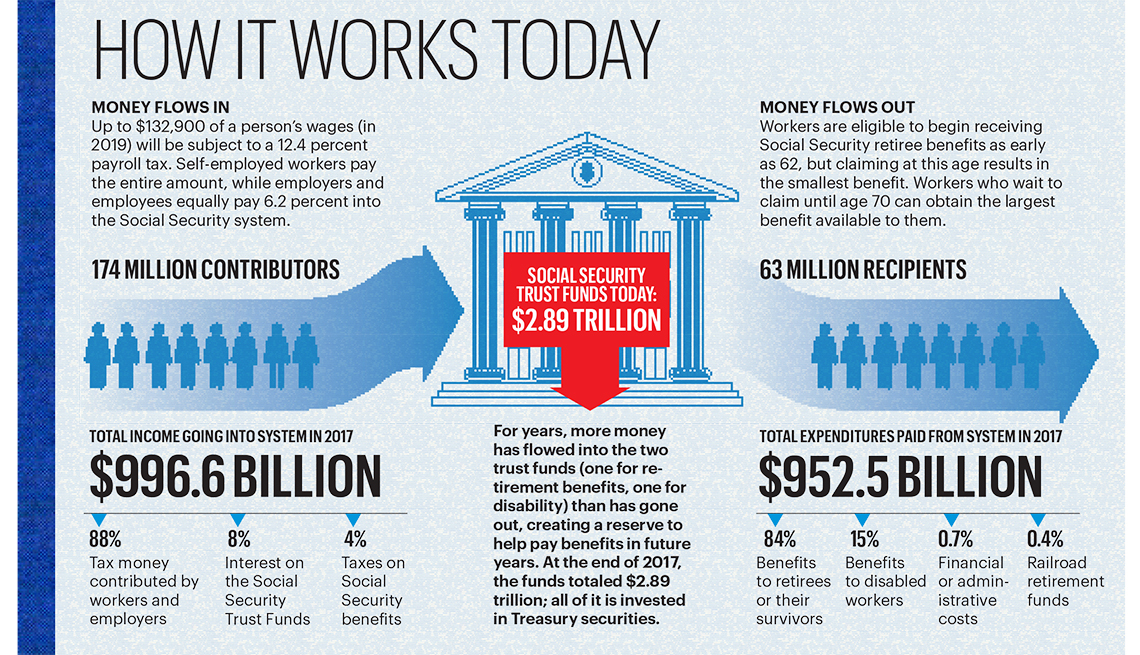
At any given time, the Social Security Administration (SSA) reports the combined asset reserves of the OASI and DI Trust Funds. For instance, as of the end of 2023, the combined trust funds held approximately $2.822 trillion in asset reserves. This figure represents a substantial amount of money, often cited as evidence of the program’s robust financial standing. However, it’s crucial to understand what these “reserves” actually are.
The entire balance of the Social Security Trust Funds is invested in special-issue U.S. Treasury securities. These are not publicly traded bonds; they are non-marketable securities issued directly by the U.S. Treasury to the Social Security Trust Funds. They are backed by the full faith and credit of the U.S. government, just like any other Treasury security. This means they are an obligation of the U.S. government to the Social Security program. When Social Security needs to pay out more in benefits than it collects in payroll taxes, it redeems these bonds. The Treasury then repays Social Security, which requires the Treasury to either raise taxes, borrow from the public, or cut other government spending.
Beyond the Balance Sheet: What “Trust Fund” Really Means
The concept of the Social Security Trust Funds differs significantly from a personal savings account or a private pension fund. For an individual, money in a bank account means immediate liquidity. For a private pension, funds are invested in a diversified portfolio of assets like stocks and corporate bonds. The Social Security Trust Funds, however, are an internal government accounting mechanism.
The funds primarily represent an accumulated surplus of past Social Security tax collections over past benefit payments. When the government spends that surplus on other government operations (which it effectively does when the Treasury issues special bonds to Social Security), it creates an obligation for future taxpayers. Therefore, the “money” in the Social Security Trust Funds is not a vault full of cash that can be drawn upon without impact. It is a promise from the U.S. government to repay funds previously loaned to it by the Social Security program. This distinction is vital for understanding the true nature of Social Security’s long-term financial challenges, as it highlights that the reserves are an asset to Social Security but a liability to the broader federal budget.
The Mechanics of Funding: Where Does the Money Come From?
Social Security’s financial stability hinges on a continuous flow of incoming revenue, primarily from dedicated payroll taxes. Understanding these funding mechanisms is essential to grasping how the system functions and why changes in demographics or economic conditions can impact its long-term viability. The program is designed to be largely self-funded, with specific revenue sources earmarked solely for its operations.
The Cornerstone: Payroll Taxes (FICA)
The overwhelming majority of Social Security’s income comes from dedicated payroll taxes, known as Federal Insurance Contributions Act (FICA) taxes. These taxes are levied on earned income up to a certain annual limit, known as the “contribution and benefit base.”
- Tax Rate: The combined Social Security tax rate is 12.4%. For most workers, this is split evenly between the employee and the employer, with each paying 6.2%. Self-employed individuals pay the full 12.4% (though they can deduct half of their self-employment taxes for income tax purposes).
- Wage Base Limit: There is an annual earnings limit subject to Social Security taxes. For example, in 2024, earnings above $168,600 are not subject to the Social Security tax. This means higher earners pay Social Security taxes on a smaller proportion of their total income compared to lower and middle earners. This limit is adjusted annually based on national average wage index.
- Medicare Taxes: It’s important to distinguish Social Security FICA taxes from Medicare taxes, which are also part of payroll deductions. Medicare tax is 2.9% (1.45% for employee and 1.45% for employer), and unlike Social Security, it has no income limit.
These payroll taxes are the lifeblood of Social Security, directly funding the benefits of current retirees, survivors, and disabled individuals.
Taxation of Benefits and Other Revenue Streams
While payroll taxes form the foundation, Social Security also receives revenue from a few other sources:
- Taxation of Social Security Benefits: Since 1983, a portion of Social Security benefits has been subject to federal income tax for some recipients. The revenue generated from this taxation is then funneled back into the Social Security Trust Funds. This applies to individuals with a “combined income” (adjusted gross income plus non-taxable interest plus half of Social Security benefits) above certain thresholds.
- Interest on Investments: As mentioned earlier, the Social Security Trust Funds hold special-issue U.S. Treasury securities. These securities earn interest, which also contributes to the funds’ income. While this interest is a significant source of revenue for the trust funds, it represents an internal government transaction, not new money flowing into the federal system from the economy.
These supplementary income streams, while smaller than payroll taxes, play an important role in enhancing the program’s overall financial strength and extend the period of solvency.
The Pay-As-You-Go System with a Buffer
Social Security is fundamentally a pay-as-you-go system. The contributions of today’s workers directly fund the benefits of today’s beneficiaries. This intergenerational compact is distinct from a fully funded private pension plan, where each person’s contributions are invested to grow and pay for their own future benefits.
However, Social Security is not purely pay-as-you-go. The accumulation of surpluses in the trust funds during periods when contributions exceeded expenditures (especially from the 1980s through the early 2000s) created a substantial buffer. This buffer allows the system to continue paying full benefits even when annual outlays exceed annual income from payroll taxes and taxation of benefits, as has been the case for several years. The trust funds are drawn down to cover the difference, until such a point where the reserves are projected to be exhausted. This buffer is critical for managing demographic transitions and economic downturns without immediate, drastic benefit cuts or tax increases.
Understanding Solvency and Sustainability: Debunking Misconceptions
The conversation about Social Security’s finances often features stark warnings about impending “insolvency” or the program “running out of money.” While the system does face long-term challenges, the reality is more nuanced than these alarmist headlines suggest. Understanding the official projections and clarifying common misconceptions is crucial for a balanced perspective.
The Annual Trustees’ Report: A Vital Prognosis
Each year, the Social Security Board of Trustees releases a comprehensive report detailing the financial status of the OASI and DI Trust Funds. This report provides both short-range (10-year) and long-range (75-year) projections under various economic and demographic assumptions. It is the most authoritative source for understanding the program’s financial outlook.
Key findings from these reports typically include:
- Projected Exhaustion Date: The most frequently cited figure is the year the combined trust funds are projected to be exhausted. For instance, the 2023 Trustees’ Report projected that the combined OASI and DI Trust Funds would be able to pay 100% of scheduled benefits until 2033. After that point, if Congress does not act, Social Security would only be able to pay about 80% of scheduled benefits, relying solely on incoming payroll tax revenue.
- Long-Range Actuarial Imbalance: The report also quantifies the long-term deficit as a percentage of taxable payroll or as a percentage of GDP, indicating the magnitude of the changes needed to achieve 75-year solvency.
These projections are not prophecies of doom but rather actuarial assessments designed to alert policymakers to the need for action.
Distinguishing Between “Broke” and “Unable to Pay Full Benefits”
A common and dangerous misconception is that Social Security will be “broke” or “run out of money.” This is inaccurate. Even if the trust funds were exhausted, Social Security would not cease to exist. As long as workers continue to pay FICA taxes, the program will continue to receive substantial income.
The scenario of trust fund exhaustion means that Social Security would no longer be able to pay 100% of scheduled benefits. Instead, it would be able to pay a percentage of benefits equal to the percentage of ongoing revenue it receives. For example, if the trust funds are exhausted in 2033, and incoming revenue is sufficient to pay 80% of scheduled benefits, then beneficiaries would receive 80 cents on the dollar. While this represents a significant reduction for individuals, it is fundamentally different from the program dissolving entirely. The system would continue to pay a large majority of promised benefits.
Key Demographic and Economic Pressures on the System
The long-term financial challenges facing Social Security are primarily driven by shifts in demographics and economic trends:
- Aging Population and Increased Longevity: The large baby boom generation is entering retirement, leading to a significant increase in the number of beneficiaries relative to the number of contributing workers. Furthermore, people are living longer, meaning they collect benefits for more years.
- Lower Birth Rates: Following the baby boom, birth rates have declined, leading to fewer workers entering the workforce to support future retirees. This reduces the worker-to-beneficiary ratio.
- Slower Wage Growth: Slower growth in real wages can impact Social Security’s revenue, as payroll taxes are based on earnings. Strong wage growth is essential for increasing the tax base.
These factors combine to create a fiscal imbalance, where the ratio of beneficiaries to workers is increasing, putting pressure on the pay-as-you-go funding model.
Navigating the Future: Potential Reforms and Personal Financial Planning
Addressing Social Security’s long-term financial outlook requires thoughtful policy adjustments. There is a broad consensus among economists and policymakers that relatively modest changes, enacted sooner rather than later, can restore long-term solvency without drastically altering the program’s fundamental structure. Simultaneously, individuals must recognize that Social Security is one pillar of retirement planning, not the sole foundation.
Policy Levers: Adjusting Taxes, Benefits, and Retirement Age
Various proposals have been put forth to restore Social Security’s financial balance. These generally fall into three categories:
- Increasing Revenue:
- Raising the Payroll Tax Rate: A small increase in the FICA tax rate for both employees and employers would significantly boost revenue.
- Raising or Eliminating the Wage Base Limit: Applying the Social Security tax to a larger portion, or all, of high earners’ income would bring in substantial additional revenue.
- Diversifying Investment Options: While politically contentious, some have suggested allowing a small portion of trust fund assets to be invested in a diversified portfolio beyond special Treasury securities.
- Adjusting Benefits:
- Modifying the Cost-of-Living Adjustment (COLA): Changing the formula used to calculate annual COLAs, such as adopting a “chained CPI,” could slow the growth of benefits.
- Adjusting the Full Retirement Age: Gradually raising the age at which individuals can claim full retirement benefits, reflecting increased longevity, would reduce total payouts over time.
- Means-Testing Benefits: Reducing benefits for high-income retirees, though this moves away from the universal nature of the program.
- Using General Revenue: Supplementing Social Security’s dedicated funding with general federal tax revenues. This would change its self-funded nature.
Most proposals suggest a combination of these approaches, as a single dramatic change could be overly burdensome to one group or another.
The Intergenerational Debate: Balancing Current and Future Needs
The discussion around Social Security reform is inherently an intergenerational debate. Current retirees and those nearing retirement are concerned about any changes that might reduce their anticipated benefits. Younger generations, while facing the prospect of higher taxes or reduced future benefits, also stand to benefit from the program in their own retirement. Achieving a bipartisan solution requires careful negotiation and compromise, ensuring that the burden and benefits of any reforms are shared equitably across generations. Early action is often emphasized because it allows for more gradual changes, giving individuals more time to adjust their financial plans.
Your Role in Retirement Planning: Beyond Social Security
While Social Security provides a vital foundation for retirement income, it was never intended to be the sole source. Financial planners universally advise against relying solely on Social Security for a secure retirement. For most individuals, Social Security benefits will replace only about 40% of pre-retirement earnings, a percentage that is lower for higher earners.
Therefore, robust personal financial planning is paramount:
- Personal Savings and Investments: Contributing regularly to tax-advantaged retirement accounts like 401(k)s, 403(b)s, and IRAs is crucial.
- Diversification: Building a diversified investment portfolio suitable for one’s risk tolerance and time horizon can help grow wealth over the long term.
- Budgeting and Debt Management: Managing current expenses and avoiding excessive debt frees up more resources for retirement savings.
- Understanding Your Social Security Statement: Regularly reviewing your annual Social Security statement provides estimated future benefits and helps you plan accordingly.
By taking proactive steps in personal finance, individuals can ensure a more secure and comfortable retirement, regardless of future adjustments to the Social Security program.

Conclusion: A Resilient System Requiring Vigilant Oversight
The question of “how much money is in Social Security” reveals a complex financial landscape. While the trust funds hold trillions in U.S. Treasury securities, representing an intergovernmental obligation, the system’s long-term health depends on a continuous flow of payroll taxes and an equitable balance between contributions and benefits. Social Security is not on the verge of collapse; it remains a robust and essential safety net for millions. However, it faces undeniable demographic challenges that will lead to a projected inability to pay 100% of scheduled benefits in the coming decade if no legislative action is taken.
The strength of Social Security lies in its adaptability and its fundamental structure as an earned benefit backed by the full faith and credit of the U.S. government. Thoughtful and timely policy adjustments – whether through revenue increases, benefit adjustments, or a combination – can ensure the program’s solvency for future generations. For individuals, understanding Social Security’s financial realities underscores the critical importance of proactive personal financial planning, ensuring a diversified approach to retirement security that complements, rather than solely relies on, this indispensable national program.
aViewFromTheCave is a participant in the Amazon Services LLC Associates Program, an affiliate advertising program designed to provide a means for sites to earn advertising fees by advertising and linking to Amazon.com. Amazon, the Amazon logo, AmazonSupply, and the AmazonSupply logo are trademarks of Amazon.com, Inc. or its affiliates. As an Amazon Associate we earn affiliate commissions from qualifying purchases.