
Understanding the intricacies of Social Security benefits is a cornerstone of effective retirement planning for millions. Far from a simple, fixed payout, the amount you receive from Social Security is a complex calculation influenced by a multitude of factors specific to your individual work history, earnings, and claiming decisions. For many, Social Security represents a vital safety net, providing a steady stream of income in retirement, disability, or for survivors. However, relying solely on this program without a clear understanding of its mechanics and your potential benefits can lead to significant financial shortfalls.
This article delves into the core components that determine your Social Security benefit, offering insights into how these factors interact and providing guidance on how you can estimate and potentially optimize your future payouts. By demystifying the calculations and outlining the strategic considerations, we aim to equip you with the knowledge needed to integrate Social Security effectively into your broader financial landscape.
Decoding Your Social Security Benefit: Key Determinants
The Social Security Administration (SSA) uses a precise formula to calculate your benefits, but this formula relies heavily on several key pieces of personal financial data. Your work history isn’t just a record of employment; it’s the fundamental input that shapes your future financial security through Social Security.
Your Earnings History and AIME: The Bedrock of Your Benefit Calculation
The most significant factor influencing your Social Security benefit is your lifetime earnings history. The SSA calculates your Average Indexed Monthly Earnings (AIME) based on your highest 35 years of indexed earnings. “Indexed” means your past earnings are adjusted for changes in the national average wage level over time. This process ensures that your earnings from decades ago reflect their relative value today, providing a more equitable basis for calculation.
If you have fewer than 35 years of earnings, the missing years will be counted as zeros in the calculation, which can significantly reduce your AIME and, consequently, your benefit amount. This underscores the importance of a consistent work history over a long period. High earners who consistently contribute to Social Security throughout their careers will generally receive higher benefits than those with sporadic employment or lower average wages. It’s crucial to understand that there’s an annual earnings limit subject to Social Security taxes; earnings above this limit in any given year do not contribute to higher benefits.
The Full Retirement Age (FRA): A Pivotal Benchmark
Your Full Retirement Age (FRA) is a critical concept in Social Security. It’s the age at which you are entitled to receive 100% of your primary insurance amount (PIA), the basic benefit calculated from your AIME. FRA is not universal; it depends on your birth year. For those born in 1943 through 1954, FRA is 66. For those born between 1955 and 1960, FRA gradually increases by a few months each year, culminating at age 67 for those born in 1960 or later.
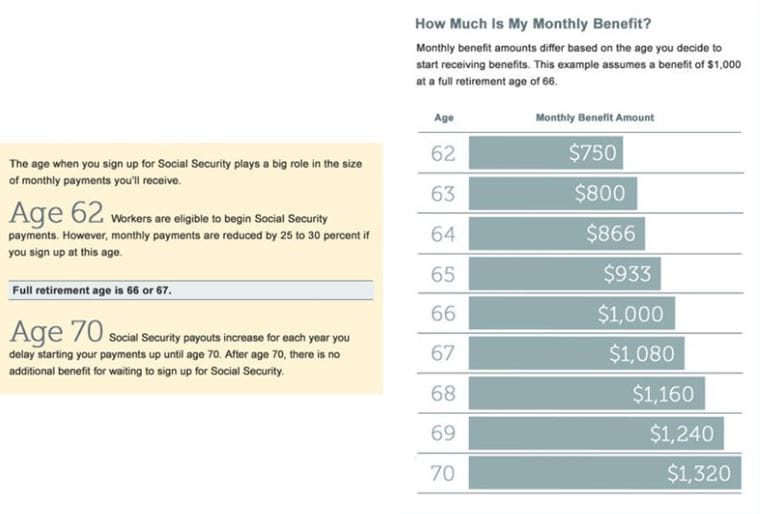
Claiming benefits before your FRA results in a permanent reduction of your monthly payment. Conversely, delaying benefits past your FRA can lead to substantially higher monthly payouts. Understanding your specific FRA is paramount, as it forms the reference point for all claiming decisions and benefit adjustments.
Years of Work: Earning Credits for Eligibility
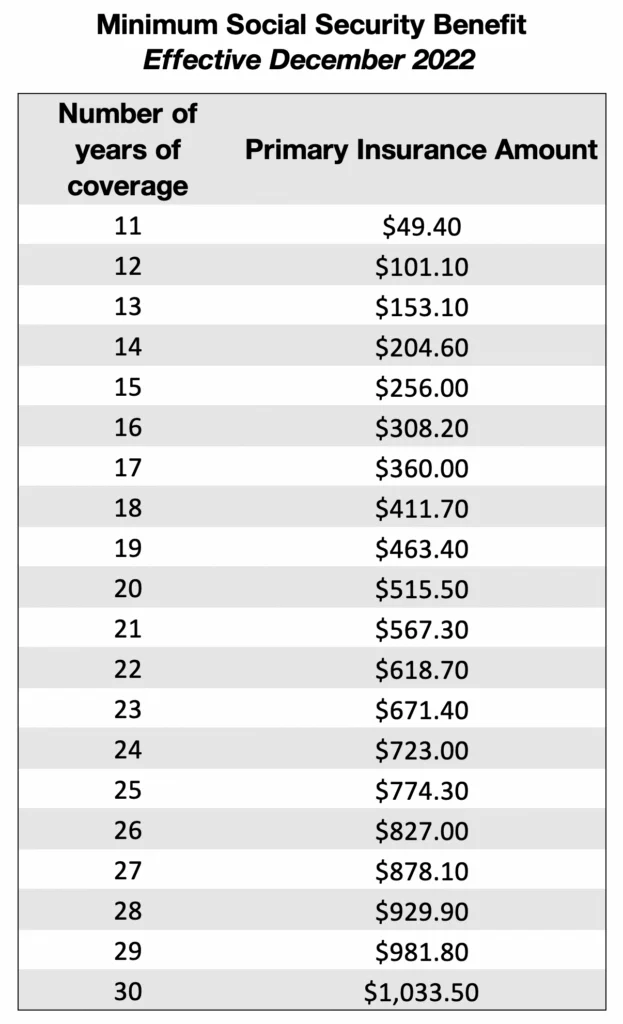
Before you can receive any Social Security benefits, you must be “insured” by the system. This means you need to have accumulated a sufficient number of work credits. You can earn up to four work credits each year, based on your annual earnings. In 2024, for example, you earn one credit for every $1,730 in earnings, up to the maximum of four credits for earnings of $6,920 or more.
To be eligible for retirement benefits, most individuals need 40 work credits, which translates to 10 years of work. It’s important to note that these 10 years do not have to be consecutive. Once you accumulate 40 credits, you are permanently insured for retirement benefits, regardless of when you stop working. These credits also determine eligibility for disability and survivor benefits, though the number required can vary based on age and specific circumstances.
Calculating Your Primary Insurance Amount (PIA): The Formula Explained
Once your AIME is determined, the SSA uses a progressive formula involving “bend points” to calculate your Primary Insurance Amount (PIA). The PIA is the basic benefit you would receive if you started claiming at your Full Retirement Age.
From AIME to PIA: The Bend Point System
The Social Security benefit formula is progressive, meaning it replaces a higher percentage of earnings for lower-income workers than for higher-income workers. This is achieved through the use of “bend points.” These are specific dollar amounts in the AIME formula that change annually. For benefits becoming payable in 2024, the formula applied to your AIME is:
- 90% of the first $1,174 of your AIME
- 32% of your AIME over $1,174 up to $7,078
- 15% of your AIME over $7,078
The sum of these three calculations equals your PIA. For instance, a person with a lower AIME would see a significant portion of their earnings replaced at the 90% rate, while a high earner would have a smaller percentage of their total AIME replaced due to the successively lower percentages applied to higher income brackets. This structure ensures that Social Security provides a foundational level of income for all eligible beneficiaries, with a more substantial proportional benefit for those with lower lifetime earnings.
Cost-of-Living Adjustments (COLAs): Keeping Pace with Inflation
Once you begin receiving Social Security benefits, your monthly payment isn’t static. It’s subject to annual Cost-of-Living Adjustments (COLAs). These adjustments are designed to help your benefits keep pace with inflation and maintain your purchasing power over time. COLAs are determined by the Consumer Price Index for Urban Wage Earners and Clerical Workers (CPI-W).
If the CPI-W increases from the third quarter of the previous year to the third quarter of the current year, benefits are adjusted upwards by that percentage. If there is no increase, there is no COLA. These adjustments are typically announced in October and take effect in December, influencing benefits paid starting in January of the following year. COLAs are a crucial feature that distinguishes Social Security from many private pension plans, offering a vital hedge against inflation throughout your retirement.
Estimating and Accessing Your Social Security Information
Proactive engagement with your Social Security information is key to informed planning. Fortunately, the SSA provides several user-friendly tools to help you understand your projected benefits.
Your “My Social Security” Account: Your Digital Lifeline
The “My Social Security” online account is arguably the most valuable tool for anyone nearing retirement or even those just starting their careers. This free, secure online portal allows you to:
- View your personalized Social Security Statement: This statement details your earnings history and provides estimates for your retirement, disability, and survivor benefits based on different claiming ages.
- Check your earnings record: Ensure that your employers have correctly reported your wages to the SSA. Discrepancies can impact future benefits.
- Get personalized estimates: Use the retirement estimators to see how different claiming ages affect your monthly benefit.
- Manage your benefits: Once you’re receiving benefits, you can use the portal to change your address, direct deposit information, or request a replacement Medicare card.
Creating and regularly reviewing your “My Social Security” account is highly recommended to stay informed and address any potential issues early.
Annual Social Security Statements: A Snapshot of Your Future
For those who haven’t set up an online account or prefer a physical document, the SSA historically mailed annual Social Security Statements. While these mailings are now less frequent for younger workers, you can always access your statement instantly through your “My Social Security” account.
The statement summarizes your taxed earnings year by year, highlights your number of accumulated work credits, and, most importantly, provides estimated monthly benefit amounts at various claiming ages (e.g., age 62, Full Retirement Age, and age 70). It also includes estimates for disability and survivor benefits, offering a holistic view of your potential entitlements under different life circumstances. Regularly reviewing this statement helps you track your progress towards retirement readiness.
Online Calculators and Professional Advice
While your “My Social Security” account offers the most accurate personalized estimates, various reputable online Social Security calculators can provide quick projections. These tools often allow you to input different scenarios, such as varying retirement ages or future earning patterns, to see the potential impact on your benefits.
For complex situations or for those seeking highly personalized strategies, consulting with a qualified financial advisor who specializes in retirement planning can be invaluable. A professional can help you integrate your Social Security benefits into your overall financial plan, consider tax implications, and navigate intricate claiming strategies involving spouses or other beneficiaries.
Strategic Claiming: Maximizing Your Social Security Income
The decision of when to start collecting Social Security benefits is one of the most critical financial choices you’ll make in retirement. It’s not just about getting money sooner; it’s about optimizing your lifetime income and aligning benefits with your overall financial and personal goals.
The Trade-offs of Early Claiming
You can start claiming Social Security retirement benefits as early as age 62. However, choosing to claim early comes with a significant and permanent reduction in your monthly benefit. For example, if your Full Retirement Age is 67, claiming at age 62 would result in a permanent reduction of roughly 30%. This means you’d receive 70% of your PIA for the rest of your life.
While early claiming provides immediate income, which can be crucial for those facing health issues, job loss, or a desire for an early exit from the workforce, it’s essential to weigh this against the long-term impact of a reduced monthly payment. This decision is especially critical if you anticipate a long lifespan, as the cumulative reduction over many years can be substantial.
The Advantages of Delayed Claiming
Conversely, delaying the start of your benefits past your Full Retirement Age can significantly increase your monthly payout. For each year you delay claiming beyond your FRA, up to age 70, you earn Delayed Retirement Credits (DRCs). These credits increase your annual benefit by 8% (for those born 1943 or later). So, if your FRA is 67, and you wait until age 70, you’ll accumulate 24% in DRCs (3 years x 8% per year), resulting in a monthly benefit that is 124% of your PIA.
This increase is permanent and applies for the rest of your life, including to your Cost-of-Living Adjustments. For individuals who are in good health, have sufficient other retirement savings to defer Social Security, or continue working, delaying benefits to age 70 can be a powerful strategy to maximize guaranteed lifetime income and provide a larger survivor benefit for a spouse.
Navigating Spousal and Survivor Benefits
Social Security isn’t just for primary workers; it also provides benefits for spouses, ex-spouses, and survivors. A spouse may be eligible for benefits based on their working spouse’s record, potentially receiving up to 50% of the worker’s PIA. If a spouse has their own work record, they can often choose to collect their own benefit or their spousal benefit, whichever is higher. Strategic claiming involving married couples can be complex, often involving one spouse delaying benefits while the other claims, or one claiming a spousal benefit before switching to their own higher benefit later.
Survivor benefits are also a critical component, offering financial support to a deceased worker’s eligible spouse, children, or dependent parents. The amount of survivor benefits depends on the deceased worker’s PIA and the relationship of the survivor. Understanding these auxiliary benefits is vital for comprehensive family financial planning.
Working While Receiving Benefits: Understanding the Earnings Test
If you claim Social Security benefits before your Full Retirement Age and continue to work, your benefits may be reduced if your earnings exceed certain limits. This is known as the Social Security Earnings Test. For example, in 2024, if you are under FRA, the SSA deducts $1 from your benefits for every $2 you earn above $22,320.
In the year you reach your FRA, a different earnings limit applies, and the deduction rate is $1 for every $3 earned above a higher threshold ($59,520 in 2024) until the month you reach your FRA. Once you reach your Full Retirement Age, the earnings test no longer applies, and you can earn as much as you like without your Social Security benefits being reduced. Any benefits withheld due to the earnings test are not lost; your future benefits are recalculated at your FRA to account for the reduction, essentially “repaying” you over time through slightly higher monthly benefits.
Integrating Social Security into Your Broader Retirement Strategy
While Social Security is a crucial component of most retirement plans, it is rarely sufficient on its own. It’s best viewed as a foundational layer, supplemented by other savings and investment vehicles.
Social Security as a Foundation, Not a Sole Source
For the average worker, Social Security is designed to replace approximately 40% of pre-retirement earnings. This means that a significant portion of your income needs in retirement will need to come from other sources, such as 401(k)s, IRAs, personal savings, investments, pensions, or even part-time work. Viewing Social Security as a base layer provides a realistic perspective and underscores the imperative of disciplined saving and investing throughout your working life. A diversified retirement portfolio is the most robust approach to achieving financial security.
Tax Implications of Social Security Benefits
It’s important to be aware that your Social Security benefits may be subject to federal income tax, and in some states, even state income tax. If your “provisional income” (which includes your adjusted gross income, tax-exempt interest, and half of your Social Security benefits) exceeds certain thresholds, up to 85% of your Social Security benefits may be taxable.
For a single filer in 2024, if provisional income is between $25,000 and $34,000, up to 50% of benefits may be taxable. If it’s over $34,000, up to 85% may be taxable. For those filing jointly, the thresholds are $32,000 and $44,000. Understanding these thresholds and their potential impact on your net income is crucial for tax-efficient retirement planning.

Proactive Planning: Why Early Engagement Matters
The journey to understanding “how much money do you get from Social Security” begins long before retirement age. By engaging proactively with your Social Security information, understanding the factors that shape your benefits, and making informed claiming decisions, you can significantly impact your financial well-being in retirement.
Start by creating your “My Social Security” account, regularly review your earnings history, and familiarize yourself with your estimated benefits. Consider your health, life expectancy, other sources of income, and spousal benefits when deciding your claiming strategy. Social Security is a powerful, guaranteed income stream, but its true value is unlocked through thoughtful planning and a comprehensive understanding of its role within your personal financial ecosystem. Taking these steps today can pave the way for a more secure and predictable financial future.
aViewFromTheCave is a participant in the Amazon Services LLC Associates Program, an affiliate advertising program designed to provide a means for sites to earn advertising fees by advertising and linking to Amazon.com. Amazon, the Amazon logo, AmazonSupply, and the AmazonSupply logo are trademarks of Amazon.com, Inc. or its affiliates. As an Amazon Associate we earn affiliate commissions from qualifying purchases.