
Navigating the landscape of health insurance can often feel like a complex puzzle, particularly when seeking affordable coverage options. For many individuals and families, the Health Insurance Marketplace (also known as the Exchange) stands as a crucial gateway to securing essential health benefits. However, simply knowing the Marketplace exists isn’t enough; understanding the specific criteria for qualification, especially for financial assistance, is paramount. This comprehensive guide will demystify the qualification process, shedding light on who is eligible, how financial subsidies work, and what steps you need to take to secure coverage that aligns with your health and financial needs. In the realm of personal finance and strategic financial planning, choosing the right health insurance isn’t just a health decision—it’s a critical financial one, protecting against unforeseen medical costs and ensuring long-term financial stability.
Understanding the Health Insurance Marketplace
The Health Insurance Marketplace was established under the Affordable Care Act (ACA) to provide a centralized platform where individuals, families, and small businesses could compare and enroll in private health insurance plans. It’s designed to make health insurance more accessible and transparent, offering a range of plans from different insurance companies. But before diving into specific plans, it’s essential to grasp the fundamental nature of this system and who it serves.
What is Marketplace Insurance?
Marketplace insurance refers to health plans offered through state or federal exchanges that adhere to ACA guidelines. These plans are required to cover ten essential health benefits, including emergency services, hospitalization, prescription drugs, mental health care, and maternity and newborn care, among others. Plans are categorized by “metal tiers”—Bronze, Silver, Gold, and Platinum—which indicate the percentage of costs the plan covers versus what you pay out-of-pocket. Bronze plans typically have the lowest monthly premiums but the highest deductibles and out-of-pocket costs, while Platinum plans have the highest premiums but the lowest out-of-pocket expenses. Silver plans are particularly noteworthy because they are the only plans eligible for Cost-Sharing Reductions (CSRs), a form of financial assistance that directly lowers your deductibles, copayments, and coinsurance. Understanding these tiers is a vital first step in financial planning for healthcare, allowing you to balance upfront costs with potential future expenses.
Who Can Apply for Coverage?
Broadly, the Marketplace is open to a significant portion of the U.S. population. The primary goal is to ensure that those who do not have access to affordable, comprehensive coverage through an employer or government programs like Medicare or Medicaid can find suitable options. This includes self-employed individuals, people working for businesses that don’t offer health benefits, and those who simply prefer to choose their own plan. The accessibility of the Marketplace is a cornerstone of its design, aiming to reduce the number of uninsured Americans and offer a safety net for those navigating the complex world of personal finance and healthcare expenditures.
Key Eligibility Criteria for Enrollment
While the Marketplace aims to be inclusive, certain basic requirements must be met before an individual can enroll in a plan. These criteria ensure that the system serves its intended purpose and prevents individuals who are already covered or ineligible for other reasons from misusing the platform. Meeting these foundational requirements is the absolute first step in qualifying for Marketplace insurance.
Citizenship and Residency Requirements
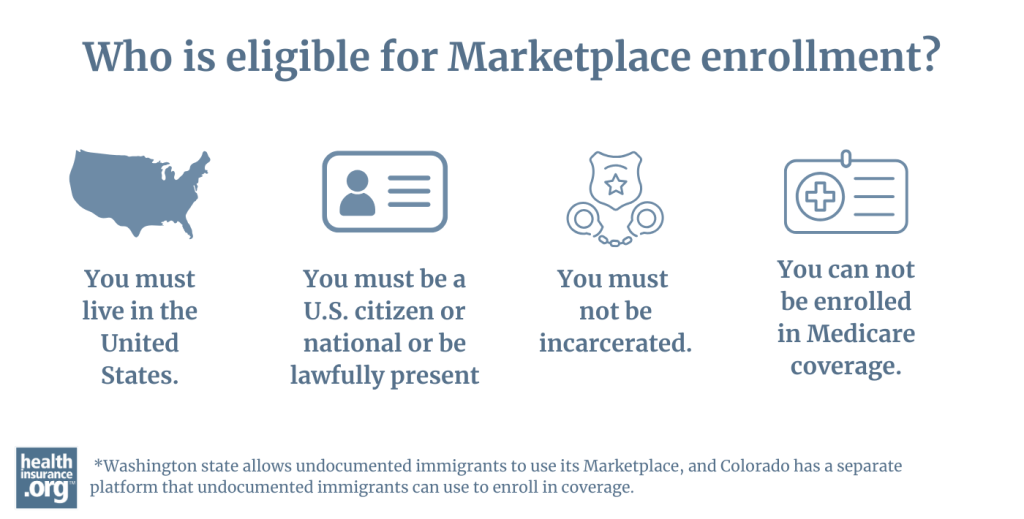
To qualify for Marketplace coverage, applicants must be U.S. citizens or nationals, or lawfully present immigrants. This includes individuals with green cards, refugees, asylum seekers, and various other legal statuses. Documentation proving your immigration status will typically be required during the application process. You must also live in the United States. You cannot apply for a Marketplace plan if you reside abroad, even if you maintain U.S. citizenship. These rules are in place to ensure that the benefits of the ACA are directed towards the population it was designed to serve, impacting those who live and contribute to the U.S. economy and society.
Ineligibility Due to Incarceration
One significant exclusion from Marketplace eligibility is incarceration. Individuals who are currently incarcerated (in jail, prison, or similar detention facilities) are generally not eligible to enroll in a Marketplace health insurance plan. This is because incarcerated individuals typically receive their healthcare services through the correctional facility itself. This criterion ensures that resources are allocated appropriately and that there isn’t an overlap in coverage responsibility. Once released, however, these individuals often become eligible for a Special Enrollment Period, allowing them to sign up for a Marketplace plan outside of the standard Open Enrollment period.
Unlocking Financial Assistance: Subsidies and Cost Savings
A major appeal of Marketplace insurance, and a crucial aspect for financial planning, is the availability of financial assistance. Without these subsidies, many plans would be unaffordable for lower and middle-income individuals and families. These financial aids come in two primary forms: Premium Tax Credits and Cost-Sharing Reductions, both designed to make healthcare more accessible and less of a financial burden. Understanding how these work is key to truly qualifying for affordable marketplace insurance.
Premium Tax Credits: Lowering Monthly Premiums
The Premium Tax Credit (PTC), also known as a subsidy, is a refundable tax credit designed to help eligible individuals and families afford health insurance coverage purchased through the Marketplace. When you apply, you can choose to have some or all of your PTC paid directly to your insurance company each month, effectively lowering your monthly premium payments. The amount of your PTC is primarily based on your estimated household income for the year, your household size, and the cost of the second-lowest-cost Silver plan available in your area. Generally, the lower your income (relative to the Federal Poverty Level, or FPL), the larger your tax credit will be.
For the vast majority of individuals, the PTC makes coverage significantly more affordable. To qualify, your household income must fall within a certain range relative to the FPL. Traditionally, this range was 100% to 400% FPL. However, temporary enhancements made through the American Rescue Plan Act (ARPA) and extended by the Inflation Reduction Act (IRA) have removed the 400% FPL income cap, ensuring that no one pays more than 8.5% of their household income for the benchmark Silver plan premium. This is a game-changer for many middle-income families, making robust health coverage a real possibility without derailing their financial stability. It’s important to accurately estimate your income, as discrepancies could lead to owing money back at tax time or receiving less assistance than you’re entitled to.
Cost-Sharing Reductions: Reducing Out-of-Pocket Costs
Beyond lowering premiums, some individuals can also qualify for Cost-Sharing Reductions (CSRs). Unlike PTCs, which reduce your monthly payment, CSRs directly reduce the amount you pay when you use healthcare services. This means lower deductibles, copayments, coinsurance, and out-of-pocket maximums. CSRs are only available if you enroll in a Silver-tier plan. If you qualify, your Silver plan will function more like a Gold or Platinum plan in terms of out-of-pocket costs, but you’ll pay a Silver plan’s premium (potentially further reduced by PTCs).
To qualify for CSRs, your household income generally needs to be between 100% and 250% of the FPL. The lower your income within this range, the stronger the CSRs you’ll receive. These reductions are automatically applied if you are eligible and select a Silver plan through the Marketplace. CSRs are a critical financial tool for lower-income individuals, as they provide substantial protection against high medical bills, making healthcare access not just possible, but genuinely affordable when services are actually needed. This direct reduction in “user fees” for healthcare is a powerful lever in personal financial management, preventing unexpected health events from becoming financial catastrophes.
Income Thresholds and Household Size
Both Premium Tax Credits and Cost-Sharing Reductions are heavily dependent on your household income and household size. Your “household income” for Marketplace purposes is generally your Modified Adjusted Gross Income (MAGI). This isn’t just your taxable income; it includes various income sources that aren’t typically counted for AGI, such as tax-exempt interest and non-taxable Social Security benefits, with certain deductions added back. Accurate calculation of MAGI is crucial for determining your eligibility and the amount of financial assistance you receive.
“Household size” includes everyone you claim as a dependent on your federal tax return, plus yourself and your spouse if married and filing jointly. Changes in income or household size throughout the year can impact your eligibility for subsidies. It is imperative to report any significant changes to the Marketplace as soon as possible. Failing to do so could result in an incorrect amount of financial assistance, potentially leading to a larger tax liability at the end of the year or missing out on aid you qualify for. This dynamic nature of eligibility underscores the need for continuous financial vigilance when relying on Marketplace subsidies.
Navigating Special Enrollment Periods
While the primary window to enroll in Marketplace insurance or change plans is during the annual Open Enrollment Period (typically November 1st to January 15th in most states), life doesn’t always adhere to a fixed schedule. Understanding Special Enrollment Periods (SEPs) is vital for those whose circumstances change outside of this window, as it allows them to qualify for coverage when they need it most. These periods are critical financial safety nets for unexpected life events.
Life Changes Triggering Enrollment
SEPs are designed to ensure that individuals can obtain or adjust their health insurance coverage when significant life events occur. Common qualifying life events include:
- Loss of other health coverage: This is one of the most frequent triggers, including losing job-based coverage (even if voluntarily quitting), COBRA expiring, turning 26 and losing coverage under a parent’s plan, or losing eligibility for Medicaid or CHIP.
- Changes in household: Getting married, having a baby, adopting a child, or placing a child for adoption or foster care are all qualifying events. Divorce or legal separation that results in loss of coverage can also trigger an SEP.
- Changes in residence: Moving to a new county or state, or a new area where new health plans are available, can open an SEP. This includes moving to the U.S. from a foreign country or U.S. territory.
- Other qualifying events: Becoming a U.S. citizen, leaving incarceration, or changes in income that affect eligibility for financial assistance can also trigger an SEP.
- Changes in tribal status or becoming a new Medicaid-eligible individual: Native Americans and Alaskan Natives have unique enrollment opportunities.
These events acknowledge that personal financial planning and healthcare needs are often intertwined with life’s unpredictable turns. An SEP provides a crucial window to adapt your financial strategy to secure essential health benefits.
The Importance of Timely Application
Most SEPs grant you a 60-day window following the qualifying life event to enroll in a new plan or change your existing one. It is absolutely critical to apply within this timeframe. Missing your SEP means you will likely have to wait until the next Open Enrollment Period to get coverage, potentially leaving you uninsured for months and vulnerable to significant medical costs. When a qualifying event occurs, prompt action is essential for maintaining continuous coverage and protecting your financial well-being. The Marketplace typically requires documentation to verify your qualifying event, so being prepared with relevant documents (e.g., marriage certificate, birth certificate, termination of employment letter) can streamline the application process.
The Application Process and What to Expect
Once you understand the eligibility criteria and potential financial assistance, the final step is to navigate the application process itself. The Marketplace application is designed to be user-friendly, but requires careful attention to detail and accurate information to ensure you receive the correct coverage and financial aid.
Gathering Necessary Documentation
Before you begin your application, it’s wise to gather all necessary documentation. This typically includes:
- Personal information: Social Security numbers (SSN) for everyone in your household, birth dates, and mailing addresses.
- Income information: Recent pay stubs, W-2s, self-employment income records (profit/loss statements), Social Security income, unemployment benefits, pension/retirement income, and any other sources of household income. This helps determine your MAGI.
- Tax information: Your most recent federal tax return can be helpful for accurately estimating current year income and household composition.
- Employer information: For any job-based health coverage that you or your family members might have.
- Immigration documents: If you are a lawfully present immigrant, documentation of your immigration status.
Having these documents readily available will significantly speed up the application process and reduce the likelihood of errors or delays. This preparatory step is fundamental to efficient financial decision-making, ensuring a smooth transition to new health coverage.
Understanding Your Options and Making Informed Choices
Once you submit your application and it’s processed, the Marketplace will notify you of your eligibility for health coverage and any financial assistance (PTC and CSRs). You will then be able to browse available plans in your area, with the net premium reflecting any subsidies you qualify for. This is where informed financial decision-making truly comes into play.
- Compare plans: Look beyond just the premium. Consider the deductible, copayments, coinsurance, and out-of-pocket maximum. Think about your anticipated healthcare needs. Do you visit the doctor often? Do you take regular prescription medications?
- Metal tiers: Remember the metal tiers (Bronze, Silver, Gold, Platinum) and what they mean for cost-sharing. If you qualify for CSRs, a Silver plan is often the most financially advantageous choice.
- Provider networks: Check if your preferred doctors, hospitals, and specialists are in the plan’s network. Out-of-network care can be significantly more expensive.
- Prescription drug coverage: Verify that your essential medications are covered and at what cost-sharing tier.
The Marketplace provides tools and navigators (trained, unbiased individuals or organizations) to help you understand your options and make the best choice for your personal financial situation and health needs. Choosing the right plan is not just about avoiding high monthly payments but about selecting a plan that offers comprehensive protection without jeopardizing your long-term financial health. By understanding how to qualify and carefully considering all available options, you can secure valuable health insurance that provides both peace of mind and financial security.
aViewFromTheCave is a participant in the Amazon Services LLC Associates Program, an affiliate advertising program designed to provide a means for sites to earn advertising fees by advertising and linking to Amazon.com. Amazon, the Amazon logo, AmazonSupply, and the AmazonSupply logo are trademarks of Amazon.com, Inc. or its affiliates. As an Amazon Associate we earn affiliate commissions from qualifying purchases.