
The question “what number is a percentage of another?” might seem like a simple mathematical query, suitable for a school textbook. However, for anyone navigating the complexities of modern finance – from personal budgeting to investment strategies, from calculating profits in a small business to understanding global economic indicators – a mastery of this fundamental concept is not just helpful, it’s indispensable. Percentages are the lingua franca of finance, providing a standardized, easily digestible way to compare quantities, express change, and measure performance across diverse financial landscapes. Without a clear grasp of how percentages work, and more specifically, how to determine a part of a whole expressed as a percentage, individuals and businesses alike risk misinterpreting crucial data, making suboptimal decisions, and ultimately, undermining their financial health.
This article delves into the critical importance of understanding “what number is a percentage of another” within the realm of money. We will explore its applications, demystify the underlying calculations, and illustrate how this seemingly basic arithmetic skill forms the bedrock of sophisticated financial literacy, empowering you to make sharper, more informed decisions in every aspect of your financial journey.
The Ubiquitous Role of Percentages in Finance
Percentages are far more than just mathematical symbols; they are powerful tools for financial communication and analysis. Their ability to contextualize numbers makes them essential across almost every financial domain.
Beyond Simple Arithmetic: Why Percentages Matter
In finance, raw numbers often tell only part of the story. For instance, knowing a company made a profit of $1 million is good, but understanding that this represents a 25% profit margin on $4 million in revenue provides far greater insight into its operational efficiency and profitability relative to its size or competitors. Similarly, an increase of $500 in your monthly expenses sounds significant, but realizing it’s a 10% jump from your previous $5,000 budget paints a clearer picture of the financial impact and urgency for adjustment. Percentages normalize data, allowing for meaningful comparisons irrespective of the absolute magnitudes involved. They allow us to speak of growth rates, discount rates, interest rates, tax rates, and allocation rates in a universally understood language, enabling clearer analysis and decision-making. They transform raw data into actionable intelligence.
Everyday Financial Scenarios Demanding Percentage Understanding
From the moment we wake up until we go to sleep, percentages influence our financial lives. Consider a few common scenarios:
- Shopping: You see a “20% off” sale. To calculate the final price, you need to know “what number is 20% of the original price.”
- Savings Accounts: Your bank offers a 0.5% annual interest rate. Understanding “what number is 0.5% of your savings balance” helps you project earnings.
- Loans and Credit Cards: An 18% APR (Annual Percentage Rate) on your credit card means you need to calculate “what number is 18% of your outstanding balance” to understand the interest cost.
- Taxes: Income tax rates, sales tax, property tax – all are expressed as percentages, requiring you to determine “what number is X% of your income/purchase/property value.”
- Investments: A stock portfolio showing a “7% return” means calculating “what number is 7% of your initial investment.”
- Budgeting: Allocating 15% of your income to savings involves calculating “what number is 15% of your monthly salary.”
These examples merely scratch the surface, illustrating how ingrained percentage calculations are in our daily financial interactions. A solid grasp of the underlying math empowers you to navigate these situations with confidence and precision.
Deconstructing the Core Calculation: “What Number is X% of Another?”
At its heart, answering “what number is a percentage of another?” involves a straightforward mathematical operation. However, mastering this operation is crucial for its manifold applications in finance.
The Fundamental Formula: Part / Whole = Percentage / 100
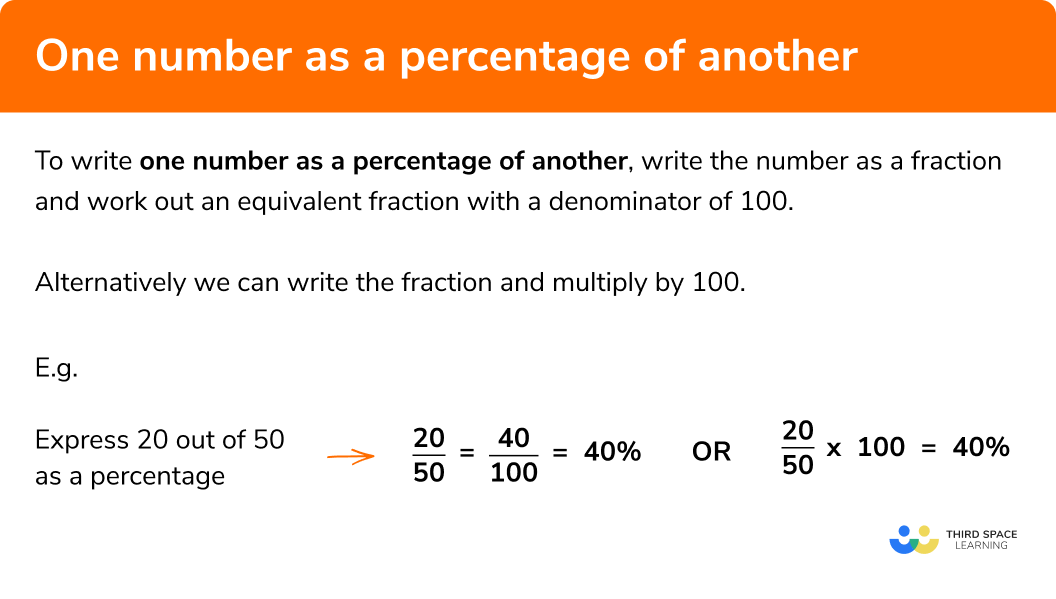
The core concept revolves around the idea that a percentage represents a “part” of a “whole” expressed as a fraction of 100. The fundamental formula can be articulated as:
$text{Part} = text{Percentage (as a decimal)} times text{Whole}$
To convert a percentage to a decimal, you simply divide it by 100. For example, 25% becomes 0.25, and 5% becomes 0.05.
Let’s illustrate: If you want to find “what number is 20% of $150?”, the ‘Whole’ is $150, and the ‘Percentage’ is 20%.
- Convert 20% to a decimal: 20 / 100 = 0.20
- Multiply the decimal by the whole: 0.20 * $150 = $30
So, $30 is 20% of $150. This simple formula is the bedrock for all other percentage calculations.
Practical Examples: Discounts, Taxes, and Tips
Let’s apply this to real-world financial scenarios:
- Discounts: You want to buy a jacket priced at $80, and there’s a 15% discount.
- What number is 15% of $80?
- 0.15 * $80 = $12.
- The discount is $12, so the final price is $80 – $12 = $68.
- Sales Tax: Your new gadget costs $500, and the sales tax is 7%.
- What number is 7% of $500?
- 0.07 * $500 = $35.
- The sales tax is $35, so the total cost is $500 + $35 = $535.
- Tipping: You had a meal that cost $65, and you want to leave a 15% tip.
- What number is 15% of $65?
- 0.15 * $65 = $9.75.
- You would leave a $9.75 tip.
These examples highlight how consistently the core calculation of finding a percentage of a number applies, making everyday financial transactions manageable and transparent.
Reverse Engineering: Finding the Whole or the Percentage Itself
Sometimes, the known variables are different, requiring a slight rearrangement of the fundamental formula.
- Finding the Whole (Original Price): Imagine you bought an item for $75 after a 25% discount. You want to know the original price.
- If there was a 25% discount, you paid 100% – 25% = 75% of the original price.
- So, $75 is 75% of the original price.
- Using the formula: Part = Percentage * Whole => $75 = 0.75 * Whole
- Solve for Whole: Whole = $75 / 0.75 = $100.
- The original price was $100.
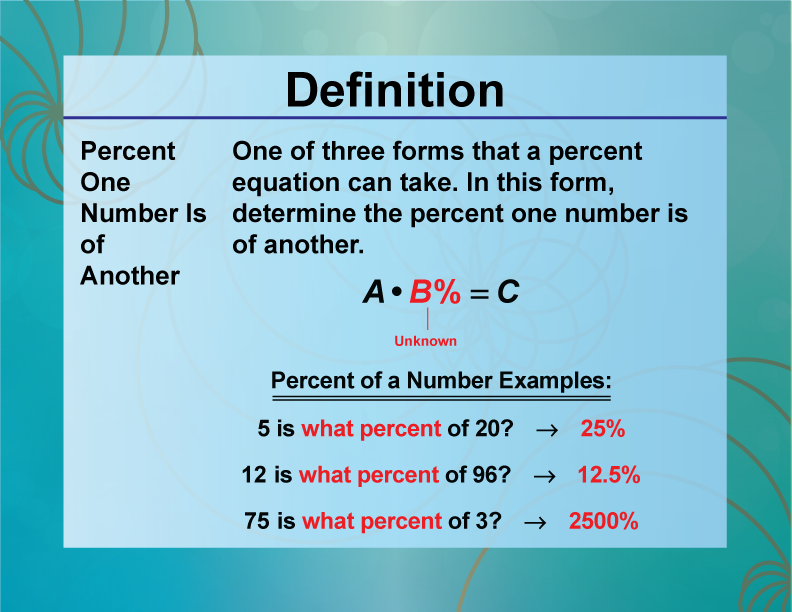
- Finding the Percentage (Rate): You invested $1,000 and earned $50 in profit. What was your percentage return?
- Here, the ‘Part’ is $50, and the ‘Whole’ is $1,000. You’re looking for the ‘Percentage’.
- Percentage (as a decimal) = Part / Whole
- Percentage = $50 / $1,000 = 0.05
- Convert to percentage: 0.05 * 100% = 5%.
- Your percentage return was 5%.
Understanding these variations ensures you can tackle any percentage-related financial problem that comes your way.
Strategic Applications in Personal Finance and Investing
The ability to calculate “what number is a percentage of another” forms the bedrock of effective personal financial management and smart investment strategies.
Budgeting and Expense Tracking: Allocating Your Income
Budgeting is essentially an exercise in percentage allocation. Common financial advice suggests allocating specific percentages of your net income to different categories, such as:
- 50/30/20 Rule: 50% for Needs, 30% for Wants, 20% for Savings/Debt Repayment.
- If your net monthly income is $4,000, you need to calculate “what number is 50% of $4,000” ($2,000 for needs), “what number is 30% of $4,000” ($1,200 for wants), and “what number is 20% of $4,000” ($800 for savings/debt).
- Debt-to-Income Ratio: Lenders often look at what percentage of your income goes towards debt payments. If your monthly debt payments are $800 and your gross monthly income is $5,000, you need to calculate “what percentage is $800 of $5,000” ($800 / $5,000 = 0.16 or 16%). This ratio is critical for loan approvals.
Precise percentage calculations ensure you adhere to your financial plan, prevent overspending, and consistently work towards your savings goals.
Understanding Loan Interest and Investment Returns
Interest rates on loans, mortgages, and investments are almost exclusively expressed as percentages.
- Loan Interest: A $10,000 loan with an 8% annual interest rate requires you to determine “what number is 8% of $10,000” ($800) to understand your annual interest cost. For monthly payments, this often gets broken down further, but the principle remains the same.
- Investment Returns: When an investment fund reports an average annual return of 10%, you can project the growth of your capital by calculating “what number is 10% of your investment amount.” Over multiple years, this leads to understanding the power of compound interest, where percentages are applied not just to the initial principal but also to accumulated interest. The ability to calculate the percentage of a number is crucial for estimating future values and evaluating the performance of your portfolio.
Decoding Inflation and Its Impact on Purchasing Power
Inflation, defined as the rate at which the general level of prices for goods and services is rising, is expressed as a percentage. If inflation is 3% per year, it means that “what number is 3% of your current money’s value” will be lost in purchasing power over a year. Understanding this allows you to:
- Adjust Savings Goals: To maintain real purchasing power, your savings or investments need to grow by at least the rate of inflation.
- Evaluate Salary Raises: A 2% salary raise when inflation is 4% actually means a real-term decrease in purchasing power, as “what number is 2% of your salary” is less than “what number is 4% of your previous purchasing power.”
- Retirement Planning: Factoring in future inflation rates, which are percentages, is vital for ensuring your retirement nest egg will be sufficient years down the line.
Business and Online Income: Leveraging Percentages for Growth
In the world of business, from multi-national corporations to sole online entrepreneurs, percentages are critical for operational analysis, strategic planning, and gauging market success.
Profit Margins and Markup: Pricing for Sustainability
Every business needs to ensure its pricing strategy yields a sustainable profit. This heavily relies on percentage calculations:
- Gross Profit Margin: This is the percentage of revenue that exceeds the cost of goods sold. If an item sells for $100 and costs $60 to produce, the gross profit is $40. To find the gross profit margin, you calculate “what percentage is $40 of $100?” (40%). Businesses benchmark these percentages against industry averages to assess efficiency.
- Markup: This is the percentage added to the cost of a product to determine its selling price. If an item costs $60 and you want a 50% markup, you calculate “what number is 50% of $60” ($30). The selling price would then be $60 + $30 = $90. Understanding markup percentages is crucial for competitive pricing and ensuring profitability.
Sales Growth and Market Share Analysis
Businesses constantly track their growth and position within the market using percentages:
- Sales Growth: If last year’s sales were $500,000 and this year’s are $600,000, the growth is $100,000. To find the percentage growth, you calculate “what percentage is $100,000 of $500,000?” (20%). This percentage provides a clear indicator of business performance.
- Market Share: If the total market for a product is $10 million and your company sells $1 million worth, your market share is “what percentage is $1 million of $10 million?” (10%). Tracking this percentage over time helps businesses assess their competitive standing and the effectiveness of their marketing strategies.
Commission Structures and Affiliate Marketing
Many sales-driven roles and online income models are built on percentage-based compensation:
- Sales Commissions: A salesperson earning a 5% commission on sales of $10,000 needs to calculate “what number is 5% of $10,000” ($500) to determine their earnings.
- Affiliate Marketing: Bloggers or influencers promoting products often earn a percentage of sales generated through their unique links. If an affiliate earns 8% commission on a $200 sale, they calculate “what number is 8% of $200” ($16).
For those pursuing online income, a precise understanding of these percentage calculations is vital for estimating potential earnings and optimizing their monetization strategies.
Common Pitfalls and Advanced Considerations
While the basic calculation of “what number is a percentage of another” is straightforward, there are nuances and more advanced applications that demand attention.
The Illusion of “Percentage Points” vs. “Percentage Change”
A common mistake in financial reporting and interpretation is confusing percentage points with percentage change.
- Percentage Points: This refers to the absolute difference between two percentages. If an interest rate increases from 4% to 6%, it has increased by 2 percentage points.
- Percentage Change: This refers to the relative change. If an interest rate increases from 4% to 6%, the increase is 2. The percentage change is “what percentage is 2 of the original 4?” (2/4 = 0.50 or 50%). So, the rate increased by 50%, not just 2%.
Understanding this distinction is crucial when interpreting financial news, investment performance, or economic reports, as misinterpreting these can lead to significantly skewed perceptions of growth or decline.
Compounding Interest: The Power of Time and Percentages
Compounding interest is arguably the most powerful concept in finance, often dubbed the “eighth wonder of the world.” It’s essentially applying the “what number is a percentage of another” calculation repeatedly over time, where the interest earned is added back to the principal, and subsequent interest is calculated on the new, larger sum.
- If you invest $1,000 at 10% annual interest, after year one, you calculate “what number is 10% of $1,000” ($100), making your total $1,100.
- In year two, the 10% interest is calculated on $1,100, not $1,000. So, “what number is 10% of $1,100” ($110), making your total $1,210.
This seemingly small difference compounds over decades, leading to exponential growth. Mastery of this concept is vital for long-term investing, retirement planning, and understanding the true cost of debt.
Using Financial Tools and Spreadsheets for Complex Calculations
While understanding the manual calculation is paramount, in real-world finance, especially for complex scenarios or large datasets, financial tools and spreadsheets become invaluable. Software like Microsoft Excel or Google Sheets allows you to quickly apply percentage formulas across hundreds or thousands of data points. For instance, calculating monthly loan payments with varying interest rates, projecting investment growth over 30 years with different contribution amounts, or analyzing sales data across multiple product lines and regions – all become manageable using built-in percentage functions. These tools abstract away the repetitive arithmetic, allowing you to focus on interpreting the financial insights that these percentage calculations reveal.

Conclusion
The seemingly simple question “what number is a percentage of another?” unlocks a vast array of financial understanding and capability. From basic consumer decisions like calculating a discount or sales tax, to strategic financial planning involving budgeting, investing, and understanding loan costs, to sophisticated business analysis of profit margins and market share – percentages are the inescapable language of money. By mastering this fundamental mathematical concept, and understanding its various applications and nuances, individuals and businesses can elevate their financial acumen, make more informed decisions, and ultimately build a stronger, more secure financial future. It’s a foundational skill that pays dividends in every aspect of your financial life.
aViewFromTheCave is a participant in the Amazon Services LLC Associates Program, an affiliate advertising program designed to provide a means for sites to earn advertising fees by advertising and linking to Amazon.com. Amazon, the Amazon logo, AmazonSupply, and the AmazonSupply logo are trademarks of Amazon.com, Inc. or its affiliates. As an Amazon Associate we earn affiliate commissions from qualifying purchases.