
Understanding how to calculate a price increase percentage is a fundamental skill, essential for sound financial management, whether you’re tracking personal spending, analyzing business profitability, or deciphering economic trends. In an ever-evolving economic landscape characterized by inflation, supply chain fluctuations, and market shifts, accurately quantifying price changes allows individuals and businesses to make informed decisions, adjust strategies, and maintain financial stability. This calculation isn’t just about numbers; it’s about gaining clarity on purchasing power, evaluating investment returns, and setting competitive pricing. It’s a core component of financial literacy that empowers you to navigate the complexities of the monetary world with greater precision and foresight.
Understanding the Importance of Price Increase Calculation
The ability to accurately calculate a price increase percentage extends far beyond a simple arithmetic exercise. It’s a critical tool for deeper financial insight, impacting decisions at both individual and organizational levels. From everyday budgeting to macroeconomic analysis, understanding the magnitude of price shifts is paramount.
Personal Finance Implications: Navigating Inflation and Budgeting
For individuals, calculating price increases is crucial for managing personal finances effectively. Inflation, the general increase in prices and fall in the purchasing value of money, erodes the value of savings and income over time. By understanding how much the cost of essential goods and services – like groceries, utilities, rent, and transportation – has increased, individuals can:
- Adjust Budgets: Recognize when current spending habits are no longer sustainable due to rising costs and modify budgets accordingly. This might involve cutting discretionary spending or seeking ways to increase income.
- Assess Purchasing Power: Understand the real value of their income. A 5% salary increase might feel significant, but if the cost of living has risen by 7%, their actual purchasing power has decreased.
- Plan for Future Expenses: Anticipate future costs for major purchases like a home, car, or retirement, enabling more realistic savings goals. Knowing that education costs historically rise by a certain percentage, for instance, allows for better long-term planning.
- Make Informed Consumer Choices: Compare prices across different brands or providers, evaluate the true cost of loyalty programs versus switching, and decide when to defer purchases in anticipation of price drops or sales.
Without this understanding, individuals risk falling behind financially, making suboptimal spending choices, and failing to achieve their long-term financial goals. It’s the bedrock of proactive financial self-management in a dynamic economic environment.
Business Finance Applications: Pricing Strategy and Cost Analysis
In the business world, calculating price increases is indispensable for maintaining profitability, competitiveness, and sustainable growth. Companies must constantly monitor their costs and revenues to thrive, and price increase percentages are a vital metric in this process.
- Optimizing Pricing Strategy: Businesses must set prices that cover their costs and generate a profit, while remaining attractive to customers. By calculating the percentage increase in production costs (raw materials, labor, overhead), businesses can determine if and by how much they need to raise their own prices to maintain margins. This data supports strategic decisions on whether to absorb costs, pass them to consumers, or find efficiency gains.
- Conducting Cost Analysis: Regular calculation of price increases for inputs helps businesses identify areas where costs are escalating rapidly. This insight can prompt negotiations with suppliers, exploration of alternative vendors, or investment in cost-saving technologies. For example, if a key raw material’s price has increased by 15% in a quarter, the procurement team knows to prioritize finding solutions.
- Forecasting and Budgeting: Accurate price increase data allows businesses to create more realistic financial forecasts and budgets. This is crucial for planning capital expenditures, managing cash flow, and setting sales targets. Misjudging future cost increases can lead to budget overruns and unexpected financial strain.
- Evaluating Performance and Profitability: By comparing current product prices against historical costs and market trends, businesses can assess the effectiveness of their pricing strategies and the health of their profit margins. A product that hasn’t seen a price adjustment in years might be severely underpriced if its input costs have risen significantly, leading to diminished profitability.
Ultimately, businesses that master price increase calculations are better equipped to adapt to market conditions, protect their bottom line, and make data-driven decisions that foster long-term success.
Economic Indicators and Market Analysis
At a broader level, price increase percentages are critical economic indicators that help economists, policymakers, and investors understand the health and direction of an economy.
- Inflation Measurement: The most prominent application is in measuring inflation. Consumer Price Index (CPI) and Producer Price Index (PPI) are constructed using weighted averages of price changes for a basket of goods and services, providing a comprehensive view of economy-wide price increases. These metrics influence central bank interest rate decisions.
- Policy Making: Governments and central banks use these figures to formulate monetary and fiscal policies aimed at stabilizing prices, promoting economic growth, and maintaining employment. For instance, persistent high price increases might lead a central bank to raise interest rates to cool down the economy.
- Investment Decisions: Investors closely track price increase data to gauge economic stability and anticipate market movements. High inflation, indicated by significant price increases across sectors, can erode investment returns, prompting shifts in portfolio allocation towards inflation-hedging assets like real estate or commodities. Conversely, stable or low price increases might signal a favorable environment for growth stocks.
- Market Trend Analysis: Analysts use price increase percentages to identify trends within specific industries or sectors. For example, consistent price increases in a particular commodity might signal increasing demand or supply shortages, impacting related industries and investment opportunities.
Therefore, understanding and calculating price increase percentages serves as a vital diagnostic tool for assessing economic vitality and guiding strategic action across all financial domains.
The Fundamental Formula for Price Increase Percentage
The calculation of a price increase percentage is straightforward, relying on a simple formula that quantifies the relative change between an original price and a new, higher price. Mastering this formula is the foundation for all subsequent financial analysis involving price shifts.
Defining Key Variables: Original Price and New Price
Before diving into the calculation, it’s essential to clearly define the two primary variables:
- Original Price (P_original): This is the starting price or the reference point from which the increase is measured. It could be last year’s price, last quarter’s price, or the initial purchase price of an asset.
- New Price (P_new): This is the current, higher price after the increase has occurred. It represents the value at the point of measurement.
Ensuring you correctly identify these two values is critical for an accurate calculation. Swapping them will result in an incorrect percentage, potentially indicating a decrease when there was an increase, or vice versa.
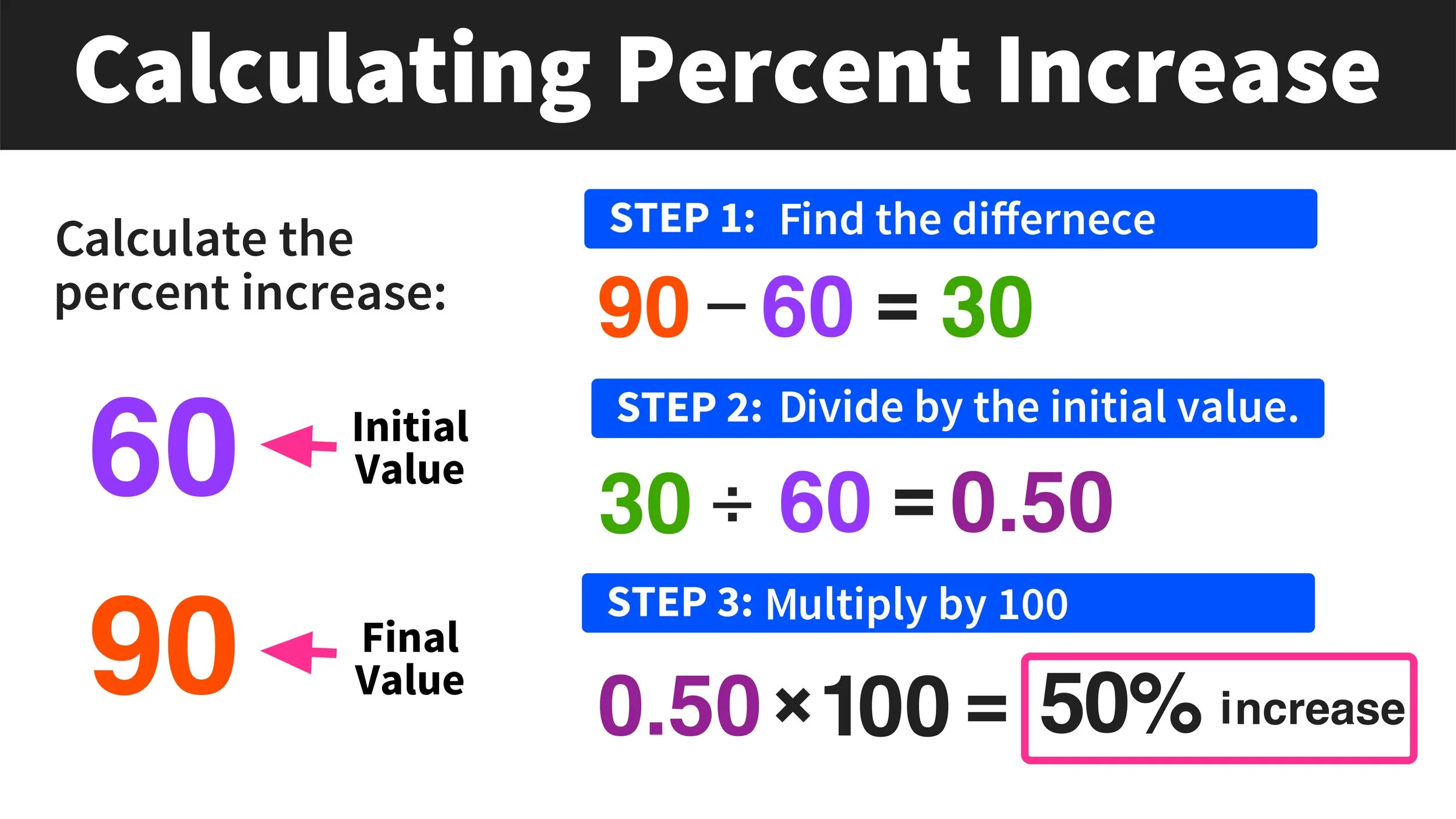
Step-by-Step Calculation Guide
The formula for calculating the price increase percentage is as follows:
Price Increase Percentage = ((Pnew – Poriginal) / P_original) * 100
Let’s break down the steps:
- Find the Difference: Subtract the original price from the new price. This gives you the absolute amount of the price increase.
Increase Amount = P_new - P_original
- Divide by the Original Price: Divide the increase amount by the original price. This converts the absolute increase into a decimal representing the proportional change relative to the starting value.
Proportional Increase = Increase Amount / P_original
- Multiply by 100: Multiply the result by 100 to express it as a percentage.
Price Increase Percentage = Proportional Increase * 100
Example:
Imagine a gallon of milk cost $3.00 last year (Poriginal) and now costs $3.30 (Pnew).
Increase Amount = $3.30 - $3.00 = $0.30Proportional Increase = $0.30 / $3.00 = 0.10Price Increase Percentage = 0.10 * 100 = 10%
So, the price of milk has increased by 10%.
Interpreting the Result
The calculated percentage provides a standardized and easily comparable metric for understanding the magnitude of a price change.
- A positive percentage indicates a price increase. The higher the percentage, the more significant the increase relative to the original price.
- A negative percentage (which would occur if Pnew were less than Poriginal, indicating a price decrease) means the price has fallen. While our focus here is on increases, the same formula effectively calculates a percentage change, positive or negative.
- The percentage makes it easy to compare changes across different items or periods, regardless of their absolute dollar values. A $1 increase on a $10 item (10%) is proportionally much larger than a $1 increase on a $100 item (1%).
Understanding this calculation and its interpretation is key to making sense of financial data and forming a solid basis for financial planning and decision-making.
Real-World Applications and Examples
The calculation of price increase percentages isn’t merely an academic exercise; it has tangible applications across various financial scenarios, empowering individuals and businesses to navigate their economic realities more effectively.
Consumer Goods and Services: Groceries, Utilities, and Everyday Spending
For the average consumer, price increase calculations are an everyday necessity, often applied implicitly when budgeting or comparing costs.
- Groceries: A staple basket of groceries might have cost $100 a month last year, but now costs $108 for the same items.
((108 - 100) / 100) * 100 = 8% increase.
This 8% increase directly impacts a household’s food budget and overall discretionary spending.
- Utilities: Your electricity bill might jump from $75 to $85 in a quarter due to rising energy costs.
((85 - 75) / 75) * 100 = 13.33% increase.
Understanding this percentage helps you budget for higher energy expenses or look for ways to reduce consumption.
- Rent/Housing: If your annual rent increases from $1,500 to $1,650.
((1650 - 1500) / 1500) * 100 = 10% increase.
This significant increase directly impacts your largest monthly expense, potentially requiring lifestyle adjustments or a search for more affordable housing.
- Transportation: The cost of gasoline is a volatile example. If a gallon went from $3.50 to $4.20.
((4.20 - 3.50) / 3.50) * 100 = 20% increase.
Such a surge can significantly impact commuting costs and overall travel budgets.

By consistently monitoring these changes, consumers can proactively adjust their spending habits, reallocate funds, and make smarter choices about where their money goes.
Investment Portfolio Performance: Stock Prices, Asset Valuation
Investors rely heavily on price increase percentages to evaluate the performance of their investments and make strategic decisions.
- Stock Prices: If you bought a share of stock for $50 and it’s now trading at $58.
((58 - 50) / 50) * 100 = 16% increase.
This 16% gain indicates a healthy return on that specific investment. Comparing this to other investments or market benchmarks helps assess its relative performance.
- Real Estate: A property purchased for $300,000 appreciates to $360,000 over five years.
((360000 - 300000) / 300000) * 100 = 20% increase.
This 20% appreciation represents the capital gain, which is crucial for evaluating the investment’s profitability and potential for future growth.
- Mutual Funds/ETFs: The value of your mutual fund units goes from $25 per unit to $27 per unit.
((27 - 25) / 25) * 100 = 8% increase.
Tracking these percentage changes helps investors understand the growth of their portfolio and decide when to hold, buy more, or sell.
- Commodities: The price of gold, a common inflation hedge, might rise from $1,800 per ounce to $1,980 per ounce.
((1980 - 1800) / 1800) * 100 = 10% increase.
This shows its effectiveness in maintaining purchasing power during periods of general price increases.
For investors, these calculations are vital for assessing risk, comparing different investment opportunities, and understanding the real returns after factoring in inflation and other economic factors.
Business Operating Costs: Raw Materials, Wages, and Services
Businesses constantly monitor price increases in their operating costs to manage profitability and make strategic decisions.
- Raw Materials: A manufacturer sees the cost of steel rise from $800 per ton to $920 per ton.
((920 - 800) / 800) * 100 = 15% increase.
This significant increase in a key input cost might force the company to raise its product prices, seek new suppliers, or explore alternative materials.
- Wages and Salaries: Due to labor market demands, a company might increase its average employee salary from $50,000 to $53,000.
((53000 - 50000) / 50000) * 100 = 6% increase.
This 6% increase in labor costs must be factored into the overall budget and pricing strategy.
- Services: The annual subscription for essential business software increases from $1,200 to $1,350.
((1350 - 1200) / 1200) * 100 = 12.5% increase.
These operational cost increases directly impact a company’s overhead and profit margins, requiring careful management and potential price adjustments for their own products or services.
- Shipping Costs: A logistics company raises its freight charges from $500 per shipment to $575.
((575 - 500) / 500) * 100 = 15% increase.
Businesses relying on shipping must factor this into their supply chain costs and potentially adjust consumer pricing or shipping fees.
By systematically calculating and analyzing these price increases, businesses can identify cost pressures, negotiate better terms with suppliers, adjust their own pricing, and maintain a healthy profit margin in a dynamic market environment.
Factors Influencing Price Increases
Understanding the calculation of price increases is only half the battle; the other half involves comprehending why prices increase. Various interconnected economic forces drive these changes, impacting both supply and demand dynamics across goods, services, and assets.
Supply and Demand Dynamics
The fundamental economic principle of supply and demand is a primary driver of price changes.
- Increased Demand: When the demand for a product or service outstrips its available supply, prices tend to rise. Consumers are willing to pay more to acquire scarce items. This can be driven by population growth, changing consumer preferences, effective marketing, or overall economic prosperity leading to higher disposable income. For example, during a housing boom, limited housing inventory combined with a surge of eager buyers pushes home prices skyward.
- Decreased Supply: Conversely, a reduction in the supply of a good or service, while demand remains constant or increases, will also lead to higher prices. Supply shocks can be caused by natural disasters (e.g., crop failures), geopolitical events (e.g., sanctions affecting oil), production bottlenecks, labor shortages, or regulatory changes limiting output. A severe drought reducing agricultural yields, for instance, leads to higher food prices.
- Elasticity: The responsiveness of demand or supply to price changes also plays a role. If demand is inelastic (consumers continue to buy regardless of price, like essential medicines), price increases can be substantial without significant loss of sales. If demand is elastic (consumers are very sensitive to price changes), businesses might absorb cost increases rather than passing them fully on, fearing a loss of market share.
Inflation and Economic Conditions
Broad economic conditions and monetary policy are overarching factors that influence price levels across an entire economy.
- Inflation: This is the sustained increase in the general price level of goods and services in an economy over a period. It’s often categorized into:
- Demand-pull inflation: Occurs when aggregate demand in an economy is growing faster than aggregate supply, pulling prices up.
- Cost-push inflation: Occurs when the cost of producing goods and services rises, and producers pass these higher costs onto consumers in the form of higher prices.
- Monetary Policy: Central banks (like the Federal Reserve in the U.S.) influence inflation through interest rates and money supply. Lower interest rates can stimulate borrowing and spending, increasing demand and potentially leading to price increases. Conversely, raising rates can cool down an overheating economy.
- Fiscal Policy: Government spending, taxation, and borrowing can also impact aggregate demand. Large government stimulus packages, for instance, can inject more money into the economy, potentially fueling inflation.
- Exchange Rates: A weaker domestic currency makes imported goods more expensive, contributing to higher prices domestically. Conversely, it makes exports cheaper, potentially boosting demand for domestic products but also importing inflation if a country relies heavily on foreign inputs.
Production Costs and Overhead
The expenses incurred by businesses to create and deliver products or services directly influence their pricing decisions.
- Raw Materials: Increases in the cost of raw materials (e.g., lumber, oil, metals, agricultural commodities) directly translate to higher production costs. Supply chain disruptions, tariffs, or increased global demand can drive these costs up.
- Labor Costs: Wages, salaries, and benefits for employees constitute a significant portion of production costs. Rising minimum wages, labor shortages, or increased unionization can lead to higher labor expenses, which companies often pass on to consumers.
- Energy Costs: Fuel, electricity, and natural gas are essential inputs for most businesses. Fluctuations in global energy markets can significantly impact operating expenses and, consequently, product prices.
- Transportation and Logistics: The cost of shipping goods from suppliers to manufacturers, and then to consumers, is a substantial business expense. Fuel price volatility, driver shortages, and port congestion can drive up these costs.
- Overhead Expenses: Rent, utilities, insurance, administrative salaries, and equipment maintenance are fixed or semi-fixed costs that contribute to the overall cost base. Increases in these areas can necessitate price adjustments.
When any of these input costs rise, businesses face pressure to increase their selling prices to maintain profit margins.
Market Competition and Brand Positioning
While cost and demand are critical, the competitive landscape and a company’s brand strategy also play a significant role in pricing.
- Competitive Landscape: In highly competitive markets, businesses might be hesitant to raise prices significantly, even if their costs increase, for fear of losing customers to rivals. Price increases are often limited by what competitors are charging.
- Monopolies/Oligopolies: In markets with limited competition, companies have more power to set and increase prices.
- Brand Strength and Value Perception: Strong brands with high customer loyalty or a perceived premium value can often command higher prices and implement increases more easily than generic brands. Consumers are willing to pay more for quality, trust, or status.
- Product Differentiation: Unique features, superior quality, or innovative technology can justify higher prices. Companies that effectively differentiate their products can raise prices without immediately losing market share.
Ultimately, price increases are a complex interplay of these factors. Businesses and individuals who understand these underlying drivers are better positioned to anticipate changes, adapt their financial strategies, and make informed decisions in a dynamic economic environment.
Leveraging Price Increase Data for Financial Decisions
Calculating and understanding price increase percentages is not an end in itself; it’s a powerful means to an end: making better financial decisions. Whether for personal wealth management or business strategy, this data provides actionable insights that can safeguard and grow financial resources.
Strategic Budgeting and Financial Planning
For individuals and households, incorporating price increase data into budgeting and financial planning is critical for maintaining financial health.
- Realistic Budget Adjustments: Regular review of price increases for essential categories (groceries, housing, transportation, utilities) allows for proactive adjustments to monthly budgets. Instead of reacting to budget shortfalls, you can anticipate higher costs and allocate funds accordingly, preventing overspending and debt accumulation.
- Inflation-Adjusted Savings Goals: When planning for future expenses like retirement, a child’s education, or a down payment on a house, it’s vital to factor in the anticipated increase in costs due to inflation. Saving a fixed amount might seem sufficient today, but its purchasing power will diminish over time. By adjusting savings goals upwards based on projected inflation rates, you ensure your future funds will cover future costs.
- Income Requirement Assessment: Understanding how much your cost of living is rising helps in negotiating salary increases or evaluating potential job offers. If your expenses are consistently increasing by 5% annually, you know your income needs to grow by at least that much to maintain your standard of living.
- Contingency Planning: Recognizing that prices can rise unexpectedly prompts individuals to build a more robust emergency fund. This financial cushion can absorb sudden cost increases (e.g., unexpectedly higher utility bills, car repair price hikes) without derailing overall financial stability.
By integrating price increase insights, personal finance moves from reactive management to proactive strategic planning, leading to greater financial security and achievement of long-term goals.
Smart Investing and Portfolio Management
For investors, price increase data is a cornerstone for informed decision-making, influencing asset allocation, risk management, and overall portfolio strategy.
- Inflation Hedging: During periods of high or rising price increases (inflation), the real return on cash and fixed-income investments (like bonds) can be eroded. Investors can use this data to pivot towards inflation-hedging assets such as real estate, commodities (gold, silver, oil), Treasury Inflation-Protected Securities (TIPS), or dividend-paying stocks that tend to perform well when prices rise.
- Evaluating Real Returns: The nominal return on an investment (e.g., a stock increased by 10%) can be misleading if the cost of living has also increased. By subtracting the inflation rate (the average price increase percentage) from the nominal return, investors can calculate the “real return,” which reflects the actual increase in purchasing power. This is crucial for truly understanding investment performance.
- Sector and Industry Analysis: Tracking price increases within specific sectors can highlight emerging trends or potential risks. For example, consistent price increases in technology components might signal supply chain issues or strong demand, influencing investment decisions in tech companies.
- Strategic Asset Allocation: Understanding long-term price increase trends helps in constructing a diversified portfolio. For instance, if historical data shows that housing prices consistently outpace general inflation in certain regions, real estate might be a more attractive long-term asset in those areas.
- Rebalancing Decisions: Price changes in individual assets within a portfolio can alter its original asset allocation. Calculating the percentage change in value for each asset helps in rebalancing the portfolio to maintain the desired risk profile and strategic focus.
Leveraging price increase data transforms investing from speculative gambling into a more disciplined, data-driven approach, maximizing returns while mitigating risks.
Business Profitability and Pricing Adjustments
For businesses, integrating price increase data into strategic operations is fundamental to maintaining profitability and competitiveness.
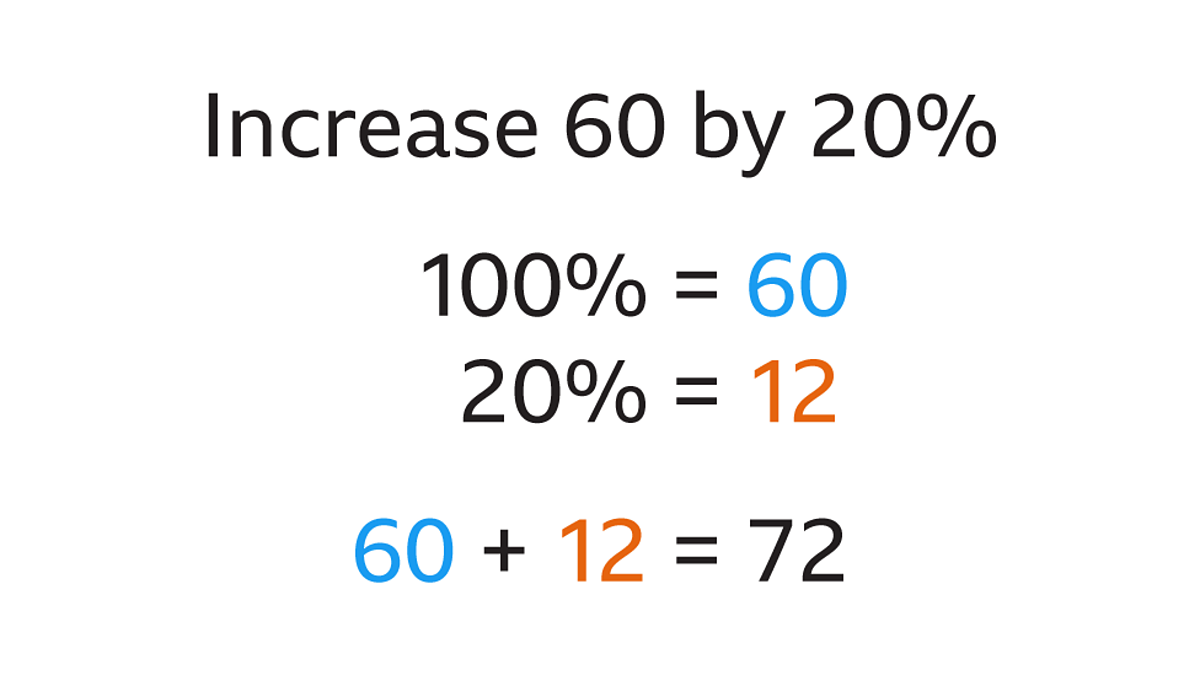
- Dynamic Pricing Strategies: Instead of static pricing, businesses can implement dynamic pricing models that respond to changes in input costs. If raw material costs increase by 10%, a business might adjust its product price by a corresponding percentage to maintain profit margins. This requires continuous monitoring of cost increases.
- Cost Management and Supplier Negotiations: By meticulously tracking price increases from suppliers for raw materials, services, and components, businesses gain leverage in negotiations. Demonstrating the percentage increase can support demands for better terms or motivate a search for alternative, more cost-effective suppliers.
- Product Line Rationalization: Analyzing which products are most affected by cost increases (and thus require higher price adjustments) can inform decisions about product portfolio. Some products might become unprofitable if their price increases make them uncompetitive, leading to discontinuation or strategic repositioning.
- Forecasting and Budgeting Accuracy: Accurate price increase projections for both costs and potential revenue (from price adjustments) lead to more reliable financial forecasts and budgets. This is vital for cash flow management, capital expenditure planning, and setting realistic profitability targets.
- Competitive Intelligence: Understanding the price increase percentages of competitors’ products or services can reveal their cost structures or pricing strategies. This intelligence helps a business position its own offerings effectively, deciding whether to lead on price, match competitors, or differentiate on value.
- Marketing and Communication: When a business must implement a price increase, understanding the percentage change allows for clear and transparent communication with customers. Explaining a 5% increase due to rising material costs is more credible than a vague statement about “market conditions.”
In essence, price increase data enables businesses to proactively manage their cost base, optimize their revenue streams, and maintain a competitive edge in an ever-fluctuating market. It transforms raw data into strategic intelligence, driving sustained financial success.
aViewFromTheCave is a participant in the Amazon Services LLC Associates Program, an affiliate advertising program designed to provide a means for sites to earn advertising fees by advertising and linking to Amazon.com. Amazon, the Amazon logo, AmazonSupply, and the AmazonSupply logo are trademarks of Amazon.com, Inc. or its affiliates. As an Amazon Associate we earn affiliate commissions from qualifying purchases.