
In the world of personal finance, business, and investing, understanding percentages isn’t just a useful skill—it’s an absolute necessity. From calculating discounts on your latest purchase to analyzing investment returns, determining interest rates, or setting effective budgets, percentages are the universal language of financial comparison and proportion. This article will demystify how to find the percent of a number, framing this fundamental mathematical concept strictly within the context of money, providing you with the insights and tools to navigate your financial landscape with confidence.
The Foundation: What Exactly is a Percentage?
Before diving into calculations, it’s crucial to grasp the core concept. The term “percent” comes from the Latin phrase “per centum,” meaning “per hundred” or “out of one hundred.” Essentially, a percentage is a way of expressing a number as a fraction of 100. It’s a standardized way to represent a part of a whole, making comparisons easier and more intuitive, especially in financial scenarios.

Understanding the “Per Cent” Basis
Imagine you’re reviewing a sales report. Saying “25 out of 100 customers bought the premium product” is clear, but representing it as “25%” instantly communicates the same proportion in a universally understood format. This “out of 100” basis allows us to compare different quantities even if their original total amounts are vastly different.
For instance, if one store sold 25 premium products out of 100 total sales, and another sold 50 premium products out of 200 total sales, expressing both as 25% (25/100 = 0.25; 50/200 = 0.25) makes their performance directly comparable, indicating an identical proportion of premium product sales.
Why Percentages Matter in Money Management
The financial world thrives on percentages because they offer a clear, relative measure that absolute numbers often lack. Consider these common applications:
- Discounts and Sales Tax: When you see “20% off,” you need to calculate that percentage of the original price. Similarly, sales tax is a percentage of the purchase price.
- Interest Rates: Whether it’s the interest you earn on savings or the interest you pay on a loan or credit card, it’s expressed as an annual percentage rate (APR).
- Investment Returns: The success of your investments is typically measured as a percentage gain or loss over a period.
- Budgeting: Financial advisors often recommend allocating percentages of your income to different categories (e.g., 50% needs, 30% wants, 20% savings).
- Profit Margins: Businesses calculate profit as a percentage of revenue to assess efficiency and profitability.
- Economic Indicators: Inflation, unemployment rates, and GDP growth are all expressed in percentages.
Without a solid understanding of percentages, making informed financial decisions becomes significantly more challenging.
Foundational Conversions: Percentage to Decimal and Back
Before performing calculations, you often need to convert percentages into a more usable format: decimals. This is the cornerstone of almost every percentage calculation.
Converting Percentages to Decimals
To convert a percentage to a decimal, simply divide the percentage by 100. This is equivalent to moving the decimal point two places to the left.
- Example 1: If you see a “15% off” sign, you convert 15% to 0.15 (15 ÷ 100 = 0.15).
- Example 2: An interest rate of 4.5% becomes 0.045 (4.5 ÷ 100 = 0.045).
- Example 3: A budget allocation of 50% becomes 0.50 (50 ÷ 100 = 0.50).
Converting Decimals to Percentages
The reverse is also true and equally important. To convert a decimal to a percentage, multiply the decimal by 100. This is equivalent to moving the decimal point two places to the right and adding the percent symbol (%).
- Example 1: If your investment return is calculated as 0.08, that’s an 8% return (0.08 × 100 = 8%).
- Example 2: A sales tax multiplier of 1.07 (representing 100% of price plus 7% tax) indicates a 7% sales tax (0.07 × 100 = 7%).
- Example 3: A profit ratio of 0.22 means a 22% profit margin (0.22 × 100 = 22%).
Mastering these simple conversions is the first step to unlocking all other percentage calculations.
The Primary Skill: Calculating a Percentage OF a Number
This is perhaps the most common percentage calculation you’ll encounter in daily financial life. You need to find a specific part of a whole when that part is expressed as a percentage.
Step-by-Step Method
The process is straightforward:
- Convert the percentage to a decimal. (As shown above, divide by 100 or move the decimal two places left).
- Multiply the decimal by the number (the whole).
The result will be the value of that percentage of the original number.
Real-World Financial Applications
Let’s illustrate with common financial scenarios:
1. Calculating a Discount:
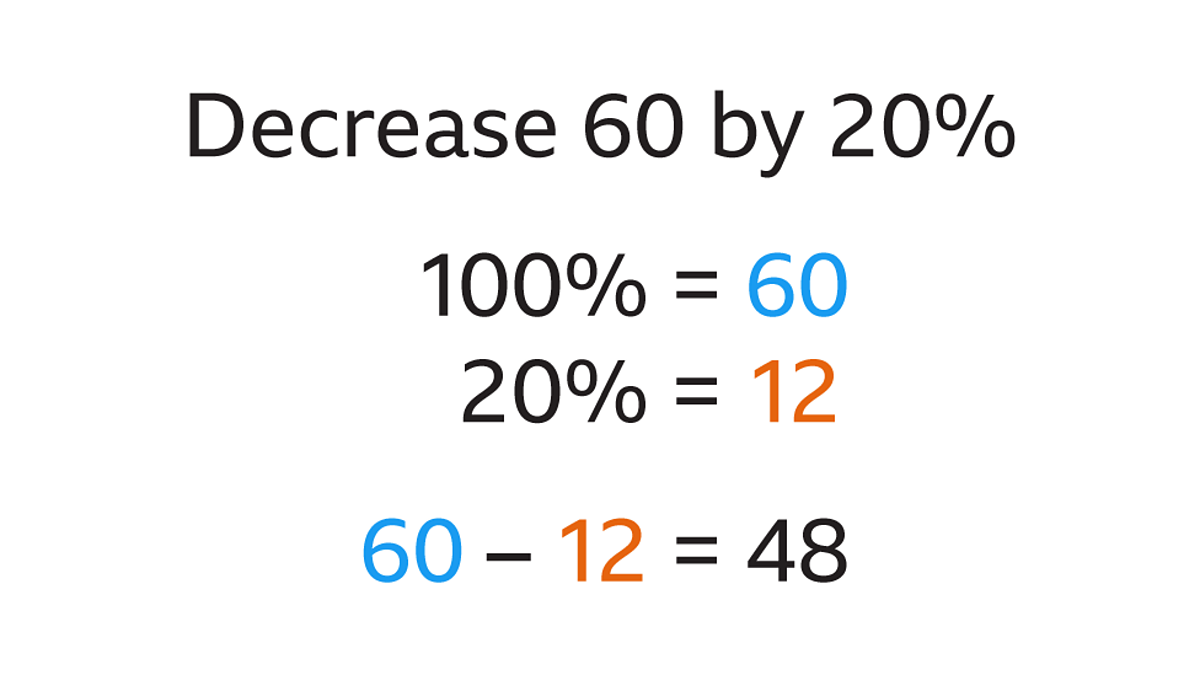
You see a pair of shoes originally priced at $120, advertised with a 25% discount. How much money do you save?
- Convert 25% to a decimal: 0.25
- Multiply the decimal by the original price: 0.25 × $120 = $30
- You save $30. The final price would be $120 – $30 = $90.
2. Determining Sales Tax:
You buy a gadget for $500, and the sales tax rate is 7%. How much sales tax will you pay?
- Convert 7% to a decimal: 0.07
- Multiply the decimal by the price: 0.07 × $500 = $35
- You will pay $35 in sales tax. The total cost will be $500 + $35 = $535.

3. Calculating Commissions:
A salesperson earns a 10% commission on sales. If they sell $2,500 worth of products, how much commission do they earn?
- Convert 10% to a decimal: 0.10
- Multiply the decimal by the total sales: 0.10 × $2,500 = $250
- The salesperson earns $250 in commission.
4. Estimating Tips:
You have a dinner bill of $75 and want to leave an 18% tip. How much should you tip?
- Convert 18% to a decimal: 0.18
- Multiply the decimal by the bill amount: 0.18 × $75 = $13.50
- You should leave a $13.50 tip.
These examples highlight how frequently this core calculation appears in everyday financial decisions.
Advanced Applications: Beyond the Basics in Finance
While finding a percentage of a number is common, other variations are equally important for comprehensive financial understanding.
Finding What Percentage One Number Is Of Another
This calculation helps you understand the proportion of one value relative to another, often used for performance metrics or comparisons.
Method:
- Divide the “part” by the “whole.”
- Multiply the result by 100 to express it as a percentage.
Financial Applications:
-
Profit Margin: Your business made $15,000 profit on $100,000 in revenue. What is your profit margin?
- Divide profit by revenue: $15,000 ÷ $100,000 = 0.15
- Convert to percentage: 0.15 × 100 = 15% profit margin.
-
Return on Investment (ROI): You invested $5,000 and earned $750. What is your ROI?
- Divide earnings by investment: $750 ÷ $5,000 = 0.15
- Convert to percentage: 0.15 × 100 = 15% ROI.
-
Budget Allocation: You earn $3,000 net income, and your housing costs are $1,000. What percentage of your income goes to housing?
- Divide housing costs by income: $1,000 ÷ $3,000 ≈ 0.3333
- Convert to percentage: 0.3333 × 100 ≈ 33.33% of income for housing.
Finding the Original Number Given a Percentage
Sometimes you know the percentage and the resulting value, but you need to find the original total. This is common when dealing with reverse calculations like finding a pre-tax price or an original price before a discount.
Method:
- Convert the percentage to a decimal.
- Divide the known value (the part) by the decimal equivalent of the percentage.
Financial Applications:
-
Reversing a Discount: You bought an item for $75 after a 25% discount. What was the original price?
- First, determine the percentage you paid: If it was 25% off, you paid 100% – 25% = 75% of the original price.
- Convert 75% to a decimal: 0.75
- Divide the discounted price by this decimal: $75 ÷ 0.75 = $100
- The original price was $100.
-
Pre-Tax Price: You paid $107 for an item, including a 7% sales tax. What was the price before tax?
- The total paid represents 100% of the item’s price plus 7% tax, so 107% of the original price.
- Convert 107% to a decimal: 1.07
- Divide the total paid by this decimal: $107 ÷ 1.07 = $100
- The price before tax was $100.
These calculations demonstrate the flexibility and power of percentages in uncovering hidden financial information.
Leveraging Tools for Financial Percentage Calculations
While understanding the manual steps is crucial for conceptual clarity, modern financial management often involves tools that simplify and expedite these calculations.
Basic Calculators and Spreadsheet Software
For simple, one-off calculations, any standard calculator will suffice. For more complex or recurring needs, spreadsheet software like Microsoft Excel or Google Sheets is invaluable.
- Excel/Sheets for Percentages:
- Finding a percentage of a number: If you want to find 20% of the number in cell A1, you would type
=A1*0.20or=A1*20%. - Finding what percentage one number is of another: To find what percentage the value in A1 is of the value in B1, use
=(A1/B1)*100and format as a percentage, or simply=(A1/B1)and then apply the percentage format to the cell. - Finding the original number: If A1 contains the discounted price and B1 contains the discount percentage (e.g., 25%), the formula would be
=A1/(1-B1). For pre-tax price, if A1 is total paid and B1 is tax rate (e.g., 7%), the formula would be=A1/(1+B1).
- Finding a percentage of a number: If you want to find 20% of the number in cell A1, you would type
Spreadsheets allow you to create dynamic financial models, budget templates, and investment trackers where percentages update automatically, providing powerful insights.
Financial Apps and Online Tools
Numerous dedicated financial apps (for budgeting, investing, loan calculations) and online calculators automatically handle percentage calculations behind the scenes. While convenient, a foundational understanding ensures you can interpret the results accurately and spot any potential errors. For instance, a loan amortization calculator uses percentages to determine interest portions of payments, but knowing how interest compounds helps you understand the long-term cost.
When Manual Calculation is Still Valuable
Even with powerful tools at your fingertips, the ability to quickly estimate percentages mentally or with a simple calculator remains a critical skill. Whether you’re in a store trying to quickly figure out a sale price, at a restaurant calculating a tip, or reviewing a financial statement for quick insights, a solid grasp of percentage calculations empowers you to make rapid, informed decisions without relying solely on technology.
Conclusion
Mastering how to find the percent of a number is more than just a mathematical exercise; it’s a foundational skill for financial literacy. From everyday spending to long-term investment strategies, percentages provide the lens through which we evaluate value, growth, cost, and risk. By understanding the simple conversion steps, the primary calculation methods, and their varied applications within personal finance and business, you equip yourself with an invaluable tool for making smarter, more confident financial decisions. Embrace the power of percentages, and watch your financial acumen grow.
aViewFromTheCave is a participant in the Amazon Services LLC Associates Program, an affiliate advertising program designed to provide a means for sites to earn advertising fees by advertising and linking to Amazon.com. Amazon, the Amazon logo, AmazonSupply, and the AmazonSupply logo are trademarks of Amazon.com, Inc. or its affiliates. As an Amazon Associate we earn affiliate commissions from qualifying purchases.