
For anyone navigating the dynamic world of investing, knowing precisely when financial markets open is not just a matter of curiosity, but a crucial piece of strategic information. The market open signifies the official commencement of trading activities, a period often characterized by heightened volatility, significant price movements, and a flurry of reactions to overnight news and economic data. Whether you are a seasoned day trader, a long-term investor, or simply someone looking to understand the mechanics behind your retirement fund, understanding market hours—and the nuances that surround them—is fundamental. This guide delves into the specifics of market opening times, explores the extended trading sessions, and outlines why these details are paramount for making informed financial decisions.
Understanding Standard Market Operating Hours
The concept of a “market open” might seem straightforward, but it varies significantly depending on the exchange and geographical location. While technology has facilitated near 24/7 global financial interaction, traditional stock exchanges still operate within defined windows, which are essential for traders and investors to grasp.
North American Giants: NYSE and NASDAQ
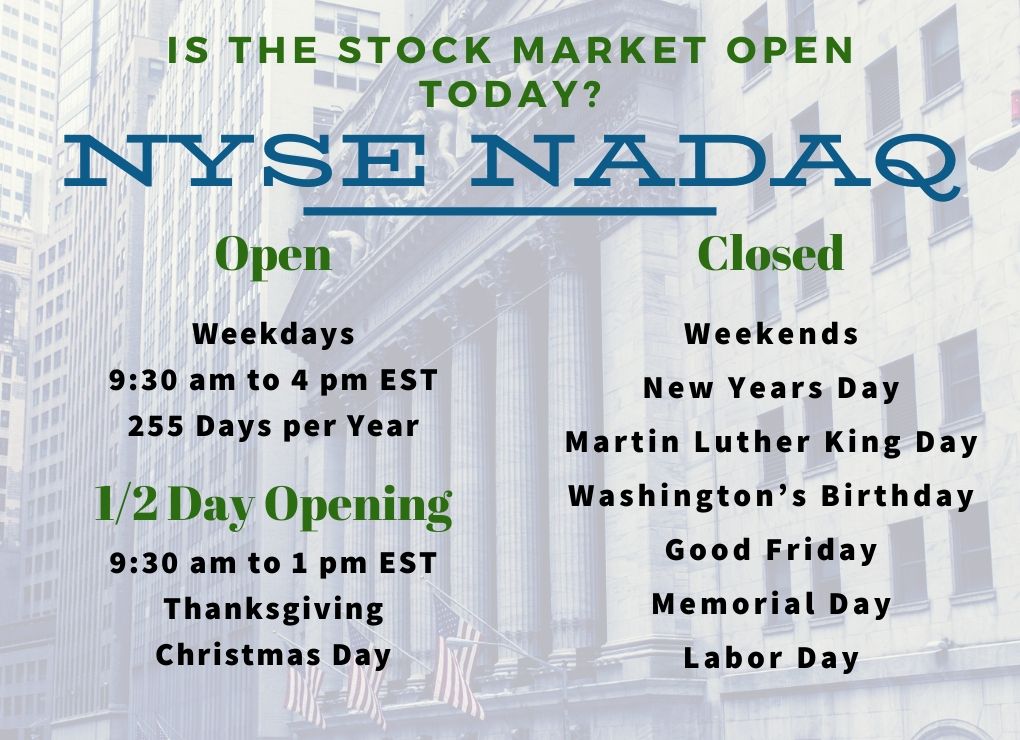
In the United States, the New York Stock Exchange (NYSE) and the NASDAQ Stock Market are the two primary exchanges, both adhering to the same standard trading hours. For most investors, these are the hours that define the “market.”
- Typical Open/Close Times: Both the NYSE and NASDAQ open at 9:30 AM Eastern Time (ET) and close at 4:00 PM ET on weekdays. This seven-and-a-half-hour window is often referred to as the “regular trading session.”
- Weekends and Federal Holidays: It’s crucial to remember that U.S. stock markets are closed on Saturdays and Sundays. Additionally, they observe all U.S. federal holidays, such as New Year’s Day, Martin Luther King, Jr. Day, Presidents’ Day, Good Friday, Memorial Day, Juneteenth National Independence Day, Independence Day, Labor Day, Thanksgiving Day, and Christmas Day. These closures are pre-scheduled and publicly announced, allowing market participants to plan accordingly.
Global Perspectives: Key International Markets
While U.S. markets are dominant, understanding the broader global landscape provides context. Different time zones mean that financial markets around the world open and close at different absolute times, creating a continuous cycle of global trading.
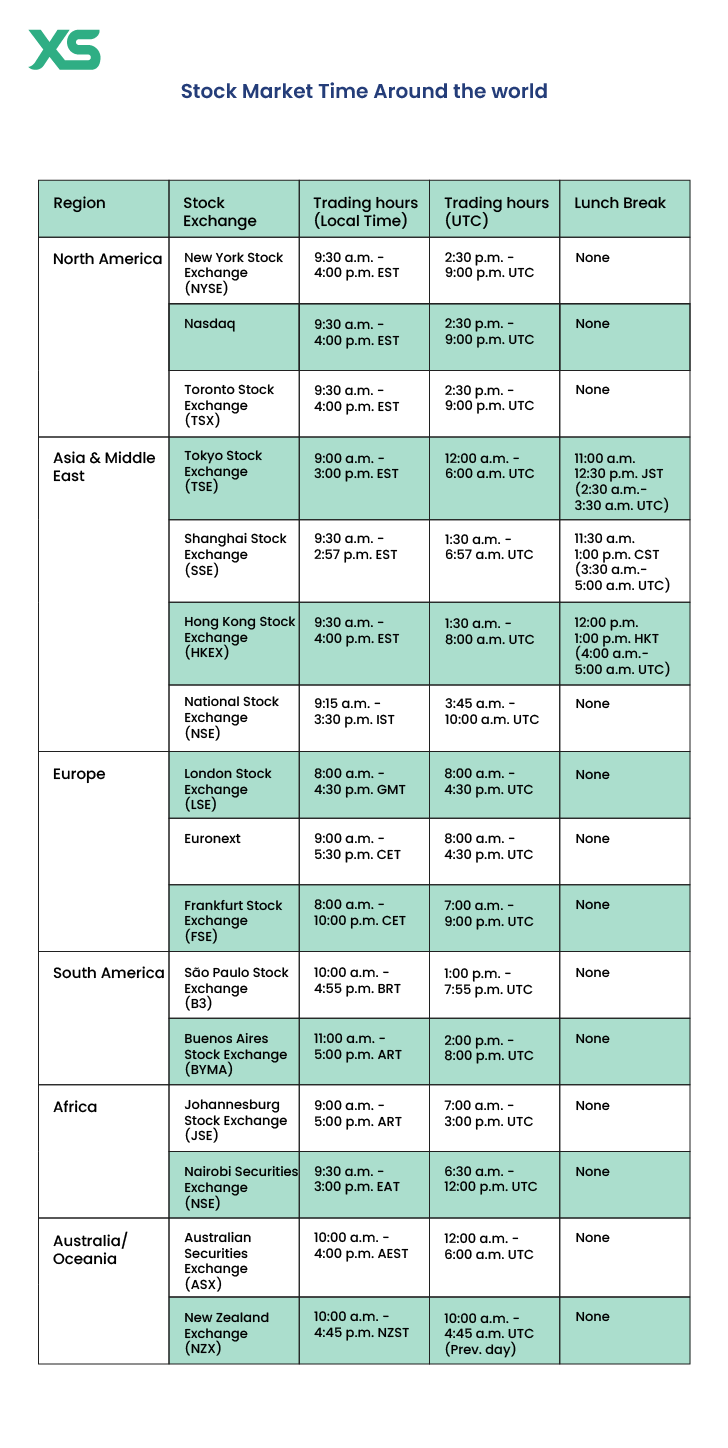
- London Stock Exchange (LSE): The LSE operates from 8:00 AM to 4:30 PM Greenwich Mean Time (GMT). Its early open often allows it to react to Asian market closures and set a tone for European trading before New York even wakes up.
- Tokyo Stock Exchange (TSE): As a major Asian market, the TSE runs from 9:00 AM to 3:00 PM Japan Standard Time (JST), with a lunch break from 11:30 AM to 12:30 PM. Its opening often provides the first reactions to global news emerging overnight from the West.
- Shanghai Stock Exchange (SSE): China’s primary exchange operates from 9:30 AM to 3:00 PM China Standard Time (CST), also with a lunch break from 11:30 AM to 1:00 PM.
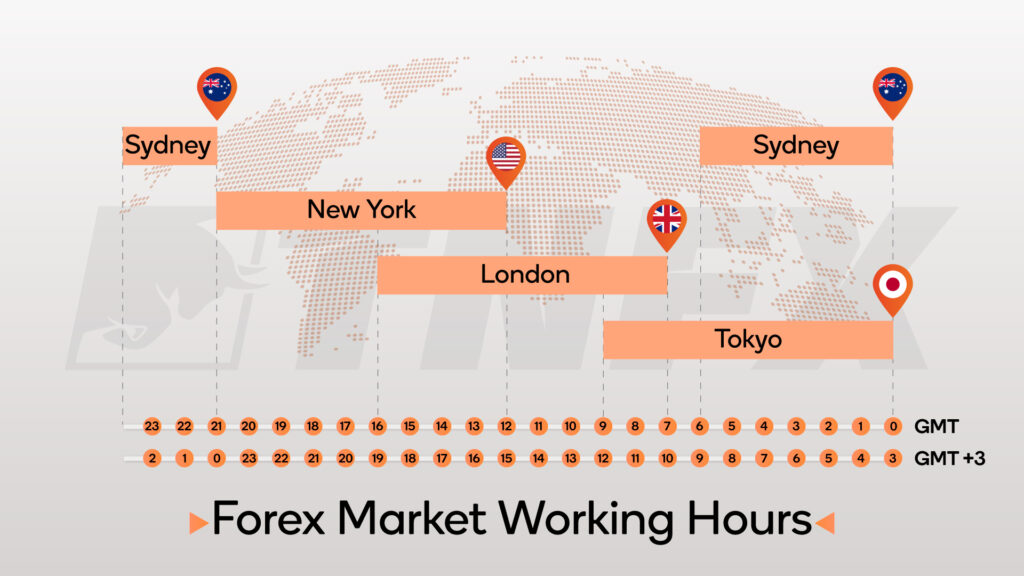
- The 24-Hour Global Market Concept: When viewed collectively, the succession of market opens across different time zones—from Sydney to Tokyo, London to New York—creates a near 24-hour cycle of financial activity, particularly in currency and futures markets. This interconnectedness means that events occurring during one market’s trading hours can significantly impact how another market opens hours later.
Beyond Standard Hours: Pre-Market and After-Hours Trading
The notion that trading begins promptly at 9:30 AM ET and ends sharply at 4:00 PM ET is a simplification. Modern electronic trading systems have extended the window for buying and selling securities significantly, allowing for activity before the traditional open and after the official close. These extended sessions, known as pre-market and after-hours trading, offer both opportunities and unique challenges.
What is Pre-Market Trading?
Pre-market trading refers to the period before the regular trading session begins. For the NYSE and NASDAQ, this typically starts as early as 4:00 AM ET and runs until 9:30 AM ET.
- Definition and Participants: During this time, trading takes place on electronic communication networks (ECNs) rather than through traditional exchange floors. Participation is often dominated by institutional investors, professional traders, and sophisticated retail investors who use brokerage platforms that offer extended-hours access.
- Significance: Pre-market activity is crucial because it allows investors to react to news that breaks overnight or early in the morning, before the main market opens. This includes corporate earnings reports released after the previous day’s close, significant economic data, or major geopolitical events. High volumes and significant price movements in pre-market can often foreshadow the sentiment and direction of the regular trading session.
Exploring After-Hours Trading
After-hours trading picks up where the regular session leaves off, typically running from 4:00 PM ET until 8:00 PM ET.
- Definition and Significance: Similar to pre-market, after-hours trading occurs on ECNs. It provides an immediate avenue for investors to respond to news released after the market close, such as late-day earnings announcements, analyst upgrades/downgrades, or unexpected company news. For instance, a company announcing better-than-expected earnings at 4:05 PM ET might see its stock price surge in after-hours trading, reflecting immediate investor optimism.
- Immediate Reaction to News: For many companies, the time immediately following market close is preferred for releasing quarterly earnings or other material news, precisely to allow investors time to digest information outside the frenetic pace of the regular session. After-hours trading provides a real-time gauge of initial market reaction.
Risks and Opportunities in Extended Trading Sessions
While extended trading sessions offer flexibility and an early response mechanism, they come with inherent risks that investors must understand.
- Lower Liquidity and Wider Spreads: Fewer participants trade during extended hours, leading to lower liquidity. This means there are fewer buyers and sellers, which can result in larger bid-ask spreads (the difference between the highest price a buyer is willing to pay and the lowest price a seller is willing to accept). Wider spreads can make it more expensive to execute trades and impact the profitability, especially for large orders.
- Increased Volatility: Low liquidity coupled with significant news can lead to exaggerated price swings. A relatively small order can have a disproportionately large impact on a stock’s price, potentially leading to rapid gains or losses.
- Information Asymmetry: Not all news is readily available to everyone simultaneously. Institutional investors with direct feeds and sophisticated algorithms might have an edge in processing and reacting to information faster.
- Opportunities for the Informed: Despite the risks, extended hours offer opportunities for astute investors. Those who can quickly analyze news and understand its potential impact can capitalize on early price movements. For long-term investors, it can provide a chance to adjust portfolios without waiting for the next day’s open.
Market Closures and Special Circumstances
Beyond regular weekends and federal holidays, various other circumstances can affect market hours, ranging from planned half-day sessions to unexpected disruptions. Being aware of these exceptions is vital for managing trading strategies and expectations.
Federal Holidays and Exchange Observances
As mentioned, U.S. stock markets close for federal holidays. It’s not just a day off for traders; these closures reflect coordinated breaks in the financial calendar to align with national observances.
- Common Holidays: Key closures include New Year’s Day, Martin Luther King, Jr. Day, Presidents’ Day, Good Friday (often observed by the markets even though it’s not a federal holiday), Memorial Day, Juneteenth National Independence Day, Independence Day, Labor Day, Thanksgiving Day, and Christmas Day.
- Partial vs. Full Closures: While most holidays lead to a full market closure, some might involve partial closures or early closings, particularly if they fall close to another major holiday or weekend. It’s always best to check the official calendar of the respective exchanges.
Half-Day Sessions and Early Closures
Certain days of the year, usually surrounding major holidays, will see stock markets close early. These are known as half-day sessions.
- Examples: Common instances include the day before Independence Day (if it falls on a weekday), the day after Thanksgiving (Black Friday), and Christmas Eve (if it falls on a weekday). On these days, the market typically closes at 1:00 PM ET instead of 4:00 PM ET.
- Implications for Traders: These shortened sessions mean a reduced trading window, often with lower volume and liquidity in the afternoon. Traders must adjust their strategies, acknowledging the compressed timeframe and potential for increased volatility in the limited hours. News released on such days can have a more pronounced immediate effect due to the shorter reaction time.
Unexpected Disruptions: From Technical Glitches to Market Halts
While rare, financial markets can experience unexpected disruptions that lead to temporary halts or even closures.
- Technical Glitches: System failures, software bugs, or cybersecurity incidents can temporarily halt trading on an exchange. These are usually resolved quickly, but during the downtime, investors cannot execute trades.
- Circuit Breakers: These are pre-defined mechanisms designed to prevent panic selling or buying by temporarily halting trading across the entire market if there’s an extremely sharp decline (or rise) in a major index like the S&P 500. This provides a cooling-off period for investors to reassess the situation. There are typically three levels of circuit breakers, triggering at 7%, 13%, and 20% drops, respectively.
- Regulatory Interventions: In extreme cases, regulators might intervene to halt trading in specific stocks or even the entire market due to unusual activity, investigations, or extraordinary news events. While infrequent, these events underscore the importance of staying updated with financial news channels.
Why Market Opening Time Matters to Investors
The market opening is often a pivotal moment in the trading day, bringing together accumulated sentiment and news from overnight and setting the tone for the hours ahead. Its significance extends beyond mere scheduling; it influences strategy, risk, and opportunity.
The “Open Gaps” and Volatility
News and events occurring between the previous day’s close and the current day’s open can create significant price discrepancies.
- Explaining Price Gaps: If a company announces positive earnings overnight, its stock might open significantly higher than its previous closing price, creating an “up gap.” Conversely, negative news can lead to a “down gap.” These gaps represent the market’s collective adjustment to new information before the regular session even begins.
- Increased Volume and Volatility: The first hour of trading, particularly the first 30 minutes, is often the most volatile and liquid period of the day. All the buy and sell orders that accumulated overnight get executed, and investors react to pre-market moves and fresh news. This surge in activity can lead to rapid price swings, offering both substantial profit opportunities for skilled day traders and significant risks for those unprepared.
Strategic Trading Around Market Open
Different investment philosophies dictate how investors approach the market open.
- Day Traders: For day traders, the market open is prime time. They often look to capitalize on the initial volatility, price gaps, and strong trends that emerge in the first hour. Strategies might involve identifying stocks with strong pre-market momentum or trading breakouts/breakdowns from opening ranges.
- Long-Term Investors: While long-term investors may not actively trade at the open, understanding the dynamics is still important. A significant drop at the open due to a temporary news event might present a buying opportunity for a fundamentally sound company, whereas an unwarranted surge might prompt consideration of profit-taking or portfolio rebalancing. They also need to be aware that their limit orders placed overnight might be filled at significantly gapped prices.
The Psychological Impact of Market Open
Human psychology plays a substantial role in market behavior, and the open can be a potent catalyst for sentiment shifts.
- Sentiment Shifts: The initial price action at the open can quickly solidify or reverse overnight sentiment. A strong opening rally might fuel optimism, encouraging more buyers, while a sharp decline can trigger panic selling, creating a negative feedback loop.
- Herd Mentality: In the chaotic environment of the open, there’s a higher propensity for herd mentality, where investors follow the crowd without independent analysis. This can exacerbate price movements and lead to irrational exuberance or fear. Understanding this psychological aspect can help investors maintain discipline and avoid impulsive decisions.
Tools and Resources for Staying Informed
In a world where market information is instantaneous, staying updated on opening times, holiday schedules, and breaking news is easier than ever. Leveraging the right tools and resources can provide a significant edge.
Reliable Financial News Outlets
Reputable financial news sources are invaluable for real-time updates, market analysis, and economic calendars.
- Top Tier Sources: Outlets like CNBC, Bloomberg, The Wall Street Journal, Reuters, and the Financial Times provide comprehensive coverage of market openings, pre-market activity, breaking news, and expert commentary. Many offer live market blogs that track activity from pre-market through the close.
- Real-time Coverage: These platforms often have dedicated sections or live feeds specifically tracking market opening times for various global exchanges, along with announcements regarding holiday closures or early closings.
Brokerage Platforms and Their Features
Modern online brokerage platforms are equipped with a suite of features designed to keep investors informed and facilitate trading.
- Real-time Data: Most platforms offer real-time stock quotes, charting tools, and news feeds. Many also display pre-market and after-hours trading data, allowing users to track price movements outside regular hours.
- Customizable Alerts: Investors can set up alerts for specific stocks, price targets, or news events, receiving notifications directly to their email or mobile devices, ensuring they don’t miss critical market developments around the open.
- Extended-Hours Access: Crucially, many brokers now provide access to pre-market and after-hours trading, enabling investors to place orders and react to news during these extended sessions, albeit with an understanding of the associated risks.
Economic Calendars and Market Holiday Schedules
For proactive planning, economic calendars and official market holiday schedules are indispensable.
- Economic Calendars: These calendars list upcoming economic data releases (e.g., inflation reports, unemployment figures, interest rate decisions) and corporate earnings announcements, along with their scheduled times. Knowing when these events occur is crucial, as they often trigger significant market reactions around the open.
- Official Exchange Calendars: The official websites of exchanges like the NYSE and NASDAQ publish their annual holiday and early closure schedules well in advance. Regularly checking these ensures investors are aware of any non-standard trading days.
In conclusion, “when does market open today” is a question that opens the door to a deeper understanding of market mechanics, strategic timing, and risk management. From the standard bell to the extended electronic sessions, and from planned holidays to unexpected halts, the intricate dance of market hours dictates the rhythm of global finance. By staying informed and utilizing available resources, investors can transform this fundamental query into a powerful tool for navigating the complexities and opportunities of the financial markets.
aViewFromTheCave is a participant in the Amazon Services LLC Associates Program, an affiliate advertising program designed to provide a means for sites to earn advertising fees by advertising and linking to Amazon.com. Amazon, the Amazon logo, AmazonSupply, and the AmazonSupply logo are trademarks of Amazon.com, Inc. or its affiliates. As an Amazon Associate we earn affiliate commissions from qualifying purchases.