
For both novice investors and seasoned traders, understanding the operational hours of stock markets is fundamental to successful financial planning and execution. The stock market, a bustling ecosystem where shares of publicly traded companies are bought and sold, isn’t a 24/7 operation. Its defined trading hours, along with scheduled breaks and specific market events, dictate when investors can actively participate. This comprehensive guide delves into the standard closing times, explores the nuances of extended-hours trading, sheds light on global market variations, and highlights why these seemingly simple details hold significant importance for anyone navigating the world of finance.
Understanding Standard Stock Market Trading Hours
The cornerstone of understanding market closures begins with the primary trading sessions of major exchanges. While the concept of a market closing seems straightforward, the specifics vary slightly and carry considerable implications.
The Core Trading Session (NYSE and NASDAQ)
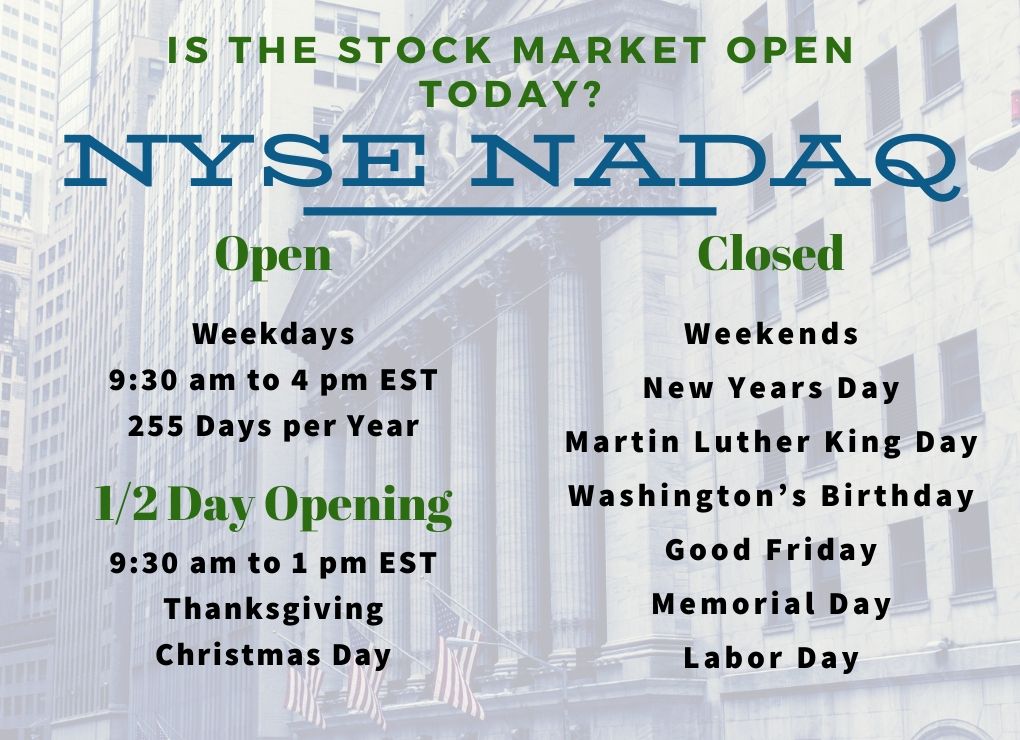
In the United States, the two most prominent stock exchanges, the New York Stock Exchange (NYSE) and the NASDAQ, operate on a standard schedule. The core trading session typically runs from 9:30 AM Eastern Time (ET) to 4:00 PM ET, Monday through Friday. This 6.5-hour window is when the majority of trading volume occurs, characterized by high liquidity and tighter bid-ask spreads, making it the most active and often the most efficient time for price discovery.
For investors, this fixed daily schedule provides a predictable framework. Decisions to buy or sell equities are generally executed within this timeframe, ensuring that orders are filled at prices reflecting the most current market consensus. Understanding this core window is crucial for managing portfolios, monitoring real-time price movements, and responding to breaking news that might impact stock valuations. The closing bell at 4:00 PM ET signifies the end of this official session, at which point standard market orders are no longer processed until the next trading day.
Weekend Closures: A Universal Rule
One of the most universal aspects of stock market operations is their closure on weekends. Globally, major stock exchanges, including the NYSE, NASDAQ, London Stock Exchange (LSE), Tokyo Stock Exchange (TSE), and others, are closed on Saturdays and Sundays. This tradition is rooted in the practicalities of financial operations, allowing time for settlement processes, administrative tasks, and for market participants to disconnect and prepare for the week ahead.
From an investment perspective, weekend closures offer a natural pause. It’s a period when investors can reflect on market performance, reassess strategies, and conduct research without the immediate pressure of fluctuating prices. However, it also means that any significant economic or geopolitical news that breaks over the weekend can lead to market gaps (where the opening price is significantly different from the previous closing price) at the start of Monday’s trading session. This weekend gap risk is a factor many traders and investors consider when holding positions overnight or over the weekend.
Public Holidays: Days of Rest for Markets
In addition to weekends, stock markets observe a number of public holidays throughout the year, during which they remain closed. These holidays can vary by country, reflecting national observances and traditions. In the U.S., for instance, both the NYSE and NASDAQ close for holidays such as New Year’s Day, Martin Luther King, Jr. Day, Presidents’ Day, Good Friday, Memorial Day, Juneteenth National Independence Day, Independence Day, Labor Day, Thanksgiving Day, and Christmas Day.
These holiday closures are significant for investors. They represent periods of enforced inactivity, meaning no trading can occur. This can lead to positions being held for longer than anticipated, and market participants cannot react to news released on these days until the next open trading session. Financial planning for portfolio adjustments or cash needs must account for these non-trading days. For companies, earnings reports or other significant announcements are rarely made on market holidays, but the preceding or succeeding days can see increased volatility as information is processed.
Beyond Standard Hours: Pre-Market and After-Hours Trading
While the core 9:30 AM to 4:00 PM ET session is the primary focus, the advent of electronic communication networks (ECNs) and advanced trading platforms has extended the trading day significantly, offering opportunities and challenges outside standard hours.
What is Pre-Market Trading?
Pre-market trading refers to the period before the official market opening. For U.S. markets, this typically begins around 4:00 AM ET and runs until 9:30 AM ET. During this time, investors can place buy and sell orders that are matched and executed through ECNs rather than the traditional exchange floor. This early window allows professional traders, institutional investors, and increasingly, retail investors, to react to news released before the market opens, such as earnings reports, economic data, or major corporate announcements.
The primary benefit of pre-market trading is the ability to act on information quickly, potentially gaining an edge or mitigating risk before the broader market reacts. However, liquidity is often lower in the pre-market, leading to wider bid-ask spreads and potentially greater price volatility. Executing large orders can be challenging without significantly impacting the stock price. Investors participating in pre-market trading need to be acutely aware of these conditions.
Navigating After-Hours Trading
After-hours trading takes place after the official market close, typically from 4:00 PM ET to 8:00 PM ET. Similar to pre-market trading, it’s conducted electronically and allows investors to react to news that breaks after the market closes, such as late-day earnings surprises or analysts’ downgrades/upgrades. Many companies strategically release their quarterly earnings reports after the market closes to allow investors time to digest the information without disrupting the ongoing trading session.
Participating in after-hours trading offers flexibility and the chance to capitalize on immediate post-market news. However, like pre-market, it’s characterized by reduced liquidity and increased volatility. Prices can swing dramatically on relatively small volumes, and it can be difficult to get orders filled at desired prices. For individual investors, the lack of real-time comprehensive market data or the inability to monitor positions actively during these hours can pose additional risks.
Risks and Opportunities of Extended-Hours Trading
Extended-hours trading presents a double-edged sword for investors.
Opportunities:
- Rapid Reaction: The ability to immediately react to breaking news, earnings reports, or economic data, potentially getting ahead of the general market.
- Flexibility: Greater flexibility for investors in different time zones or those with busy daytime schedules.
- Price Discovery: Early indicators of market sentiment and price movements for the next trading day.
Risks:
- Lower Liquidity: Fewer participants mean it can be harder to buy or sell shares without affecting the price, leading to wider spreads and difficulty in order execution.
- Higher Volatility: Prices can fluctuate more dramatically on thinner volumes, increasing the risk of significant gains or losses.
- Lack of Information: Less readily available real-time information or analysis compared to regular trading hours.
- Competition: Primarily dominated by institutional investors and professional traders with sophisticated tools and faster access to information.
- Time Zone Disadvantage: Retail investors might not be able to monitor their positions effectively during these extended hours, especially if they are not in the ET time zone.
Successful navigation of extended-hours trading requires a deep understanding of its unique dynamics, careful risk management, and often, advanced trading knowledge.
Navigating Special Circumstances and Early Closures
Beyond standard daily and weekly closures, stock markets also have specific, less frequent closing patterns and the rare event of unscheduled shutdowns.
Half-Day Trading Sessions: A Closer Look
Certain holidays result in “half-day” trading sessions rather than full closures. On these days, the market might open at the usual 9:30 AM ET but close earlier, often at 1:00 PM ET. Examples in the U.S. include the day before Independence Day (if it falls on a weekday) or the day after Thanksgiving (Black Friday).
These shortened sessions maintain market access but with reduced hours. Investors need to be aware of these schedules to adjust their trading strategies, especially regarding order placement and monitoring. The reduced trading window can concentrate activity, potentially leading to increased volatility in the morning and a flurry of activity just before the early close as traders square off positions. For financial professionals, these days often involve more focused, high-intensity work during the shortened window.
Unexpected Closures: Black Swan Events
While rare, stock markets can also experience unexpected, unscheduled closures due to “black swan” events – unpredictable occurrences with potentially severe consequences. Historically, this has included major national tragedies (e.g., the days following 9/11), severe natural disasters, or significant technical failures that threaten market integrity. Regulatory bodies or exchanges themselves make these decisions to protect investors, maintain orderly markets, and ensure the stability of the financial system.
These emergency closures are disruptive and highlight the importance of robust risk management and contingency planning for investors. They underscore the fact that even highly regulated financial markets are not immune to external shocks, and access to capital can be temporarily halted, impacting liquidity and investment timelines.
Impact on Investors and Traders
Market closures, whether scheduled or unscheduled, have a profound impact on investors and traders:
- Strategy Adaptation: Investors must adapt their strategies, knowing they cannot execute trades during closure periods. This might mean adjusting position sizes, setting stop-loss orders, or taking profits before a long closure.
- Information Lag: News that breaks during closed hours cannot be immediately acted upon, potentially leading to significant price gaps when the market reopens.
- Liquidity Constraints: The inability to access liquidity during closures can be problematic for those needing to raise cash or exit positions quickly.
- Opportunity Cost: Missed opportunities to capitalize on favorable market movements that occur during non-trading hours.
- Settlement Delays: Closures can affect the settlement of trades, impacting cash availability for future investments or withdrawals.
Understanding these impacts is crucial for comprehensive financial planning, especially for active traders who rely on continuous market access and for long-term investors whose portfolios can be affected by significant weekend or holiday news.
Global Perspectives on Market Closures
The world of finance is interconnected, and market closures extend far beyond national borders. Global investors must contend with a tapestry of varying trading hours and holiday schedules.
Time Zones and International Exchanges
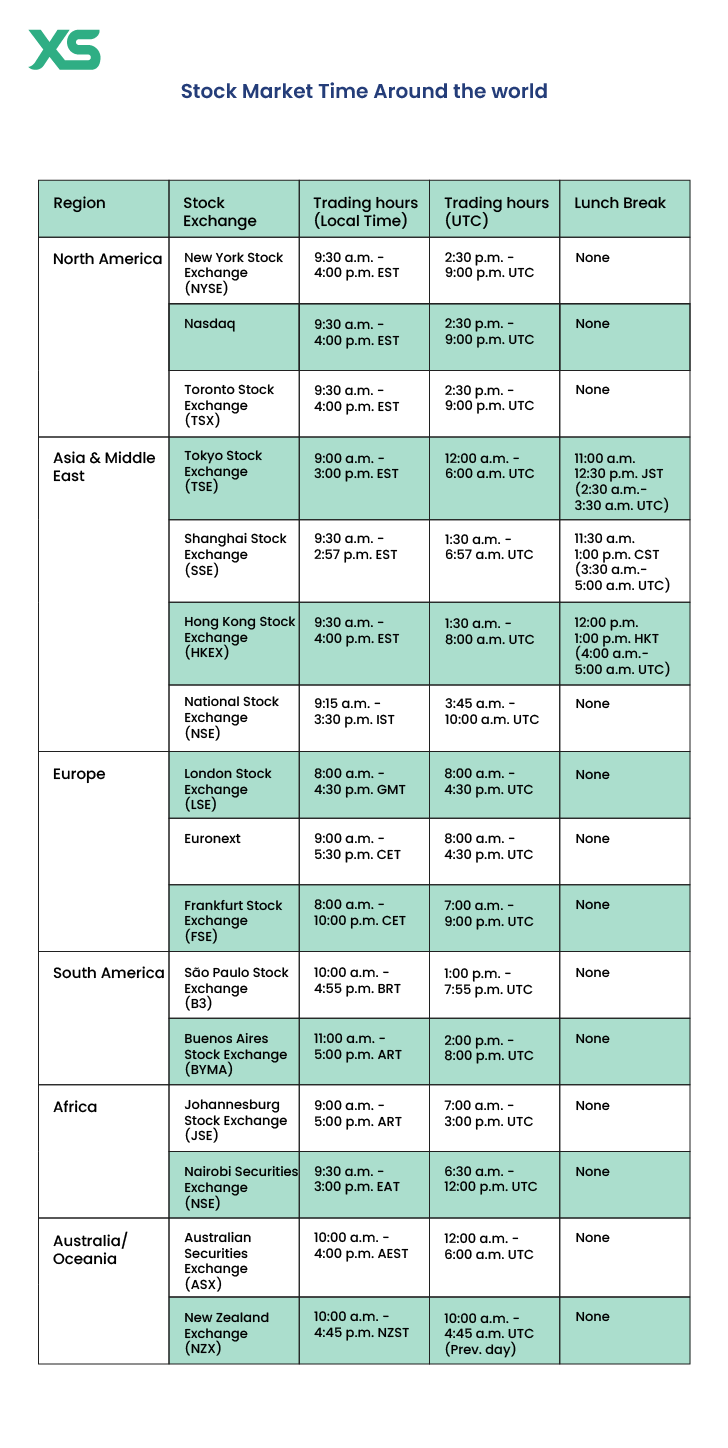
Stock exchanges around the globe operate according to their local time zones. While the NYSE and NASDAQ run on ET, the London Stock Exchange operates on Greenwich Mean Time (GMT), the Tokyo Stock Exchange on Japan Standard Time (JST), and so forth. This means that while one market might be closing for the day, another might just be opening or mid-session. For instance, as U.S. markets close, Asian markets are typically preparing to open for their next trading day.
For international investors or those trading global equities, understanding these time differences is critical for timely execution and market monitoring. A significant announcement from a multinational corporation based in Europe might impact its stock price on a U.S. exchange during pre-market hours, even if European markets are already closed for their day. Financial tools and platforms often provide real-time global market data, helping investors track these staggered operations.
Diverse Holiday Calendars
Each country has its unique set of public holidays, resulting in a diverse and often complex calendar of market closures worldwide. For example, while U.S. markets are closed for Thanksgiving, European and Asian markets are typically open. Conversely, Chinese markets observe extended closures for Lunar New Year, a period when Western markets remain fully operational.
Investors with diversified international portfolios must meticulously track these varied holiday schedules to avoid unexpected periods of illiquidity. Trading platforms and financial news outlets often publish comprehensive lists of global market holidays, which are indispensable resources for managing multi-national investment strategies and ensuring compliance with local market rules.
Implications for Global Investors
For investors engaged in global markets, these varying hours and holidays present both challenges and opportunities:
- 24-Hour Coverage: Theoretically, there’s always an open market somewhere in the world, allowing for a continuous flow of capital and information.
- Arbitrage Opportunities: Price discrepancies across different markets for the same asset can arise due to time differences or holiday closures, creating arbitrage opportunities for sophisticated traders.
- Increased Complexity: Managing a global portfolio requires a more intricate understanding of market dynamics, time zone conversions, and local regulatory nuances.
- Overnight Risk: Positions held in foreign markets are subject to “overnight risk” relative to one’s local time zone, as significant events can unfold while local markets are closed.
- Currency Fluctuations: Different operating hours can also interact with foreign exchange markets, adding another layer of complexity to international investing.
Strategic awareness of global market schedules is essential for mitigating risks and optimizing returns in a globally integrated financial landscape.
Why Market Closures Matter for Investors
Beyond the logistical aspect, the timing and duration of market closures are profoundly impactful on an investor’s strategy, risk management, and overall financial outcomes.
The Role of Liquidity and Volatility
Market closures directly influence liquidity and volatility. During standard trading hours, high liquidity ensures that buyers and sellers can easily find counterparts, leading to tighter spreads and more efficient price discovery. When markets are closed, liquidity evaporates entirely. In extended-hours trading, reduced liquidity often translates into increased volatility, making large price swings more common on lower trading volumes.
Understanding this dynamic is critical for investors. Attempting to execute large trades during low-liquidity periods can lead to “slippage,” where the actual execution price differs significantly from the expected price. Moreover, holding highly volatile assets over extended closures (weekends or holidays) increases exposure to price gaps when the market reopens, necessitating careful risk assessment.
Strategy Adjustments During Off-Hours
Savvy investors and traders factor market closures into their strategic planning.
- Risk Management: Investors might reduce their exposure to highly volatile stocks or use options strategies to hedge against potential adverse movements over a weekend or holiday.
- Order Types: Utilizing limit orders instead of market orders during extended hours can help control execution prices in low-liquidity environments.
- Information Gathering: Off-hours are ideal for conducting in-depth research, analyzing company fundamentals, reviewing economic data, and refining investment theses without the distraction of real-time price fluctuations.
- Portfolio Rebalancing: Longer closures provide an opportunity to reassess portfolio allocations and make strategic adjustments for the long term.
These adjustments are not merely reactive but proactive elements of a well-rounded investment approach, designed to mitigate risks and capitalize on opportunities that arise from the market’s operational schedule.
The Importance of Planning and Information
Ultimately, knowing when stock markets close boils down to the importance of proactive planning and access to accurate, timely information. Investors who are well-informed about trading hours, holiday schedules, and the specific dynamics of extended-hours trading are better positioned to make sound decisions.
- Financial Calendar: Maintaining a financial calendar that includes market holidays and early closures is a simple yet effective tool.
- Reliable News Sources: Subscribing to financial news services that provide real-time updates and pre-market/after-hours news is invaluable.
- Brokerage Access: Understanding how your specific brokerage handles extended-hours trading and what types of orders are supported is crucial.
- Risk Awareness: A constant awareness of the inherent risks associated with trading outside standard market hours or holding positions over long closures.
In conclusion, the question “When do stock markets close?” is far more nuanced than a simple time of day. It opens up a discussion about market dynamics, risk management, global interconnectedness, and the continuous need for informed decision-making in the complex world of investing. Mastering these details is a cornerstone of prudent financial stewardship and successful wealth building.
aViewFromTheCave is a participant in the Amazon Services LLC Associates Program, an affiliate advertising program designed to provide a means for sites to earn advertising fees by advertising and linking to Amazon.com. Amazon, the Amazon logo, AmazonSupply, and the AmazonSupply logo are trademarks of Amazon.com, Inc. or its affiliates. As an Amazon Associate we earn affiliate commissions from qualifying purchases.