
Understanding when financial markets open and close is far more than a trivial detail; it’s a fundamental aspect of successful investing and trading. For anyone looking to navigate the complexities of global finance, whether a nascent individual investor or a seasoned professional, knowing market hours is critical for strategic decision-making, risk management, and capitalizing on opportunities. Different markets, from traditional stock exchanges to the dynamic realms of forex and cryptocurrencies, operate on varied schedules, influenced by geographical location, local holidays, and the very nature of the assets traded. This guide delves into the intricacies of market opening times, exploring why they matter, detailing schedules for major global exchanges, and shedding light on continuous markets and extended trading sessions, all within the lens of effective financial management and investing.
The Significance of Market Opening and Closing Times
The precise moments markets open and close are not merely administrative timestamps; they are periods of heightened activity that can significantly influence asset prices and trading dynamics. Recognizing the unique characteristics of these windows allows investors to better understand market sentiment, anticipate volatility, and execute strategies more effectively.
Volatility and Liquidity at the Open
The opening bell often signals a surge in activity as accumulated news, overnight data, and pre-market orders translate into immediate buying and selling pressure. This influx of demand and supply frequently leads to increased volatility. Prices can swing dramatically in the initial minutes, creating both significant opportunities for rapid gains and substantial risks for impulsive traders. Simultaneously, the market open is typically characterized by high liquidity, meaning there’s a large volume of buyers and sellers, making it easier to enter or exit positions without significantly impacting the price. For day traders, this early volatility can be a primary target, while long-term investors might observe these movements to gauge immediate market reaction to macro news or earnings reports.
Strategic Implications for Traders
For active traders, particularly those involved in day trading or swing trading, market hours dictate their entire operational rhythm. The opening minutes can set the tone for the day, revealing market sentiment and identifying strong trending stocks. Strategies such as “opening range breakouts” or “gap fills” are entirely dependent on understanding the immediate price action post-open. Conversely, the market close also brings its own set of strategic considerations. Traders might try to liquidate positions before the close to avoid overnight risk, or institutions might execute large orders in the final minutes, leading to what’s known as “power hour” volatility. Understanding these patterns is crucial for developing robust trading plans, managing risk exposure, and optimizing entry and exit points. Moreover, knowledge of market hours informs when investors can place limit orders or market orders, ensuring their instructions are executed when the market is live and active.
Key Global Stock Exchanges and Their Hours
The world’s financial ecosystem is a tapestry of interconnected exchanges, each with its distinct operating hours, typically tied to local business days and time zones. Navigating these schedules is essential for anyone trading international equities or tracking global economic indicators.
North American Markets (NYSE, NASDAQ, TSX)
The North American trading day typically anchors the global financial cycle for many investors.
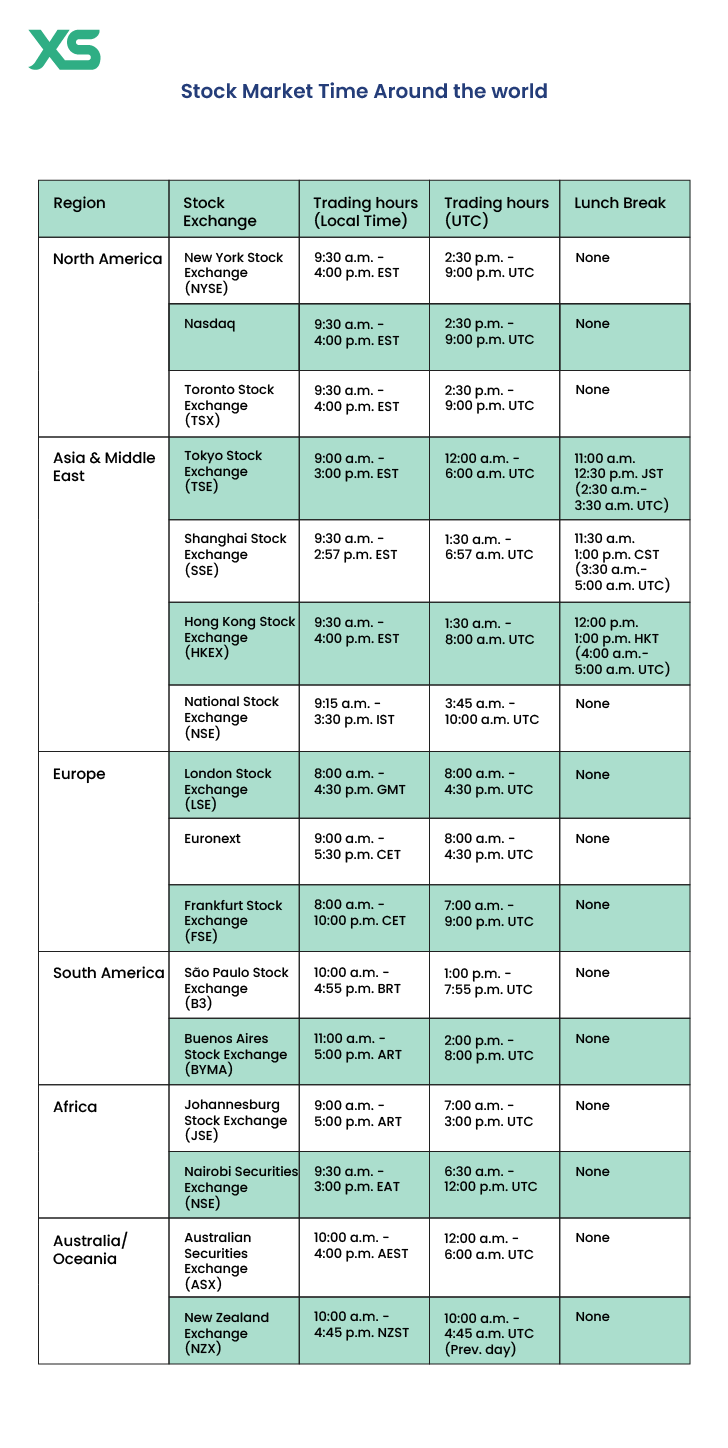
- New York Stock Exchange (NYSE) and NASDAQ: Both operate from 9:30 AM to 4:00 PM Eastern Time (ET), Monday through Friday. These hours represent the core trading session for the vast majority of U.S. equities. While there are pre-market and after-hours sessions, the bulk of volume and price discovery occurs within these standard hours.
- Toronto Stock Exchange (TSX): Canada’s primary exchange largely mirrors its U.S. counterparts, running from 9:30 AM to 4:00 PM Eastern Time (ET), Monday through Friday. Due to time zone alignment, trading activity often correlates with that of New York, especially for companies with cross-border listings.
European Markets (LSE, Euronext, Deutsche Börse)
As North American markets prepare to close, European exchanges are well into their afternoon or closing hours, providing another window of activity.
- London Stock Exchange (LSE): A global financial hub, the LSE operates from 8:00 AM to 4:30 PM Greenwich Mean Time (GMT), Monday through Friday. Its early start allows it to overlap with Asian markets briefly and provide a strong lead into the New York session.
- Euronext (Paris, Amsterdam, Brussels, Lisbon): As a pan-European exchange, Euronext’s main trading hours are typically from 9:00 AM to 5:30 PM Central European Time (CET), Monday through Friday, aligning with the core European business day.
- Deutsche Börse (Frankfurt): Germany’s leading exchange, primarily Xetra, also operates from 9:00 AM to 5:30 PM Central European Time (CET), Monday through Friday. These hours are crucial for tracking European economic health and corporate performance.
Asian Markets (TSE, SSE, HKEX)
The Asian trading day typically kicks off the global financial cycle, often reacting to events that unfolded while Western markets were closed.
- Tokyo Stock Exchange (TSE): Japan’s main exchange runs from 9:00 AM to 11:30 AM JST (Japan Standard Time) for its morning session, and then 12:30 PM to 3:00 PM JST for its afternoon session, Monday through Friday. There’s a one-hour lunch break in between.
- Shanghai Stock Exchange (SSE): China’s largest exchange also has a split session: 9:30 AM to 11:30 AM CST (China Standard Time) and 1:00 PM to 3:00 PM CST, Monday through Friday.
- Hong Kong Stock Exchange (HKEX): Similar to Tokyo and Shanghai, HKEX has a morning session from 9:30 AM to 12:00 PM HKT (Hong Kong Time) and an afternoon session from 1:00 PM to 4:00 PM HKT, Monday through Friday. The one-hour lunch break is common across many Asian markets.
These staggered hours mean that while one major market is closing, another is opening or well into its session, contributing to a near-continuous flow of financial news and trading opportunities around the clock.
Beyond Standard Hours: Pre-Market and After-Hours Trading
The concept of “market open” isn’t always restricted to the traditional 9:30 AM to 4:00 PM window, especially in technologically advanced markets. Electronic communication networks (ECNs) and alternative trading systems (ATSs) have enabled trading to extend beyond these conventional boundaries, creating both new opportunities and unique risks for investors.

Understanding Extended Trading Sessions
Pre-market and after-hours trading sessions allow investors to trade securities outside the standard exchange hours.
- Pre-Market Trading: For U.S. equities, this typically runs from around 4:00 AM ET to 9:30 AM ET. It allows investors to react to news released before the market officially opens, such as early morning earnings reports, economic data, or geopolitical developments.
- After-Hours Trading: This session usually starts immediately after the market closes at 4:00 PM ET and can extend until 8:00 PM ET or even later, depending on the brokerage. Similar to pre-market, it enables reactions to late-day news, analyst upgrades/downgrades, or post-market earnings announcements.
These extended hours are facilitated by electronic trading platforms, bypassing the need for physical exchange floors to be open. They are increasingly utilized by institutional investors, professional traders, and sophisticated retail investors who wish to react swiftly to market-moving information.
Risks and Opportunities in Extended Hours
While extended trading sessions offer flexibility, they come with a distinct set of characteristics that warrant caution:
- Lower Liquidity: Generally, there are fewer participants in pre-market and after-hours sessions compared to regular hours. This lower liquidity means that large orders can have a disproportionate impact on prices, leading to wider bid-ask spreads and potentially significant price slippage. It can be harder to execute trades at desired prices.
- Increased Volatility: News released outside regular hours can cause rapid and exaggerated price movements due to the lower liquidity. A stock might gap up or down significantly in pre-market trading, and these moves may or may not sustain once regular hours commence.
- Institutional Dominance: Retail investors often face a disadvantage as institutional traders with more sophisticated tools and information access tend to dominate these sessions.
- Opportunities: For those who are well-informed and quick to act, extended hours can provide opportunities to capitalize on breaking news before the broader market reacts. For instance, positive earnings announced after the close might allow an investor to buy shares at a relatively lower price before a potential surge the next day. Conversely, it can be a way to exit positions quickly in response to adverse news.
Understanding these dynamics is crucial. While pre-market and after-hours trading can offer strategic advantages, they also demand a higher degree of vigilance and risk awareness.
Continuous Markets: Forex and Cryptocurrencies
Not all markets adhere to the conventional 9-to-5 schedule of stock exchanges. The foreign exchange (Forex) and cryptocurrency markets operate on fundamentally different paradigms, offering near-continuous trading opportunities around the clock, albeit with their own unique structures.
The 24/5 Nature of Forex Trading
The Forex market, where currencies are traded, is the largest and most liquid financial market globally. It operates on a 24-hour-a-day, five-day-a-week basis. This continuous nature is possible because it’s an over-the-counter (OTC) market, meaning trades happen directly between participants rather than through a centralized exchange, and it spans multiple global financial centers.
- Market Sessions: Trading follows the sun, opening in Sydney, then moving to Tokyo, London, and finally New York, before circling back to Sydney.
- Sydney Session: (e.g., Sunday 5:00 PM ET to Monday 2:00 AM ET)
- Tokyo Session: (e.g., Sunday 7:00 PM ET to Monday 4:00 AM ET)
- London Session: (e.g., Monday 3:00 AM ET to Monday 12:00 PM ET)
- New York Session: (e.g., Monday 8:00 AM ET to Monday 5:00 PM ET)
These sessions overlap, creating periods of higher liquidity and volatility, particularly when the London and New York sessions are both active. The market generally closes for retail traders from Friday evening (around 5:00 PM ET) until Sunday evening (around 5:00 PM ET), restarting with the Sydney open.
- Benefits and Challenges: The 24/5 schedule offers immense flexibility, allowing traders to react to global news immediately, regardless of their local time zone. However, it also demands constant vigilance and can lead to burnout if not managed properly. The market never truly sleeps, meaning opportunities and risks are ever-present.
Cryptocurrency Markets: A 24/7 Reality
In contrast to Forex, the cryptocurrency market is truly 24 hours a day, seven days a week, 365 days a year. There is no official “close” or “open” bell, nor are there traditional holidays.
- Decentralized Nature: This continuous operation is a direct consequence of the decentralized, global nature of cryptocurrencies. Transactions are processed on blockchain networks, which are always active, and trading occurs on various global exchanges that never shut down.
- Implications for Investors:
- Constant Access: Investors can buy, sell, and trade cryptocurrencies at any time, day or night, weekdays or weekends. This constant accessibility is a major draw for many, allowing for immediate reaction to news or shifts in market sentiment.
- Uninterrupted Volatility: While traditional markets have breaks, crypto markets do not. This means volatility can strike at any hour, and there’s no “off-peak” period when prices are guaranteed to be stable. Weekend trading, for instance, can often be characterized by significant price swings.
- Global Events: Geopolitical events, major announcements, or technological developments can impact crypto prices instantly, without waiting for a traditional market open.
- Managing Risk: The continuous nature means investors must be prepared for constant market movement. Tools like stop-loss orders become even more critical, and a disciplined approach to risk management is paramount to avoid being caught off guard by overnight or weekend price changes.
The shift to continuous trading environments in Forex and especially crypto marks a significant evolution in financial markets, offering unprecedented accessibility but also requiring a new level of diligence and strategic planning from investors.
Navigating Market Holidays, Early Closures, and Time Zones
Beyond the standard operating hours, several external factors can alter the trading schedule, impacting investors’ ability to execute trades and manage portfolios. Awareness of these nuances is crucial for both domestic and international market participants.
Impact of Public Holidays and Special Events
Financial markets, particularly traditional stock exchanges, observe local public holidays. On these days, exchanges are typically closed, meaning no regular trading takes place.
- Common Holidays: In the U.S., examples include New Year’s Day, Martin Luther King Jr. Day, Presidents’ Day, Good Friday, Memorial Day, Juneteenth National Independence Day, Independence Day, Labor Day, Thanksgiving Day, and Christmas Day. Similar national holidays affect exchanges in other countries (e.g., Boxing Day in the UK, Golden Week in Japan, Lunar New Year in China).
- Early Closures: Sometimes, markets might have early closures before a major holiday (e.g., the day before Thanksgiving or Christmas Eve in the U.S.). These shortened sessions still operate but with reduced hours and often lower liquidity.
- Impact on Trading: Being unaware of these closures can lead to frustration for investors trying to place trades or react to news. It can also create “rollover risk,” where positions held over a holiday weekend are exposed to significant price gaps when the market reopens, particularly if important news breaks during the closure. Professional investors and financial planners routinely publish holiday schedules to help clients anticipate these non-trading days.
The Challenge of International Time Zones
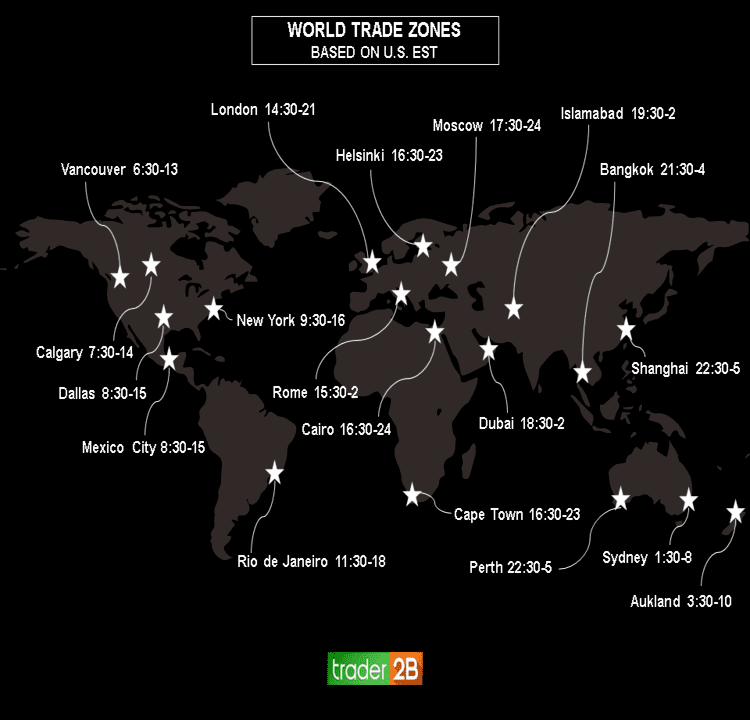
For investors engaging with global markets, managing different time zones is arguably the most complex aspect of understanding market hours.
- Conversion is Key: An investor in London tracking the Tokyo Stock Exchange needs to convert JST to GMT. Similarly, a New York-based trader watching the LSE must convert GMT to ET. This constant conversion requires careful attention to avoid errors.
- Daylight Saving Time: Adding another layer of complexity is Daylight Saving Time (DST), which is observed differently across various countries. While some regions spring forward and fall back, others do not, leading to shifts in the time difference between locations for part of the year. This means the time difference between, say, New York and London, can change by an hour twice a year.
- Tools and Resources: To mitigate confusion, investors often rely on dedicated financial calendars, time zone converters, and integrated trading platforms that automatically display market hours in their local time. Major financial news outlets and brokerage firms typically provide comprehensive schedules that account for holidays and time zone adjustments. Ignoring these factors can lead to missed opportunities, unexpected overnight holds, or failed trade executions.
Mastering the intricacies of market hours, including standard opens, extended sessions, continuous operations, and holiday adjustments, forms a critical pillar of financial literacy. It empowers investors to make informed decisions, manage risk proactively, and strategically position themselves within the dynamic global financial landscape.
aViewFromTheCave is a participant in the Amazon Services LLC Associates Program, an affiliate advertising program designed to provide a means for sites to earn advertising fees by advertising and linking to Amazon.com. Amazon, the Amazon logo, AmazonSupply, and the AmazonSupply logo are trademarks of Amazon.com, Inc. or its affiliates. As an Amazon Associate we earn affiliate commissions from qualifying purchases.