
Understanding the operational hours of major stock exchanges is fundamental for anyone participating in the financial markets, from novice individual investors to seasoned institutional traders. The New York Stock Exchange (NYSE), often dubbed “The Big Board,” stands as a beacon of global capitalism, its opening and closing bells signaling the start and end of daily equity trading for billions of dollars in assets. Knowing precisely when the market opens and, more critically, when it closes, is not just a matter of trivia; it’s a critical piece of information that dictates trading strategies, risk management, and overall investment planning.
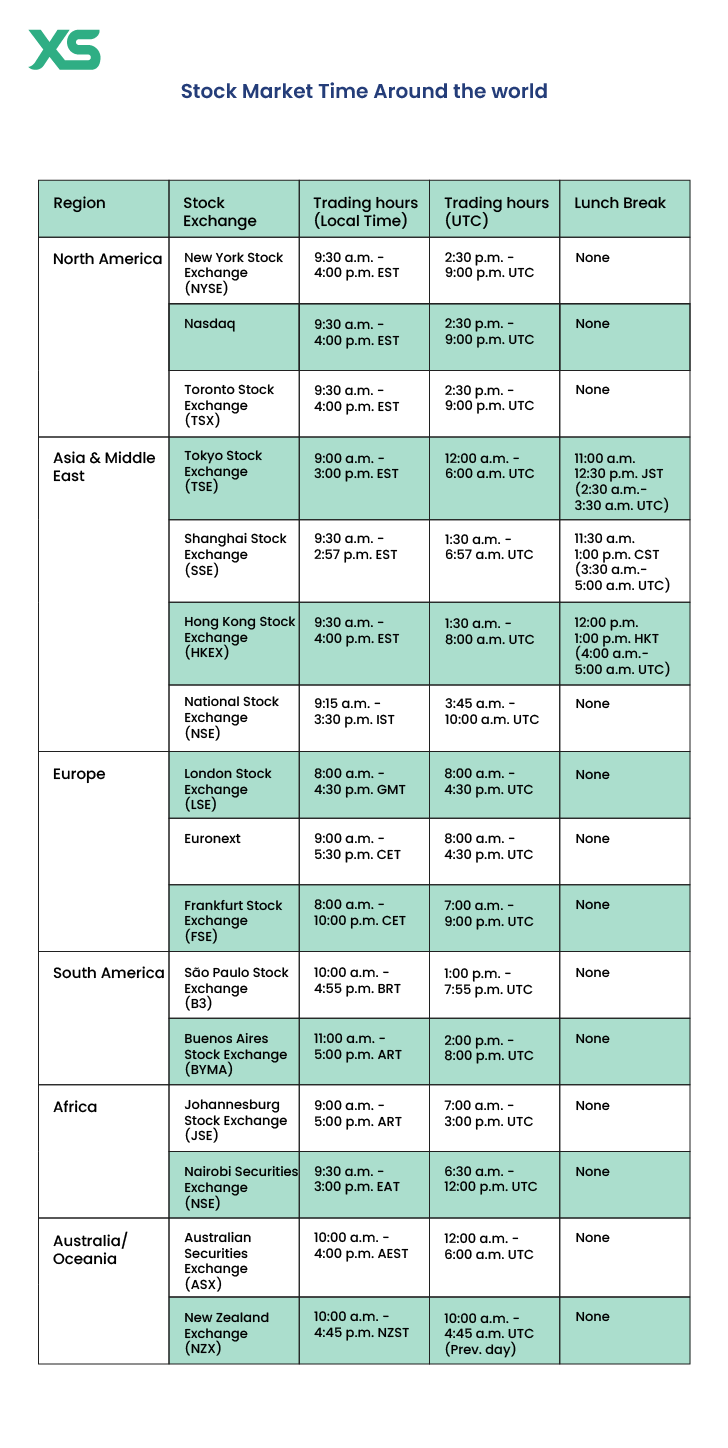
This guide delves into the specifics of the NYSE’s closing time, exploring not only the standard schedule but also the nuances of extended hours, market holidays, and the strategic implications for investors operating within the dynamic world of finance. For those committed to personal finance, investing, and understanding the mechanics of business finance, mastering these temporal aspects of the market is an indispensable skill.
The Standard NYSE Trading Day: An Investor’s Primer
At its core, the daily operations of the New York Stock Exchange adhere to a consistent schedule, designed to provide a structured and predictable environment for trading. This regularity is a cornerstone of market efficiency and liquidity, allowing participants to plan their activities with precision.
Core Trading Hours Defined: Pinpointing the 9:30 AM to 4:00 PM ET Window
The standard trading day for the New York Stock Exchange begins at 9:30 AM Eastern Time (ET) and concludes at 4:00 PM ET. This six-and-a-half-hour window is when the vast majority of trading volume occurs, and it is during these hours that market-moving news, corporate earnings reports, and economic data releases often have their most pronounced impact. For investors, these hours represent the primary opportunity to execute trades at the most liquid and transparent prices, influenced by the broadest participation of buyers and sellers. Orders placed during these times, especially market orders, are typically executed swiftly and efficiently, reflecting the current market consensus.
Understanding this core window is paramount for strategic financial planning. Whether you’re a day trader looking to capitalize on intraday fluctuations or a long-term investor seeking to rebalance your portfolio, the 9:30 AM to 4:00 PM ET period is your battlefield. Price discovery is at its peak, and financial tools often rely on these official closing prices for valuation, analysis, and benchmark comparisons.
Understanding Eastern Time (ET): Why Time Zones Matter for Global Investors
The designation of Eastern Time (ET) is not an arbitrary detail; it is a critical factor for investors operating outside the U.S. East Coast. For instance, an investor in California (Pacific Time) must remember that the NYSE closes at 1:00 PM PT, while someone in London (Greenwich Mean Time) would see the market close at 9:00 PM GMT. This time zone difference necessitates careful planning, especially for those who need to react to market movements in real-time or place orders before the closing bell.
Many online income strategies, particularly those involving active trading or international portfolio management, hinge on a clear understanding of these time differences. Financial tools and trading platforms typically display times in the user’s local zone but often provide an option to switch to ET for direct market hour correlation. Failure to account for time zones can lead to missed opportunities, delayed trade executions, or even errors in managing risk and meeting deadlines for corporate actions.
NASDAQ’s Parallel Schedule: A Brief Comparison for Equity Traders
While the NYSE is known for its physical trading floor and large-cap industrial companies, the NASDAQ Stock Market, a fully electronic exchange, is equally vital, particularly for technology and growth stocks. Importantly, NASDAQ operates on the exact same standard trading schedule as the NYSE: 9:30 AM to 4:00 PM ET. This uniformity across the two largest U.S. equity exchanges simplifies trading for investors, as they don’t need to track different standard hours for different stocks.
However, while the standard hours are identical, slight differences can exist in their extended-hours trading rules and liquidity, which we will explore next. For investors building diversified portfolios or engaging in active trading across different market segments, this parallel schedule is a convenience, allowing for a unified approach to monitoring and managing their equity holdings throughout the trading day.
Beyond Standard Hours: Pre-Market and After-Hours Trading
The concept of a “market close” primarily refers to the cessation of regular trading. However, the financial markets are increasingly fluid, offering avenues for investors to buy and sell securities outside these traditional windows through pre-market and after-hours sessions. These extended sessions, while providing flexibility, also come with their own set of characteristics and risks that savvy investors must understand.
Opportunities in Extended Sessions: The Dynamics of Trading Outside the Main Window
Pre-market trading typically begins around 4:00 AM ET and runs until the market opens at 9:30 AM ET. After-hours trading, conversely, picks up at 4:00 PM ET and can extend until 8:00 PM ET. These sessions emerged largely due to technological advancements and the demand for investors to react quickly to news that breaks outside standard market hours – such as corporate earnings releases, significant economic data, or geopolitical events.
For certain online income strategies or active investors, these extended hours offer a chance to capitalize on early information or adjust positions ahead of the next day’s open. For instance, a company might release stellar earnings at 4:05 PM ET, leading to a surge in its stock price in after-hours trading before the next regular session begins. This can be an opportunity for those positioned correctly.
Risks and Rewards: Liquidity, Volatility, and Information Flow
While attractive, extended-hours trading is not without its caveats. The primary difference from regular hours is significantly reduced liquidity. Fewer participants mean that bid-ask spreads – the difference between the highest price a buyer is willing to pay and the lowest price a seller is willing to accept – tend to be wider. This can lead to greater volatility and more pronounced price swings on smaller volumes, making it harder to get desired execution prices.
Furthermore, information flow can be less centralized. While major news outlets cover after-hours releases, the overall depth of analysis and investor sentiment is generally lower compared to regular hours. This means investors might be making decisions with less complete information, amplifying risk. Those engaged in personal finance and investing must weigh the potential for quick gains against the higher transaction costs and increased price risk associated with these less liquid environments. Using limit orders rather than market orders is a common strategy to mitigate some of this risk in extended sessions.
How to Access Extended Hours Trading: Brokerage Platforms and Their Features
Most modern online brokerage platforms offer access to pre-market and after-hours trading. However, the exact availability and features can vary. Investors typically need to opt-in or select specific order types (e.g., “Good ‘Til Cancelled” orders with extended-hours eligibility) to participate. It’s crucial for investors to understand their broker’s specific rules, fees, and the platforms’ capabilities for extended-hours trading.
Many financial tools integrated into these platforms provide real-time quotes for extended sessions, but it’s important to verify if these quotes reflect actual tradable prices or simply indicative ones. Familiarity with the platform’s order types, especially limit orders which are crucial for controlling execution prices in illiquid markets, is essential. Before diving into extended hours, practicing with paper trading accounts or starting with small positions is a prudent step for any investor.
Navigating Market Closures: Holidays and Early Finishes
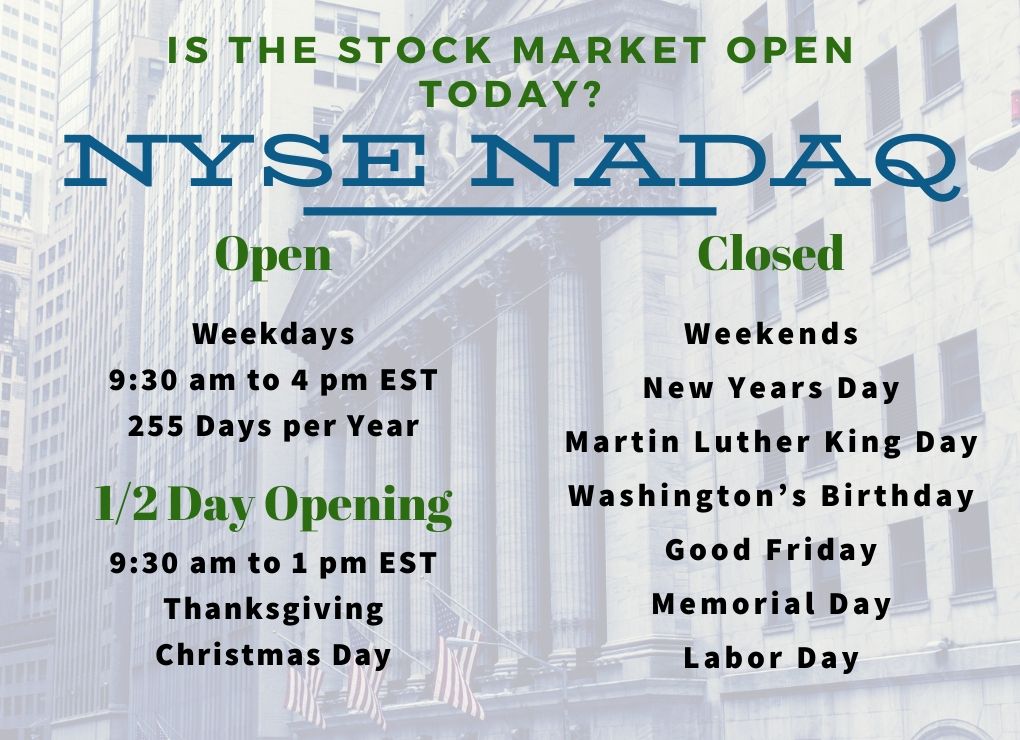
Beyond the standard daily closing time, the NYSE observes a specific calendar of holidays and occasional early closures. These scheduled non-trading days are critical for investors to be aware of, as they directly impact trade execution, settlement times, and overall market dynamics.
Recognizing NYSE Market Holidays: A Comprehensive Guide to Scheduled Closures
The NYSE generally closes in observance of several U.S. federal holidays. These typically include:
- New Year’s Day
- Martin Luther King, Jr. Day
- Presidents’ Day
- Good Friday
- Memorial Day
- Juneteenth National Independence Day
- Independence Day
- Labor Day
- Thanksgiving Day
- Christmas Day
When these holidays fall on a weekend, the market will typically observe the holiday on the preceding Friday or the following Monday. For personal finance management and investment planning, being aware of this holiday schedule is vital. It affects when dividends are paid, when mutual fund NAVs are calculated, and when settlement of trades (T+2 days) will occur. Investors must check the NYSE’s official calendar at the beginning of each year to confirm exact dates.
The Significance of Early Closures: Half-Day Sessions and Their Implications
In addition to full-day holidays, the NYSE sometimes has “early closures” or “half-day sessions.” The most common instance is the day after Thanksgiving (Black Friday) and, less frequently, the day before Christmas (if it falls on a weekday). On these days, the market might close early, often at 1:00 PM ET.
These early closures, though shorter in duration, can sometimes lead to increased volatility as traders rush to close positions or react to any late-breaking news within a compressed timeframe. For investors, it means having an even shorter window for market participation, which requires proactive planning for order placement and risk assessment. Business finance professionals also need to adjust their reporting and liquidity management strategies around these abbreviated sessions.
Planning Ahead: Strategies for Managing Trades Around Non-Trading Days
Effective planning around market closures involves several strategies:
- Check the Calendar: Regularly consult the official NYSE holiday calendar.
- Adjust Order Placement: If you anticipate placing a significant order, do so well in advance of a holiday or early close, or understand that it will not execute until the next trading day.
- Monitor News: Be extra vigilant for news releases immediately preceding or during non-trading days, as these can set the tone for the market’s opening when trading resumes.
- Consider Settlement Times: Remember that market closures extend the T+2 settlement period, which is crucial for managing cash flows, especially for those involved in options or other derivatives where timely settlement is critical.
- Review Portfolio Risk: Assess how your portfolio might be exposed to events occurring during a closure.
Proactive planning minimizes surprises and ensures that investment decisions are executed optimally, even amidst the interruptions of market holidays or early closures.
The Rationale Behind Fixed Market Hours
The structure of the NYSE’s trading day, with its definitive opening and closing times, is not arbitrary. It is the product of historical evolution, regulatory considerations, and practical necessities designed to foster an orderly, fair, and efficient financial marketplace.
Historical Context and Evolution: Why Trading Hours Were Established
Historically, stock exchanges operated physically, requiring human traders to be present. The concept of fixed hours arose from the practicalities of managing these physical venues, ensuring that all participants had an equal opportunity to trade during a set period. Early exchanges in the 18th and 19th centuries had less rigid schedules, but as trading volume grew and the need for standardized practices emerged, the modern, fixed trading day evolved.
The six-and-a-half-hour trading day we know today became largely standardized in the mid-20th century. While technology has since enabled 24/7 global trading, the core NYSE hours have largely persisted, representing a balance between tradition, market access, and the human element of oversight and analysis.
Ensuring Market Integrity and Stability: The Role of Fixed Hours in Regulation
Fixed trading hours play a crucial role in maintaining market integrity and stability. By concentrating trading activity into a defined period, regulators can more effectively monitor for market manipulation, insider trading, and other illicit activities. The closing bell provides a definitive end to the day’s trading, allowing for a pause during which regulators, firms, and investors can reconcile trades, process information, and prepare for the next session.
This structured environment helps to manage volatility, preventing continuous, unbridled trading that could lead to extreme price swings or flash crashes without adequate time for participants to react and assess. It also facilitates fair price discovery, as a large concentration of buyers and sellers within a limited window helps to generate efficient market prices.
Impact on Price Discovery and Liquidity: How Structured Hours Facilitate Efficient Markets
Fixed hours enhance price discovery by ensuring a high concentration of liquidity. When everyone trades at roughly the same time, there’s a greater likelihood that buy and sell orders will meet, resulting in tighter bid-ask spreads and more accurate pricing. This robust liquidity reduces the impact of any single large trade on the overall market price, fostering a more stable environment for investors.
Moreover, the daily closing price is a crucial benchmark for valuing portfolios, setting investment fund prices, and determining option expiration values. Without a definitive closing time, establishing such universal benchmarks would be significantly more challenging, impacting the reliability of financial tools and analysis across the industry. The structured hours, therefore, are integral to the overall health and functionality of the capital markets, benefitting all participants in personal finance and business finance alike.
Strategic Implications for Investors
Understanding the NYSE’s closing time and the broader context of market hours is not just about knowing a fact; it’s about developing a strategic advantage in your investment journey. How you react to and plan around these hours can significantly impact your portfolio’s performance and risk exposure.
Optimizing Trade Execution: Timing Your Entries and Exits
For active traders and even long-term investors making periodic adjustments, the timing of trade execution relative to market close can be critical. The first and last hours of the trading day (“the open” and “the close”) are often characterized by heightened volatility and increased trading volume. This can present opportunities but also risks.
- Opening Bell: The initial frenzy can be driven by news overnight or pre-market trading, leading to significant price gaps. Experienced traders might use this volatility, while others might wait for the market to settle down within the first 15-30 minutes.
- Closing Bell: The end of the day often sees a surge in volume as institutions balance their books, fund managers adjust positions, and retail investors place orders to be executed at the day’s closing price. This “power hour” can offer good liquidity but also increased price movement.
- Mid-Day Lull: Often, the middle of the day sees lower volatility and volume, which can be ideal for investors looking to place larger orders without causing undue market impact, or for those wishing to avoid the opening and closing frenzies.
Strategic timing of entries and exits, often supported by advanced financial tools that track real-time volume and price action, can help optimize returns and minimize slippage.
Managing Portfolio Risk: How Market Closures Affect Your Holdings
The period when the market is closed, especially over weekends or long holidays, is often referred to as “overnight risk” or “weekend risk.” During these non-trading hours, significant global events, economic announcements, or corporate news can emerge that directly impact your holdings, but you have no ability to react until the market reopens.
Consider a major geopolitical event occurring over a weekend. When the market reopens on Monday, stocks related to that event could gap up or down significantly, leading to immediate gains or losses. Investors focused on personal finance must factor this into their risk management strategy. This might involve:
- Reducing Exposure: Lightening up on volatile positions before a long closure.
- Using Stop-Loss Orders: While stop-loss orders offer some protection, they can be gapped over if news causes a drastic price movement at the open.
- Diversification: A well-diversified portfolio is less susceptible to single-stock or sector-specific risks during non-trading hours.
- Staying Informed: Monitoring global news even when markets are closed can prepare you mentally for potential impacts upon reopening.

The Global Perspective: Interplay with International Market Hours
No financial market operates in a vacuum. The NYSE’s closing time, while definitive for U.S. equities, coincides with the opening or mid-day activity of other major global exchanges. As the NYSE closes at 4:00 PM ET, European markets might already be preparing for their own close, while Asian markets are still hours away from their next open.
For investors with international exposure or those involved in global macro strategies, understanding this interconnectedness is vital. News from Asian markets overnight can influence European markets, which then set the tone for the NYSE’s opening. Similarly, the NYSE’s closing behavior can influence the sentiment for Asian markets the following day. Investors in online income streams that involve forex or international equities must integrate a global clock into their daily routine, using financial tools that track multiple time zones and market statuses to make informed decisions. This holistic view enhances foresight and enables more robust risk management strategies across diverse portfolios.
In conclusion, the NYSE’s closing time at 4:00 PM ET is much more than a simple timestamp. It’s a critical boundary within the financial ecosystem, influencing trading strategies, risk management, and overall investment planning for millions. By understanding its nuances, including extended hours, holidays, and its broader role in market dynamics, investors can navigate the complexities of the financial markets with greater confidence and strategic foresight, ultimately enhancing their pursuit of financial success.
aViewFromTheCave is a participant in the Amazon Services LLC Associates Program, an affiliate advertising program designed to provide a means for sites to earn advertising fees by advertising and linking to Amazon.com. Amazon, the Amazon logo, AmazonSupply, and the AmazonSupply logo are trademarks of Amazon.com, Inc. or its affiliates. As an Amazon Associate we earn affiliate commissions from qualifying purchases.