
The stock market, often perceived as a complex realm reserved for financial elite, is in essence a fundamental pillar of modern capitalism. Far from being merely a casino for speculators, it serves a multifaceted and crucial role in facilitating economic growth, wealth creation, and capital allocation. Understanding its core purposes demystifies its operations and highlights its indispensable function in connecting investors with growing businesses, ultimately driving innovation and prosperity.
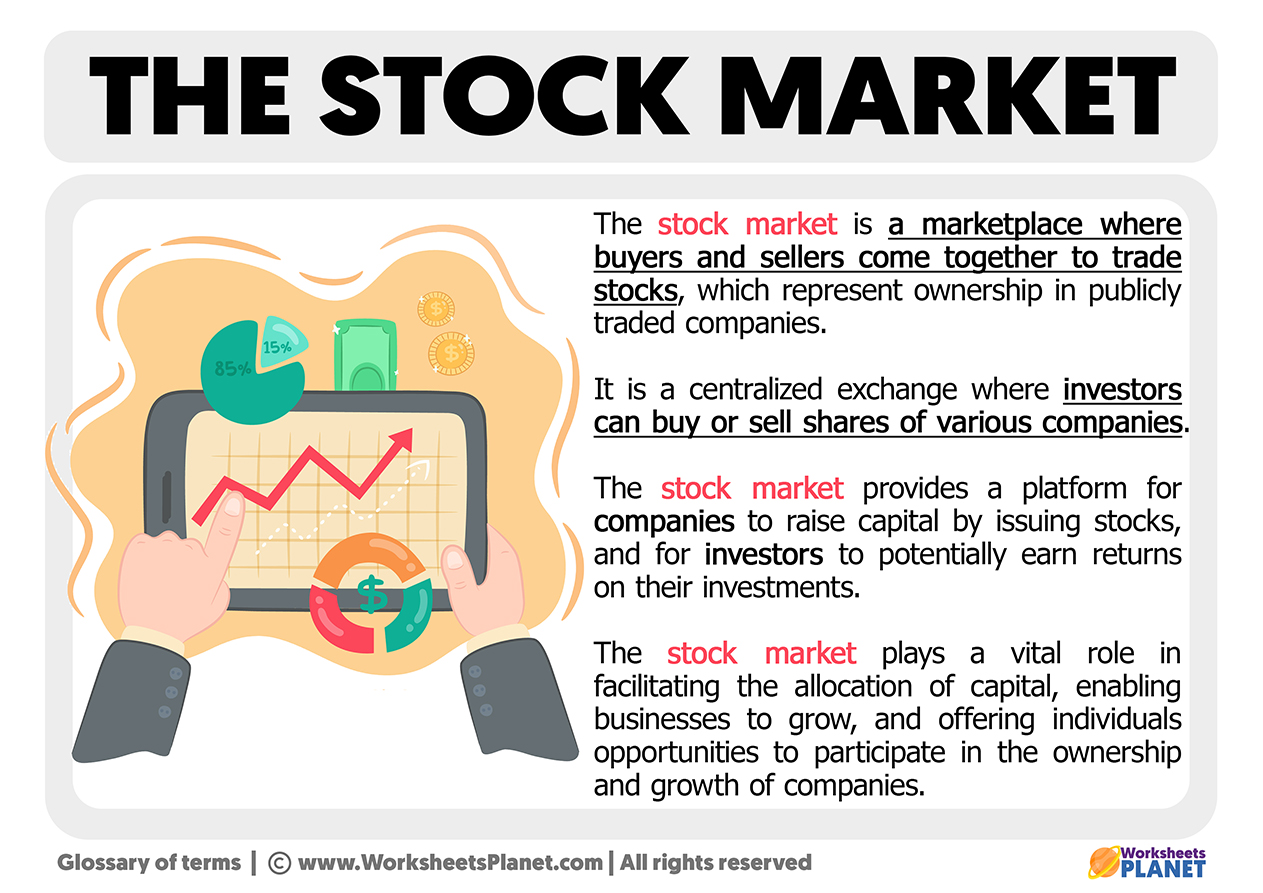
At its heart, the stock market provides a structured marketplace where shares of publicly traded companies are bought and sold. These shares represent fractional ownership in a company, and their trading allows both businesses and individuals to achieve their financial objectives. Its primary functions extend far beyond simple trading, impacting everything from corporate expansion to individual retirement plans, and the overall health of national and global economies.
The Dual Pillars: Capital Formation and Investment Opportunity
The stock market’s existence is predicated on two symbiotic functions that drive its daily operations and long-term impact: enabling companies to raise capital and offering individuals and institutions opportunities for investment and wealth accumulation.
Facilitating Capital Formation for Businesses
For businesses, especially those poised for growth or seeking to expand their operations, the stock market is an invaluable conduit for accessing substantial capital. When a company decides to “go public” through an Initial Public Offering (IPO), it sells shares to the public for the first time. This process allows the company to raise large sums of money that can be used for various strategic purposes.
- Funding Growth and Expansion: The capital raised through stock issuance provides companies with the necessary funds to invest in research and development, build new facilities, expand into new markets, acquire other businesses, or upgrade technology. Without access to such significant capital, many innovative ideas and large-scale projects would struggle to get off the ground or reach their full potential, thereby stifling economic progress.
- Debt Reduction and Financial Flexibility: Public companies can also use the proceeds from stock sales to pay off existing debts, thereby improving their financial health and reducing interest expenses. This increased financial flexibility allows them to allocate more resources towards growth initiatives rather than servicing debt, strengthening their balance sheet and making them more resilient to economic downturns.
- Increased Visibility and Brand Recognition: Being a publicly traded company often comes with increased media attention, analyst coverage, and investor scrutiny. While demanding, this heightened visibility can significantly enhance a company’s brand recognition, credibility, and reputation, making it easier to attract top talent, secure partnerships, and build customer loyalty.
Providing Investment Opportunities for Individuals and Institutions
On the other side of the equation, the stock market offers a vital avenue for individuals, pension funds, mutual funds, and other institutional investors to deploy their capital with the aim of generating returns. It democratizes ownership, allowing ordinary people to participate in the success of leading companies.
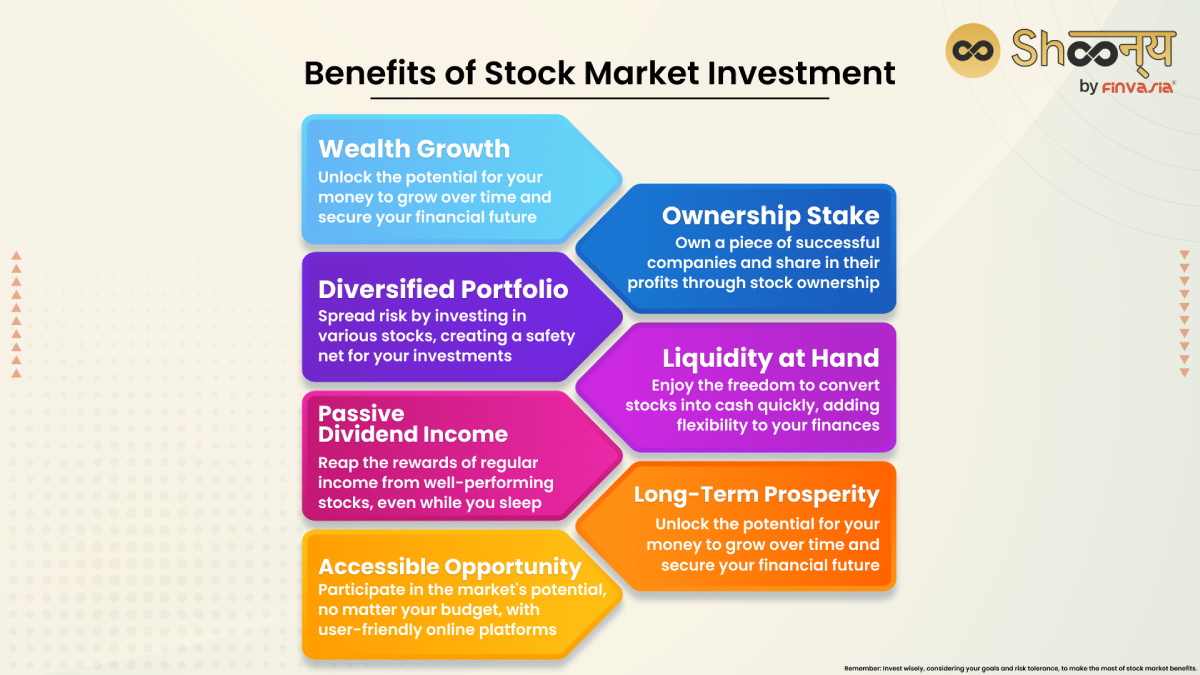
- Wealth Creation and Accumulation: For long-term investors, the stock market has historically been one of the most effective vehicles for wealth creation, often outperforming other asset classes like bonds or real estate over extended periods. By investing in stocks, individuals can grow their savings, build retirement funds, and achieve various financial goals, such as funding education or purchasing a home.
- Diversification and Risk Management: While investing in a single stock carries considerable risk, the stock market allows investors to diversify their portfolios across numerous companies, industries, and geographies. This diversification is a cornerstone of prudent risk management, as it helps mitigate the impact of poor performance by any single investment, smoothing out overall returns.
- Income Generation through Dividends: Many mature and profitable companies distribute a portion of their earnings to shareholders in the form of dividends. For investors seeking regular income, particularly retirees or those relying on passive income streams, dividend-paying stocks can be a crucial component of their financial strategy.
Economic Functions: Liquidity, Price Discovery, and Capital Allocation
Beyond facilitating transactions, the stock market performs critical economic functions that underpin its importance to the broader financial system and the economy as a whole.

Ensuring Liquidity and Efficient Trading
Liquidity refers to the ease with which an asset can be converted into cash without affecting its market price. The stock market is designed to provide a highly liquid environment for shares.
- Ease of Buying and Selling: Investors can buy or sell shares relatively quickly and at a fair market price because there are always willing buyers and sellers. This ease of transaction is vital; without it, individuals and institutions would be hesitant to commit capital to public companies, fearing they might not be able to exit their positions when needed. High liquidity encourages investment, knowing that capital is not permanently tied up.
- Reduced Transaction Costs: The competitive nature of the stock market, facilitated by numerous participants and advanced trading systems, generally leads to low transaction costs (commissions and spreads) relative to the value of the assets traded. This efficiency makes it more attractive for both large institutional investors and small retail investors to participate.
Facilitating Price Discovery
The stock market is a continuous auction where millions of participants constantly process new information and express their views through buying and selling. This collective action leads to the efficient discovery of a company’s share price.
- Reflecting Company Value: The prevailing stock price at any given moment is theoretically the market’s consensus on the fair value of a company, based on all available public information, including its earnings, future prospects, industry trends, and macroeconomic factors. This dynamic pricing mechanism ensures that capital is allocated based on perceived value and potential.
- Signaling Mechanism: Stock prices act as important signals for companies, investors, and policymakers. A rising stock price can signal strong performance and investor confidence, potentially making it easier for a company to raise additional capital in the future or pursue expansion plans. Conversely, a declining stock price can indicate underlying issues or a lack of confidence, prompting companies to re-evaluate strategies or operations.
Optimizing Capital Allocation
Perhaps one of the most significant, yet often overlooked, purposes of the stock market is its role in efficiently allocating capital across the economy.
- Directing Capital to Productive Enterprises: By allowing investors to buy shares in companies they believe will be successful, the stock market effectively directs capital towards those enterprises deemed most productive, innovative, and capable of generating future growth. Companies that consistently perform well and offer compelling growth prospects tend to attract more investment, enabling them to expand further.
- Driving Innovation and Efficiency: This efficient allocation of capital fuels innovation by providing funds to companies developing new technologies, products, or services. It encourages companies to be more efficient and competitive, as those that fail to adapt or innovate may see their stock prices decline, making it harder to attract investment. Ultimately, this leads to a more dynamic and prosperous economy.
The Broader Societal and Economic Impact
The functions of the stock market extend beyond corporate finance and individual wealth to have a profound impact on society and the economy at large.
Fostering Economic Growth and Job Creation
By providing capital for businesses to expand, the stock market directly contributes to economic growth. When companies grow, they hire more employees, invest in new infrastructure, and create demand for goods and services from other businesses. This virtuous cycle leads to increased productivity, higher wages, and a stronger overall economy. Many jobs created today, from tech startups to manufacturing plants, are indirectly funded by capital raised through public markets.
Promoting Corporate Governance and Transparency
Publicly traded companies are subject to stringent regulatory oversight and reporting requirements. They must regularly disclose financial results, operational details, and other material information to the public and to regulatory bodies like the Securities and Exchange Commission (SEC). This increased transparency, driven by the need to maintain investor confidence, often leads to better corporate governance, accountability, and ethical practices. While not infallible, this oversight aims to protect investors and ensure fair play.
Enabling Valuation and Benchmarking
The stock market provides a continuous and transparent mechanism for valuing companies. This valuation is not just useful for investors but also for businesses themselves when considering mergers, acquisitions, or divestitures. Furthermore, stock market indices (like the S&P 500 or Dow Jones Industrial Average) serve as critical benchmarks for the overall health of the economy, investor sentiment, and the performance of various industries. These benchmarks are widely used by economists, policymakers, and financial professionals to assess trends and make informed decisions.
In conclusion, the stock market is far more than a trading platform; it is a sophisticated mechanism essential for the functioning of modern economies. It acts as a vital bridge, connecting capital-seeking businesses with return-seeking investors, and in doing so, it drives innovation, fosters economic growth, facilitates wealth creation, and ensures the efficient allocation of resources across industries. Its ongoing evolution continues to shape financial landscapes and offers a dynamic, albeit challenging, arena for participating in the global economy.
aViewFromTheCave is a participant in the Amazon Services LLC Associates Program, an affiliate advertising program designed to provide a means for sites to earn advertising fees by advertising and linking to Amazon.com. Amazon, the Amazon logo, AmazonSupply, and the AmazonSupply logo are trademarks of Amazon.com, Inc. or its affiliates. As an Amazon Associate we earn affiliate commissions from qualifying purchases.