
Learning the stock market is often perceived as a daunting task, a labyrinth of complex jargon, volatile charts, and high-stakes decisions. However, for those willing to invest time and effort, understanding the stock market is an invaluable skill that can unlock significant financial growth and security. It’s not about quick riches, but rather about informed decision-making, strategic planning, and a commitment to continuous learning. This comprehensive guide will demystify the process, outlining a structured approach to learning the stock market effectively, moving from foundational knowledge to practical application and strategic thinking.
Laying the Foundation: Understanding the Basics
Before you can build a sturdy investment portfolio, you need a solid understanding of the fundamental components that make up the stock market. This initial phase is crucial for establishing a mental framework upon which all subsequent knowledge will be built. Skipping these foundational steps can lead to confusion and costly mistakes down the line.
What is the Stock Market?
At its core, the stock market is a vast network of exchanges and markets where participants buy and sell shares of publicly traded companies. When you buy a share of stock, you are essentially purchasing a tiny piece of ownership in that company. The value of your share fluctuates based on the company’s performance, industry trends, economic conditions, and investor sentiment. Key participants include individual investors, institutional investors (like mutual funds and pension funds), and brokers who facilitate these transactions. Understanding the roles of these players and how exchanges like the NYSE and NASDAQ operate provides essential context. It’s a dynamic ecosystem reflecting global economic activity and corporate health.
Key Terminology Every Beginner Needs
The financial world has its own language, and familiarizing yourself with key terms is non-negotiable. Without this vocabulary, even the simplest market news can seem impenetrable. Essential terms include:
- Stocks/Shares: Units of ownership in a company.
- Bonds: Debt instruments issued by governments or corporations to raise capital.
- ETFs (Exchange-Traded Funds): A basket of securities that trades like a stock.
- Mutual Funds: Professionally managed portfolios of stocks, bonds, and other investments.
- Dividends: A portion of a company’s earnings paid out to shareholders.
- P/E Ratio (Price-to-Earnings Ratio): A valuation measure that compares a company’s current share price to its per-share earnings.
- Market Capitalization (Market Cap): The total value of a company’s outstanding shares (share price multiplied by the number of shares).
- Bull Market: A market condition where prices are rising or are expected to rise.
- Bear Market: A market condition where prices are falling or are expected to fall.
- Volatility: The degree of variation of a trading price series over time.
Investing your time in understanding these, and many other, terms will significantly enhance your ability to comprehend market analysis and make informed decisions.
Different Investment Vehicles
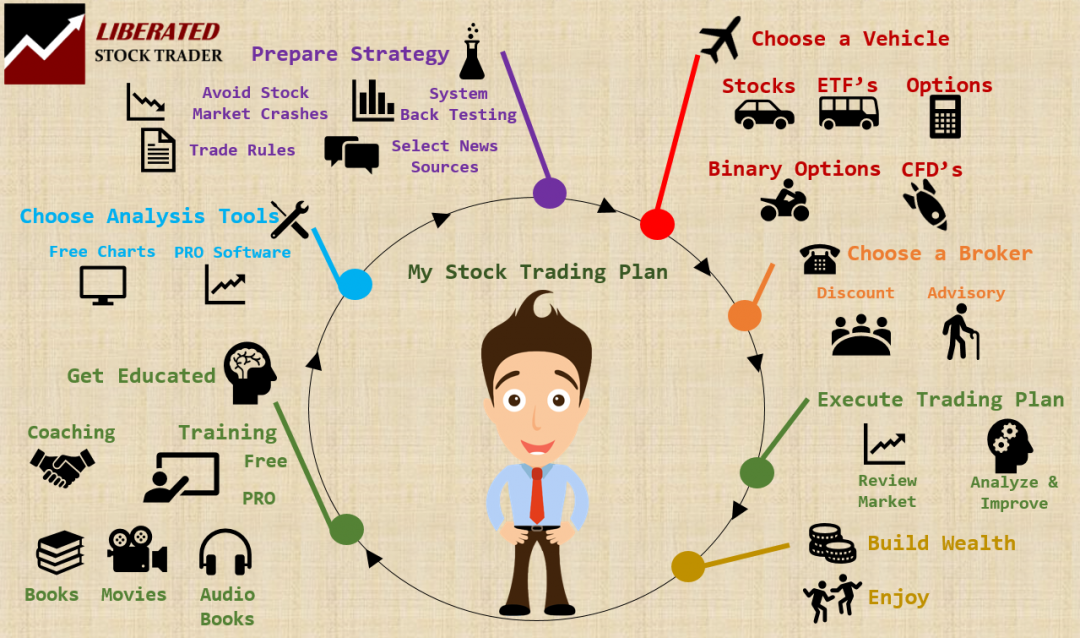
While the term “stock market” often implies only stocks, a diversified portfolio typically involves various investment vehicles. Beyond individual stocks, learning about bonds (which offer stability and income), ETFs (which provide diversification at a low cost), and mutual funds (managed by professionals for a fee) is critical. Each vehicle has different risk profiles, liquidity, and potential returns, and understanding their distinctions will help you align your investments with your personal financial goals and risk tolerance. Exploring these options early on can broaden your investment horizons and prevent over-reliance on a single asset class.
Essential Learning Pathways and Resources
Once the foundational concepts are clear, the next step is to actively engage with reliable learning resources. The digital age offers an unprecedented wealth of information, but it also necessitates discernment in choosing credible and effective learning pathways. A multi-pronged approach often yields the best results, combining theoretical knowledge with practical insights.
Books and Online Courses
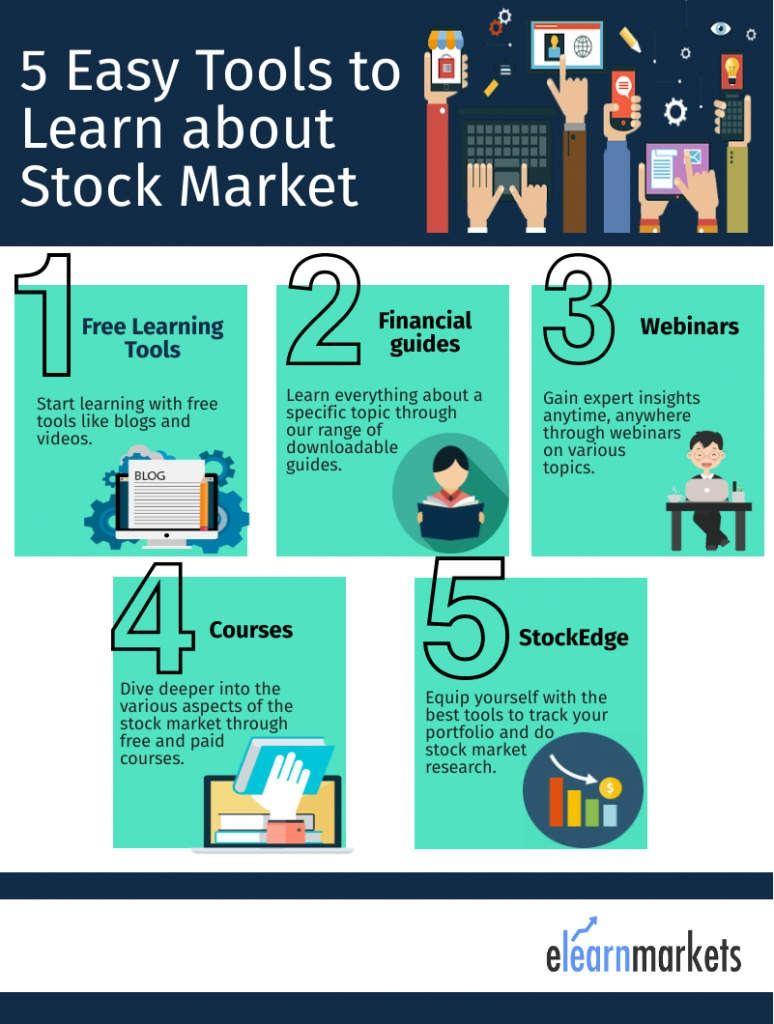
For structured learning, books remain an invaluable resource. Classics like “The Intelligent Investor” by Benjamin Graham, “A Random Walk Down Wall Street” by Burton Malkiel, and “Common Stocks and Uncommon Profits” by Philip Fisher offer timeless wisdom on investing principles. For beginners, books that simplify complex concepts are ideal. Alongside books, online courses from reputable platforms such as Coursera, Udemy, edX, or even university extensions can provide structured lessons, quizzes, and practical exercises. Many brokerage firms also offer free educational courses for their clients, covering everything from market basics to advanced trading strategies. These resources often provide a progressive learning path, ensuring a solid grasp of concepts before moving on to more complex topics.
Reputable Financial News and Websites
Staying informed about current events, economic indicators, and company news is vital for any investor. Develop a habit of regularly reading financial news from trusted sources. Major publications like The Wall Street Journal, Bloomberg, The Financial Times, and Reuters offer in-depth analysis and timely updates. For educational content and definitions, Investopedia is an unparalleled resource, serving as a comprehensive dictionary and explainer for all things finance. Websites like Yahoo Finance or Google Finance provide real-time stock quotes, charts, and company news, allowing you to track specific investments and market trends. Critically evaluating information and understanding different perspectives is a skill developed over time.
Podcasts and YouTube Channels
For those who prefer auditory or visual learning, podcasts and YouTube channels have become powerful tools. Podcasts like “The Investors Podcast,” “Planet Money,” or “Money for the Rest of Us” offer engaging discussions and interviews with experts, making complex topics more accessible. On YouTube, channels dedicated to personal finance and investing provide tutorials, market updates, and analyses, often breaking down strategies with visual aids. However, it’s crucial to vet these sources carefully, as the internet also hosts a plethora of less reliable or biased content. Stick to channels run by certified financial professionals, reputable educators, or established financial institutions.
Practical Tools: Stock Simulators and Paper Trading
Theoretical knowledge must eventually meet practical application. Before risking real capital, utilizing stock market simulators, often referred to as “paper trading” or “virtual trading,” is an indispensable step. Many online brokers offer free demo accounts that mimic real-time market conditions. These platforms allow you to practice buying and selling stocks, ETFs, and other assets with virtual money. This hands-on experience helps you understand how orders work, how market movements affect your portfolio, and how to manage risk without the emotional pressure of losing actual money. It’s an invaluable training ground to test strategies, learn from mistakes, and build confidence before transitioning to live trading.
Developing a Strategic Mindset
Beyond understanding the mechanics and utilizing resources, a successful investor cultivates a strategic mindset. This involves defining your approach, understanding your personal financial boundaries, and committing to principles that guide long-term success rather than chasing short-term gains.
Fundamental vs. Technical Analysis
Two primary approaches guide investment decisions:
- Fundamental Analysis: This involves evaluating a company’s intrinsic value by examining its financial statements (balance sheet, income statement, cash flow statement), management, industry position, and economic outlook. The goal is to determine if a stock is undervalued or overvalued relative to its true worth.
- Technical Analysis: This approach focuses on past market data, primarily price and volume, to identify patterns and predict future price movements. Technical analysts use charts, indicators, and trends to make trading decisions, often with a shorter-term outlook.
Understanding both methodologies, even if you choose to specialize in one, provides a more holistic view of the market and helps you interpret different types of analyses.
Setting Clear Financial Goals and Risk Tolerance
Before making any investment, clearly define what you want to achieve. Are you saving for retirement, a down payment on a house, or your child’s education? Your financial goals will dictate your investment horizon and the level of risk you can comfortably take. Equally important is understanding your risk tolerance – how much potential loss you can psychologically and financially bear. A young individual with a long investment horizon might tolerate more risk for higher potential returns, while someone nearing retirement might prioritize capital preservation. Honesty about your risk tolerance prevents panic selling during market downturns and ensures your investment strategy aligns with your personal comfort zone.
The Importance of Diversification
“Don’t put all your eggs in one basket” is perhaps the most fundamental principle of investing. Diversification involves spreading your investments across various asset classes, industries, and geographies. This strategy helps mitigate risk, as the poor performance of one asset can be offset by the stronger performance of another. Diversifying across different company sizes (large-cap, mid-cap, small-cap), sectors (tech, healthcare, finance), and even investment types (stocks, bonds, real estate) reduces your overall portfolio volatility and increases the likelihood of achieving consistent returns over time.
Long-Term vs. Short-Term Investing
Your investment horizon significantly influences your strategy.
- Long-term investing: Often favored by beginners and those seeking wealth accumulation, focuses on holding assets for many years (5+ years). This approach typically involves fundamental analysis, dollar-cost averaging, and riding out market fluctuations, relying on the power of compounding.
- Short-term investing/trading: Involves buying and selling assets rapidly, sometimes within hours or days, to profit from quick price movements. This requires extensive knowledge of technical analysis, strict risk management, and a high tolerance for stress. While potentially lucrative, it’s also significantly riskier and not recommended for novices.
Understanding which approach aligns with your goals and temperament is crucial for sustainable success in the market.
Taking Action: Practical Steps to Get Started
With a solid foundation and a strategic mindset, you’re ready to take the first practical steps toward becoming an active investor. This phase involves setting up your accounts, initiating your investments, and committing to ongoing learning and emotional discipline.
Choosing a Brokerage Account
To buy and sell stocks, you’ll need a brokerage account. There are numerous online brokerage firms, each offering different features, fee structures, and tools. Factors to consider when choosing a broker include:
- Commissions and Fees: Many brokers now offer commission-free trading for stocks and ETFs, but be aware of other potential fees (e.g., account maintenance, inactivity, transfer fees).
- Investment Options: Ensure the broker offers access to the types of investments you’re interested in (stocks, ETFs, mutual funds, options, etc.).
- Research and Educational Tools: Look for platforms that provide robust research tools, analytical charts, and educational resources suitable for your learning level.
- Customer Service: Good customer support can be invaluable, especially when you’re starting.
- User Interface: A user-friendly platform can make a big difference in your trading experience.
Comparing a few reputable brokers like Fidelity, Charles Schwab, Vanguard, E*TRADE, or Robinhood (for simpler interfaces) is a good starting point.
Starting Small: The Power of Dollar-Cost Averaging
You don’t need a large sum of money to start investing. Many platforms allow you to begin with just a few dollars, often through fractional shares. A highly recommended strategy for beginners is dollar-cost averaging (DCA). This involves investing a fixed amount of money at regular intervals (e.g., $100 every month), regardless of the asset’s price. When prices are high, your fixed amount buys fewer shares; when prices are low, it buys more. Over time, this strategy averages out your purchase price, reduces the impact of market volatility, and removes the need to time the market, which is notoriously difficult even for professionals. Consistency is key here.
Continuous Learning and Adapting
The stock market is a dynamic entity, constantly influenced by global events, technological advancements, and economic shifts. Therefore, learning is not a one-time event but a lifelong journey. Stay curious, read new books, follow reputable analysts, and adapt your strategies as market conditions and your personal financial situation evolve. Review your portfolio periodically, rebalance when necessary, and be open to adjusting your investment thesis based on new information. The most successful investors are perpetual students.
Managing Emotions and Avoiding Common Pitfalls
Perhaps the greatest challenge in investing is managing your emotions. Fear and greed are powerful forces that can lead to irrational decisions – panic selling during a downturn or chasing hyped stocks during a bull run. Develop a disciplined approach: stick to your investment plan, avoid impulsive decisions, and understand that market corrections are a normal part of the cycle. Common pitfalls include herd mentality, overconfidence, relying on unverified tips, and not diversifying. A well-defined strategy, combined with emotional discipline, is your strongest defense against these common traps.
In conclusion, learning the stock market is a marathon, not a sprint. It requires patience, diligence, and a genuine interest in understanding the forces that drive financial markets. By systematically building your knowledge foundation, leveraging diverse learning resources, cultivating a strategic mindset, and taking disciplined practical steps, you can confidently navigate the complexities of investing. Remember that every seasoned investor started where you are now – with curiosity and a willingness to learn. Embrace the journey, and the rewards will follow.
aViewFromTheCave is a participant in the Amazon Services LLC Associates Program, an affiliate advertising program designed to provide a means for sites to earn advertising fees by advertising and linking to Amazon.com. Amazon, the Amazon logo, AmazonSupply, and the AmazonSupply logo are trademarks of Amazon.com, Inc. or its affiliates. As an Amazon Associate we earn affiliate commissions from qualifying purchases.