
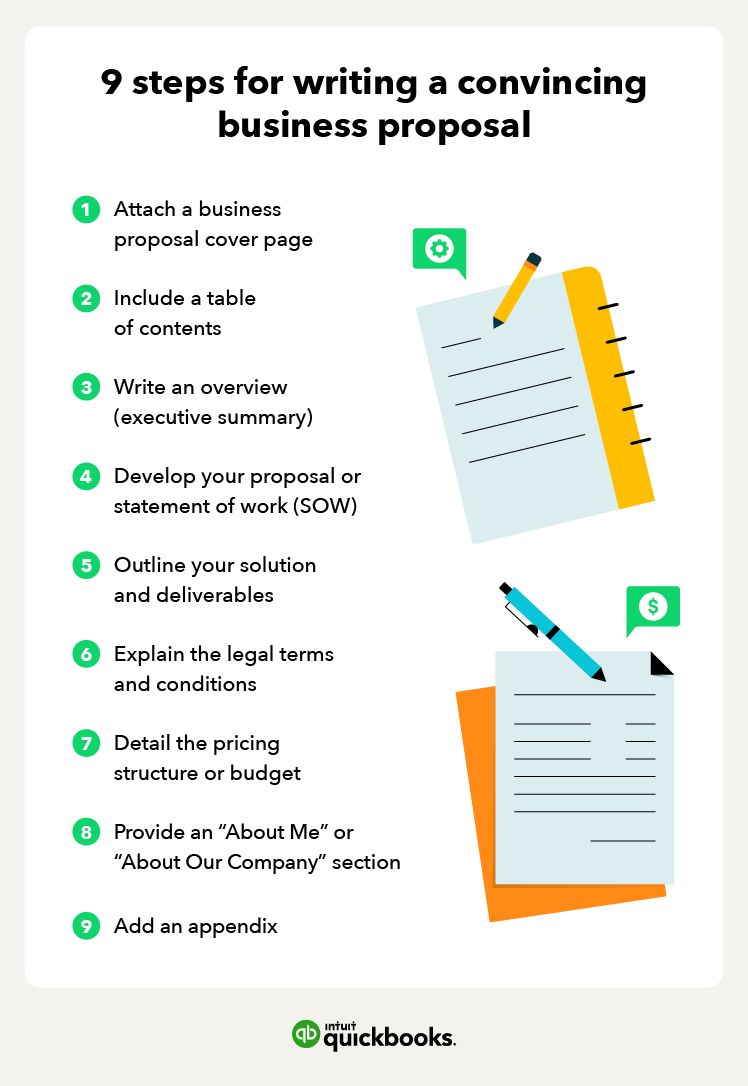
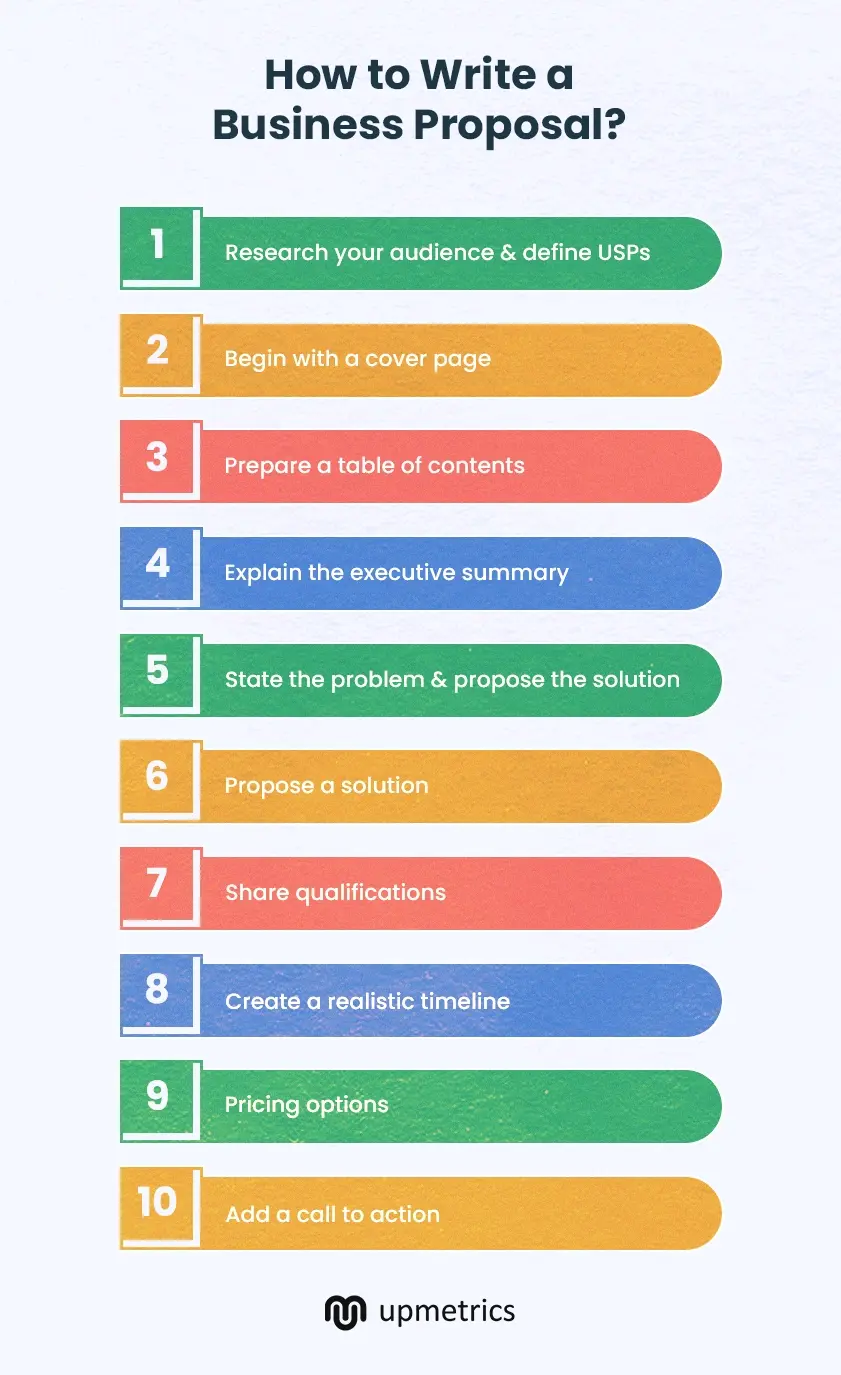
In the dynamic world of business, a meticulously crafted proposal is often the key that unlocks new opportunities, secures vital investments, or establishes lucrative partnerships. It’s more than just an offer; it’s a strategic financial document designed to persuade a potential client, investor, or partner that your proposed solution or venture offers compelling monetary value and a robust return on investment. Within the realm of “Money,” a business proposal transcends mere description to become a powerful instrument for financial growth, demonstrating a clear path to profitability, cost savings, or capital appreciation for all parties involved.

This guide will delve into the critical financial aspects of developing a business proposal, ensuring it not only communicates your vision but also articulates its inherent financial advantages. From understanding the client’s financial pain points to structuring your pricing and projecting future gains, every element will be framed through the lens of maximizing economic benefit and fostering sustainable financial relationships.
Understanding the Financial Core of Your Proposal
At its heart, every business proposal is a financial document. It’s an articulation of how your services, products, or investment opportunity will either generate revenue, reduce costs, save time (which translates to money), or provide a significant return on capital. Before a single word is written, it is imperative to deeply understand the financial context and objectives of your audience.
Identifying the Client’s Monetary Needs and Opportunities
The first step in crafting a compelling financial proposal is conducting thorough due diligence on your prospective client or investor. What are their current financial challenges? Are they struggling with high operational costs, seeking new revenue streams, looking to optimize existing investments, or aiming for market expansion that requires significant capital? For an investor, what is their preferred risk-to-reward profile, their typical investment horizon, and their expectation for exit strategies?
Understanding their specific monetary needs allows you to tailor your proposal to address these directly. For instance, if a client is struggling with inefficient processes, your proposal should highlight how your solution will not only streamline operations but also quantify the specific cost savings per quarter or year. If an investor is looking for high growth, your proposal needs to present aggressive but realistic financial projections and market opportunities. This financial empathy is crucial; it demonstrates that you’ve done your homework and that your solution isn’t just a generic offering, but a targeted financial intervention designed to improve their bottom line. It’s about speaking their financial language and showing them you understand their fiscal landscape.
Framing Your Solution as a Financial Advantage
Once you understand their financial needs, the next step is to articulate how your proposed solution directly translates into a tangible financial advantage for them. This means moving beyond product features or service descriptions to focus on the economic benefits. Instead of saying, “Our software has X feature,” say, “Our software’s X feature reduces manual data entry by 50%, saving your team an estimated $5,000 per month in labor costs and allowing reallocation of resources to high-value tasks.”
For an investment proposal, you wouldn’t just describe your innovative product; you would elaborate on its market penetration potential, projected revenue growth, and the anticipated equity appreciation for investors. Every aspect of your solution—from its efficiency to its scalability—should be linked to a quantifiable financial outcome. This framing transforms your proposal from a mere sales pitch into a strategic financial document, clearly illustrating the monetary upside and the value proposition from a fiscal perspective.
The Importance of a Strong Executive Summary for Financial Buy-in
The executive summary is arguably the most crucial section of your business proposal, especially when targeting financial decision-makers. It’s often the first, and sometimes only, part read in detail before a deeper dive. Therefore, it must immediately capture attention by summarizing the core financial problem you’re addressing and the compelling financial solution you’re offering.
This section should not just state what you do; it should boldly present the financial impact. “This proposal outlines a strategy to increase your market share by 15% within the next 12 months, projected to boost annual revenue by $2 million,” or “We present an investment opportunity in a pre-seed startup with a projected 10x ROI within five years, disrupting an underserved $500 billion market.” It should succinctly encapsulate the return on investment (ROI), the cost savings, or the revenue generation potential. A powerful executive summary acts as a financial hook, compelling the reader to explore the detailed financial projections and strategic rationale presented in the subsequent sections. It’s the condensed financial story, designed to get an immediate nod of interest.
Crafting a Value-Driven Solution and ROI Narrative
Once you’ve set the stage with a financially focused introduction, the body of your proposal must substantiate these claims with detailed analysis and projections. This involves meticulously building a narrative that not only outlines your solution but rigorously quantifies its financial benefits and potential returns.
Quantifying the Return on Investment (ROI)
The ability to clearly articulate the Return on Investment (ROI) is paramount in any financially oriented business proposal. This goes beyond vague promises of “better efficiency” or “increased growth.” It requires concrete numbers, models, and projections that demonstrate how the capital invested in your proposal will generate a positive financial return for the client or investor.
This section should include:
- Initial Investment/Cost: Clearly state the upfront financial commitment required.
- Expected Benefits/Gains: Itemize the monetary benefits, such as increased revenue, cost reductions, operational efficiencies, or asset appreciation.
- Timeframe for Returns: Specify when these benefits are expected to materialize (e.g., “ROI projected within 6 months,” or “first significant returns expected in Q3 of year 2”).
- Calculation: Present the ROI calculation (Net Profit / Cost of Investment * 100) or similar metrics tailored to the specific financial goals.
For example, if proposing a new marketing campaign, you might project an ROI based on increased lead generation, conversion rates, and average customer lifetime value, translating these into additional revenue versus the campaign cost. For a new system implementation, the ROI might be derived from reduced labor hours, lower error rates, and improved decision-making leading to higher profits. The more granular and data-supported your ROI analysis, the more credible and persuasive your proposal will be.
Detailed Financial Projections and Cost-Benefit Analysis
Beyond a simple ROI, a comprehensive business proposal within the “Money” category must include detailed financial projections and a robust cost-benefit analysis. This demonstrates a deep understanding of the financial implications and a forward-looking perspective.
Financial Projections:
These should be realistic yet ambitious, providing a roadmap for future financial performance. Depending on the proposal’s nature, this might include:
- Revenue Forecasts: Monthly, quarterly, or annual projections based on market analysis, sales pipeline, and pricing strategy.
- Expense Budgets: Detailed breakdown of operational costs, marketing spend, personnel expenses, and other overheads.
- Profit & Loss Statements: Projected P&L to show anticipated net income.
- Cash Flow Statements: Crucial for understanding liquidity and financial viability over time.
- Balance Sheets: For investment proposals, projecting the impact on assets, liabilities, and equity.
Cost-Benefit Analysis (CBA):
A CBA systematically compares the costs of your proposed solution against its benefits. This quantitative method helps decision-makers weigh the financial viability. Identify all direct and indirect costs (implementation, training, ongoing maintenance) and quantify all direct and indirect benefits (increased sales, improved productivity, enhanced reputation leading to future opportunities). Present this as a clear table or chart, highlighting the net financial gain over a specified period. This comprehensive financial modeling underscores your analytical rigor and reinforces the soundness of your proposal from an economic standpoint.
Mitigating Financial Risks and Ensuring Long-Term Value
No financial endeavor is without risk. Acknowledging and addressing potential financial risks in your proposal not only adds credibility but also demonstrates your foresight and ability to manage challenges. This section should detail potential financial risks—market fluctuations, competition, unexpected costs, regulatory changes, or project delays—and outline concrete strategies to mitigate them.
For example, you might propose:
- Contingency Budgets: Allocating a percentage of the overall budget for unforeseen expenses.
- Diversification Strategies: For investment proposals, outlining how diversification will reduce portfolio risk.
- Phased Implementations: Breaking down large projects into smaller, manageable financial milestones to reduce upfront risk.
- Performance Guarantees: Offering a financial guarantee if certain performance metrics are not met.
Furthermore, emphasize the long-term financial value beyond immediate ROI. How will your solution contribute to sustained revenue growth, increased market share, enhanced brand equity (which has financial implications), or a stronger competitive position over several years? Discuss scalability and future opportunities for additional revenue or cost savings. This demonstrates that your proposal is not just a short-term fix but a strategic investment that will yield compounding financial benefits over time, making it a more attractive proposition for prudent financial planning.
Structuring the Financials: Pricing, Payment, and Funding
The financial section of your proposal is where you explicitly state the monetary commitment required and the terms surrounding it. This must be presented with clarity, transparency, and a strong justification of the value provided for the investment.
Developing a Strategic Pricing Model
Your pricing strategy is a critical component of your business proposal. It must be competitive, reflective of the value you provide, and aligned with your own financial objectives. Avoid simply listing a price; instead, explain the rationale behind it.
Consider various pricing models:
- Value-Based Pricing: Tying the price directly to the financial benefits or ROI the client will receive. This is often the most effective for high-value services or products where the financial impact is significant.
- Cost-Plus Pricing: Calculating your costs and adding a margin. Suitable for projects with clearly defined costs.
- Tiered Pricing: Offering different packages or levels of service at varying price points, allowing clients to choose based on their budget and needs.
- Subscription or Retainer Models: For ongoing services, providing predictable revenue for you and predictable costs for the client.
- Performance-Based Pricing: Where a portion of your fee is tied to achieving specific financial outcomes for the client.
Justify your chosen model by linking it back to the value proposition and financial benefits discussed earlier. For instance, if you’re using value-based pricing, explain how the projected cost savings or revenue generation far outweighs your fee. This approach transforms the price from a standalone figure into an investment with a projected return.
Transparent Cost Breakdown and Value Justification
Transparency in your cost breakdown builds trust and helps the client understand exactly what they are paying for. Avoid ambiguous “miscellaneous” charges. Itemize all costs associated with your proposal, ensuring each line item is clearly defined. This might include:
- Labor Costs: Breaking down hours and rates for personnel involved.
- Material/Software Costs: Specific prices for any physical goods, licenses, or subscriptions.
- Implementation Fees: Costs associated with setup, customization, or integration.
- Training & Support: Detailing ongoing support, maintenance, or training fees.
- Project Management Fees: If applicable, outlining the cost of overseeing the project.
After presenting the breakdown, reiterate the value justification for each major component. Connect each cost back to a benefit or necessity that contributes to the overall financial outcome. For example, “The $X fee for our advanced analytics module is justified by its ability to identify Y revenue opportunities, translating to an estimated $Z increase in sales annually.” This detailed explanation allows the client to see the direct correlation between their investment and the specific value they will receive, reinforcing the financial prudence of their decision.
Outlining Payment Terms and Funding Mechanisms
Clarity on payment terms is essential for smooth financial transactions and avoids future misunderstandings. Clearly state:
- Total Investment Required: The final figure for the entire proposal.
- Payment Schedule: Whether it’s an upfront payment, milestone-based payments, monthly installments, or a final payment upon completion.
- Payment Methods: Acceptable forms of payment (bank transfer, credit card, etc.).
- Due Dates: Specific dates or triggers for payments.
- Late Payment Penalties: Any charges for overdue payments.
For investment proposals, this section transforms into outlining the funding mechanisms. This includes:
- Type of Funding: Equity investment (seed, Series A, etc.), debt financing, convertible notes, grants, etc.
- Valuation: Your company’s valuation (if applicable) and how it was determined.
- Equity Offered: The percentage of equity being offered in exchange for the investment.
- Use of Funds: A detailed breakdown of how the investment capital will be allocated to achieve key milestones and financial growth.
- Exit Strategy: For investors, outlining potential avenues for them to realize their returns (e.g., acquisition, IPO, secondary sale) and the projected financial outcomes.
Providing a transparent and well-defined financial structure instills confidence and positions your proposal as a professionally managed and fiscally sound opportunity.
Presenting Your Financial Credibility and Call to Action
The final sections of your business proposal must reinforce your credibility as a financially sound and trustworthy partner, culminating in a clear directive for the client or investor to take the next lucrative step.
Highlighting Your Track Record and Financial Stability
To persuade someone to invest their money or commit their budget, they need to trust your ability to deliver financial results. This section is where you showcase your past successes and demonstrate your own financial stability.
- Case Studies with Quantifiable Financial Outcomes: Present concise examples of previous projects where you delivered significant financial benefits for clients (e.g., “Increased Client X’s revenue by 30% in 12 months,” “Reduced operational costs for Company Y by $150,000 annually”). Focus on hard numbers and positive ROI achieved for others.
- Testimonials: Include quotes from satisfied clients or partners, specifically highlighting their financial gains or improved efficiency as a direct result of your work.
- Company Financials (for investment proposals): If seeking investment, provide a summary of your company’s historical financial performance (revenue, profitability, growth rates) and current financial health. This might include audited financials or recent funding rounds.
- Team Expertise: Briefly highlight the financial acumen and relevant experience of your team members, particularly those involved in project management, finance, or strategy. Show that you have the internal capabilities to manage finances and deliver on the projected returns.
This builds a strong foundation of trust, assuring the reader that their financial commitment will be in capable and experienced hands, leading to the promised monetary outcomes.
Budgeting for Success: Resources and Financial Allocation
While you’ve detailed the costs, this section provides an overarching view of how you manage resources efficiently to ensure the project’s financial success. It demonstrates your fiscal responsibility and strategic planning.
- Resource Allocation: Briefly explain how your internal resources (personnel, technology, time) will be allocated to maximize efficiency and avoid cost overruns. For example, “Dedicated project manager for 20 hours/week, leveraging proprietary software to streamline reporting, minimizing external vendor reliance.”
- Budget Management Strategy: Outline your approach to managing the project budget. This could include regular financial reporting, transparent tracking of expenses against projections, and contingency plans for unexpected costs.
- Value Optimization: Discuss how you continually seek to optimize value without compromising quality or financial outcomes. This might involve strategic partnerships, bulk purchasing discounts, or agile methodologies that reduce waste.
By demonstrating a clear, responsible approach to resource and budget management, you further assure the client or investor that their funds will be utilized judiciously and strategically to achieve the desired financial results. It reinforces your commitment to financial prudence throughout the engagement.
Guiding the Client Towards a Lucrative Decision
The conclusion of your business proposal must serve as a strong, clear, and action-oriented call to action, guiding the reader towards making a financially beneficial decision. Reiterate the core financial advantages and make the next steps unambiguous.
- Reiterate Key Financial Benefits: Briefly summarize the most compelling financial benefits, ROI, or cost savings presented throughout the proposal. Remind them of the significant monetary upside.
- Clear Call to Action: Explicitly state what you want the reader to do next. This might be:
- “We invite you to schedule a follow-up meeting to discuss these projections further and finalize the terms.”
- “Please sign the enclosed agreement by [Date] to initiate the project and begin realizing these financial gains.”
- “We look forward to partnering with you to unlock [specific financial outcome, e.g., ‘significant market growth’ or ‘unprecedented cost efficiencies’].”
- Contact Information: Provide all necessary contact details (name, title, email, phone number) for easy communication.
- Timeline for Decision (Optional but Recommended): If appropriate, suggest a timeframe within which a decision would be beneficial to capitalize on current market conditions or secure specific resources.
A strong, financially focused call to action not only directs the reader but also subtly reinforces the urgency and magnitude of the financial opportunity presented. It leaves no doubt about the path forward and the potential monetary rewards waiting to be seized. By adhering to these principles, your business proposal will transcend a mere document and become a powerful catalyst for financial progress and successful partnerships.
aViewFromTheCave is a participant in the Amazon Services LLC Associates Program, an affiliate advertising program designed to provide a means for sites to earn advertising fees by advertising and linking to Amazon.com. Amazon, the Amazon logo, AmazonSupply, and the AmazonSupply logo are trademarks of Amazon.com, Inc. or its affiliates. As an Amazon Associate we earn affiliate commissions from qualifying purchases.