
Securing funding is often a critical hurdle for entrepreneurs, whether launching a new venture, expanding an existing one, or simply managing cash flow during lean periods. Small business loans serve as a vital financial lifeline, offering the capital necessary to fuel growth, acquire essential assets, and maintain operational stability. However, navigating the landscape of business finance can be complex, with numerous lenders, loan products, and eligibility requirements. Understanding the intricacies of how to obtain a small business loan is paramount for any business owner looking to secure the capital needed to thrive. This comprehensive guide will demystify the process, from identifying your needs to successfully applying for and managing your business’s financial future.
Understanding Your Funding Needs and Options
Before embarking on the loan application journey, a clear understanding of your business’s financial requirements and the types of funding available is essential. This foundational step helps align your needs with the most suitable financial products, increasing your chances of approval and ensuring the loan serves its intended purpose effectively.
Why Do Small Businesses Need Loans?
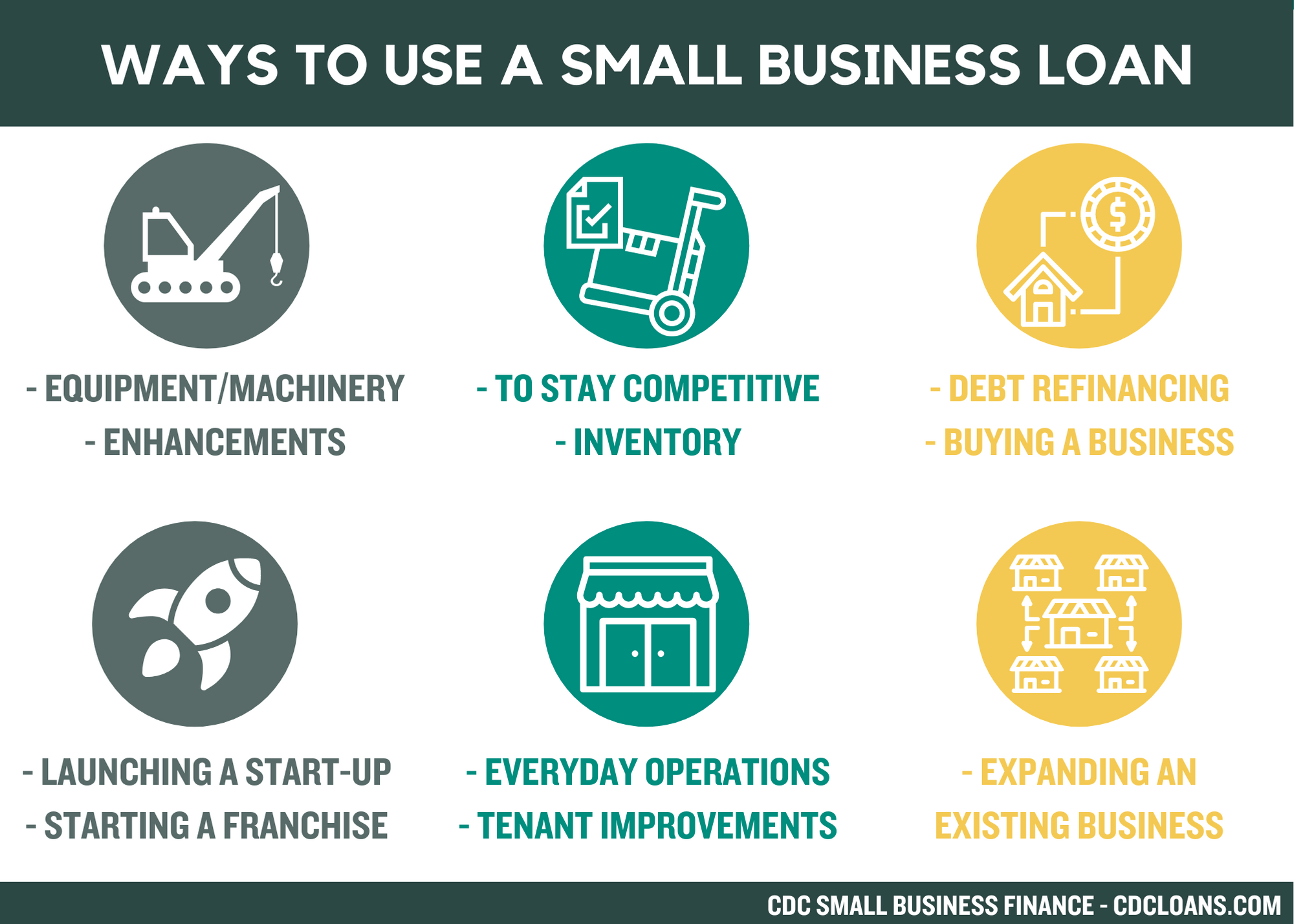
Small businesses seek loans for a myriad of reasons, each critical to their lifecycle and operational health. Startup capital is often the initial driver, covering expenses like licensing, initial inventory, and rent. For established businesses, loans might fund expansion projects, such as opening new locations or entering new markets. Working capital loans are crucial for bridging gaps in cash flow, covering daily operational costs like payroll and utilities. Equipment financing enables the acquisition of necessary machinery or technology, directly impacting productivity. Furthermore, loans can be used to purchase inventory in bulk, allowing businesses to take advantage of discounts or meet seasonal demand. Clearly defining the purpose of the loan will inform the type and amount of financing required.
Overview of Common Small Business Loan Types
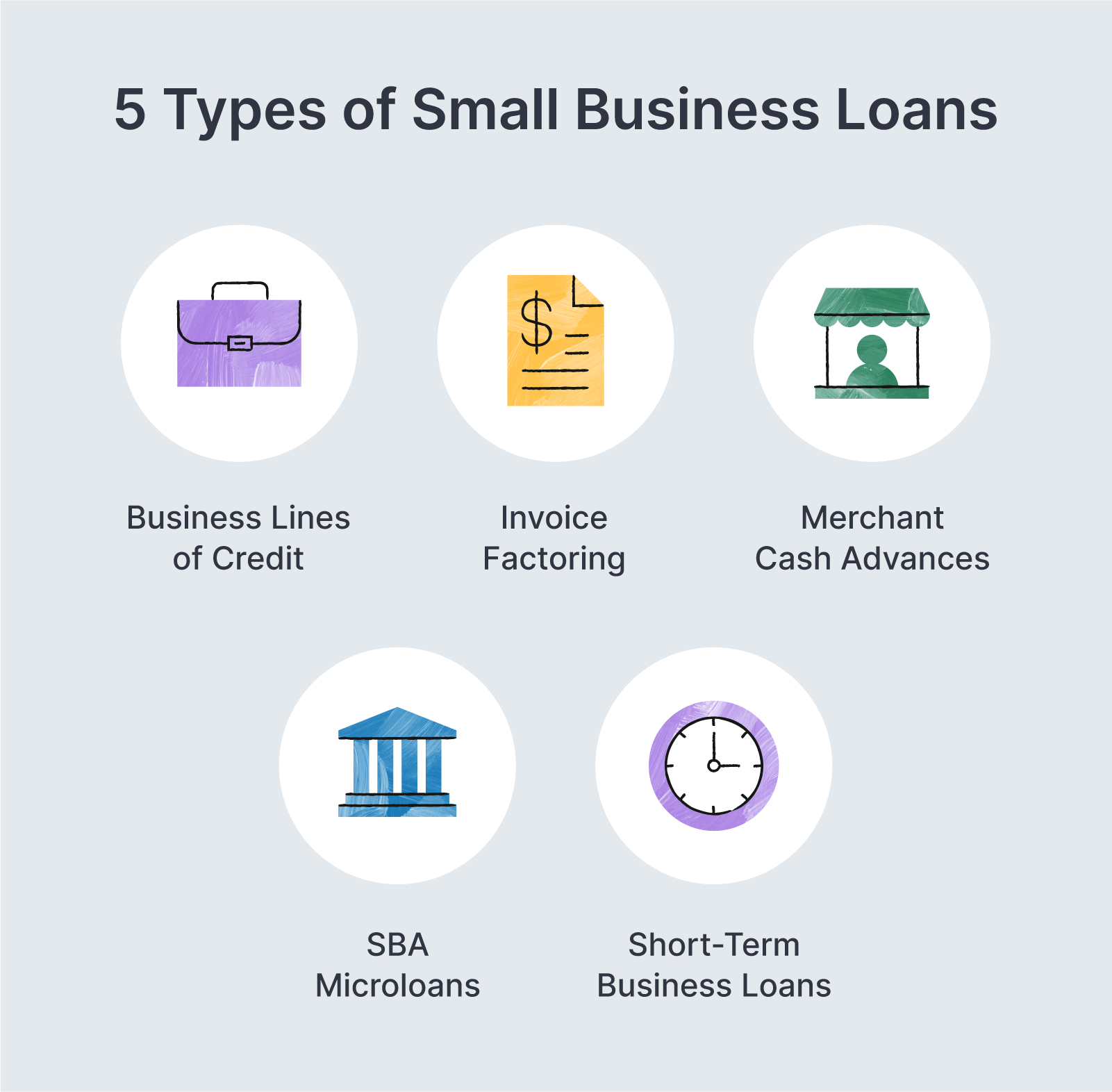
The market offers a diverse range of loan products, each designed to address specific business needs. Term loans are perhaps the most straightforward, providing a lump sum of capital that is repaid with interest over a fixed period. Lines of credit offer flexibility, allowing businesses to draw funds as needed, up to a certain limit, and only pay interest on the amount borrowed. These are ideal for managing fluctuating cash flow.
SBA (Small Business Administration) loans are government-backed loans that provide favorable terms and lower down payments, making them highly attractive, especially for businesses that might not qualify for traditional bank loans. While the SBA doesn’t lend directly, it guarantees a portion of the loan, reducing risk for participating lenders. Equipment financing is specifically for purchasing machinery or vehicles, with the equipment itself often serving as collateral. Invoice factoring allows businesses to sell their outstanding invoices to a third party at a discount for immediate cash, improving liquidity. Lastly, merchant cash advances provide a lump sum in exchange for a percentage of future credit card sales, offering quick access to funds but often at a higher effective interest rate.
Traditional vs. Alternative Lenders
The choice of lender significantly impacts the loan experience. Traditional lenders, primarily banks and credit unions, typically offer competitive interest rates and longer repayment terms. They often require a strong credit history, significant collateral, and a proven track record. The application process can be lengthy and stringent. Alternative lenders, encompassing online lenders and fintech platforms, have emerged as popular options, particularly for businesses seeking faster approvals or those that don’t meet traditional bank criteria. These lenders often have more flexible eligibility requirements and a streamlined application process, though their interest rates can sometimes be higher. Understanding the differences is key to choosing the right partner for your financial needs.
Key Eligibility Criteria for Small Business Loans
Once you understand your funding needs and the types of loans available, the next critical step is to assess your business’s eligibility. Lenders evaluate several factors to determine a borrower’s creditworthiness and the likelihood of repayment. Meeting these criteria significantly enhances your chances of loan approval.
Business Credit Score and Personal Credit Score
Both your business and personal credit scores play a pivotal role in the loan approval process. Your personal credit score (e.g., FICO score) reflects your history of managing personal debts and is particularly important for newer businesses that haven’t yet established a robust business credit profile. A strong personal credit score (typically 680+) signals responsible financial behavior. A business credit score (e.g., Dun & Bradstreet PAYDEX score) assesses your business’s ability to pay its suppliers and creditors. Lenders use these scores to gauge financial reliability. It is crucial to monitor and actively work on improving both scores well in advance of applying for a loan.
Time in Business and Revenue
Lenders often prefer businesses with a proven track record, as it indicates stability and viability. Many traditional lenders require a minimum of two years in business, along with consistent revenue figures. This allows them to evaluate historical financial performance and project future cash flows. Newer businesses or startups, while facing higher hurdles with traditional lenders, might find more success with alternative lenders or specific startup-focused loan programs that prioritize a strong business plan over extensive operating history. Demonstrating steady or growing revenue is critical, as it assures lenders that your business generates sufficient income to cover loan repayments.
Collateral and Guarantees
Some loans, particularly larger ones or those from traditional banks, require collateral. Collateral refers to assets (such as real estate, equipment, inventory, or accounts receivable) that a borrower pledges to a lender as security for repayment of a loan. If the borrower defaults, the lender can seize the collateral to recover their losses. Loans requiring collateral are known as secured loans. For businesses that lack significant assets, an unsecured loan might be an option, though these typically come with higher interest rates due to the increased risk for the lender. Additionally, many small business loans, especially those to sole proprietorships or smaller corporations, require a personal guarantee from the business owner, meaning they are personally responsible for repaying the loan if the business defaults.
Business Plan and Financial Projections
A well-crafted business plan is more than just a roadmap; it’s a persuasive document that articulates your business’s vision, strategy, market analysis, management team, and, critically, its financial viability. Lenders scrutinize business plans to understand your operational model, competitive advantage, and potential for success. Equally important are financial projections, which detail your anticipated revenues, expenses, and profits over a specific period (typically 3-5 years). These projections, backed by realistic assumptions and thorough market research, demonstrate your ability to generate sufficient cash flow to meet loan obligations. A coherent and convincing business plan, coupled with robust financial projections, instills confidence in potential lenders.
Navigating the Small Business Loan Application Process
Once you’ve determined your needs and assessed your eligibility, the next phase involves the actual application. This stage requires meticulous preparation and attention to detail, as a complete and well-presented application can significantly impact the outcome.
Essential Documents to Prepare

The cornerstone of a successful loan application is a comprehensive set of documents. Lenders require these to verify your business’s financial health and operational legitimacy. Key documents typically include:
- Business Plan: As discussed, a detailed narrative of your business.
- Financial Statements: This includes income statements (profit & loss), balance sheets, and cash flow statements for the past 2-3 years. For startups, accurate projections are critical.
- Business and Personal Tax Returns: Typically for the past 2-3 years, these provide an official record of income and expenses.
- Bank Statements: Recent business bank statements (usually 6-12 months) to show cash flow patterns and account activity.
- Legal Documents: Articles of incorporation, business licenses, permits, and any relevant contracts.
- Personal Financial Statement: A summary of your personal assets, liabilities, and net worth.
- Collateral Documentation: If applicable, details and appraisals of assets offered as collateral.
Organizing these documents in advance streamlines the application process and demonstrates your preparedness to the lender.
The Application Journey: From Submission to Approval
The application journey typically begins with an initial inquiry or pre-qualification stage, where you provide basic information about your business. If you meet preliminary criteria, you’ll then proceed to the full application. This involves submitting all required documentation. The lender’s underwriting team will then thoroughly review your financial health, creditworthiness, business plan, and the specific loan request. This due diligence can take anywhere from a few days for online lenders to several weeks for traditional banks. During this period, be prepared to answer follow-up questions or provide additional information. If approved, you’ll receive a loan offer outlining the terms, interest rates, fees, and repayment schedule. Review this offer carefully, seeking professional advice if needed, before signing the loan agreement.
What Lenders Look For
Beyond the documents, lenders are ultimately looking for specific indicators of a healthy, reliable business. Consistent cash flow is paramount, as it’s the primary source for loan repayment. They assess your business’s ability to generate sufficient operating cash to cover all expenses, including debt service. Your debt-to-income ratio (how much debt your business carries relative to its income) is also critical, as a high ratio can signal financial strain. Lenders also consider the stability of your industry and your business’s position within it. A strong management team, a clear market niche, and a well-defined competitive advantage all contribute to a favorable impression. Understanding these underlying concerns allows you to present your business in the most compelling light.
Beyond Traditional Lenders: Alternative Funding Avenues
While traditional banks remain a cornerstone of small business financing, the financial landscape has evolved significantly. A growing number of alternative funding avenues now provide viable options for businesses of all sizes, particularly those that might face challenges with conventional lending criteria.
The Rise of Online Lenders
Online lenders have revolutionized the small business loan market by offering speed, convenience, and more flexible eligibility requirements. Utilizing advanced algorithms and data analytics, these platforms can process applications and disburse funds much faster than traditional banks, sometimes within days. This rapid turnaround is invaluable for businesses needing urgent capital. Online lenders often have less stringent time-in-business or revenue requirements, making them accessible to newer businesses or those with less-than-perfect credit. However, it’s crucial to compare interest rates and fees, as they can sometimes be higher to compensate for the increased risk and convenience. Examples include Kabbage, OnDeck, and Fundbox, each offering different products from lines of credit to short-term loans.
Government-Backed Programs (SBA Loans)
Government-backed programs, primarily those offered through the U.S. Small Business Administration (SBA), are a cornerstone of small business finance. While the SBA does not lend money directly, it guarantees a significant portion of loans made by approved lenders (banks, credit unions, and some non-profit organizations). This guarantee reduces the risk for lenders, encouraging them to provide loans to businesses that might otherwise not qualify. SBA loans, such as the 7(a) loan program (the most common and flexible), 504 loan program (for real estate and equipment), and microloan program, typically feature lower interest rates, longer repayment terms, and lower down payments compared to conventional loans. While the application process can be more extensive, the favorable terms often make the effort worthwhile for eligible businesses.
Niche Financing Options
Beyond the mainstream, several niche financing options cater to specific business needs or stages. Crowdfunding platforms (like Kickstarter or Indiegogo for rewards-based, or Mainvest for investment-based) allow businesses to raise capital from a large number of individuals, often in exchange for a product, equity, or debt. While not strictly a “loan,” it’s an alternative to traditional debt. Venture capital (VC) and angel investors provide equity financing, typically for high-growth startups with significant potential for return. These investors take an ownership stake in the business in exchange for capital and often mentorship. While not a loan, it’s a critical funding source for certain types of businesses. Other options include factoring (as mentioned earlier), asset-based lending, and grants, which are non-repayable funds often tied to specific industries or projects. Exploring these diverse avenues ensures that businesses can find a funding solution tailored to their unique circumstances and growth trajectory.
Tips for a Successful Loan Application and Responsible Borrowing
Securing a small business loan is just the beginning. To maximize your chances of approval and ensure the loan positively impacts your business, strategic preparation and responsible financial management are key.
Prepare Thoroughly and Present Clearly
The importance of preparation cannot be overstated. Before even approaching a lender, conduct a detailed financial audit of your business. Understand your cash flow, profitability, and debt obligations inside out. Organize all required documents meticulously, ensuring they are up-to-date and accurate. Craft a compelling narrative for your business plan, clearly articulating your vision, market opportunity, and how the loan will be used to achieve specific objectives. When presenting to lenders, be confident, transparent, and ready to answer probing questions. Demonstrating a clear understanding of your business’s financial health and future plans instills trust and confidence in potential lenders. A well-prepared applicant is a serious applicant.
Understand the Terms and Conditions
Once a loan offer is extended, resist the urge to sign immediately. Carefully review every aspect of the loan agreement. Pay close attention to the interest rate (fixed vs. variable), annual percentage rate (APR), repayment schedule, any associated fees (origination fees, closing costs, prepayment penalties), and specific covenants or conditions. Understand the implications of collateral requirements and personal guarantees. If anything is unclear, do not hesitate to ask for clarification from the lender or seek advice from a financial advisor or attorney. Fully understanding the terms and conditions prevents unpleasant surprises down the road and ensures the loan is truly beneficial for your business.
Maintain Strong Financial Discipline Post-Funding
Obtaining a loan is a significant achievement, but responsible management post-funding is crucial for long-term success. Adhere strictly to the repayment schedule to avoid late fees and protect your business credit score. Utilize the funds precisely as outlined in your business plan; avoid diverting capital to unrelated expenses. Continuously monitor your cash flow and financial performance to ensure your business can comfortably meet its debt obligations. Proactive financial management, including regular budgeting and forecasting, helps maintain financial stability and prepares you for future growth or unforeseen challenges. Building a positive repayment history will also make it easier to secure additional financing in the future, should the need arise.
Seek Professional Advice
Navigating the complexities of small business finance can be challenging, and you don’t have to do it alone. Consulting with financial professionals can provide invaluable guidance throughout the entire process. Accountants can help you prepare accurate financial statements, analyze your business’s financial health, and develop realistic projections. Business advisors or consultants can assist with refining your business plan and identifying suitable loan products. Legal counsel can review loan agreements to ensure you understand your obligations and rights. Leveraging expert advice can save you time, avoid costly mistakes, and ultimately position your business for greater financial success.
In conclusion, securing a small business loan is a strategic endeavor that requires diligence, preparation, and a clear understanding of the financial landscape. By thoroughly assessing your needs, understanding eligibility criteria, meticulously preparing your application, and exploring all available funding avenues, you can successfully navigate the process. Furthermore, by embracing responsible borrowing practices and seeking professional guidance, your business can leverage external capital to achieve its growth aspirations and secure a robust financial future.
aViewFromTheCave is a participant in the Amazon Services LLC Associates Program, an affiliate advertising program designed to provide a means for sites to earn advertising fees by advertising and linking to Amazon.com. Amazon, the Amazon logo, AmazonSupply, and the AmazonSupply logo are trademarks of Amazon.com, Inc. or its affiliates. As an Amazon Associate we earn affiliate commissions from qualifying purchases.