
In an increasingly complex financial world, the question “Where should I put my money to grow?” has become more pertinent than ever. For many, simply saving money isn’t enough; the rising cost of living and inflation necessitate a proactive approach to wealth accumulation. Growing your money isn’t just about getting rich; it’s about securing your financial future, achieving your life goals, and building a safety net against unforeseen circumstances. This endeavor requires a blend of strategy, discipline, and a clear understanding of the various investment avenues available.
This article will serve as your comprehensive guide to navigating the investment landscape, offering insights into traditional and modern approaches to growing your wealth. We’ll explore how to align your investment choices with your personal financial situation, risk tolerance, and long-term aspirations, empowering you to make informed decisions that pave the way for a more prosperous tomorrow.
I. Laying the Financial Foundation: Before You Invest
Before you even consider which stocks to buy or real estate to explore, a solid financial foundation is paramount. Rushing into investments without preparation can expose you to unnecessary risks and undermine your long-term goals.
A. Assessing Your Current Financial Health
Understanding where you stand financially is the first critical step. This involves a clear picture of your income, expenses, assets, and liabilities. Creating a detailed budget can highlight areas where you can save more, freeing up capital for investment. It also helps in identifying and prioritizing financial goals, ensuring your investment strategy is aligned with your personal objectives.
B. Building a Robust Emergency Fund
An emergency fund is your financial safety net, typically covering 3-6 months of living expenses. This fund should be easily accessible, ideally in a high-yield savings account. Its purpose is to prevent you from dipping into your investments or incurring high-interest debt when unexpected events like job loss, medical emergencies, or significant home repairs occur. Investing before securing an emergency fund is akin to building a house without a foundation – precarious and risky.
C. Eliminating High-Interest Debt
High-interest debt, such as credit card balances or personal loans, can severely hinder your ability to grow wealth. The interest rates on such debts often far exceed the returns you could realistically achieve through most investments. Prioritizing the elimination of high-interest debt is, in essence, one of the most effective “investments” you can make, as it guarantees a return equal to the interest rate you avoid paying. Focus on strategies like the debt snowball or debt avalanche to tackle these liabilities aggressively.
D. Defining Your Investment Goals and Risk Tolerance
Every investment decision should be anchored to specific goals. Are you saving for a down payment on a house (short-term), retirement (long-term), or your child’s education (medium-term)? Your timeline will significantly influence your investment choices. Equally important is understanding your personal risk tolerance. Are you comfortable with market fluctuations for potentially higher returns, or do you prefer more stable, albeit lower-yielding, options? Matching your investments to your risk profile prevents emotional decisions during market downturns.
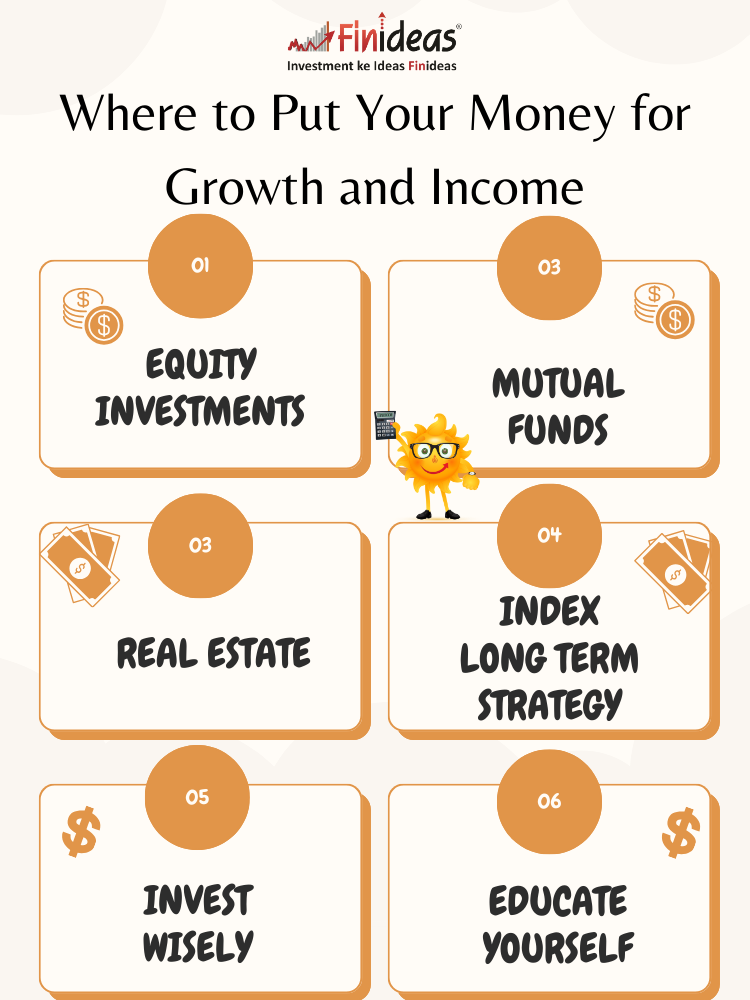
II. Diversifying for Long-Term Wealth: Key Investment Avenues
Once your financial foundation is solid, you can strategically explore various investment avenues designed for growth. Diversification – spreading your investments across different asset classes – is crucial to mitigating risk and optimizing returns.
A. Traditional Market Investments: Stocks and Bonds
The bedrock of most investment portfolios, stocks and bonds offer different risk-return profiles.
1. Stocks: Ownership for Growth
Investing in stocks means buying a share of ownership in a company. Stocks offer the potential for significant capital appreciation as the company grows, along with potential dividend payments.
- Individual Stocks: For those willing to research and monitor specific companies. Higher risk, potentially higher reward.
- Index Funds and Exchange-Traded Funds (ETFs): These funds hold a basket of stocks, often tracking a specific market index (like the S&P 500). They offer instant diversification, lower risk than individual stocks, and are typically more suitable for most investors. They provide a cost-effective way to gain broad market exposure.
2. Bonds: Stability and Income
Bonds represent a loan made by an investor to a borrower (typically a corporation or government entity). In return, the borrower pays interest to the bondholder for a specified period, after which the principal amount is repaid. Bonds are generally considered less risky than stocks and provide a stable income stream, making them a crucial component for balancing a portfolio.
B. Real Estate Investments: Tangible Assets
Real estate can be a powerful wealth-building tool, offering potential for appreciation, rental income, and inflation hedging.
1. Direct Property Ownership
This involves buying physical properties, such as residential homes, rental properties, or commercial buildings. While it can offer substantial returns and control, it also demands significant capital, management effort, and illiquidity.
2. Real Estate Investment Trusts (REITs)
For those who want real estate exposure without direct property management, REITs are an excellent option. REITs are companies that own, operate, or finance income-generating real estate. They trade like stocks on major exchanges, providing liquidity and diversified exposure to various real estate sectors.
C. Alternative Investments: Beyond the Mainstream
While often carrying higher risks, alternative investments can offer unique growth opportunities and further diversification.
1. Precious Metals: Gold and Silver
Considered a safe haven asset, precious metals like gold and silver often perform well during economic uncertainty, acting as a hedge against inflation and currency devaluation. They don’t typically generate income but can preserve purchasing power.
2. Cryptocurrencies: High Risk, High Reward
Digital currencies like Bitcoin and Ethereum have gained prominence as a new asset class. While highly volatile and speculative, they have shown immense growth potential. Investing in cryptocurrencies requires extensive research, a high-risk tolerance, and a willingness to accept significant price swings. It’s generally advisable to allocate only a small portion of your portfolio to such assets.

3. Peer-to-Peer (P2P) Lending
P2P lending platforms connect individual borrowers with individual lenders, often bypassing traditional banks. Lenders can earn interest on their loans, but it involves credit risk and potential for default. Diversifying across many small loans can mitigate this risk.
III. Leveraging Technology for Smarter Investing
The digital age has democratized investing, making it more accessible and efficient for the average individual.
A. Robo-Advisors: Automated and Accessible
Robo-advisors are digital platforms that provide automated, algorithm-driven financial planning services with little to no human supervision. They build and manage diversified portfolios based on your financial goals and risk tolerance, typically at a lower cost than traditional financial advisors. This is an excellent option for new investors or those who prefer a hands-off approach.
B. Discount Brokerages: Empowering Self-Directed Investors
For those who prefer to manage their own investments, online discount brokerages offer platforms to buy and sell stocks, ETFs, bonds, and mutual funds with low commissions (or often commission-free). They provide research tools, educational resources, and a wide range of investment options, putting control directly into the investor’s hands.
C. Financial Planning Software and Apps
A plethora of apps and software are available to help you track your spending, manage your budget, monitor your investments, and even plan for retirement. Tools like Personal Capital, Mint, or YNAB (You Need A Budget) can consolidate your financial picture, helping you stay organized and make informed decisions about where to allocate your money.
IV. Strategies for Consistent Wealth Accumulation
Beyond choosing where to invest, applying sound strategies is crucial for sustained growth.
A. The Power of Compound Interest
Often called the “eighth wonder of the world,” compound interest is the interest you earn on both your initial principal and the accumulated interest from previous periods. Starting early allows your investments more time to compound, dramatically increasing your wealth over decades. Even small, consistent contributions can grow into substantial sums thanks to this powerful force.
B. Dollar-Cost Averaging (DCA)
Dollar-cost averaging involves investing a fixed amount of money at regular intervals, regardless of market fluctuations. This strategy helps mitigate risk by ensuring you buy more shares when prices are low and fewer when prices are high, averaging out your purchase price over time. It removes the emotion from investing and is particularly effective for long-term investors.
C. Regular Portfolio Rebalancing
Over time, different asset classes in your portfolio will grow at varying rates, potentially skewing your original asset allocation. Rebalancing involves periodically adjusting your portfolio back to your target asset allocation by selling assets that have performed well and buying those that have lagged. This strategy helps maintain your desired risk level and can force you to “buy low and sell high.”
D. Tax-Advantaged Accounts
Maximizing contributions to tax-advantaged retirement accounts is a cornerstone of wealth growth.
- 401(k) and 403(b): Employer-sponsored plans offering tax-deferred growth. Contributions are often pre-tax, reducing your current taxable income. Many employers offer matching contributions, which is essentially free money.
- Traditional IRA: Contributions may be tax-deductible, and growth is tax-deferred until retirement.
- Roth IRA: Contributions are made with after-tax money, but qualified withdrawals in retirement are tax-free.
- Health Savings Accounts (HSAs): A triple tax-advantaged account (tax-deductible contributions, tax-free growth, tax-free withdrawals for qualified medical expenses) for those with high-deductible health plans.
V. Beyond Portfolio: Investing in Yourself and New Opportunities
While traditional investments are vital, don’t overlook other avenues that can lead to significant financial growth.
A. Investing in Your Skills and Education
The most valuable asset you possess is often yourself. Investing in continuous learning, skill development, or higher education can lead to increased earning potential, career advancement, and new opportunities. This could involve certifications, online courses, workshops, or even pursuing an advanced degree. The returns on self-investment can often far outweigh those from financial markets.
B. Starting a Side Hustle or Online Business
Leveraging your skills or passions to start a side hustle or an online business can generate additional income streams, which can then be used to accelerate your investment goals. From freelancing and consulting to e-commerce and content creation, the digital economy offers myriad ways to create value and earn extra money outside of your primary employment.
C. Dividend-Paying Stocks and Funds
For those seeking regular income from their investments, dividend-paying stocks or dividend-focused ETFs and mutual funds can be attractive. These investments provide periodic cash payouts to shareholders, which can be reinvested to buy more shares (compounding) or used as a supplemental income stream.
Conclusion
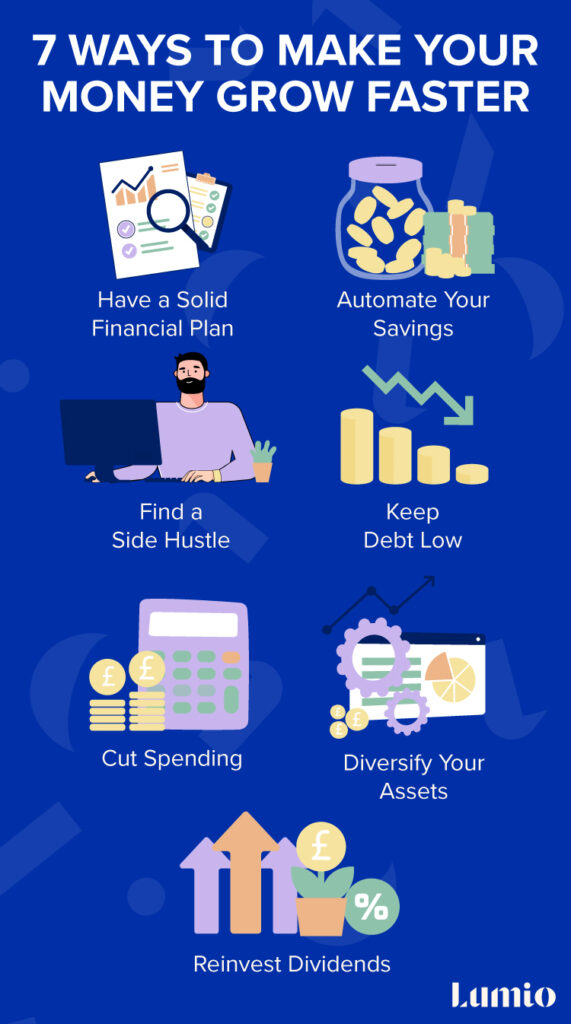
The journey of growing your money is a marathon, not a sprint. It begins with establishing a strong financial foundation, followed by a well-diversified investment strategy tailored to your goals and risk tolerance. Leveraging modern financial tools and adhering to sound principles like dollar-cost averaging and compounding can significantly accelerate your progress.
Remember, there’s no single “best” place to put your money to grow; the optimal approach is a personalized one. Continuously educate yourself, regularly review and adjust your portfolio, and consider seeking advice from a qualified financial advisor, especially as your financial situation becomes more complex. By taking a proactive, informed, and disciplined approach, you can confidently answer the question “Where should I put my money to grow?” and build the financial future you envision.
aViewFromTheCave is a participant in the Amazon Services LLC Associates Program, an affiliate advertising program designed to provide a means for sites to earn advertising fees by advertising and linking to Amazon.com. Amazon, the Amazon logo, AmazonSupply, and the AmazonSupply logo are trademarks of Amazon.com, Inc. or its affiliates. As an Amazon Associate we earn affiliate commissions from qualifying purchases.