
The S&P 500 index stands as a cornerstone of the global financial market, representing the performance of 500 of the largest publicly traded companies in the United States. For decades, it has been a benchmark for the health of the U.S. economy and a highly sought-after investment vehicle for both novice and seasoned investors alike. Its appeal lies in its inherent diversification, historical track record of robust returns, and the relative simplicity of gaining exposure to a broad swath of American corporate power.
Investing in the S&P 500 isn’t about picking individual stocks; it’s about owning a piece of the collective success of these economic giants. From tech behemoths to healthcare innovators and consumer goods stalwarts, the index provides immediate diversification across various sectors, mitigating the risk associated with single-company investments. This article will delve into the mechanisms of how to effectively invest in the S&P 500, exploring the most common and efficient pathways, critical considerations, and best practices for building long-term wealth. Whether you’re looking to start your investment journey or refine an existing portfolio, understanding the S&P 500 is a crucial step towards achieving your financial goals.
Understanding the S&P 500 Index
Before diving into how to invest, it’s essential to grasp what the S&P 500 truly represents and why it has earned such a prominent place in investment strategies worldwide.
What is the S&P 500?
The S&P 500, short for the Standard & Poor’s 500, is a market-capitalization-weighted index of 500 of the largest U.S. publicly traded companies selected by S&P Dow Jones Indices. “Market-capitalization-weighted” means that companies with larger market values have a greater impact on the index’s performance. For instance, a 1% move in Apple or Microsoft (due to their massive market caps) will have a much larger effect on the index than a 1% move in a smaller constituent company.
The companies included in the S&P 500 are chosen based on criteria like market size, liquidity, and sector representation to ensure it accurately reflects the broad U.S. equity market. While it’s commonly referred to as the “top 500” companies, the selection process is more nuanced, aiming for a representative cross-section rather than a strict ranking by market cap alone. This index serves as a bellwether for the U.S. stock market and, by extension, the broader economy.
Why Invest in the S&P 500?
The reasons for the S&P 500’s enduring popularity among investors are compelling and multifaceted:
- Diversification: By investing in a single S&P 500 fund, you instantly gain exposure to 500 different companies across 11 major sectors. This broad diversification significantly reduces the idiosyncratic risk associated with investing in individual stocks. The failure of one or even a few companies within the index will have a minimal impact on your overall portfolio.
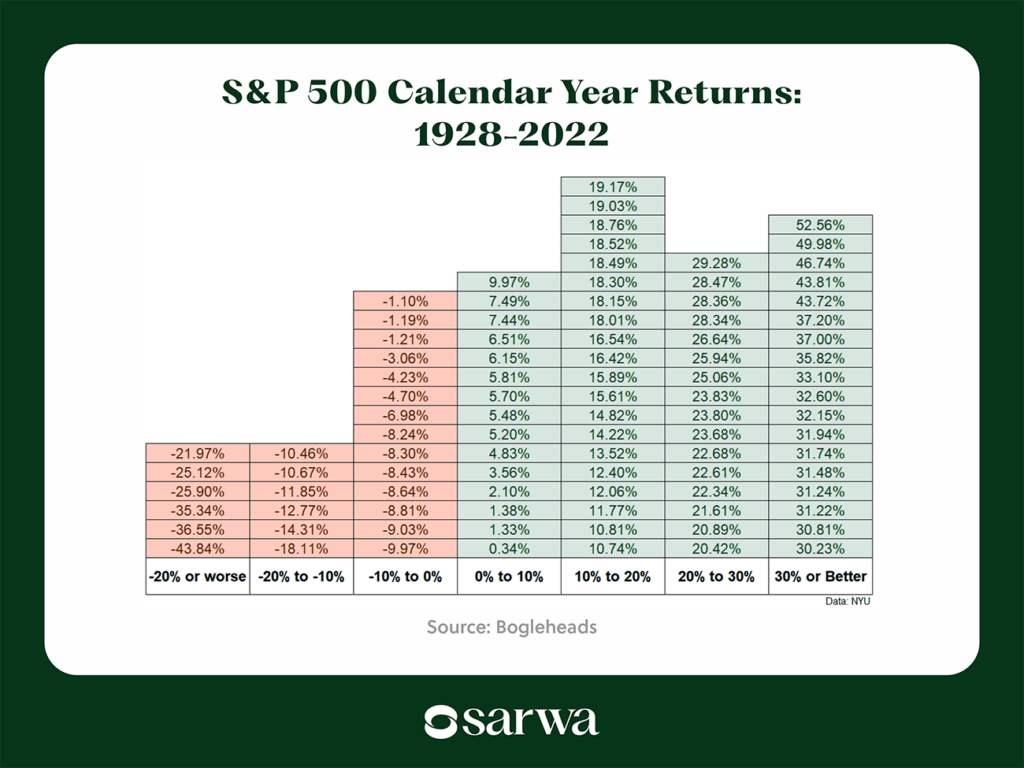
- Historical Performance: Over its long history, the S&P 500 has demonstrated remarkable resilience and growth, averaging annual returns of approximately 10-12% (before inflation) over various long-term periods. While past performance is no guarantee of future results, this consistent growth has made it a powerful engine for wealth creation.
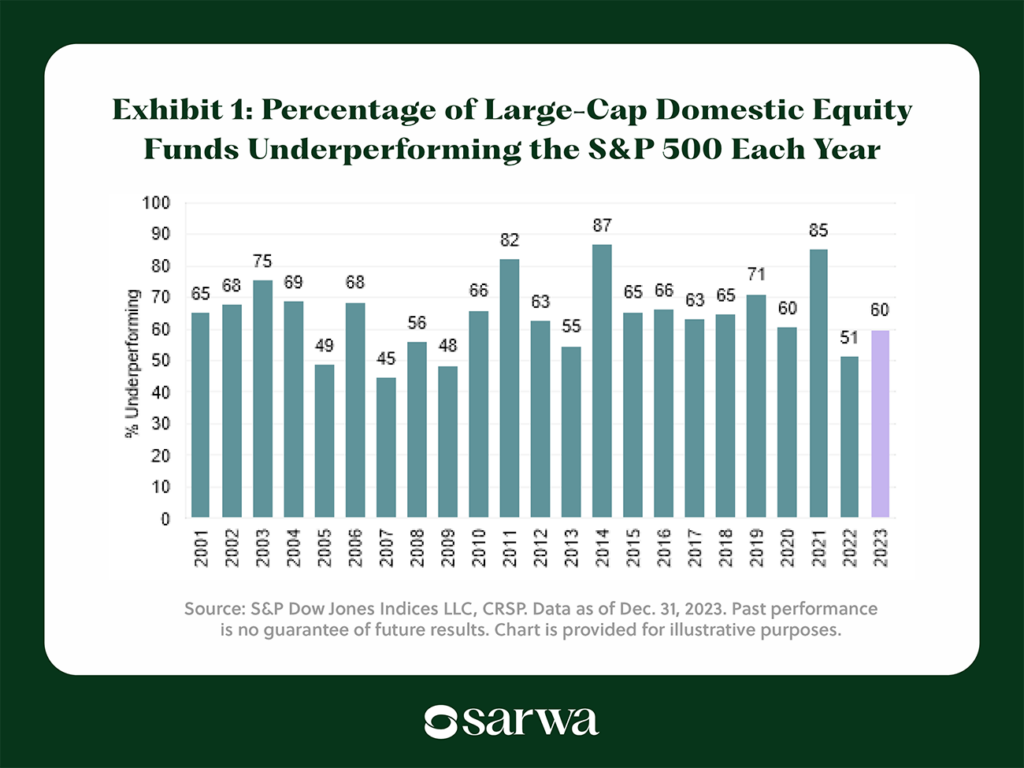
- Lower Risk Compared to Individual Stocks: While all stock market investments carry risk, investing in a diversified index like the S&P 500 is generally considered less risky than picking individual stocks. It’s notoriously difficult for even professional fund managers to consistently beat the S&P 500.
- Simplicity and Low Cost: Investing in an S&P 500 index fund or ETF is incredibly straightforward. You don’t need to spend hours researching individual companies; you simply invest in the market as a whole. Furthermore, the competition among fund providers has driven down expense ratios, making it one of the most cost-effective ways to invest.
- Passive Investing Appeal: For those who prefer a “set it and forget it” approach, S&P 500 investing aligns perfectly with passive investment strategies. It requires minimal ongoing management, freeing up time and reducing the stress often associated with active stock picking.
Primary Ways to Invest in the S&P 500
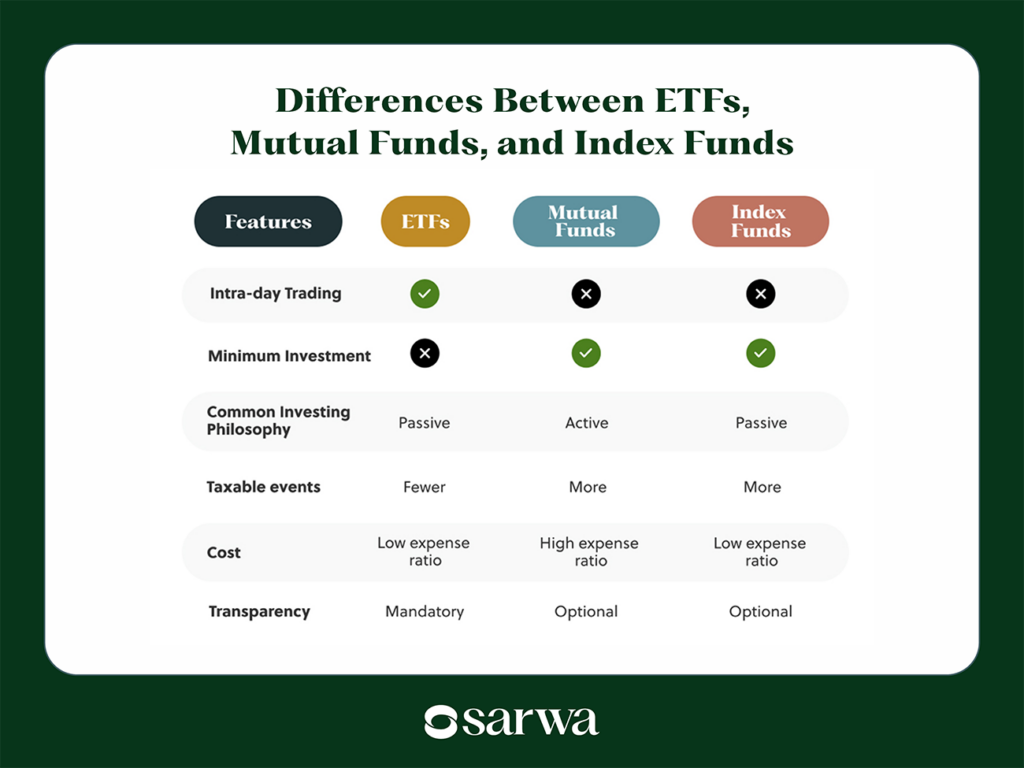
While you cannot directly “buy” the S&P 500 index itself, there are highly efficient financial products designed to mimic its performance. The two most popular and accessible methods are S&P 500 index funds and Exchange-Traded Funds (ETFs).
S&P 500 Index Funds
An S&P 500 index fund is a type of mutual fund that holds all the stocks in the S&P 500 index, in the same proportions as the index itself. The goal of an index fund is not to “beat” the market, but to match the market’s performance.
- How They Work: When you invest in an S&P 500 index fund, you are pooling your money with other investors. The fund manager then uses this collective capital to purchase the underlying stocks that comprise the S&P 500. The fund’s Net Asset Value (NAV) is calculated once a day, typically after the market closes, and all buy and sell orders are executed at that price.
- Advantages:
- Automatic Diversification: Immediate exposure to 500 companies.
- Professional Management (Passive): While managed, the strategy is passive (tracking the index), leading to lower management fees (expense ratios).
- Easy to Understand: Simple concept for new investors.
- Minimum Investment: Some funds have minimum investment requirements, but many offer low entry points.
- Disadvantages:
- Traded Once Daily: You can only buy or sell shares at the end-of-day NAV, which means you don’t have real-time pricing flexibility.
- Potential Minimums: Some traditional mutual funds may have initial minimum investment requirements (e.g., $1,000 or $3,000), though many brokerages offer commission-free index funds with lower or no minimums.
S&P 500 Exchange-Traded Funds (ETFs)
S&P 500 ETFs are similar to index funds in that they aim to track the S&P 500 index. However, they are structured differently and trade on stock exchanges like individual stocks throughout the day.
- How They Work: An S&P 500 ETF holds a basket of stocks designed to mirror the S&P 500. Unlike mutual funds, ETFs are priced and traded throughout the day on exchanges, allowing investors to buy and sell shares at current market prices. This intra-day trading flexibility is a key differentiator. Popular S&P 500 ETFs include SPDR S&P 500 ETF Trust (SPY), iShares Core S&P 500 (IVV), and Vanguard S&P 500 ETF (VOO).
- Advantages:
- Real-Time Trading: Can be bought and sold at any time the market is open, just like stocks.
- Lower Expense Ratios: ETFs generally boast even lower expense ratios than traditional mutual funds due to their structure and lower administrative overhead.
- No Minimum Investment: You can buy as little as one share, making them highly accessible.
- Tax Efficiency: ETFs are often more tax-efficient than mutual funds, particularly in taxable accounts, due to their creation/redemption mechanism.
- Disadvantages:
- Brokerage Commissions: While many brokers now offer commission-free ETF trading, some still charge fees, which can eat into returns for frequent traders or small investments.
- Bid-Ask Spread: Like stocks, ETFs have a bid-ask spread, which is the difference between the highest price a buyer is willing to pay and the lowest price a seller is willing to accept. This can be a minor transaction cost.
Advanced Investment Options (Brief Mention)
For sophisticated investors, there are other, more complex ways to gain exposure to the S&P 500, but these carry significantly higher risk and are not recommended for most retail investors:
- Futures Contracts: Allow investors to bet on the future direction of the S&P 500 index without owning the underlying assets. These are highly leveraged and volatile.
- Options: Provide the right, but not the obligation, to buy or sell the S&P 500 index or related ETFs at a specific price by a certain date. These are complex, can expire worthless, and are often used for speculation or hedging.
For the vast majority of investors seeking long-term growth, S&P 500 index funds and ETFs are the most appropriate and effective vehicles.
Setting Up Your S&P 500 Investment Journey
Once you’ve decided that investing in the S&P 500 aligns with your financial goals, the next step is to set up the practical aspects of your investment.
Choose a Brokerage Account
The first prerequisite is to open an investment account with a reputable brokerage firm. You have several types of accounts to consider, each with different tax implications:
- Individual Retirement Accounts (IRAs):
- Roth IRA: Contributions are made with after-tax money, and qualified withdrawals in retirement are tax-free. Excellent for those who expect to be in a higher tax bracket in retirement.
- Traditional IRA: Contributions may be tax-deductible, and earnings grow tax-deferred. Withdrawals in retirement are taxed as ordinary income. Good for those who expect to be in a lower tax bracket in retirement.
- 401(k) or 403(b): If your employer offers a retirement plan, check if an S&P 500 index fund or ETF is available as an investment option. These plans offer significant tax advantages and often come with employer matching contributions, which is essentially free money.
- Taxable Brokerage Account: A standard investment account where contributions are made with after-tax money, and gains are taxed annually or upon sale. This account offers flexibility as there are no contribution limits or withdrawal restrictions like IRAs, making it suitable for short-to-medium term goals or investing beyond retirement account limits.
When choosing a brokerage, consider factors like account minimums, fees (trading commissions, account maintenance), research tools, customer service, and the availability of the specific S&P 500 funds or ETFs you’re interested in. Reputable brokers include Charles Schwab, Fidelity, Vanguard, E*TRADE, and Merrill Edge.
Research and Select Your Investment Vehicle
Once your account is open, you’ll need to select the specific S&P 500 index fund or ETF.
- Index Fund vs. ETF: Decide which structure better suits your needs. If you prefer automated investments and don’t need real-time trading, an index mutual fund might be suitable, especially if your brokerage offers proprietary funds with low or no transaction fees. If you value intra-day trading flexibility and typically lower expense ratios, an ETF is likely a better choice.
- Expense Ratios: This is paramount. The expense ratio is the annual fee charged by the fund as a percentage of your investment. A difference of even 0.1% or 0.2% can equate to thousands of dollars over decades due to compounding. Look for funds with ultra-low expense ratios, often below 0.10% (e.g., Vanguard’s VOO, Fidelity’s FXAIX, Schwab’s SWPPX, iShares’ IVV).
- Tracking Error: While less critical for major S&P 500 funds, tracking error refers to how closely the fund’s performance matches the actual index. Major funds from reputable providers typically have minimal tracking error.
- Fund Provider: Stick with well-established fund providers like Vanguard, iShares (BlackRock), Fidelity, and Charles Schwab, which are known for their low-cost, high-quality index products.
Determine Your Investment Strategy
Developing a clear investment strategy ensures you stay disciplined and on track toward your financial objectives.
- Dollar-Cost Averaging (DCA): This highly recommended strategy involves investing a fixed amount of money at regular intervals (e.g., $100 every month), regardless of the market’s performance. DCA smooths out the average purchase price over time, reducing the risk of buying all your shares at a market peak. It promotes consistency and takes the emotion out of investing.
- Lump Sum Investing: If you have a large sum of money available (e.g., an inheritance), studies generally suggest that investing it all at once (lump sum) tends to outperform DCA over the long term, as the market typically trends upwards. However, this strategy carries higher short-term risk, as a market downturn immediately after your investment could be psychologically challenging.
- Long-Term Horizon: The S&P 500 is an investment designed for the long haul. Its historical returns are most impressive over periods of 10, 20, or even 30+ years, allowing the power of compounding to work its magic and ride out market fluctuations. Be prepared to hold your investment for many years, ideally decades.
Key Considerations and Best Practices
Successful S&P 500 investing extends beyond merely buying a fund; it involves understanding ongoing management, potential pitfalls, and how it fits into your broader financial plan.
The Power of Compounding and Long-Term Horizon
This cannot be overstressed. The S&P 500’s average historical returns, when coupled with a long investment horizon, create significant wealth through compounding. Compounding means that the returns you earn on your investment also start earning returns themselves. The earlier you start and the longer you stay invested, the more powerful this effect becomes. Resisting the urge to sell during market downturns is crucial, as significant recovery periods often follow declines. Patience and discipline are your most valuable assets.
Expense Ratios and Taxes Matter
As mentioned, low expense ratios are critical. Even a seemingly small difference of 0.5% can erode a substantial portion of your returns over 30 or 40 years. Always opt for the lowest-cost option available that meets your needs.
Tax efficiency is also important, especially in taxable brokerage accounts. When holding S&P 500 funds, you’ll typically receive quarterly dividend distributions, which are taxable. If you sell shares for a profit, you’ll incur capital gains taxes. Understanding the difference between short-term (held for less than a year) and long-term (held for more than a year) capital gains rates is essential for tax planning. Utilizing tax-advantaged accounts like IRAs and 401(k)s can shield your gains from annual taxation, allowing for faster compounding.
Diversification Beyond the S&P 500
While the S&P 500 itself offers excellent diversification within large-cap U.S. equities, a truly robust portfolio typically includes diversification beyond just the S&P 500. Consider adding:
- International Stocks: Exposure to developed and emerging markets can provide additional growth opportunities and further reduce correlation risk.
- Bonds: Government or corporate bonds can act as a buffer during equity market downturns, providing stability and income. They are generally less volatile than stocks.
- Real Estate: Through REITs (Real Estate Investment Trusts) or direct ownership, real estate can offer inflation protection and income.
The optimal allocation will depend on your age, risk tolerance, and financial goals. The S&P 500 can form a significant core of your equity holdings, but it’s rarely the entirety of a well-rounded portfolio.
Rebalancing Your Portfolio (If Applicable)
If you hold a diversified portfolio that includes the S&P 500 along with other asset classes (like bonds or international stocks), periodic rebalancing is important. Over time, the performance of different asset classes can cause your portfolio’s allocation to drift from your target. Rebalancing involves selling some of the assets that have grown (and are now overweight) and buying more of the assets that have underperformed (and are now underweight) to bring your portfolio back to its desired allocation. This strategy can help manage risk and enforce a “buy low, sell high” discipline. For a portfolio solely focused on an S&P 500 fund, rebalancing within that specific fund isn’t necessary, as the fund itself rebalances its holdings to match the index.
Conclusion
Investing in the S&P 500 is a proven, intelligent strategy for building long-term wealth. Its inherent diversification, historical growth, and cost-efficiency make it an ideal choice for a wide range of investors. By understanding what the S&P 500 represents, choosing between index funds and ETFs, establishing a disciplined investment strategy like dollar-cost averaging, and committing to a long-term horizon, you can harness the power of America’s leading companies to achieve your financial aspirations.
Remember that while the S&P 500 offers substantial benefits, it is not without risk, and market fluctuations are a natural part of investing. The key is to remain patient, avoid emotional reactions to short-term market movements, and consistently contribute to your investments. Start early, invest regularly, and let the incredible engine of American innovation work for you. With a clear strategy and a commitment to these best practices, investing in the S&P 500 can be a powerful cornerstone of your journey toward financial independence.
aViewFromTheCave is a participant in the Amazon Services LLC Associates Program, an affiliate advertising program designed to provide a means for sites to earn advertising fees by advertising and linking to Amazon.com. Amazon, the Amazon logo, AmazonSupply, and the AmazonSupply logo are trademarks of Amazon.com, Inc. or its affiliates. As an Amazon Associate we earn affiliate commissions from qualifying purchases.