
In the vast and often volatile world of financial markets, few indicators capture the attention of investors, analysts, and the general public quite like the Dow Jones Industrial Average (DJIA). More than just a number, the “Dow” serves as a daily barometer for the health and sentiment of the U.S. stock market, and by extension, the broader economy. When people ask, “Where is Dow Jones today?” they are typically seeking an immediate snapshot of market performance, often as a first step to understanding current economic trends and assessing the impact on their investments.
This question, seemingly simple, opens a gateway to a deeper exploration of market mechanics, economic indicators, and investment strategies. Today’s Dow reflects a complex interplay of corporate earnings, global events, monetary policy, and investor psychology. For both seasoned investors and curious observers, understanding its current position and the forces driving it is crucial for navigating the financial landscape and making informed decisions. This article delves into what the Dow represents, how to track its movements, the key factors influencing its performance, and its enduring significance in the modern investment paradigm.

Understanding the Dow Jones Industrial Average
To fully grasp the significance of “where the Dow is today,” one must first understand what the Dow Jones Industrial Average actually is. Far from being a mere collection of all stocks, the DJIA is a carefully curated index with a rich history that reflects the evolution of American industry.
What is the DJIA? A Historical Perspective
The Dow Jones Industrial Average was created by Charles Dow in May 1896, making it one of the oldest and most recognized stock market indices in the world. Initially comprising 12 industrial companies, its primary purpose was to provide a clear, daily measure of the stock market’s performance, particularly focusing on the industrial sector that dominated the American economy at the time. Over a century later, while the index has expanded to 30 companies and its composition has dramatically shifted to reflect a more diverse, modern economy – including technology, finance, and healthcare giants – its fundamental role as a benchmark for large, established U.S. companies remains central.
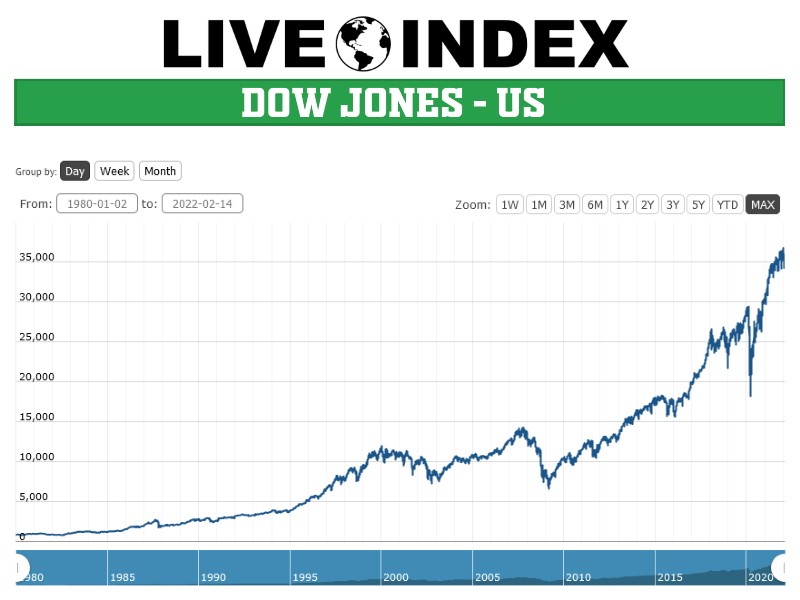
Its long history means the Dow has weathered countless economic cycles, market crashes, and periods of unprecedented growth, offering a historical lens through which to view the enduring resilience and transformative power of the American corporate landscape. From the Roaring Twenties to the Great Depression, the Dot-Com Bubble to the 2008 financial crisis, and more recently, the global pandemic, the Dow’s trajectory has often mirrored the nation’s economic journey.
The “Blue-Chip” Benchmark: Components and Calculation
Today, the DJIA consists of 30 “blue-chip” companies – large, well-established, and financially sound corporations that are leaders in their respective industries. These are not just any companies; they are selected to represent a broad cross-section of the U.S. economy and are generally considered bellwethers for economic health. Notable examples often include Apple, Microsoft, Goldman Sachs, Johnson & Johnson, Coca-Cola, and Walmart, though the exact components are reviewed and occasionally changed by the S&P Dow Jones Indices committee to maintain relevance and representation.
Crucially, the DJIA is a price-weighted index, which distinguishes it from market-capitalization-weighted indices like the S&P 500. This means that stocks with higher share prices have a greater impact on the index’s value than those with lower share prices, regardless of the company’s overall market capitalization. While this methodology has drawn criticism for not fully reflecting the true economic weight of its constituent companies, its simplicity and historical continuity have ensured its enduring popularity. The index’s value is calculated by summing the prices of the 30 stocks and dividing by a “Dow divisor,” a number adjusted for stock splits, dividends, and other structural changes to ensure the index’s historical continuity.
Why the Dow Matters to Investors
For many investors, the Dow is more than just a historical relic; it’s a vital indicator. Its movements are often reported first by financial news outlets, shaping initial perceptions of market performance. While it only represents 30 companies, these companies are so large and influential that their combined performance offers a significant snapshot of corporate America’s health. For long-term investors, the Dow’s upward trend over decades underscores the power of compounding and the general growth trajectory of the U.S. economy. For those focused on diversification, understanding the Dow’s behavior can inform decisions about sector allocation or the overall risk appetite of the market. Furthermore, many financial products, such as exchange-traded funds (ETFs) and mutual funds, track the Dow, making its movements directly relevant to the performance of these investment vehicles.
Tracking the Dow’s Real-Time Movements
In today’s interconnected world, tracking the Dow’s real-time movements is easier than ever. Staying abreast of its daily fluctuations is crucial for anyone looking to understand immediate market sentiment and potential investment opportunities or risks.
Essential Tools for Monitoring the Market
To answer “where is Dow Jones today” with precision, individuals can access a wealth of financial tools and platforms:
- Financial News Websites: Major financial news outlets like Bloomberg, Reuters, The Wall Street Journal, CNBC, and Yahoo Finance provide live updates, charts, and breaking news related to the Dow’s performance throughout the trading day.
- Trading Platforms and Brokerage Accounts: Most online brokerage platforms offer real-time quotes for the DJIA, often alongside personalized portfolio tracking and advanced charting tools. These platforms are indispensable for active traders and serious investors.
- Mobile Apps: Numerous financial apps provide convenient access to market data, customizable watchlists, and alerts, allowing users to monitor the Dow and other indices on the go.
- Dedicated Market Data Services: Professional traders and institutions often subscribe to specialized data services that provide highly granular, real-time information, often with advanced analytical capabilities.
These tools typically display the Dow’s current point value, its change in points from the previous day’s close, and the percentage change. They also often include charts showing intraday performance, historical trends, and related news, offering a comprehensive view of the index’s status.
Decoding Daily Fluctuations: What Drives the Numbers
The daily movement of the Dow is a complex symphony of forces. While simply seeing a number is informative, understanding why that number is moving is paramount. Daily fluctuations can be attributed to:
- Company-Specific News: Earnings reports, mergers and acquisitions, product announcements, and leadership changes within any of the 30 Dow components can significantly impact that stock’s price, and due to the price-weighted nature, ripple through the entire index.
- Economic Data Releases: Reports on inflation (CPI, PPI), unemployment (jobless claims, non-farm payrolls), GDP growth, manufacturing activity (ISM reports), and consumer confidence can shift market expectations about the economy and corporate profits, influencing the Dow.
- Geopolitical Events: International trade disputes, political instability, wars, and major global events can create uncertainty, leading investors to re-evaluate risk and prompting broad market reactions.
- Market Sentiment and Investor Psychology: Fear and greed are powerful forces in the market. A positive news cycle or general optimism can lead to buying pressure, driving the Dow up, while negative headlines or widespread pessimism can trigger sell-offs.
Analyzing these drivers in conjunction with the Dow’s current value provides a much richer understanding than merely observing the numbers in isolation.
Key Factors Influencing the Dow’s Performance
The Dow’s daily fluctuations are just the surface; deeper currents of economic, corporate, and global dynamics constantly shape its long-term trajectory. Understanding these foundational factors is essential for any investor seeking to make sense of market movements.
Economic Indicators and Monetary Policy
Central to the Dow’s performance are overarching economic indicators. A robust economy, characterized by strong GDP growth, low unemployment, and controlled inflation, generally provides a favorable environment for corporate earnings, leading to higher stock prices. Conversely, signs of economic contraction or recession tend to weigh heavily on the index.

Crucially, the actions of central banks, particularly the U.S. Federal Reserve, through their monetary policy, exert immense influence. Decisions regarding interest rates, quantitative easing, and other policy tools directly impact borrowing costs for businesses and consumers, corporate profitability, and the attractiveness of equity investments versus fixed-income alternatives. For instance, higher interest rates can increase borrowing costs for companies, potentially slowing growth and making equities less appealing, thus pressuring the Dow downwards. Conversely, lower rates often stimulate economic activity and make stocks more attractive.
Corporate Earnings and Sectoral Impact
At its core, the stock market reflects the aggregate future earnings potential of companies. Therefore, the earnings reports of the 30 Dow components are incredibly significant. Strong earnings and positive outlooks from these blue-chip companies signal corporate health and can propel the index higher. Missed earnings estimates or cautious forecasts, even from a few major components, can trigger widespread selling.
Furthermore, trends within specific sectors represented in the Dow play a critical role. For example, robust performance in the technology sector (e.g., Apple, Microsoft, Salesforce) can lift the entire index, while challenges in the financial sector (e.g., Goldman Sachs, JPMorgan Chase) or industrial giants (e.g., Boeing, Caterpillar) can drag it down. Analysts constantly scrutinize these sectoral trends to forecast the Dow’s likely direction.
Geopolitical Events and Global Sentiment
In an increasingly interconnected global economy, geopolitical events far from Wall Street can have immediate and profound impacts on the Dow. Trade wars, international conflicts, sanctions, significant political shifts in major economies, or even widespread natural disasters can introduce uncertainty, disrupt supply chains, affect corporate profits, and shift investor confidence globally. For example, tensions between major economic powers can lead to tariffs, impacting the revenue and cost structures of multinational Dow components and causing market jitters. Conversely, the resolution of such tensions or positive international agreements can spur market rallies. Global investor sentiment, often influenced by these events, can quickly shift from risk-on to risk-off, leading to capital flows that impact the U.S. market.
Technical Analysis and Market Psychology
Beyond fundamental economic and corporate data, market psychology and technical analysis also play a role in the Dow’s movements. Technical analysts study historical price patterns, volume, and indicators to predict future price action. While not universally accepted, many traders and institutional investors use these methods to identify support and resistance levels, trend lines, and potential reversal patterns for the DJIA.
Moreover, the collective psychology of millions of investors – fear, greed, exuberance, panic – can create self-fulfilling prophecies. Positive momentum can attract more buyers, pushing the Dow higher, while a wave of negative sentiment can trigger a cascade of selling. Major news events, whether positive or negative, can amplify these psychological responses, leading to sharp intraday swings that may not always align with underlying economic fundamentals. Understanding these emotional undercurrents is vital for interpreting short-term market volatility.
The Dow’s Role in Investment Strategy
While the Dow’s daily movements provide a snapshot, its real utility in investment strategy comes from understanding its long-term trends and how it fits into a broader portfolio. For investors, the Dow is less about today’s precise number and more about its implications for future wealth building.
Beyond the Headlines: Interpreting Market Trends
For savvy investors, “where is Dow Jones today” is merely the starting point for a deeper inquiry. Instead of reacting to every daily fluctuation, experienced individuals look for underlying trends. Is the Dow consistently making higher highs and higher lows, indicating a bull market? Or is it struggling to break through resistance levels, signaling potential weakness? They also compare the Dow’s performance to other indices, like the S&P 500 (which is broader and market-cap-weighted) and the Nasdaq Composite (tech-heavy), to gain a comprehensive view of market breadth and leadership. A strong Dow but a weak Nasdaq might suggest a rotation from growth to value stocks, for example. Interpreting these trends helps investors position their portfolios strategically, rather than being swayed by daily noise.
Investing in the Dow: Indices, ETFs, and Individual Stocks
Directly investing in the Dow Jones Industrial Average as a whole is not possible, as it’s just an index. However, investors can gain exposure to its performance through several avenues:
- ETFs (Exchange-Traded Funds) and Mutual Funds: The most common way to invest in the Dow is through funds that track the index. The most popular is the SPDR Dow Jones Industrial Average ETF Trust (ticker: DIA), often referred to as “Diamonds.” These funds hold shares of the 30 Dow components in proportions that mirror the index, providing instant diversification and tracking the Dow’s performance.
- Individual Dow Components: Investors can also choose to buy individual stocks that are part of the Dow. This approach allows for selective investing based on a company’s specific fundamentals and future prospects, but it sacrifices the diversification offered by an index fund.
- Derivatives: More advanced investors and traders might use options or futures contracts tied to the DJIA for hedging or speculative purposes, though these carry higher risks.
Choosing the right method depends on an investor’s risk tolerance, investment horizon, and knowledge level. For most, an index-tracking ETF offers a simple, cost-effective way to participate in the performance of these blue-chip companies.
Long-Term Perspective vs. Short-Term Volatility
Perhaps the most crucial aspect of the Dow’s role in investment strategy is the distinction between short-term volatility and long-term growth. While the Dow can experience significant daily, weekly, or monthly swings due to economic news, corporate reports, or geopolitical events, its historical trajectory has been overwhelmingly upward. Investors with a long-term perspective (years to decades) often view these short-term dips as opportunities to buy more assets at a lower price. Conversely, those focused on short-term trading must be acutely aware of volatility and employ strategies to manage risk effectively. A common adage is that “time in the market beats timing the market,” underscoring the power of patience and a long-term outlook when dealing with major indices like the Dow.
Navigating the Future: Outlook for the Dow and Investors
Looking ahead, the Dow Jones Industrial Average will continue to be a vital indicator for investors. Its future movements will be shaped by evolving economic landscapes, technological advancements, and the ever-present dynamic of human behavior in financial markets.
Anticipating Economic Shifts and Market Resilience
The Dow’s trajectory in the coming years will largely hinge on global economic growth, inflation trends, and the corresponding monetary policy responses from central banks. Factors such as technological innovation (e.g., AI, renewable energy), shifts in consumer behavior, demographic changes, and the ongoing adaptation to climate change will undoubtedly influence the profitability and competitive landscape of its constituent companies. The resilience of the American corporate sector, particularly the blue-chip companies in the Dow, to adapt to these changes will be key to sustaining long-term growth. Investors should remain vigilant about macroeconomic forecasts, understand the implications of fiscal policies, and assess the robustness of corporate earnings in a dynamic environment.
Strategies for Prudent Investing in a Dynamic Market
Given the ongoing shifts, a prudent investment strategy will remain paramount. This includes:
- Diversification: While investing in the Dow provides exposure to large-cap U.S. companies, a truly diversified portfolio should include other asset classes, international equities, and potentially smaller-cap stocks to mitigate risk.
- Regular Portfolio Review: Periodically rebalancing your portfolio ensures that your asset allocation aligns with your risk tolerance and financial goals, especially as market conditions evolve.
- Long-Term Horizon: Resisting the urge to make emotional decisions based on short-term Dow fluctuations is critical. A focus on long-term goals and consistent investing through various market cycles is historically proven to be more effective.
- Continuous Learning: Staying informed about economic trends, market news, and the specific performance of Dow components empowers investors to make more informed decisions.
The Enduring Significance of the Dow
Despite criticisms regarding its price-weighted methodology and limited scope compared to broader indices, the Dow Jones Industrial Average retains its iconic status. It continues to be a simple yet powerful gauge of investor sentiment and corporate performance, representing a collection of companies that have historically demonstrated remarkable resilience and innovation. For millions, “where is Dow Jones today” will remain the first question asked when evaluating the pulse of the financial markets. Its enduring significance lies not just in its numerical value, but in its historical context, its representation of corporate America’s giants, and its role as a key touchstone in the narrative of financial progress and challenge. As markets continue to evolve, the Dow will undoubtedly evolve with them, remaining a focal point for understanding the investment landscape.
aViewFromTheCave is a participant in the Amazon Services LLC Associates Program, an affiliate advertising program designed to provide a means for sites to earn advertising fees by advertising and linking to Amazon.com. Amazon, the Amazon logo, AmazonSupply, and the AmazonSupply logo are trademarks of Amazon.com, Inc. or its affiliates. As an Amazon Associate we earn affiliate commissions from qualifying purchases.