
In the dynamic world of investing, discerning the most effective and accessible avenues for wealth creation can be a daunting task. Amidst a plethora of complex strategies and high-fee products, the S&P index fund stands out as a beacon of simplicity, efficiency, and proven long-term performance. For many, it represents a cornerstone of a sound financial strategy, offering broad market exposure without the complexities of active stock picking. This article will demystify what an S&P index fund is, how it functions, its myriad benefits, and crucial considerations for anyone looking to harness its power for their financial future.

At its core, an S&P index fund is a type of investment fund that aims to replicate the performance of the S&P 500 Index. Instead of having a fund manager actively select individual stocks, these funds passively invest in all (or a representative sample) of the companies included in the S&P 500, in proportion to their market capitalization. This passive approach significantly differentiates it from actively managed funds, which attempt to outperform the market through strategic buying and selling decisions. The beauty of an S&P index fund lies in its ability to offer instant diversification across 500 of America’s largest and most influential companies, providing investors with a direct stake in the broader U.S. economy’s growth.
Understanding the S&P 500 Index
To truly grasp the essence of an S&P index fund, one must first understand the benchmark it tracks: the S&P 500 Index. This index is not merely a random collection of companies; it is a meticulously constructed measure designed to reflect the health and direction of the U.S. equity market.
A Benchmark for the U.S. Stock Market
The S&P 500, short for the Standard & Poor’s 500, is a stock market index that represents 500 of the largest publicly traded companies in the United States. It is a market-capitalization-weighted index, meaning companies with larger market values have a greater impact on the index’s performance. Widely considered one of the best gauges of large-cap U.S. equities and the overall stock market, the S&P 500 is maintained by S&P Dow Jones Indices. Its movements are regularly reported in financial news and serve as a vital indicator for economists, investors, and policymakers alike. Over its long history, the S&P 500 has demonstrated a remarkable upward trend, albeit with periodic fluctuations, making it a compelling long-term investment vehicle.
The Selection Criteria
Inclusion in the S&P 500 is not automatic; companies must meet specific criteria set by the index committee. These criteria include market capitalization, liquidity, public float, sector representation, and domicile. Companies must be U.S.-based, have a market capitalization exceeding a certain threshold (which adjusts periodically), be highly liquid, and have a public float of at least 10% of their shares. Furthermore, the committee considers financial viability, requiring companies to have positive aggregate earnings over the past four consecutive quarters. These stringent rules ensure that the S&P 500 remains a robust and representative benchmark of leading U.S. companies across various sectors, ranging from technology and finance to healthcare and industrials. The committee periodically rebalances the index, adding and removing companies to maintain its relevance and reflect changes in the market landscape.
The Mechanics of an S&P Index Fund
An S&P index fund works by mirroring the composition and weighting of the S&P 500 Index. Its operational philosophy is rooted in the belief that attempting to beat the market consistently is extremely difficult, and often futile, especially after accounting for fees and taxes.
Passive Investing Philosophy
The core principle behind an S&P index fund is passive investing. Unlike active fund managers who conduct extensive research, attempt to predict market movements, and frequently trade stocks to generate alpha (returns above the market), an index fund simply tracks an established index. The goal is not to outperform the S&P 500 but to match its performance as closely as possible. This approach is underpinned by the efficient market hypothesis, which suggests that all available information is already reflected in asset prices, making it challenging to consistently find undervalued assets or predict market direction. By embracing passive investing, S&P index funds minimize trading activity, research costs, and management fees, translating into significant savings for investors.
Replication Strategies: Full vs. Sampling
Fund managers of S&P index funds employ different strategies to replicate the index. The most straightforward method is full replication, where the fund buys every single stock in the S&P 500 in the exact same proportion as its weighting in the index. This ensures precise tracking but can be costly and logistically challenging, especially for smaller funds or illiquid stocks.
Alternatively, some funds use a sampling strategy. This involves purchasing a representative sample of stocks from the S&P 500 that, when combined, closely mimic the overall risk and return characteristics of the entire index. This approach is more common for funds tracking very broad or less liquid indexes but is also used for the S&P 500 to reduce transaction costs and operational complexities, especially for smaller positions. While sampling might introduce a slight “tracking error” (the difference between the fund’s return and the index’s return), it is generally negligible for well-managed S&P 500 funds.
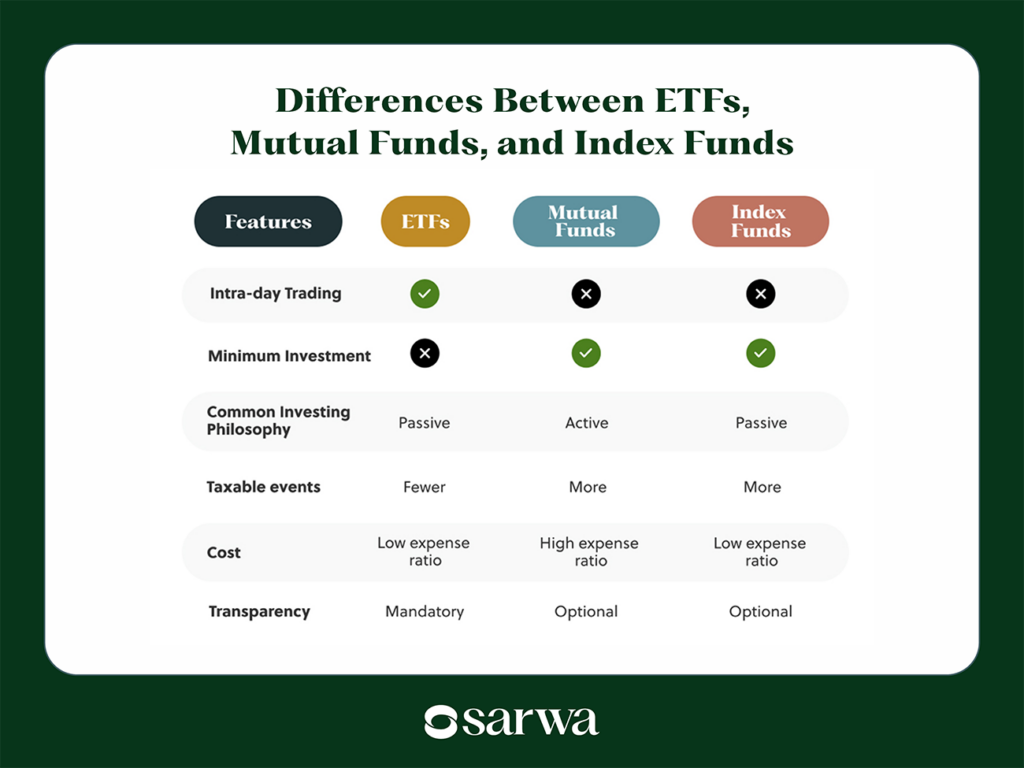
ETF vs. Mutual Fund Structures
S&P index funds are typically offered in two main structures: Exchange Traded Funds (ETFs) and mutual funds.
- ETFs (Exchange Traded Funds): These are investment funds that trade like individual stocks on a stock exchange. You can buy and sell ETF shares throughout the trading day at market prices. ETFs often have lower expense ratios than traditional mutual funds and offer greater trading flexibility. Popular S&P 500 ETFs include SPY (SPDR S&P 500 ETF Trust), IVV (iShares Core S&P 500 ETF), and VOO (Vanguard S&P 500 ETF).
- Mutual Funds: These are professionally managed portfolios of stocks, bonds, or other investments. Unlike ETFs, mutual fund shares are priced once per day after the market closes, based on their Net Asset Value (NAV). They are typically purchased directly from the fund company or through a brokerage. Mutual funds often require a minimum initial investment, though many now have very low or no minimums, especially for S&P 500 index funds. Examples include Vanguard 500 Index Fund Admiral Shares (VFIAX) or Fidelity 500 Index Fund (FXAIX).
Both structures offer effective ways to invest in the S&P 500, with the choice often coming down to personal preference regarding trading flexibility, minimum investments, and specific expense ratios.
Key Benefits of Investing in S&P Index Funds
The popularity of S&P index funds is not without reason. They offer a compelling set of advantages that make them a cornerstone for many investment portfolios, particularly for long-term investors.
Diversification and Risk Reduction
One of the most significant benefits of an S&P index fund is instant, broad diversification. By investing in a single fund, you gain exposure to 500 different companies across various sectors of the U.S. economy. This significantly reduces company-specific risk; if one company within the index performs poorly, its impact on your overall portfolio is mitigated by the performance of the other 499 companies. While market-wide risk (systematic risk) remains, the diversification against idiosyncratic risk is a powerful feature, helping to smooth out portfolio volatility compared to investing in a handful of individual stocks.
Lower Costs (Expense Ratios)
Passive investing funds, like S&P index funds, typically boast significantly lower expense ratios compared to actively managed funds. This is because they do not require extensive research teams, frequent trading, or highly paid fund managers making complex decisions. Lower expense ratios mean more of your investment returns stay in your pocket. Over decades, even a difference of 0.5% in expense ratio can translate into tens or even hundreds of thousands of dollars in foregone returns due to compounding. For example, many S&P 500 index funds have expense ratios as low as 0.03% to 0.09%, while actively managed funds can charge 0.5% to 2% or more annually.
Simplicity and Accessibility
S&P index funds are remarkably simple to understand and manage. There’s no need to analyze individual company financials, research management teams, or track economic indicators for specific sectors. You’re essentially betting on the long-term growth and innovation of the entire U.S. large-cap market. This simplicity makes them highly accessible to novice investors, while their effectiveness appeals to seasoned investors seeking efficient market exposure. Furthermore, they are widely available through most brokerage platforms and investment firms, making them easy to purchase and integrate into any portfolio.
Consistent Long-Term Performance
Historically, the S&P 500 Index has delivered robust returns over the long term. While past performance is not indicative of future results, the index has averaged annual returns of approximately 10-12% over various multi-decade periods. This consistent growth, driven by the collective innovation and profitability of America’s leading companies, makes S&P index funds a powerful vehicle for wealth accumulation. For long-term investors, the strategy of “buying the market” through an S&P index fund has proven to be a highly effective way to participate in economic growth and outpace inflation, often outperforming a significant majority of actively managed funds after fees.
Important Considerations and Potential Drawbacks
While S&P index funds offer numerous advantages, it’s crucial to approach them with a clear understanding of their limitations and potential drawbacks. No investment is without risk, and index funds are no exception.
Market Risk and Volatility
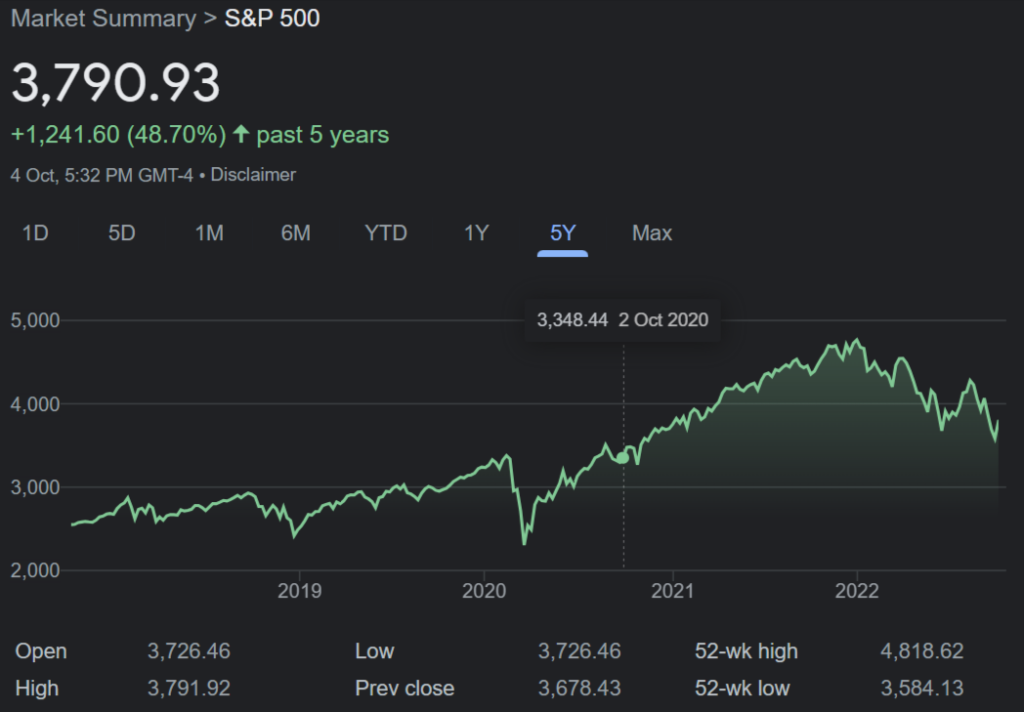
An S&P index fund is not immune to market downturns. Because it mirrors the broader market, if the S&P 500 Index experiences a significant decline, your investment will decline proportionally. This is known as market risk or systematic risk. Economic recessions, geopolitical events, pandemics, or major financial crises can all lead to substantial drops in the index, impacting your portfolio. While historical data suggests the market eventually recovers, investors must be prepared for periods of volatility and potential losses, especially if they need to access their funds during a downturn. This underscores the importance of a long-term investment horizon for such funds.
Lack of Active Management Upside
One of the trade-offs for the low cost and diversification of an S&P index fund is the absence of potential active management upside. While most active managers struggle to beat the S&P 500, a small percentage do manage to outperform in certain periods. An S&P index fund, by design, will only ever match the market’s return (minus a tiny expense ratio). It will never “pick the next Apple” or avoid a struggling company before it drops out of the index. For investors who believe in their ability or a specific fund manager’s ability to consistently identify winning stocks or time the market, an S&P index fund might feel restrictive, capping their potential for market-beating returns.
Tracking Error
While index funds aim for perfect replication, a small deviation between the fund’s performance and the index’s performance, known as tracking error, can occur. This error can stem from several factors, including the fund’s expense ratio, transaction costs incurred during rebalancing, dividend reinvestment timing, and for sampling strategies, the imperfect representation of the index. For large, highly liquid indexes like the S&P 500, tracking error is typically minimal, often a fraction of a percentage point. However, it’s a factor to be aware of, particularly when comparing different index funds that track the same benchmark. Investors should always review a fund’s prospectus for details on its tracking methodology and historical tracking error.
How to Invest in an S&P Index Fund
Investing in an S&P index fund is a straightforward process, making it accessible to virtually anyone. Here’s a general guide to getting started.
Choosing the Right Fund Provider
Many reputable financial institutions offer S&P 500 index funds, including Vanguard, Fidelity, Charles Schwab, and iShares (BlackRock). When choosing a provider, consider their expense ratios (aim for the lowest possible), minimum investment requirements (some mutual funds have them, ETFs generally do not), and the overall reputation and customer service of the firm. It’s also wise to check if the fund has a significant asset base, indicating its stability and liquidity. Vanguard is particularly known for its low-cost index funds, while Fidelity and iShares also offer highly competitive options.
Opening a Brokerage Account
To purchase an S&P index fund, you will need a brokerage account. This can be a standard taxable investment account, a Roth IRA or Traditional IRA for retirement savings, or a 401(k) or 403(b) if your employer offers S&P 500 index fund options within their plan. Most major online brokers allow you to open an account with relative ease, often with no minimum deposit for basic accounts. You’ll typically need to provide personal information, including your Social Security number, and link a bank account for funding.
Regular Contributions: The Power of Dollar-Cost Averaging
Once your account is set up and funded, you can begin investing. A highly recommended strategy for long-term investors is dollar-cost averaging. This involves investing a fixed amount of money at regular intervals (e.g., $100 every month), regardless of market fluctuations. When prices are high, your fixed amount buys fewer shares; when prices are low, it buys more shares. Over time, this strategy helps to average out your purchase price and reduces the risk of investing a large sum at an unfortunate market peak. Automating these contributions through your brokerage account is an excellent way to maintain discipline and benefit from the consistent growth of the S&P 500.
In conclusion, an S&P index fund offers a compelling, low-cost, and diversified approach to investing in the U.S. stock market. By understanding its underlying index, mechanics, benefits, and considerations, investors can confidently integrate this powerful financial tool into their long-term wealth-building strategy, allowing them to participate directly in the prosperity of America’s leading enterprises.
aViewFromTheCave is a participant in the Amazon Services LLC Associates Program, an affiliate advertising program designed to provide a means for sites to earn advertising fees by advertising and linking to Amazon.com. Amazon, the Amazon logo, AmazonSupply, and the AmazonSupply logo are trademarks of Amazon.com, Inc. or its affiliates. As an Amazon Associate we earn affiliate commissions from qualifying purchases.