
The world of finance often presents a complex tapestry of acronyms, indicators, and market movements that can be daunting for both novice and seasoned investors. Among these, the “S&P Index” stands out as one of the most frequently cited and influential benchmarks in the global financial landscape. While often colloquially referred to, understanding its precise nature, composition, and implications is crucial for anyone seeking to comprehend market dynamics, measure investment performance, or make informed financial decisions. Far more than just a list of companies, the S&P Index, particularly its most famous iteration, the S&P 500, serves as a vital barometer of the U.S. economy’s health and the collective sentiment of its largest publicly traded corporations.

This article delves into the core of what the S&P Index represents, dissecting its methodology, exploring its significance, and outlining how individual investors can engage with this powerful financial tool. We will navigate through its construction, the criteria companies must meet for inclusion, and the myriad ways it influences investment strategies and economic analysis.
The Foundation: Understanding the S&P 500
At its heart, the S&P Index refers to a family of indices developed and maintained by S&P Dow Jones Indices. While there are hundreds of S&P indices tracking various market segments, geographies, and asset classes, when most people refer to “the S&P Index,” they are almost invariably talking about the S&P 500. This flagship index is arguably the most well-known and widely followed stock market index in the world.
Defining the Standard & Poor’s Index
The “S&P” in S&P Index stands for “Standard & Poor’s,” a company that has a long history in providing financial information and analytics. An index, in this context, is a hypothetical portfolio of investment holdings that represents a segment of the financial market. It’s not something you can directly invest in like a stock; rather, it’s a theoretical measure of performance. The S&P 500, specifically, tracks the stock performance of 500 of the largest publicly traded companies in the United States. Its primary purpose is to serve as a benchmark for the overall health and direction of the U.S. large-cap equity market and, by extension, the broader American economy.
The Significance of the “500”
The number “500” signifies the approximately 500 leading U.S. companies that are included in the index. While it’s often described as representing 500 companies, the actual number can fluctuate slightly due to mergers, acquisitions, or other changes in constituent companies. These companies are chosen for their size, liquidity, and industry representation, ensuring that the index is a comprehensive and accurate reflection of the U.S. economy’s large-cap segment. Combined, the market capitalization of these 500 companies represents a significant portion—typically around 80%—of the total value of the U.S. stock market. This broad coverage makes the S&P 500 an exceptionally robust indicator of market trends and economic performance.
How the Index is Constructed: Market-Cap Weighting
The S&P 500 is a market-capitalization-weighted index. This means that companies with larger market capitalizations (stock price multiplied by the number of outstanding shares) have a greater impact on the index’s performance than companies with smaller market capitalizations. For example, if Apple, a company with a massive market cap, sees its stock price rise by 1%, it will move the index more significantly than a 1% rise in a smaller component company. This weighting methodology naturally gives more influence to the largest and most established companies, which often represent the economic leaders and drivers of innovation. This approach ensures that the index accurately reflects the true scale and impact of its constituent companies within the overall market.
The Criteria for Inclusion: Who Makes the Cut?
Being included in the S&P 500 is a prestigious achievement for a company, often leading to increased investor visibility and demand for its stock. However, inclusion is not automatic and is determined by a committee at S&P Dow Jones Indices, rather than strict quantitative rules alone. The committee assesses companies based on several key criteria to ensure the index remains relevant, representative, and reflective of the leading U.S. businesses.
Key Eligibility Requirements
While the S&P committee has discretion, generally, companies must meet the following fundamental criteria to be considered for inclusion:
- U.S. Company: The company must be domiciled in the United States.
- Market Capitalization: It must meet a minimum market cap threshold, which is periodically adjusted. As of recent updates, this threshold is often in the multi-billion dollar range, distinguishing it as a “large-cap” stock.
- Liquidity: The company’s stock must be highly liquid, meaning it is actively traded and can be bought and sold without significantly impacting its price. This typically requires a minimum number of shares traded monthly and a specific ratio of trading volume to its public float.
- Public Float: A significant portion of the company’s shares must be available for public trading, rather than being held by insiders or government entities.
- Profitability: Companies must demonstrate positive earnings in their most recent quarter and have positive aggregate earnings over the past four consecutive quarters. This ensures the inclusion of fundamentally sound businesses.
- Sector Representation: The committee also considers sector balance to ensure the index is a diversified representation of the broader U.S. economy, avoiding over-concentration in any single industry.
Maintaining Index Integrity: Quarterly Rebalancing
The S&P 500 is not static. The S&P Dow Jones Indices committee regularly reviews the index constituents, typically on a quarterly basis, to ensure they continue to meet the eligibility criteria and maintain the index’s integrity and representativeness. Companies can be added or removed due to mergers, acquisitions, bankruptcies, significant changes in market capitalization, or a failure to meet ongoing profitability or liquidity requirements. These adjustments, though carefully managed, can have an immediate impact on the market as index funds and ETFs that track the S&P 500 are forced to buy or sell shares of the affected companies to rebalance their portfolios.
Why the S&P 500 Matters: A Benchmark for Investors and the Economy
The S&P 500’s prominence stems from its multi-faceted utility. It’s not just a tally of stock prices; it’s a powerful tool for economic analysis, investment strategy, and performance evaluation. For many, it represents the very definition of “the market.”
A Barometer of Economic Health
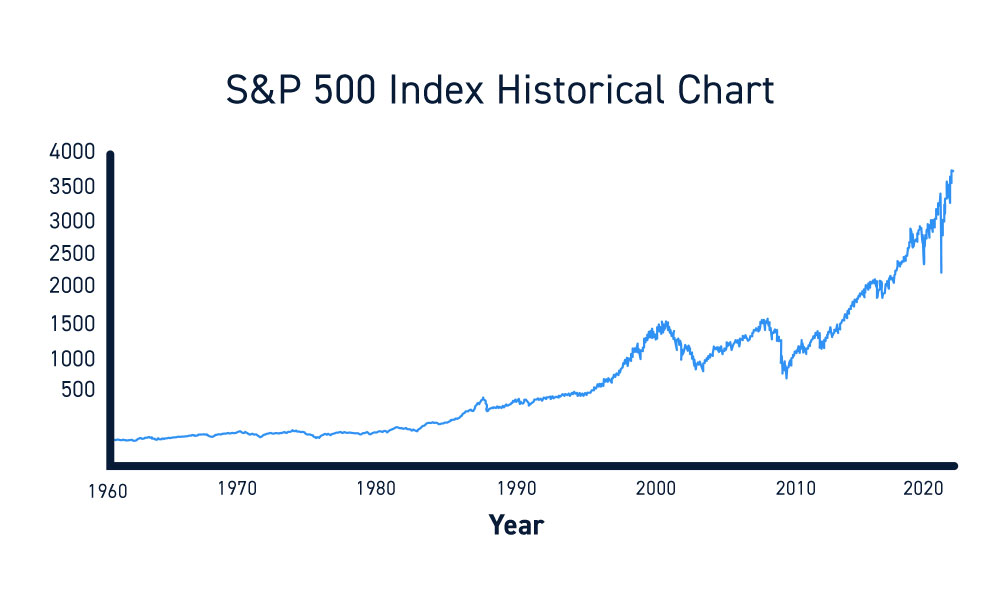
Because the S&P 500 comprises 500 of the largest and most influential U.S. companies across a wide array of sectors, its performance is often seen as a reliable indicator of the overall health of the U.S. economy. When the S&P 500 is trending upwards, it generally signals economic growth, strong corporate earnings, and investor confidence. Conversely, a significant downturn can suggest economic contraction, recessionary fears, or widespread pessimism. Economists, policymakers, and financial analysts closely monitor the S&P 500 as a real-time gauge of economic activity and future expectations.
Measuring Portfolio Performance
For investors, the S&P 500 serves as the most common benchmark against which to measure the performance of their own investment portfolios or actively managed funds. If a mutual fund manager claims to be generating superior returns, investors will often compare that fund’s performance to that of the S&P 500 over the same period. Beating the S&P 500 is considered a significant achievement, while underperforming it may lead investors to question the value proposition of active management. This benchmarking function helps investors assess whether their investment strategies are delivering competitive returns relative to the broad market.
Diversification and Long-Term Growth Potential
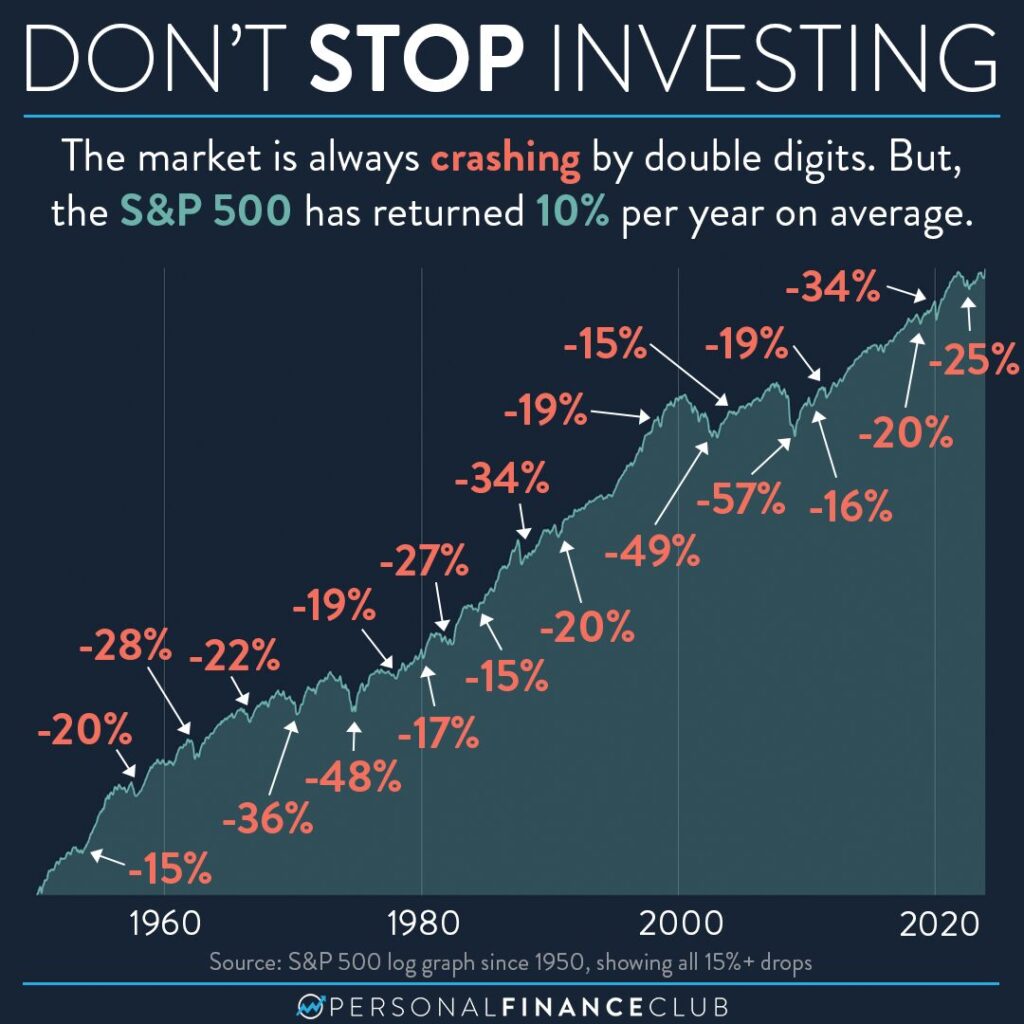
Investing in the S&P 500 offers inherent diversification across 500 different companies and numerous industries. This diversification reduces idiosyncratic risk—the risk associated with a single company’s poor performance—as the underperformance of one company is typically offset by the strong performance of others. Historically, the S&P 500 has demonstrated robust long-term growth, averaging returns that have outpaced inflation and many other asset classes over extended periods. This makes it an attractive option for investors focused on long-term wealth accumulation and retirement planning, providing exposure to the growth of the largest and most innovative companies in the U.S. economy.
Investing in the S&P 500: Accessible Strategies for Wealth Building
While you cannot directly “buy the S&P 500,” there are highly accessible and efficient ways for individual investors to gain exposure to the performance of the index. These methods primarily revolve around passive investment vehicles designed to replicate the index’s composition and returns.
Index Funds: Passive Investing at Its Core
An S&P 500 index fund is a type of mutual fund that holds stocks in the same proportions as the S&P 500 index itself. The fund manager’s goal is not to “beat the market” but rather to perfectly track its performance. Because these funds are passively managed—meaning they don’t require extensive research, stock picking, or frequent trading by a human manager—they typically have very low expense ratios compared to actively managed mutual funds. This cost efficiency is a major draw for investors seeking broad market exposure with minimal fees, aligning their returns directly with the S&P 500’s performance before expenses.
Exchange-Traded Funds (ETFs): Flexibility and Liquidity
S&P 500 Exchange-Traded Funds (ETFs) are similar to index funds in that they aim to track the S&P 500. However, unlike traditional mutual funds, ETFs trade like individual stocks on an exchange throughout the day. This offers investors greater flexibility and liquidity, as they can buy and sell shares at current market prices, much like buying shares of Apple or Microsoft. ETFs also generally boast low expense ratios and can be more tax-efficient than traditional mutual funds due to their creation and redemption mechanisms. Popular S&P 500 ETFs include SPDR S&P 500 ETF Trust (SPY), iShares Core S&P 500 (IVV), and Vanguard S&P 500 ETF (VOO).
Robo-Advisors and Brokerage Platforms
Gaining exposure to the S&P 500 has become even simpler through modern financial tools. Many online brokerage platforms (like Fidelity, Vanguard, Charles Schwab, Robinhood, etc.) allow investors to easily buy shares of S&P 500 index funds or ETFs with just a few clicks. Furthermore, robo-advisors—automated, algorithm-driven financial planners—often include S&P 500-tracking ETFs as core components of their diversified portfolios, tailored to an investor’s risk tolerance and financial goals. This democratization of access means almost anyone can now invest in the S&P 500 with minimal effort and capital.
Beyond the S&P 500: A Glimpse at Other S&P Indices
While the S&P 500 commands the most attention, S&P Dow Jones Indices maintains a vast array of other indices that track different segments of the market, catering to a diverse range of investment needs and analytical purposes. Understanding these can provide a more nuanced view of market performance.
Tracking Mid-Cap and Small-Cap Performance
Beyond large-cap companies, S&P also offers indices that track different market capitalization segments:
- S&P MidCap 400: This index measures the performance of mid-sized U.S. companies, providing a benchmark for the mid-cap segment of the U.S. equity market. These companies are generally too small to be in the S&P 500 but are larger than small-cap firms, often representing a growth-oriented portion of the economy.
- S&P SmallCap 600: This index focuses on smaller U.S. companies, offering a benchmark for the small-cap segment. Small-cap stocks are often considered to have higher growth potential but also higher volatility than their larger counterparts.
These indices allow investors to gain exposure to different risk/reward profiles within the U.S. stock market and help analysts understand how various company sizes are performing.
Sector-Specific and Global Indices
S&P also constructs indices that track specific industries or sectors (e.g., S&P 500 Information Technology Index, S&P 500 Healthcare Index), allowing investors to make targeted bets on particular segments of the economy. Furthermore, S&P offers a comprehensive suite of international and global indices, such as the S&P Global 1200, which tracks large-cap stocks across developed and emerging markets worldwide, or country-specific indices. These broader indices provide benchmarks for global investment strategies and offer perspectives beyond the U.S. market.
In conclusion, the S&P Index, primarily through the lens of the S&P 500, is far more than a simple stock listing. It is a meticulously constructed, dynamic benchmark that plays a pivotal role in personal finance, investing, and economic analysis. Its comprehensive nature, robust methodology, and accessibility have cemented its status as an indispensable tool for understanding and participating in the growth of the world’s largest economy. Whether you’re tracking economic trends, measuring portfolio success, or building a diversified investment strategy, a solid grasp of the S&P Index is fundamental to navigating the financial markets with confidence and insight.
aViewFromTheCave is a participant in the Amazon Services LLC Associates Program, an affiliate advertising program designed to provide a means for sites to earn advertising fees by advertising and linking to Amazon.com. Amazon, the Amazon logo, AmazonSupply, and the AmazonSupply logo are trademarks of Amazon.com, Inc. or its affiliates. As an Amazon Associate we earn affiliate commissions from qualifying purchases.