
In an era saturated with content and diverse viewing platforms, the seemingly simple question, “What channel can you watch Yellowstone on?” unveils a complex tapestry of technological advancements, content licensing strategies, and evolving consumer habits. Far from a straightforward answer, determining where to find television’s most popular neo-western involves understanding the intricate interplay between traditional linear television, on-demand streaming services, and digital purchasing options. For tech enthusiasts and casual viewers alike, dissecting this landscape offers a fascinating glimpse into the infrastructure that delivers our favorite shows right to our screens, highlighting key trends in digital media distribution and consumption.
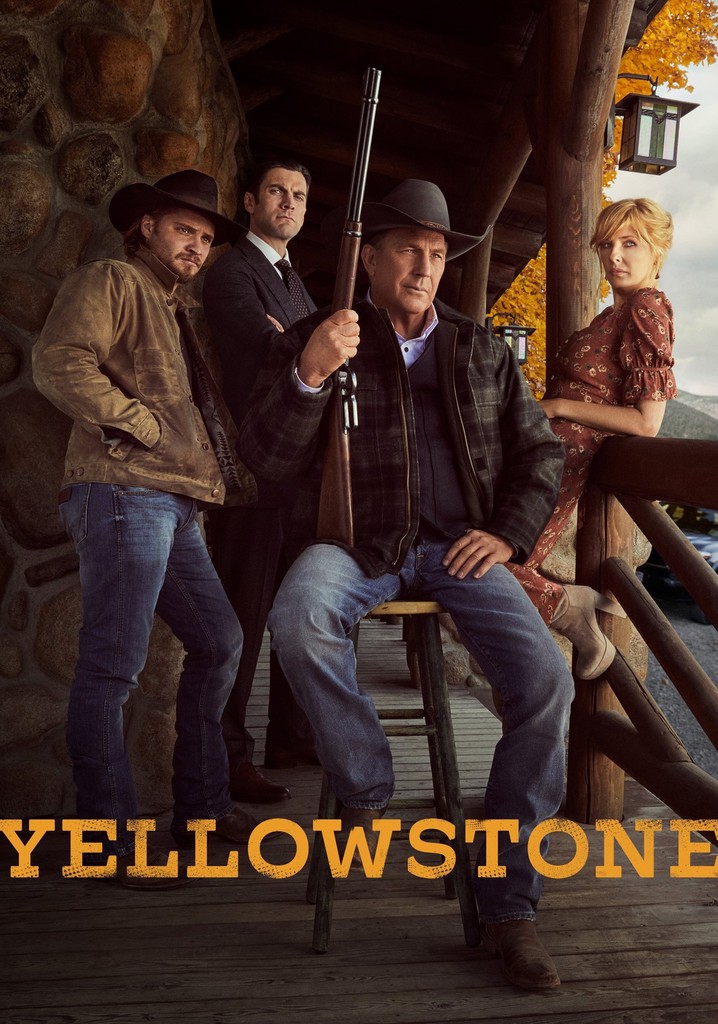
The journey to watch “Yellowstone” is less about tuning into a single channel and more about navigating a sophisticated tech ecosystem, where different seasons and new episodes reside on distinct platforms governed by intricate distribution agreements. This article will delve into the technical mechanisms and platforms that enable viewers to access the Dutton family’s saga, examining the technologies that power these experiences and the strategic decisions behind their implementation.
The Traditional Broadcast: Linear TV and Its Digital Evolution
The foundational answer to where “Yellowstone” can be found often begins with its original home, the Paramount Network. This traditional approach to television viewing, however, has undergone significant technological evolution, offering multiple avenues for access beyond the classic cable box.
Paramount Network: The Original Home and Its Live Delivery Tech
The Paramount Network serves as the primary linear broadcast channel for new episodes of “Yellowstone.” For viewers with traditional cable or satellite subscriptions (e.g., Xfinity, Spectrum, DirecTV, Dish Network), tuning into Paramount Network at the scheduled airtime is the most direct method. The technology here is well-established: content is transmitted via satellite or fiber optic networks to local cable headends, then distributed through coaxial cables or fiber to individual homes. This “linear” model relies on a fixed broadcast schedule, a relic in many ways, yet still foundational for major premieres.
The underlying technology ensures a stable, often high-definition signal, delivered synchronously to millions of households. While seemingly old-school compared to streaming, the robust infrastructure for linear TV handles massive concurrent viewership without the buffering issues sometimes associated with internet-based delivery, thanks to dedicated bandwidth allocation rather than sharing internet capacity. This reliability is a key differentiator, especially for high-profile live events and premiere broadcasts that draw huge audiences simultaneously.
Authenticated Streaming: Bridging Old and New with Digital Credentials
For cable or satellite subscribers who prefer the flexibility of digital viewing, the Paramount Network app and website offer a crucial technological bridge. This “authenticated streaming” model allows users to log in with their TV provider credentials, unlocking live access to the Paramount Network feed and, often, a limited selection of on-demand content.
Technologically, this involves a single sign-on (SSO) or OAuth 2.0 framework where the streaming platform (Paramount Network app) communicates with the user’s TV provider (e.g., Comcast’s Xfinity authentication server) to verify their subscription. Once authenticated, the app streams the content over the internet using adaptive bitrate streaming protocols (like HLS or DASH). This technology dynamically adjusts video quality based on the user’s internet speed and device capabilities, ensuring a smooth playback experience even with fluctuating network conditions. It represents an early, yet persistent, effort to integrate traditional TV subscriptions into the nascent digital streaming landscape, offering convenience without fully detaching from the linear service.
The Technology Behind Live TV Streaming Services
For cord-cutters or those seeking a more flexible alternative to traditional cable, Live TV streaming services like YouTube TV, Hulu + Live TV, Sling TV, and FuboTV have emerged as powerful technological solutions. These platforms mimic the linear TV experience by offering bundles of channels, including Paramount Network, delivered entirely over the internet.
The technical infrastructure behind these services is complex. They acquire broadcast rights for numerous channels, ingest multiple live feeds, and then re-encode them into various digital formats and bitrates suitable for streaming to a wide array of devices (smart TVs, phones, tablets, computers, streaming sticks). Their core technology involves sophisticated content delivery networks (CDNs) to distribute the video streams efficiently, minimizing latency and buffering. Features like cloud DVR (allowing users to record shows digitally without physical hardware) and instant channel switching require advanced server-side processing and robust network architecture. These services exemplify a complete paradigm shift, leveraging internet protocol (IP) networks to deliver what was once exclusively the domain of dedicated broadcast infrastructure, democratizing access and offering unparalleled flexibility.
The On-Demand Era: Streaming Platforms and Exclusive Rights
While linear broadcasts handle new “Yellowstone” episodes, the on-demand viewing of past seasons resides predominantly on streaming platforms, a testament to the powerful shift towards consumer-driven content consumption. This segment explores the technological backbone of these services and the strategic implications of exclusive content.
Peacock Premium: Yellowstone’s Streaming Sanctuary
For viewers looking to binge past seasons of “Yellowstone,” Peacock Premium stands out as the exclusive streaming home. This arrangement highlights a critical aspect of modern content distribution: exclusive licensing deals. Universal, the parent company of Peacock, secured the streaming rights for “Yellowstone” seasons even before Peacock’s launch, making it a tentpole title for the platform.
Technologically, Peacock operates as a video-on-demand (VOD) service. Its infrastructure is designed to store vast libraries of content in the cloud, encrypted and optimized for various streaming devices. When a user selects an episode, Peacock’s content delivery network (CDN) determines the optimal server location to stream the content from, aiming for the lowest latency and highest possible quality. The platform utilizes sophisticated recommendation engines powered by machine learning algorithms to suggest other content based on viewing history, a core feature of most modern streaming services aimed at increasing user engagement and retention. The subscription model (Peacock Premium requires a paid subscription) funds these technological operations and the acquisition of exclusive content rights.
The Technical Nuances of Streaming Quality
The quality of your “Yellowstone” viewing experience on streaming platforms like Peacock is heavily dependent on several technical factors. Resolution (HD, Full HD, 4K UHD), bitrate, and frame rate are crucial. Modern streaming services typically support adaptive bitrate streaming, meaning the video player dynamically switches between different quality versions of the video file based on your internet speed and device’s processing power. If your internet connection is robust (e.g., 25 Mbps or higher for HD, 50-100 Mbps for 4K), and your device supports it, you’ll receive a higher bitrate stream, resulting in sharper images and smoother motion.

However, inconsistent Wi-Fi signals, network congestion, or older routing equipment can degrade the experience, leading to lower resolution video or buffering. The encoding technology used (e.g., H.264, H.265/HEVC, AV1) also plays a significant role in compressing video efficiently while maintaining visual fidelity, allowing for high-quality streaming even with limited bandwidth. Ensuring a modern streaming device and a stable, fast internet connection are technical prerequisites for enjoying “Yellowstone” in its full visual glory.
Device Compatibility and App Ecosystems
Accessing “Yellowstone” on streaming platforms is fundamentally tied to device compatibility and the robust app ecosystems that have flourished. Streaming services develop dedicated applications for a vast array of devices: smart TVs (Samsung, LG, Sony, Vizio), streaming sticks and boxes (Roku, Amazon Fire TV, Apple TV), gaming consoles (PlayStation, Xbox), mobile devices (iOS, Android), and web browsers on computers.
Each app is meticulously engineered to optimize playback for its specific hardware, leveraging the device’s unique processing capabilities, display characteristics, and user interface paradigms. Developing and maintaining these diverse applications requires significant software engineering effort, ensuring a consistent user experience across platforms while adapting to their individual technical constraints and strengths. The seamless integration of these apps with device operating systems and remote controls is a testament to sophisticated software design, making the act of finding and watching “Yellowstone” feel intuitive, despite the complex technical processes happening behind the scenes.
Beyond Subscriptions: Digital Purchase and Rental Technologies
For viewers who prefer outright ownership or a one-time rental without a recurring subscription, digital video-on-demand (VOD) stores offer another technologically distinct pathway to “Yellowstone.” This model presents a different set of technical considerations, particularly concerning content rights and digital asset management.
VOD Stores: A-la-carte Access with Digital Rights Management
Platforms like Amazon Prime Video (for purchase/rental, not for streaming with Prime subscription), Apple TV, Google Play Movies & TV, and Vudu allow users to purchase individual episodes or entire seasons of “Yellowstone.” This “a-la-carte” model provides permanent access to the content without a subscription to a specific streaming service.
The technology underpinning these transactions involves robust Digital Rights Management (DRM) systems. DRM solutions (like Widevine, FairPlay, PlayReady) encrypt the content and attach specific usage rules (e.g., no copying, limited number of simultaneous streams, duration of rental). When you purchase or rent “Yellowstone,” the platform issues a license key that decrypts the content for your authorized devices. This ensures that content creators and distributors maintain control over their intellectual property in the digital realm. The content is typically streamed from the cloud, but some platforms also offer download options, allowing for offline viewing, with DRM still enforcing usage rules on the downloaded file.
Cloud-Based Libraries: Managing Your Digital Collection
A significant technical advantage of purchasing “Yellowstone” through these VOD stores is the creation of a cloud-based digital library. Once purchased, the content is typically accessible across all devices linked to your account on that particular platform. This is enabled by centralized cloud storage infrastructure that securely houses your purchased media and synchronizes your viewing history, progress, and ownership rights across various clients (apps, web browsers).
This architecture eliminates the need for physical media and provides unparalleled flexibility. The technology ensures that if you start watching an episode on your smart TV, you can pick up exactly where you left off on your tablet, leveraging cloud synchronization services and persistent user profiles. This seamless experience relies on robust backend databases and API integrations that manage user entitlements and content metadata, making your digital collection accessible anytime, anywhere, on almost any compatible device.
The Future of Content Delivery: Trends and Tech Implications
The journey to watch “Yellowstone” is a microcosm of the larger evolution in content delivery. As technology continues its relentless march forward, the ways we access and interact with our favorite shows will undoubtedly transform further.
The Fragmented Streaming Landscape and Aggregation Tech
The current state, with “Yellowstone” split between live TV and Peacock, is indicative of a fragmented streaming landscape. Consumers increasingly face “subscription fatigue” from managing multiple services. Future technological solutions will likely focus on aggregation. This includes universal search capabilities that span across all your subscribed services (as seen in Apple TV app or Roku’s search), personalized content hubs that centralize recommendations from various platforms, and potentially “super-aggregator” apps that allow subscribing to multiple services through a single portal and billing system. The underlying tech for this will involve sophisticated APIs for data exchange between services, advanced metadata tagging, and AI-driven personalization engines to cut through the noise and simplify content discovery.
5G, AI, and Immersive Experiences
The advent of 5G networks promises ultra-fast speeds and extremely low latency, which will significantly enhance mobile streaming experiences, potentially allowing for high-quality 4K streaming even on the go. AI will continue to refine recommendation algorithms, but also influence content creation (e.g., AI-assisted editing, deepfake technologies for visual effects) and even dynamic advertising that adapts in real-time to viewer preferences. Looking further ahead, immersive technologies like virtual reality (VR) or augmented reality (AR) could offer new ways to experience narratives like “Yellowstone,” perhaps through interactive companion content or virtual set tours, though full-episode VR viewing remains a distant, technically challenging prospect. Edge computing, bringing processing closer to the user, could also reduce latency and improve responsiveness for interactive elements.

Global Access and Geo-Restrictions: Technical Hurdles
The ability to watch “Yellowstone” also faces international technical hurdles due to geo-restrictions. Content licensing is often region-specific, meaning a show available on Peacock in the U.S. might be on a different service or unavailable entirely in other countries. These restrictions are enforced technically through IP address blocking, where the streaming service identifies your geographical location based on your IP address and either grants or denies access. While VPNs (Virtual Private Networks) are often used to bypass these restrictions by routing traffic through servers in different countries, their use can violate a service’s terms of agreement, and streaming providers constantly update their detection methods to block known VPN IPs, creating an ongoing technological cat-and-mouse game. The ultimate solution for global audiences lies in complex international licensing agreements, which are slowly evolving.
In conclusion, the simple question of “what channel can you watch Yellowstone on” unravels a fascinating and ever-changing technological narrative. From the steadfast delivery of linear TV to the intricate ecosystems of on-demand streaming and digital purchases, technology is the silent, yet powerful, engine driving content accessibility. Understanding these underlying mechanisms not only empowers viewers to find their favorite shows but also provides critical insights into the future of media consumption in an increasingly digital world. As platforms evolve and new technologies emerge, the viewing experience for “Yellowstone” and countless other shows will continue to be reshaped by innovation, connectivity, and the strategic battle for digital distribution.
aViewFromTheCave is a participant in the Amazon Services LLC Associates Program, an affiliate advertising program designed to provide a means for sites to earn advertising fees by advertising and linking to Amazon.com. Amazon, the Amazon logo, AmazonSupply, and the AmazonSupply logo are trademarks of Amazon.com, Inc. or its affiliates. As an Amazon Associate we earn affiliate commissions from qualifying purchases.