
In the increasingly crowded landscape of streaming services, understanding the financial commitment required for each platform is crucial for savvy consumers. Paramount Plus, a formidable contender in the streaming wars, offers a diverse array of content, from iconic TV shows and blockbuster movies to live sports and breaking news. However, before diving into its extensive library, the fundamental question for many potential subscribers is: “How much does Paramount Plus cost a month, and is it a wise financial investment?” This comprehensive guide will break down the pricing structures, evaluate the monetary value proposition, and provide strategies for integrating Paramount Plus into your personal budget effectively.
Understanding Paramount Plus Subscription Tiers and Pricing
Paramount Plus, like many of its competitors, employs a tiered pricing model designed to cater to different viewer preferences and financial capacities. Each tier comes with its own set of features and, crucially, its own monthly price point. Deciphering these options is the first step in making an informed financial decision.
The Essential “Paramount+ Essential” Plan
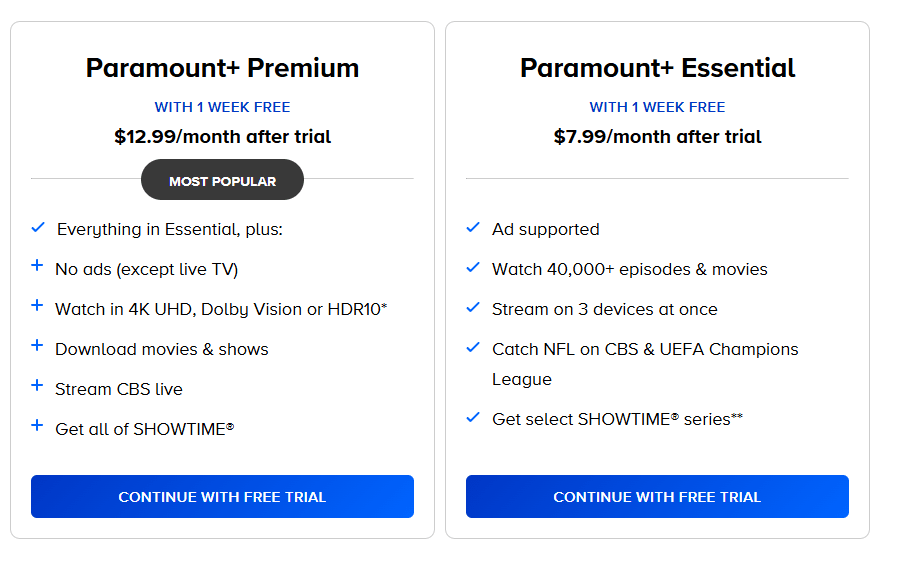
The entry-level offering from Paramount Plus is typically branded as the “Paramount+ Essential” plan. This is the most budget-friendly option, providing access to a substantial portion of the Paramount Plus content library. For a lower monthly fee, subscribers gain access to thousands of episodes and movies on demand.
The primary financial consideration with the Essential plan is the presence of limited commercials. While these ads are generally shorter and less frequent than traditional broadcast television, they represent a trade-off for the lower cost. From a financial perspective, this plan is ideal for consumers who prioritize cost savings above an ad-free viewing experience. It allows access to a vast amount of content without breaking the bank, making it an attractive option for budget-conscious individuals or families looking to expand their streaming portfolio without a significant financial outlay. It’s also important to note that, depending on regional variations, live local CBS stations might not be included, or certain live sports might only be available with the premium tier.
The Premium “Paramount+ with Showtime” Plan
For those seeking an uninterrupted viewing experience and an even broader content offering, the “Paramount+ with Showtime” plan (formerly often just “Premium”) is the more comprehensive—and consequently, more expensive—option. This tier eliminates ads from most on-demand content, providing a seamless entertainment experience.
Beyond the ad-free benefit, the Premium plan significantly enhances its value proposition by integrating the entire Showtime library. This addition brings a wealth of critically acclaimed series, movies, and documentaries that were previously exclusive to a separate Showtime subscription. Financially, this bundle can represent a substantial saving compared to subscribing to Paramount Plus and Showtime independently. Furthermore, the Premium plan typically includes access to your live local CBS station and an expanded array of live sports content, including the UEFA Champions League and NFL on CBS. For viewers who value live programming, an ad-free environment, and the extensive Showtime catalog, the increased monthly cost of this plan can be justified as a consolidated entertainment expenditure.
Annual vs. Monthly Subscriptions: Maximizing Savings
A critical financial strategy for any streaming service is to evaluate the cost-effectiveness of annual subscriptions versus monthly payments. Paramount Plus, like many platforms, often incentivizes longer commitments through discounted annual rates.
Opting for an annual subscription typically results in a lower overall cost over 12 months compared to paying month-to-month. This upfront payment demands a larger immediate financial outlay but yields long-term savings. For instance, if a monthly plan costs $5, an annual plan might be priced at $50, effectively giving you two months free. This strategy is particularly beneficial for subscribers who are confident they will use the service consistently throughout the year. For individuals with fluctuating budgets or those who prefer the flexibility to cancel at any time, the monthly option remains viable, albeit at a slightly higher cumulative cost. A careful calculation of annual savings versus the need for flexibility should guide this financial decision.
Evaluating the Financial Value of Paramount Plus
Beyond the sticker price, the true financial value of a streaming service lies in what it delivers for that cost. Assessing the return on investment (ROI) for your Paramount Plus subscription involves looking at its content, features, and how well it meets your entertainment needs.
Content Library: Bang for Your Buck
The core value proposition of any streaming service is its content. Paramount Plus boasts a vast and growing library that includes a deep catalog from CBS, BET, Comedy Central, MTV, Nickelodeon, and the Smithsonian Channel, alongside new originals. From a financial perspective, consider if this library genuinely provides “bang for your buck.”
Are there enough shows and movies that you and your household will actually watch? Does it offer exclusive content you can’t find elsewhere that justifies the expense? For fans of specific franchises like Star Trek, Yellowstone (via the Showtime bundle), or popular Nickelodeon series, the service offers immense value. Similarly, its robust movie selection, which often includes films soon after their theatrical release or premium pay-per-view windows, can offset the cost of renting or buying individual titles. Before committing, a quick inventory of “must-watch” content available on Paramount Plus can help you quantify its worth against your entertainment budget.
Live Sports and News: Is It Worth the Premium?
One of Paramount Plus’s significant differentiators, particularly with its Premium plan, is the inclusion of live sports and news. Access to live local CBS stations, NFL games, UEFA Champions League, and other sports events can be a major draw. For many, the cost of separate sports packages or even traditional cable TV can be prohibitive.
Financially, if you are a sports enthusiast who watches a significant amount of NFL or international soccer, or if you rely on live local news, the Premium plan’s additional cost might be a very cost-effective alternative to other, more expensive sports or cable TV subscriptions. For instance, an NFL RedZone subscription or a dedicated sports package often costs more than the difference between the Essential and Premium Paramount Plus plans. Weighing this against the direct savings from not needing other services can make the Premium tier a financially astute choice for sports fans.
Ad Experience: A Cost-Benefit Analysis
The presence or absence of ads is a direct financial trade-off on Paramount Plus. The Essential plan includes limited commercials, while the Premium plan is largely ad-free (though some live programming and a few specific shows may still contain promotional interruptions).
From a financial perspective, the question becomes: how much is your time and an uninterrupted experience worth? If you find advertisements highly disruptive and believe they detract significantly from your viewing pleasure, the higher cost of the Premium plan might be a worthwhile investment in your personal satisfaction. Conversely, if you are accustomed to commercials, or if you primarily use the service for background viewing, the savings from the Essential plan might outweigh the minor inconvenience of ads. It’s a personal valuation of time versus money, directly impacting your perceived financial gain or loss.
Paramount Plus in Your Personal Budget
Integrating a new streaming service into your personal budget requires strategic planning, especially if you subscribe to multiple platforms. Maximizing value and minimizing unnecessary expenditure are key financial objectives.
Strategic Bundling and Promotions
Paramount Plus frequently offers promotions, often in conjunction with other services or as part of broader telecom packages. Keeping an eye out for these deals can lead to significant savings. For example, wireless carriers, internet providers, or even other streaming services sometimes bundle Paramount Plus at a discounted rate or for a promotional period.
Furthermore, educational or student discounts are occasionally available, as are longer free trial periods beyond the standard seven days. Proactively searching for these opportunities before committing to a full-price subscription is a smart financial move. A bundled offer might make the combined cost of multiple services more palatable than subscribing individually, optimizing your overall entertainment spend.
Utilizing Free Trials Effectively
Nearly all streaming services, including Paramount Plus, offer a free trial period. This is an invaluable financial tool if used strategically. The free trial allows you to assess the content library, test the user interface, and experience the ad frequency (if on the Essential plan) without any financial commitment.
To make the most of a free trial, plan your viewing. Identify the shows or movies you particularly want to watch and try to consume as much as possible within the trial window. Crucially, set a calendar reminder a day or two before the trial ends to decide whether to continue the subscription or cancel. Forgetting to cancel can lead to an unexpected charge, undermining the financial benefit of the trial. Using free trials responsibly ensures you only pay for services you genuinely want to keep.
Comparing Paramount Plus to Competitors: A Cost Analysis
No streaming service exists in a vacuum. A responsible financial decision involves comparing Paramount Plus’s offerings and costs against its direct and indirect competitors. For instance, if you are considering Paramount Plus primarily for live sports, how does its price compare to ESPN+, Peacock Premium, or Sling TV? If it’s for premium dramas, how does it stack up against HBO Max, Netflix, or Hulu?
Create a simple spreadsheet outlining the monthly costs of services you currently have, those you’re considering, and their respective core value propositions (e.g., content type, ad-free status, live TV). This comparative analysis will highlight which service provides the best financial return for your specific entertainment priorities, helping you avoid subscription overlap and unnecessary expenses. It’s about optimizing your entertainment budget, not just adding another line item.
Managing Your Subscription and Avoiding Unnecessary Costs
The proliferation of streaming services can quickly lead to “subscription fatigue” and, more importantly, “subscription creep” – where numerous small monthly charges accumulate into a significant drain on your finances. Proactive management is key.
Monitoring Your Spending on Streaming Services
Regularly review your bank statements or credit card bills to identify all recurring charges for streaming services. It’s easy to forget about a service you signed up for months ago and no longer use. Apps for personal finance management can also help categorize and track these expenses, providing a clear overview of your total monthly outlay on digital entertainment.
Consider setting a fixed budget for streaming services each month. If Paramount Plus pushes you over that budget, evaluate which other services you could pause or cancel to stay within your financial limits. This disciplined approach ensures that your entertainment spending remains intentional and controlled, preventing it from spiraling out of control.
The Art of Pausing and Resubscribing
Many streaming services, including Paramount Plus, offer the flexibility to pause your subscription. This feature is a financial boon for intermittent viewers. For example, if you subscribe to Paramount Plus primarily for a specific series that airs seasonally, you can subscribe for a few months when the new season drops, watch it, and then pause or cancel until the next season.
This “churn and return” strategy minimizes your annual spending, ensuring you only pay for the service when you are actively using it. It requires a bit of planning and attention, but the financial savings can be substantial over the course of a year, particularly if you apply this strategy across multiple services.
Hidden Costs and How to Avoid Them
While Paramount Plus’s pricing is generally transparent, there can be subtle “hidden” costs or factors that inflate your overall spending. For example, ensure you are not paying for the service twice through different billing channels (e.g., directly through Paramount Plus and also through an Amazon Prime Video Channel subscription).
Also, be wary of automatic renewals. If you use a free trial and intend to cancel, make sure to do so before the billing date. Sometimes, premium add-ons or transactional video on demand (TVOD) content might be available for purchase within the app; distinguish these from your base subscription fee. By being vigilant and regularly checking your subscription status and billing, you can prevent unexpected charges and ensure your Paramount Plus expenditure aligns precisely with your intentions.

Conclusion
Paramount Plus offers a compelling blend of content at various price points, making it an attractive option for a wide spectrum of viewers. Understanding “how much Paramount Plus costs a month” goes beyond merely looking at a number; it involves a comprehensive financial analysis of its tiered plans, content value, and how it fits within your broader personal budget. By strategically evaluating the Essential vs. Premium plans, leveraging annual discounts and free trials, comparing it with competitors, and actively managing your subscriptions, you can ensure that Paramount Plus—or any streaming service—remains a source of entertainment rather than a drain on your finances. In the era of subscription overload, smart financial planning is the ultimate key to enjoying your digital content responsibly.
aViewFromTheCave is a participant in the Amazon Services LLC Associates Program, an affiliate advertising program designed to provide a means for sites to earn advertising fees by advertising and linking to Amazon.com. Amazon, the Amazon logo, AmazonSupply, and the AmazonSupply logo are trademarks of Amazon.com, Inc. or its affiliates. As an Amazon Associate we earn affiliate commissions from qualifying purchases.