
In the rapidly evolving world of computing, few components ignite as much passion and discussion as the graphics card, or GPU. At the forefront of this innovation stands NVIDIA, a company synonymous with high-performance visual processing. For enthusiasts, gamers, content creators, and professionals alike, the question of “what is the latest NVIDIA graphics card?” isn’t merely about identifying a product; it’s about understanding the current pinnacle of technological achievement, the boundaries of visual fidelity, and the raw computational power that drives the most demanding digital experiences. This article delves into NVIDIA’s most recent flagship offerings, exploring their specifications, architectural innovations, target audiences, and the broader impact they have on the technology landscape.
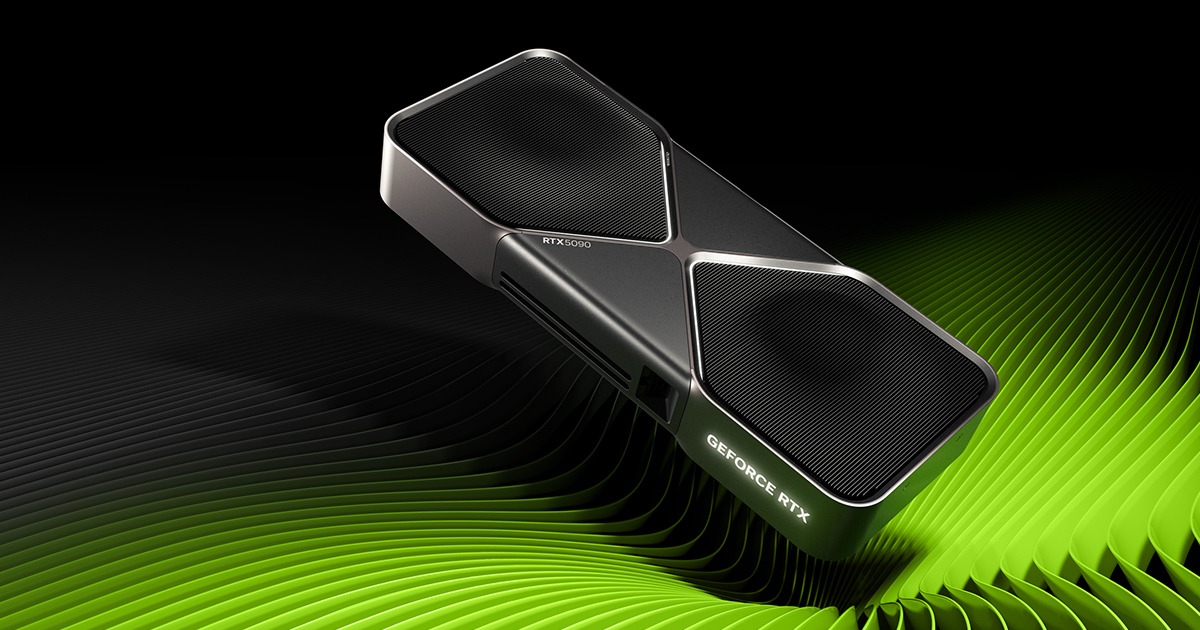
The Apex of NVIDIA’s GeForce Lineup: A Deep Dive into the RTX 40 Series
As of my last update, NVIDIA’s latest generation of consumer graphics cards belongs to the GeForce RTX 40 Series, powered by the Ada Lovelace architecture. Within this series, the undisputed king is typically the GeForce RTX 4090. This card represents a monumental leap in performance and efficiency compared to its predecessors, designed to deliver uncompromised experiences in gaming, professional creative applications, and the burgeoning field of AI acceleration.
Unpacking the Flagship’s Core Specifications
The RTX 4090 is an engineering marvel, boasting specifications that redefine desktop computing capabilities. At its heart lies a significantly larger GPU die, packed with an unprecedented number of CUDA Cores, Tensor Cores, and RT Cores. For instance, the RTX 4090 typically features over 16,000 CUDA Cores, a massive increase that translates directly to raw processing power. Coupled with a substantial 24GB of GDDR6X memory on a wide memory bus, it offers incredible bandwidth crucial for handling ultra-high-resolution textures and complex scene data in real-time. This immense memory capacity also makes it a powerhouse for professional tasks such as 3D rendering, video editing, and machine learning model training, where large datasets are routinely processed.
The boost clock speeds also push well beyond 2.5 GHz, further enhancing its computational throughput. While these numbers might seem abstract, they signify a card capable of delivering exceptionally high frame rates at 4K resolution, often exceeding 100 FPS in the most demanding AAA titles, even with ray tracing enabled. This level of performance fundamentally changes the immersive quality of gaming and the speed at which creative projects can be completed.
Architectural Innovations: Powering Next-Gen Performance
The Ada Lovelace architecture is the bedrock of the RTX 40 Series’ capabilities. It introduces several key innovations that collectively drive its performance dominance.
Firstly, a significant generational leap in Streaming Multiprocessor (SM) design provides more CUDA cores per clock cycle and improved cache hierarchy, boosting raw rasterization performance. Secondly, the third-generation RT Cores offer up to 2x ray tracing performance compared to the previous Ampere architecture. This enhancement is critical for rendering realistic lighting, reflections, and shadows, bringing cinematic quality to gaming and professional visualizations. Thirdly, fourth-generation Tensor Cores deliver up to 2x AI performance, which is vital for NVIDIA’s Deep Learning Super Sampling (DLSS) technology and various AI-accelerated applications.
A standout feature of Ada Lovelace is the introduction of Shader Execution Reordering (SER). This technology dynamically reorders shader workloads to improve ray tracing efficiency, leading to substantial performance gains in heavily ray-traced scenes. Additionally, the architecture incorporates Ada Optical Flow Accelerator technology, which plays a crucial role in Frame Generation. This innovative feature, part of DLSS 3, uses AI to generate entirely new frames between traditionally rendered frames, effectively doubling or even quadrupling frame rates in supported titles without sacrificing image quality, often making 4K ray-traced gaming truly smooth and enjoyable for the first time.
Beyond Raw Power: Features and Ecosystem Advantages
While raw specifications provide a baseline, NVIDIA’s leadership in the graphics card market is also solidified by its comprehensive ecosystem and advanced software features that enhance the user experience far beyond mere frame rates.
Ray Tracing and DLSS: Redefining Visual Fidelity
NVIDIA popularized real-time ray tracing, a rendering technique that simulates the physical behavior of light, producing hyper-realistic visuals. The RTX 40 Series, with its enhanced RT Cores and SER, takes this to new heights. Games and professional applications leveraging ray tracing benefit from unparalleled visual depth, realistic shadows, reflections, and global illumination.
Complementing ray tracing is Deep Learning Super Sampling (DLSS). This AI-powered upscaling technology renders frames at a lower resolution and then uses a deep learning model to reconstruct a sharp, high-resolution image, effectively boosting performance without a noticeable drop in visual quality. With DLSS 3, the inclusion of Frame Generation further amplifies this effect, synthesizing new frames using AI, leading to unprecedented frame rate increases. This combination allows gamers to experience demanding titles with stunning ray tracing effects at playable frame rates, often in 4K resolution, an achievement previously thought impossible. For professionals, it means faster viewport rendering and more efficient content creation workflows.
NVIDIA Studio and AI Applications: More Than Just Gaming
NVIDIA’s commitment extends beyond gaming into the professional creative space with its NVIDIA Studio platform. This initiative provides dedicated drivers (Studio Drivers), exclusive tools, and optimizations for creative applications, ensuring peak performance and stability for tasks like 3D rendering, video editing, graphic design, and live streaming. GPUs like the RTX 4090 are not just for gaming; they are powerful workstations capable of accelerating complex computations in applications such as Adobe Creative Suite, Blender, DaVinci Resolve, and Autodesk products. The sheer number of CUDA cores and large VRAM capacity makes quick work of tasks that would bog down lesser hardware.
Furthermore, the advanced Tensor Cores within the RTX 40 Series are instrumental in the explosion of AI and machine learning applications. From accelerating local AI models for image generation (e.g., Stable Diffusion), video upscaling, and noise reduction to powering professional deep learning research, these cards offer accessible, high-performance compute capabilities that are becoming increasingly vital across various industries.
Connectivity and Cooling Solutions
The RTX 40 Series cards typically feature modern connectivity options, including HDMI 2.1 and DisplayPort 1.4a, supporting ultra-high resolutions and refresh rates (e.g., 8K at 60Hz or 4K at 120Hz/240Hz). Power delivery for these potent cards often relies on the new 12VHPWR connector (PCIe Gen 5), which can deliver up to 600W through a single cable, simplifying power management.
Cooling is paramount for such high-performance hardware. NVIDIA’s Founders Edition cards, along with custom designs from partners like ASUS, MSI, and GIGABYTE, employ sophisticated cooling solutions featuring large heatsinks, multiple axial fans, and vapor chambers to efficiently dissipate heat and maintain optimal operating temperatures even under sustained heavy loads. This ensures consistent performance and longevity for the card.
Understanding NVIDIA’s Product Tiers and Naming Conventions
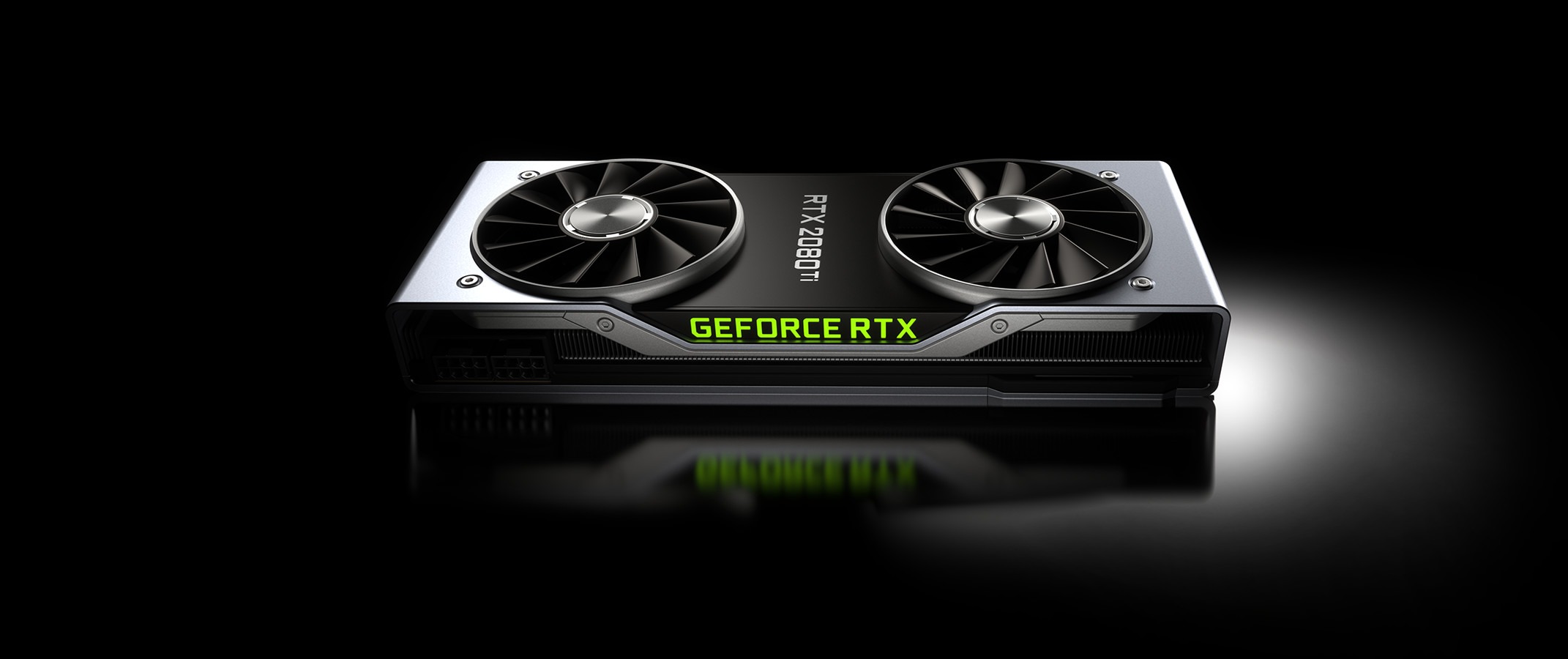
While the RTX 4090 stands at the pinnacle, NVIDIA’s lineup comprises a hierarchy of cards designed to cater to different performance needs and budgets. Understanding their naming conventions is key to navigating the market.
Decoding the “Ti,” “Super,” and “Founders Edition” Designations
- RTX 40 Series: This denotes the generation of the architecture (Ada Lovelace). The higher the number (e.g., 40 vs. 30), the newer the generation.
- x090, x080, x070, x060, x050: The two digits following the series number indicate the performance tier within that generation. Generally, a higher number signifies a more powerful card (e.g., 4090 is more powerful than 4080).
- “Ti” (Titanium): This suffix indicates an enhanced version of a base model within the same tier, offering a noticeable performance bump (e.g., RTX 4070 Ti is more powerful than a standard RTX 4070). These cards often bridge the gap between two performance tiers.

- “Super”: Similar to “Ti,” the “Super” designation signifies a refresh or an improved version of an existing card, typically offering better performance-per-dollar than the original model it replaces or complements, often with more CUDA cores or faster memory.
- Founders Edition (FE): These are NVIDIA’s own reference designs, often showcasing a premium build quality, a unique aesthetic, and robust cooling solutions designed by NVIDIA itself. Partner brands then release their own custom-designed cards based on NVIDIA’s chips, often with factory overclocks and proprietary cooling.
This tiered system ensures that consumers can find a card that balances their performance requirements with their financial considerations, from entry-level gaming to professional-grade computation.
The Generational Leap: Comparing Current vs. Previous Gen
The generational leap from the RTX 30 Series (Ampere) to the RTX 40 Series (Ada Lovelace) has been significant. While each generation brings improvements, Ada Lovelace delivered substantial gains, particularly in ray tracing and AI performance, thanks to the architectural refinements like SER and DLSS 3’s Frame Generation. This means that an RTX 4070, for example, can often outperform an RTX 3080 in certain scenarios, especially with ray tracing and DLSS enabled, demonstrating the efficiency gains and not just raw increases in core count. These generational improvements are what keep the technology moving forward, continually pushing the boundaries of what is possible on a desktop PC.
Who Needs the Latest and Greatest? Target Audiences and Use Cases
While the allure of the most powerful graphics card is undeniable, the RTX 4090, or even the 4080, is not necessary for everyone. Its target audience is specific, demanding users who require absolute top-tier performance.
For the Ultimate Gamer: Uncompromised Visuals and Frame Rates
The primary beneficiaries of the latest NVIDIA flagship are enthusiast gamers seeking the absolute best possible gaming experience. This includes those who demand:
- 4K Resolution Gaming: Playing the latest AAA titles at 3840×2160 resolution with maxed-out settings.
- High Refresh Rate Monitors: Achieving incredibly high frame rates (120Hz, 144Hz, 240Hz+) even at 1440p or 4K to fully utilize high refresh rate displays for competitive advantage or buttery-smooth visuals.
- Ray Tracing Immersion: Experiencing games with the most advanced ray tracing effects enabled, providing unparalleled visual realism.
- Future-Proofing: Investing in a card that will comfortably handle upcoming demanding titles for several years.
For these users, the RTX 4090 provides an unmatched level of performance, making compromises a thing of the past.
For Content Creators and Professionals: Speeding Up Workflows
Beyond gaming, the RTX 40 Series, especially the RTX 4090, is a game-changer for content creators and professionals in various fields:
- 3D Artists and Animators: Dramatically reducing rendering times in software like Blender, OctaneRender, and Autodesk Maya/3ds Max, allowing for faster iterations and higher quality outputs.
- Video Editors: Accelerating video encoding, decoding, and effects processing in applications like Adobe Premiere Pro and DaVinci Resolve, particularly for 4K and 8K footage.
- Architects and Engineers: Enhancing real-time architectural visualization, CAD rendering, and simulation workloads.
- AI/Machine Learning Researchers: Providing a powerful local platform for training and running complex neural networks, accelerating development and experimentation.
The significant VRAM, CUDA core count, and AI acceleration capabilities translate directly to substantial productivity gains for these users.
The Enthusiast’s Perspective: Benchmarking and Innovation Showcase
Finally, the latest flagship GPU serves the hardware enthusiast community as a benchmark for what’s possible. These users enjoy pushing hardware to its limits, running benchmarks, testing new technologies, and simply appreciating the engineering prowess involved. For them, owning the latest card is about being at the bleeding edge of technology and experiencing the highest level of computational performance available.
Looking Ahead: The Future of NVIDIA Graphics
The pace of innovation in the GPU market shows no signs of slowing down. While the RTX 40 Series represents the current zenith, NVIDIA is continually researching and developing the next generation of graphics technology.
Anticipating the Next Architectural Shift
Following Ada Lovelace, industry speculation and leaks often point towards future architectures such as “Blackwell” or “Rubin.” These next-generation designs will undoubtedly focus on further improvements in performance per watt, more advanced RT and Tensor Cores, and potentially new memory technologies or chiplet designs to overcome the physical limitations of monolithic dies. We can expect even greater integration of AI into the core architecture, not just for upscaling but for various rendering and computational tasks.
The Evolving Landscape of GPU Technology
The role of the GPU is also expanding beyond traditional graphics rendering. With the explosion of AI, GPUs are becoming indispensable general-purpose accelerators for a vast array of computational tasks. Future NVIDIA cards will likely see even deeper integration of AI capabilities, making them more versatile than ever. Power efficiency will remain a critical focus, with continuous efforts to deliver more performance within reasonable power envelopes. Furthermore, the interplay between CPU and GPU, driven by technologies like PCIe Gen 5 and future interconnects, will continue to evolve, unlocking even greater system-wide performance.
In conclusion, the latest NVIDIA graphics card, typically the GeForce RTX 4090, is not just a component; it’s a testament to relentless innovation. It offers unparalleled performance for high-end gaming and professional creative tasks, powered by groundbreaking architectural advancements and a robust software ecosystem. For those who demand the absolute best from their computing experience, the latest NVIDIA GPU is a powerful gateway to the future of digital interaction.
aViewFromTheCave is a participant in the Amazon Services LLC Associates Program, an affiliate advertising program designed to provide a means for sites to earn advertising fees by advertising and linking to Amazon.com. Amazon, the Amazon logo, AmazonSupply, and the AmazonSupply logo are trademarks of Amazon.com, Inc. or its affiliates. As an Amazon Associate we earn affiliate commissions from qualifying purchases.