
For investors, analysts, and market watchers, few events command as much attention in the tech sector as NVIDIA’s quarterly earnings reports. Far from being a mere procedural announcement, these disclosures are critical market-moving events that offer deep insights into the health of the semiconductor industry, the relentless pace of artificial intelligence development, and the broader economic landscape. The timing of such a report is not just a logistical detail; it’s a strategic piece of information that sets the stage for market reactions, trading strategies, and long-term investment decisions. Understanding when NVIDIA will release its financial results, what to look for, and how to interpret the data is paramount for anyone navigating the complexities of modern finance.
NVIDIA Corporation (NVDA) has transcended its origins as a graphics card manufacturer to become the undisputed leader in accelerated computing and a pivotal enabler of the artificial intelligence revolution. Its GPUs power everything from the most sophisticated data centers and AI research labs to high-end gaming rigs and autonomous vehicles. Consequently, each earnings call is dissected with meticulous care, providing a quarterly pulse check on one of the most influential companies in the world. This article will delve into the critical aspects surrounding NVIDIA’s earnings reports, guiding investors on what to expect, when to prepare, and how to approach these high-stakes financial disclosures from a purely monetary perspective.
The Anticipation: A Deep Dive into NVIDIA’s Earnings Schedule
The release of NVIDIA’s earnings report is a carefully choreographed event designed to provide transparency to the market while managing potential volatility. Knowing the precise timing is the first step for any serious investor.
The Critical Date and Time
NVIDIA, like most publicly traded companies, typically reports its quarterly earnings after the market closes on a specified date. This timing allows institutional investors, analysts, and retail traders alike to process the information without disrupting live trading sessions. While the exact date shifts slightly each quarter, it usually falls within a predictable window, approximately three to six weeks after the end of the fiscal quarter.
For instance, NVIDIA is generally expected to report its first-quarter earnings in May, second-quarter earnings in August, third-quarter earnings in November, and fourth-quarter earnings (which coincides with its full fiscal year) in February. The announcement typically occurs between 4:00 PM and 4:30 PM Eastern Time (ET) on the chosen day, immediately followed by the release of the official earnings press release. A live conference call and webcast with NVIDIA’s management usually commences an hour later, typically at 5:00 PM ET. This call provides crucial context, management’s outlook, and a question-and-answer session with analysts. Investors must consult NVIDIA’s official Investor Relations website or reputable financial news outlets closer to the expected date for the most precise confirmation.
Understanding Earnings Cycles and Fiscal Calendars
Public companies operate on fiscal calendars that may or may not align with the standard calendar year. NVIDIA’s fiscal year ends on the last Sunday of January. This means:
- Q1: Ends the last Sunday of April.
- Q2: Ends the last Sunday of July.
- Q3: Ends the last Sunday of October.
- Q4: Ends the last Sunday of January.
Understanding this calendar is essential because all reported figures, guidance, and comparisons are based on these fiscal periods, not the common calendar quarters. This framework allows for consistent year-over-year and sequential comparisons, which are vital for assessing financial performance trends. The earnings call will discuss results for the recently concluded fiscal quarter and provide guidance for the current fiscal quarter.
Where to Find Official Announcements and Resources
Reliance on unofficial sources for earnings information can lead to misinformed decisions. Savvy investors always turn to primary sources:
- NVIDIA Investor Relations Website: This is the definitive source for earnings dates, press releases, financial reports (10-Q and 10-K filings with the SEC), and webcast archives of conference calls.
- SEC Filings: Detailed financial statements are filed with the U.S. Securities and Exchange Commission (SEC) on Form 10-Q (quarterly) and 10-K (annual). These documents provide audited financials and comprehensive disclosures.
- Reputable Financial News Outlets: Major financial news services (e.g., Bloomberg, Reuters, The Wall Street Journal, CNBC) will widely report the earnings date and provide comprehensive coverage immediately following the announcement. However, always cross-reference key figures with official NVIDIA releases.
Why NVIDIA’s Earnings Reports Matter to Investors
An NVIDIA earnings report is far more than a simple numerical disclosure; it’s a comprehensive narrative that can significantly sway investor sentiment and the broader market. Its implications ripple through the portfolios of individual investors, institutional funds, and the global supply chain.
Beyond the Numbers: Key Metrics to Watch
While the headline figures often grab immediate attention, a holistic understanding requires diving deeper into several key metrics:
- Revenue and Earnings Per Share (EPS): These are the most watched figures. Investors compare reported revenue and adjusted EPS against analyst consensus estimates. A “beat” (exceeding estimates) often propels the stock higher, while a “miss” can lead to a significant sell-off.
- Guidance (Outlook): Perhaps the most critical component, management’s forward-looking guidance for the next quarter’s revenue and gross margin offers a direct view into their expectations for future performance. Strong guidance can overshadow a slight miss on current earnings, signaling confidence in ongoing growth. Conversely, weak guidance can trigger alarm bells even if current results are good.
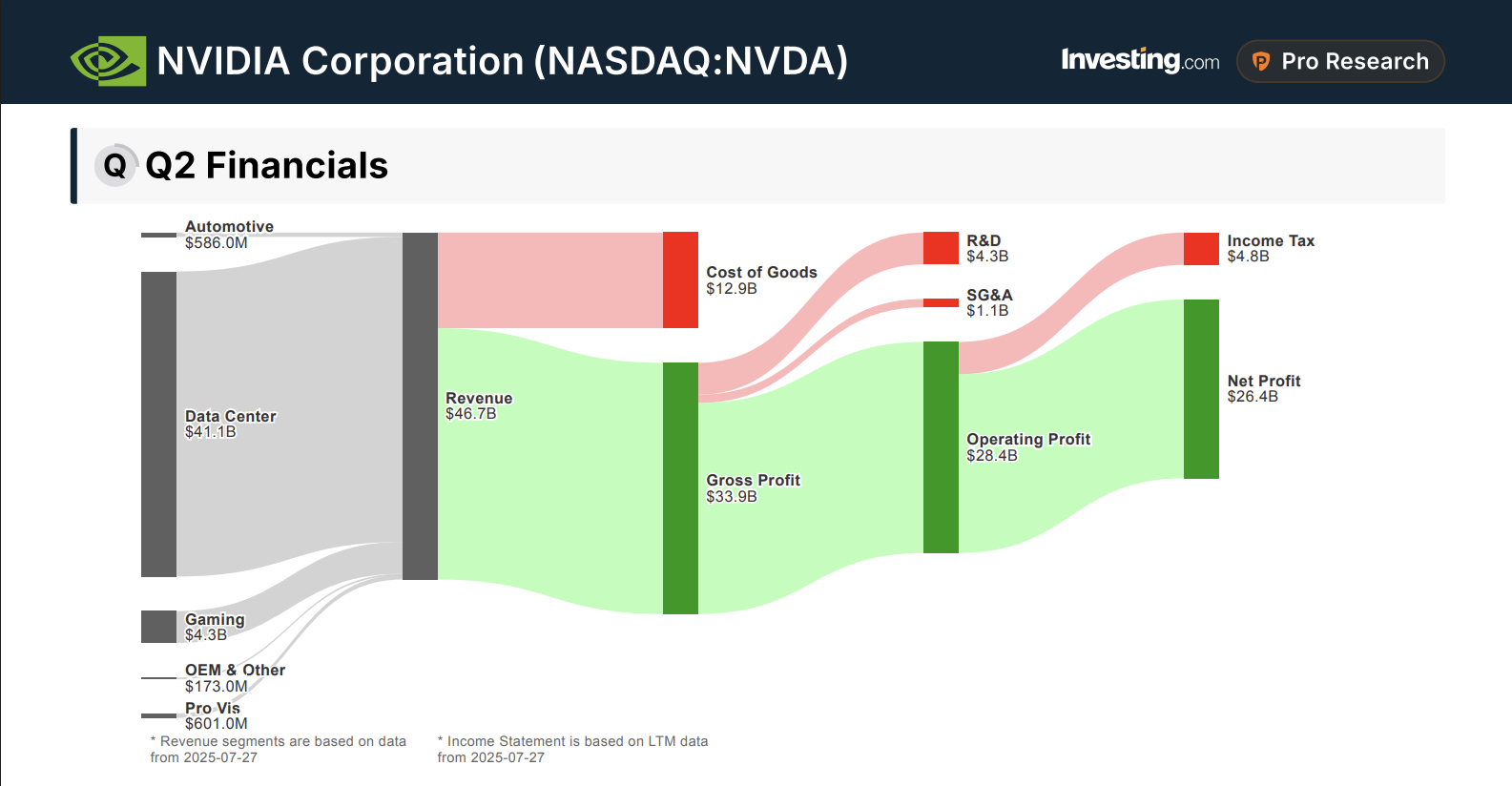
- Segment Performance: NVIDIA reports revenue across several key segments:
- Data Center: This is the engine of NVIDIA’s growth, driven by AI accelerators, networking, and software platforms (CUDA). Investors scrutinize this segment for continued hyper-growth, indicating the strength of AI adoption.
- Gaming: Historically NVIDIA’s largest segment, it provides insight into the consumer PC market and the health of the GPU upgrade cycle.
- Professional Visualization: Revenue from high-end workstations and enterprise design applications.
- Automotive: Although smaller, this segment is a crucial long-term growth driver, focusing on autonomous driving platforms and in-car infotainment.
- Analyzing the growth rates and commentary for each segment provides a granular understanding of NVIDIA’s diverse revenue streams and strategic priorities.
- Gross Margin: This metric (revenue minus cost of goods sold, divided by revenue) indicates the company’s pricing power and efficiency. Sustained high gross margins are crucial for profitability, especially for a hardware-heavy company.
- Inventory Levels: Changes in inventory can signal demand fluctuations or supply chain issues. Rising inventory could indicate slowing demand or overproduction, while declining inventory could suggest strong demand or supply constraints.
Impact on Stock Price and Market Dynamics
NVIDIA’s stock (NVDA) is renowned for its volatility around earnings reports. Positive surprises or robust guidance can lead to double-digit percentage gains in after-hours trading and the subsequent day. Conversely, disappointments can trigger similar declines. This volatility stems from:
- High Expectations: NVIDIA trades at a premium valuation due to its leadership in AI, meaning investors have high growth expectations priced into the stock. Any deviation from these expectations can cause an outsized reaction.
- Algorithmic Trading: Automated trading systems react instantaneously to earnings headlines, amplifying initial price movements.
- Broader Market Influence: Given NVIDIA’s significant market capitalization and its role as an AI bellwether, its earnings can influence the entire semiconductor sector (e.g., AMD, Intel, ASML, TSMC), the broader technology market, and even major indices like the S&P 500 and Nasdaq 100.
The Role of Analyst Consensus

Before an earnings report, financial analysts from various investment banks publish their earnings estimates and target prices for NVIDIA. These individual estimates are aggregated to form a “consensus estimate” for revenue and EPS. Investors primarily measure NVIDIA’s performance against this consensus. The narrative surrounding the report often hinges on whether the company “beats” or “misses” these collective expectations. Management’s commentary during the conference call, especially regarding their outlook, often leads analysts to revise their ratings and price targets, which can further influence stock movement in the days and weeks following the report.
Strategic Considerations for Investors Around Earnings
Navigating NVIDIA’s earnings reports requires a well-thought-out strategy. The period leading up to and immediately following the announcement is characterized by heightened volatility, presenting both opportunities and risks for investors.
Pre-Earnings Volatility and Position Adjustments
Many investors choose to adjust their positions in the days or hours leading up to the earnings announcement. This can involve:
- Reducing Exposure: Some investors may trim their NVDA holdings to de-risk against a potential earnings disappointment.
- Options Strategies: Sophisticated investors might use options to hedge their positions or speculate on the earnings outcome. For example, buying calls to profit from a potential surge, or using a “straddle” or “strangle” strategy to profit from significant volatility in either direction, regardless of whether the stock goes up or down. These strategies are complex and carry substantial risk.
- Pre-Market Momentum: Observing pre-market trading and analyst commentary can offer clues, though these are often speculative and should be treated with caution. The market often tries to “price in” anticipated results, leading to a run-up or sell-off before the actual report.
It’s crucial to remember that holding a stock through an earnings report is inherently a higher-risk proposition due to the binary nature of the outcome (beat or miss, and guidance).
Post-Earnings Analysis and Decision Making
Once the earnings are released, the real work for investors begins. It’s not enough to simply see the headline numbers.
- Digest the Press Release: Start by thoroughly reading NVIDIA’s official earnings press release. Pay attention to the detailed financial tables, segment breakdowns, and non-GAAP adjustments.
- Listen to the Conference Call: The live webcast and subsequent transcript of the earnings call are invaluable. Management’s tone, emphasis, and answers to analyst questions provide qualitative insights that numbers alone cannot convey. Listen for details on product cycles, competitive landscape, supply chain dynamics, and specific market trends (e.g., AI adoption rates, enterprise spending).
- Compare to Expectations: Evaluate how the results compare not just to analyst consensus but also to your own investment thesis and prior expectations.
- Re-evaluate Investment Thesis: After absorbing all the information, reassess your investment thesis for NVIDIA. Has anything fundamentally changed? Does the guidance align with long-term growth prospects? Have new risks or opportunities emerged?
Decisions made immediately after earnings should be based on a comprehensive understanding, not just a knee-jerk reaction to initial stock price movements.
Long-Term vs. Short-Term Perspectives
For long-term investors, earnings reports are merely data points in a broader journey. While short-term volatility is inevitable, their focus remains on NVIDIA’s fundamental growth drivers: its technological leadership, market share in critical sectors like AI, innovation pipeline, and strategic positioning. A single quarter’s fluctuation, even a significant one, might not alter a long-term bullish thesis if the underlying fundamentals remain strong and the company continues to execute on its strategic vision.
Conversely, short-term traders might seek to capitalize on the immediate post-earnings price swings. Their strategies are often based on technical analysis, option pricing, and rapid reaction to news, aiming for quick profits but also facing higher risk. Regardless of the investment horizon, understanding the timing and potential impact of NVIDIA’s earnings is a fundamental component of financial literacy in today’s market.
NVIDIA’s Position in the AI Revolution: A Fundamental Driver
Beyond the quarterly numbers, what underpins investor confidence and the market’s fascination with NVIDIA is its pivotal role in the ongoing artificial intelligence revolution. This fundamental strength drives its financial performance and influences long-term investment theses.
The Data Center Dominance
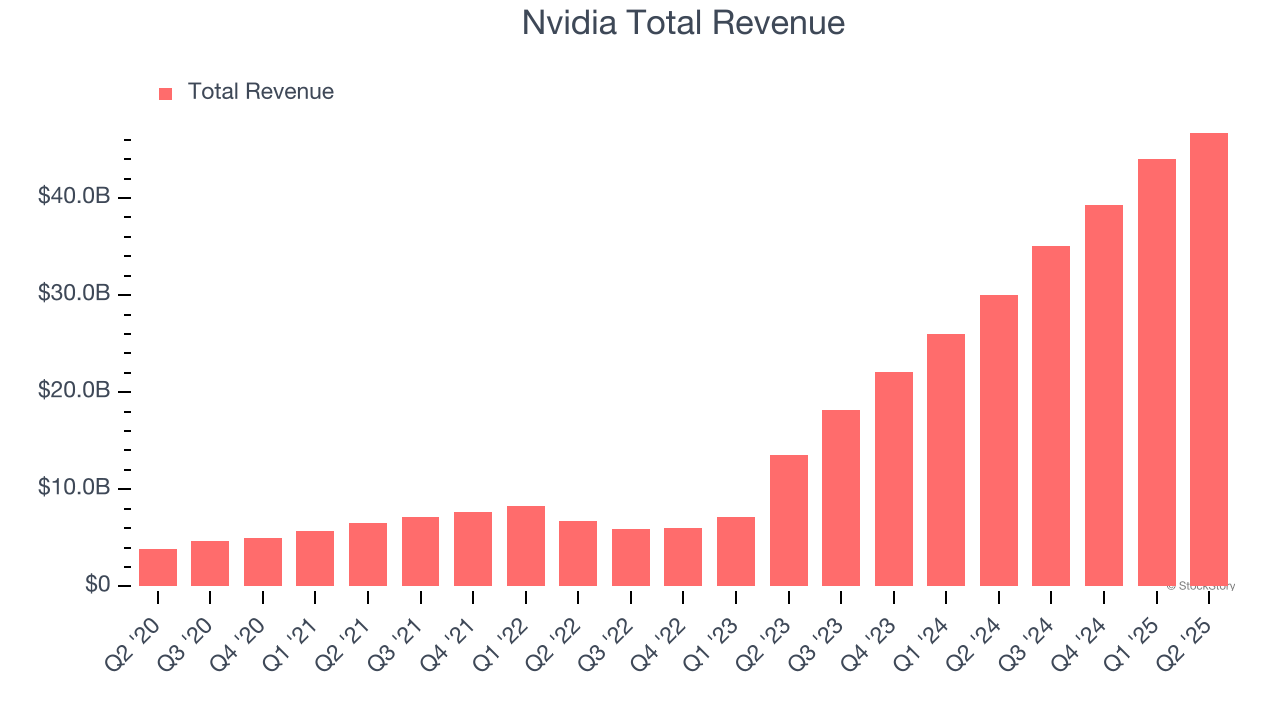
NVIDIA’s Data Center segment has become its primary growth engine, fueled by the insatiable demand for AI computing power. The company’s GPUs, like the H100 and A100 series, are the de facto standard for training and deploying large language models (LLMs) and other complex AI algorithms. This dominance is not just about raw silicon; it’s about a comprehensive ecosystem.
- CUDA: NVIDIA’s proprietary parallel computing platform and programming model, CUDA, is deeply entrenched within the AI developer community. Its vast libraries and tools create a powerful moat, making it difficult for competitors to displace NVIDIA’s leadership.
- Networking: Mellanox, acquired by NVIDIA, provides high-speed networking solutions essential for connecting thousands of GPUs in massive AI clusters, further solidifying NVIDIA’s end-to-end data center solution.
- Software and Services: NVIDIA’s strategy extends to software platforms like NVIDIA AI Enterprise, which helps businesses deploy and manage AI at scale, and AI Foundry services, which assist companies in developing custom AI models. This holistic approach captures value across the entire AI stack.
Expanding Ecosystem and Future Growth Vectors
NVIDIA is not resting on its laurels. The company is actively expanding its reach and developing new growth avenues:
- Enterprise AI: Beyond cloud providers, NVIDIA is increasingly targeting enterprises across various industries (healthcare, finance, manufacturing) to help them integrate AI into their operations.
- Sovereign AI: Nations are investing heavily in building their own AI infrastructure for data security and strategic autonomy, often turning to NVIDIA for their foundational technology.
- Robotics and Autonomous Systems: NVIDIA’s Jetson platform powers edge AI applications in robotics, drones, and smart factories. Its Drive platform is at the forefront of autonomous vehicle development.
- Omniverse: The Omniverse platform is NVIDIA’s vision for the industrial metaverse, enabling real-time collaborative 3D simulation and digital twins, a potentially massive market for industrial design, manufacturing, and logistics.
These strategic initiatives underscore NVIDIA’s ambition to remain at the forefront of technological innovation and capture new revenue streams, providing a strong narrative for long-term investors even amidst short-term market fluctuations.
Conclusion
NVIDIA’s earnings reports are high-stakes financial events that offer critical insights into one of the most transformative companies of our era. For investors, understanding “what time will NVIDIA report earnings” is merely the starting point. The real value lies in a meticulous analysis of the reported figures, the nuanced guidance provided by management, and the underlying fundamental trends driving its growth. From dissecting revenue and EPS to scrutinizing segment performance and gross margins, every data point contributes to a comprehensive picture of the company’s health and future prospects.
Strategic investors leverage this information to adjust positions, evaluate risk, and validate or revise their long-term theses. While short-term volatility around earnings is a given, NVIDIA’s enduring leadership in AI, its robust data center ecosystem, and its expanding portfolio of innovative solutions paint a compelling narrative for sustained growth. By diligently monitoring these financial disclosures and looking beyond the immediate headlines, investors can better position themselves to navigate the dynamic landscape of the stock market and participate in the ongoing AI revolution that NVIDIA continues to lead.
aViewFromTheCave is a participant in the Amazon Services LLC Associates Program, an affiliate advertising program designed to provide a means for sites to earn advertising fees by advertising and linking to Amazon.com. Amazon, the Amazon logo, AmazonSupply, and the AmazonSupply logo are trademarks of Amazon.com, Inc. or its affiliates. As an Amazon Associate we earn affiliate commissions from qualifying purchases.