
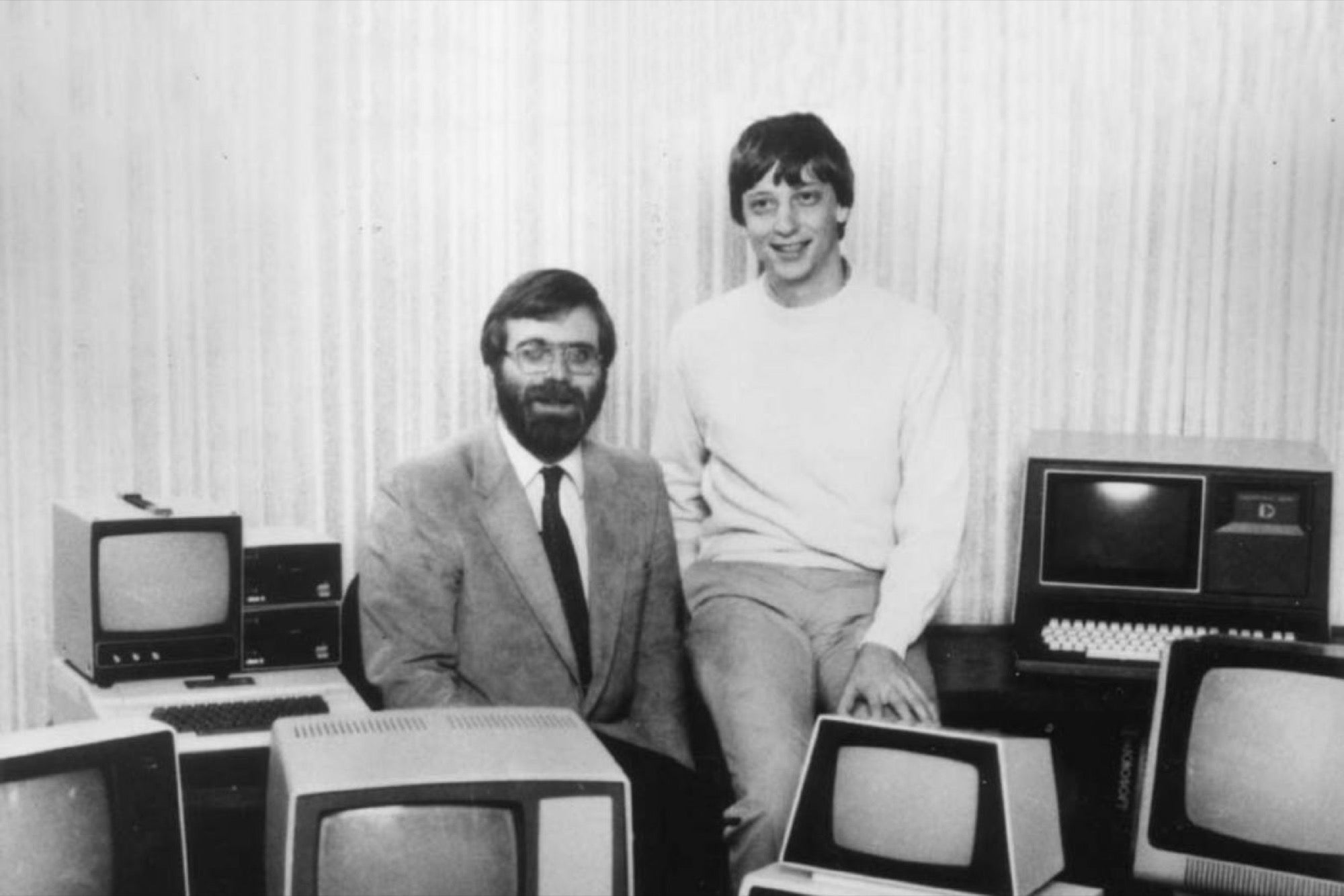
The story of modern computing is inextricably linked with the genesis and evolution of Microsoft, a company that fundamentally reshaped how the world interacts with technology. From its humble beginnings to its current status as a global tech giant, Microsoft’s formation marked a pivotal moment in the digital revolution. Founded by Bill Gates and Paul Allen, Microsoft officially came into existence on April 4, 1975, in Albuquerque, New Mexico. This date wasn’t merely the registration of a company; it heralded the birth of an entity that would tirelessly drive innovation, democratize computing, and embed its software at the core of personal and professional digital life. Understanding Microsoft’s formation is to grasp a foundational chapter in the history of software development, operating systems, and the pervasive technological landscape we inhabit today.
The Genesis: A Vision Takes Shape in Early Computing
The mid-1970s represented a fascinating, nascent period for computing. Mainframes dominated the landscape, and the idea of a personal computer, let alone one powerful enough for everyday use, was still largely a dream. Yet, amidst this backdrop, two young visionaries saw a future where computers would be ubiquitous, powered by accessible and robust software. This shared vision fueled the foundational efforts that would soon coalesce into Microsoft.
The Altair 8800 Connection: A Catalyst for Creation
The spark that ignited Microsoft’s formation came from an unexpected source: the Altair 8800 microcomputer. Released by Micro Instrumentation and Telemetry Systems (MITS) in December 1974, the Altair was one of the first commercially successful personal computers. While primitive by today’s standards – requiring manual input of binary code through front-panel switches – it captivated hobbyists and enthusiasts, signaling a paradigm shift towards personal computing.
Bill Gates and Paul Allen, lifelong friends and computing enthusiasts, read about the Altair in the January 1975 issue of Popular Electronics magazine. They immediately recognized its potential, but also its glaring limitation: the lack of accessible programming software. Without a high-level language, interacting with the Altair was an arduous task, limiting its appeal and utility. They envisioned a solution: a BASIC interpreter that would allow users to program the Altair in a more user-friendly language. This wasn’t just about making a program; it was about unlocking the computational power of a new device for a broader audience, a truly transformative technological undertaking.
From MITS to Microsoft: Building the First Interpreter
Driven by an audacious belief, Gates and Allen contacted MITS, falsely claiming to have a BASIC interpreter for the Altair. MITS, eager for software to accompany their hardware, expressed interest, prompting Gates and Allen to race against time. Working tirelessly for eight weeks in their Harvard dorm room (Gates) and at Allen’s apartment, they developed Altair BASIC, emulating the Altair on Harvard’s PDP-10 minicomputer. Allen flew to Albuquerque in March 1975 to demonstrate the interpreter to MITS. Despite having to debug it on the fly and never having tested it on an actual Altair before the demonstration, it worked flawlessly.
This success led to MITS licensing the Altair BASIC interpreter. It was this initial agreement and the need for a formal business entity to manage such ventures that prompted the official formation of Microsoft. The name “Micro-Soft” (initially hyphenated) was coined by Allen and Gates to signify their focus on microcomputer software, a niche that would rapidly expand into the mainstream. The company was founded to develop and sell BASIC interpreters for various microcomputers, establishing itself as a software-first enterprise at a time when hardware often overshadowed software’s importance. This early success proved that software could be a valuable, independent product, laying the groundwork for the modern software industry.
Early Software Development Challenges and Innovations
The first few years for Microsoft were characterized by intense development and strategic positioning. They quickly moved beyond Altair BASIC, adapting and enhancing their BASIC interpreter for other microprocessors and platforms, effectively creating an early standard for software compatibility. This involved tackling complex technical challenges related to memory constraints, processor architectures, and differing hardware specifications. The company’s innovative approach to licensing their software, rather than selling exclusive rights, allowed their products to proliferate across various hardware vendors, expanding their market reach and influence. This strategy foreshadowed Microsoft’s future role in establishing cross-platform software standards, a core technological principle that would define the industry for decades.
The OS Revolution: MS-DOS and the IBM Partnership
While Microsoft began with programming languages, its true technological ascendancy began with operating systems. The late 1970s and early 1980s saw the rapid growth of the personal computer market, but a critical piece of the puzzle was still missing: a standardized, robust operating system that could run on diverse hardware. Microsoft stepped into this void, not by inventing the first PC operating system, but by strategically acquiring and developing the one that would become the industry standard.
The QDOS Acquisition: A Fortuitous Turn
In 1980, IBM, then the undisputed titan of the computing world, decided to enter the nascent personal computer market. They needed an operating system for their revolutionary IBM PC. Initially, IBM approached Digital Research, creator of CP/M, the dominant operating system for 8-bit microcomputers at the time. However, licensing negotiations stalled. Desperate, IBM turned to Microsoft, primarily known for its programming languages.
Microsoft, surprisingly, did not have its own operating system ready for an 8086-based machine (the processor IBM planned to use). However, Bill Gates, ever the astute strategist, recommended Seattle Computer Products’ (SCP) 86-DOS, also known as QDOS (Quick and Dirty Operating System), developed by Tim Paterson. In a remarkable display of foresight and swift action, Microsoft purchased QDOS outright from SCP for a mere $50,000 in July 1981, rebranding it as MS-DOS (Microsoft Disk Operating System). This acquisition was a gamble, but one that would pay off handsomely, placing Microsoft at the center of the burgeoning PC ecosystem. The technological brilliance wasn’t in QDOS’s initial elegance, but in Microsoft’s ability to rapidly refine, optimize, and scale it for a mass market.
Forging the IBM Deal: A Strategic Masterstroke
With MS-DOS in hand, Microsoft sealed a groundbreaking deal with IBM. Crucially, Gates insisted that Microsoft retain the rights to license MS-DOS to other hardware manufacturers. This decision was a masterstroke, a technological and business maneuver that single-handedly defined Microsoft’s trajectory for the next two decades. IBM’s entry into the PC market legitimized personal computing, and the IBM PC, running MS-DOS, quickly became the industry benchmark.
Because Microsoft could license MS-DOS to other PC manufacturers who inevitably cloned the IBM PC, MS-DOS rapidly became the de facto standard operating system. This meant that any software developer creating applications for the IBM PC and its clones would target MS-DOS. This technological convergence facilitated an explosion in software development, driving innovation not just in operating systems but across the entire application landscape. Microsoft’s operating system became the foundation upon which countless other tech companies built their products, establishing a powerful platform effect.
Establishing PC Standards: A Foundation for Growth
The widespread adoption of MS-DOS created a critical technological standard. It ensured compatibility across a multitude of hardware vendors, fostering a robust ecosystem of applications and peripherals. Developers no longer had to write separate versions of their software for every different computer; they could target MS-DOS, confident in its broad reach. This standardization significantly lowered the barrier to entry for both software developers and hardware manufacturers, fueling the exponential growth of the personal computer industry. Microsoft’s MS-DOS wasn’t the most advanced operating system of its time, but its ubiquity and the ecosystem it fostered made it an undeniable technological powerhouse, setting the stage for even greater advancements.
Windows to the World: The Graphical Interface Era
While MS-DOS laid the groundwork, it was the graphical user interface (GUI) that truly democratized computing, making it accessible to millions beyond tech enthusiasts. Microsoft’s answer to this evolving need was Windows, a revolutionary operating environment that transformed how users interacted with their PCs.
The Ambitious Project: Bringing GUI to the Masses
Microsoft recognized early on the limitations of command-line interfaces like MS-DOS. Inspired by Xerox PARC’s pioneering work and Apple’s subsequent commercialization with the Macintosh, Gates understood that a visual, intuitive interface would unlock the true potential of personal computing for a mainstream audience. The Windows project began in 1983, aiming to provide a graphical “operating environment” that ran on top of MS-DOS. It wasn’t a full operating system initially, but a shell designed to simplify interactions and allow multitasking.
Windows 1.0, released in November 1985, was a significant technological leap. While it faced initial challenges and competition, it laid the essential groundwork for future iterations. It introduced concepts like graphical windows, icons, menus, and a mouse as a primary input device, fundamentally altering the user experience. This was a direct push towards making computers less intimidating and more productive for a wider demographic, a key technological shift from textual commands to visual interaction.

The GUI’s Impact on Users and Software Development
The true breakthrough came with Windows 3.0 in 1990, which offered a much more stable and aesthetically pleasing GUI. Its success was further cemented by the integration with popular applications like Microsoft Word and Excel, which fully leveraged the graphical environment. Windows 3.1 and then Windows 95, released in 1995, solidified Microsoft’s dominance. Windows 95, in particular, was a monumental technological achievement. It was a standalone operating system, not just an environment, and introduced features like the Start button, taskbar, and plug-and-play capabilities that became synonymous with PC usage.
The widespread adoption of Windows profoundly impacted software development. Developers shifted their focus from character-based interfaces to graphical applications, leading to richer, more intuitive software. The Windows API (Application Programming Interface) became the standard for developing PC applications, creating an enormous ecosystem of compatible software and hardware. This standardization fostered innovation across the entire tech stack, from graphics cards to input devices, all designed to enhance the Windows experience. The sheer volume of users and developers meant that Windows became the primary platform for digital creativity, communication, and productivity.
Navigating the OS Wars and Maintaining Dominance
Microsoft’s journey with Windows was not without its battles. It faced stiff competition from other operating systems like OS/2 (initially a joint venture with IBM), and later, from Apple’s Mac OS. However, Microsoft’s strategy of aggressive licensing to hardware manufacturers, coupled with continuous technological refinement and a vast application ecosystem, ensured its enduring dominance. Each new version of Windows (Windows 98, XP, Vista, 7, 8, 10, 11) brought significant technological advancements in terms of stability, security, networking capabilities, and user experience, consistently pushing the boundaries of what a personal computer could do. This iterative innovation and commitment to backward compatibility were crucial factors in maintaining its technological leadership in the desktop OS market.
Beyond the Desktop: Diversification and Innovation
While its desktop operating systems and office productivity suites formed the bedrock of its success, Microsoft never rested on its laurels. Recognizing the ever-evolving nature of technology, the company embarked on ambitious diversification strategies, expanding its influence into new and critical areas, from enterprise servers to the internet, gaming, and now, cloud computing and artificial intelligence.
Enterprise Software and Servers: Powering Businesses
Even as Windows conquered the consumer desktop, Microsoft was quietly building a formidable presence in the enterprise sector. Windows NT (New Technology), first released in 1993, marked a significant departure from the MS-DOS lineage, offering a more robust, secure, and scalable operating system designed for networked business environments. This paved the way for Windows Server, a family of operating systems that became the backbone for countless corporate networks, data centers, and web services globally.
Alongside Windows Server, Microsoft developed a powerful suite of enterprise software, including SQL Server for database management, Exchange Server for email and collaboration, and SharePoint for content management. These technologies became indispensable tools for businesses of all sizes, providing the infrastructure and applications necessary for modern operations. This focus on enterprise-grade solutions demonstrated Microsoft’s ability to scale its technological prowess from personal computing to complex, mission-critical business environments.
The Internet Browser Wars: Adapting to a New Frontier
The advent of the World Wide Web in the mid-1990s presented both a challenge and an opportunity. Microsoft, initially slow to grasp the internet’s full potential, quickly pivoted to make web technologies a central part of its strategy. The “browser wars” of the late 1990s, primarily between Microsoft’s Internet Explorer and Netscape Navigator, illustrate this pivot. By integrating Internet Explorer directly into Windows, Microsoft leveraged its OS dominance to rapidly gain market share, albeit controversially. This period spurred massive technological investment in web development tools, protocols, and the integration of internet capabilities directly into the operating system, fundamentally changing how users accessed information and applications. The technical competition drove innovation in browser technology, security, and web standards.
Xbox and Consumer Tech: A Leap into Entertainment
In a bold move beyond its traditional software and enterprise focus, Microsoft entered the highly competitive consumer electronics market with the launch of the Xbox in 2001. This venture into video game consoles was a massive technological undertaking, requiring expertise in hardware design, graphics processing, game development, and online services. The Xbox, and its subsequent iterations (Xbox 360, Xbox One, Xbox Series X/S), established Microsoft as a major player in the gaming industry, fostering innovation in interactive entertainment, online multiplayer experiences (Xbox Live), and advanced graphics hardware. It represented a diversification of Microsoft’s technological portfolio into a completely new domain, showcasing its engineering prowess beyond productivity software.
The Dawn of Cloud Computing: Azure’s Ascendancy
Perhaps Microsoft’s most significant strategic and technological shift in recent decades has been its aggressive pivot to cloud computing. Recognizing the paradigm shift from on-premise servers to scalable, internet-based infrastructure, Microsoft launched Azure in 2010. Azure is a comprehensive suite of cloud services that provides computing power, storage, networking, databases, analytics, machine learning, and much more, all accessible over the internet.
This move transformed Microsoft from a primarily software-licensing company into a leading provider of cloud infrastructure and platforms. Azure’s growth has been phenomenal, competing directly with AWS and Google Cloud. It represents a massive investment in global data center infrastructure, advanced virtualization technologies, and distributed computing, enabling businesses worldwide to innovate and scale without managing their own hardware. Azure exemplifies Microsoft’s continuous adaptation and commitment to leading the next wave of technological evolution.
AI and the New Frontier: Intelligent Computing
Today, Microsoft is at the forefront of the artificial intelligence revolution. From embedding AI capabilities across its product line (Office 365, Dynamics 365) to developing cutting-edge AI research and tools (Azure AI, Cognitive Services), the company is making significant contributions to machine learning, natural language processing, computer vision, and more. Its substantial investment in OpenAI and the integration of models like GPT into its Bing search engine and other products signals a deep commitment to intelligent computing. This current phase reflects Microsoft’s ongoing dedication to pushing the boundaries of what technology can achieve, aiming to make AI a pervasive and beneficial force across all aspects of digital life.
Microsoft’s Enduring Legacy and Future Trajectory
From its inception in 1975, Microsoft has been more than just a software company; it has been a relentless driver of technological progress, shaping the digital world in profound and lasting ways. Its journey is a testament to the power of vision, strategic adaptation, and continuous innovation.
Shaping the Digital Landscape: A Pervasive Influence
Microsoft’s contributions to technology are ubiquitous. It democratized computing through accessible operating systems and productivity software, making technology a tool for everyone, not just specialists. It set industry standards that fostered compatibility and accelerated software development. It built the infrastructure that powers countless businesses and continues to innovate in critical areas like cloud computing and artificial intelligence. The sheer breadth and depth of its technological footprint are unparalleled, impacting how we work, communicate, learn, and entertain ourselves. The company’s legacy is etched into the very fabric of the modern digital experience.
Continuous Adaptation and Reinvention: The Key to Longevity
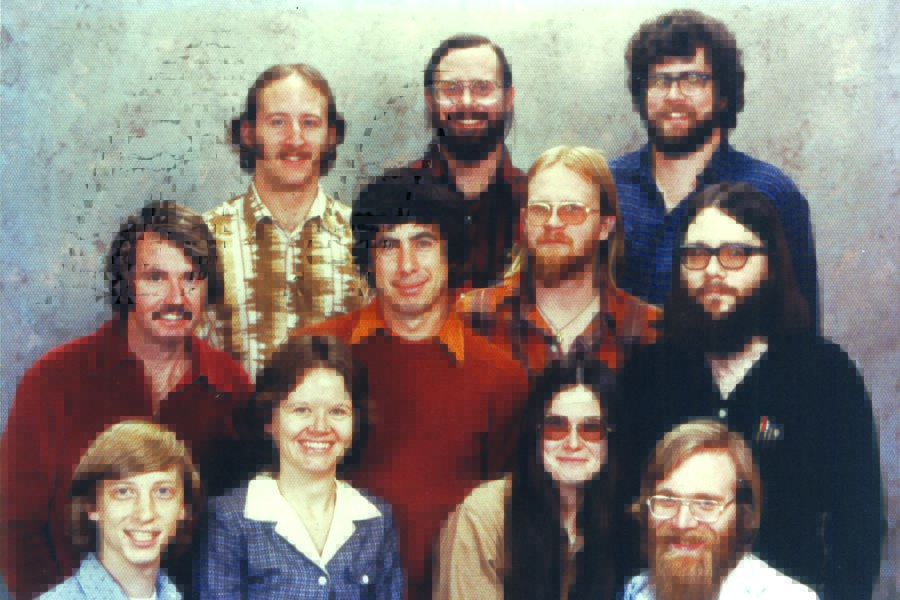
What makes Microsoft’s story particularly compelling is its ability to adapt and reinvent itself in the face of ever-changing technological paradigms. From programming languages to operating systems, from desktop dominance to internet and cloud leadership, and now to AI, Microsoft has consistently demonstrated a capacity to evolve its core technological focus. This continuous reinvention, often requiring bold shifts in strategy and massive investments in research and development, has been critical to its enduring relevance and success. It’s a company that has learned to embrace disruption, often becoming the disruptor itself.
The Future of Computing at Microsoft: An AI-Powered World
As Microsoft looks to the future, its trajectory is clearly focused on intelligent computing, ambient experiences, and robust, secure cloud infrastructure. The emphasis on AI integration across its product ecosystem, from developer tools to end-user applications, signals a vision where technology becomes even more intuitive, proactive, and assistive. With its vast resources, deep technical expertise, and a history of overcoming challenges, Microsoft remains a pivotal force in driving the next wave of technological innovation. Its foundation nearly five decades ago set the stage for a technological journey that continues to define and redefine the boundaries of what is possible in the digital age.
aViewFromTheCave is a participant in the Amazon Services LLC Associates Program, an affiliate advertising program designed to provide a means for sites to earn advertising fees by advertising and linking to Amazon.com. Amazon, the Amazon logo, AmazonSupply, and the AmazonSupply logo are trademarks of Amazon.com, Inc. or its affiliates. As an Amazon Associate we earn affiliate commissions from qualifying purchases.