
Microsoft, a perennial titan in the technology sector, has been orchestrating a multifaceted transformation that extends far beyond its traditional operating systems and productivity software. In recent years, the company has aggressively repositioned itself at the vanguard of several critical technological frontiers, notably artificial intelligence, cloud computing, and gaming. These strategic maneuvers are not merely incremental updates but fundamental shifts designed to future-proof its ecosystem and solidify its influence in an increasingly competitive digital landscape.
The Dawn of an AI-Centric Ecosystem
Microsoft’s most profound recent pivot lies in its unwavering commitment to artificial intelligence, particularly generative AI. This isn’t a superficial overlay but a deep integration strategy permeating nearly every layer of its technology stack. The partnership with OpenAI has proven to be a watershed moment, granting Microsoft privileged access to cutting-edge AI models and enabling an unparalleled pace of innovation.
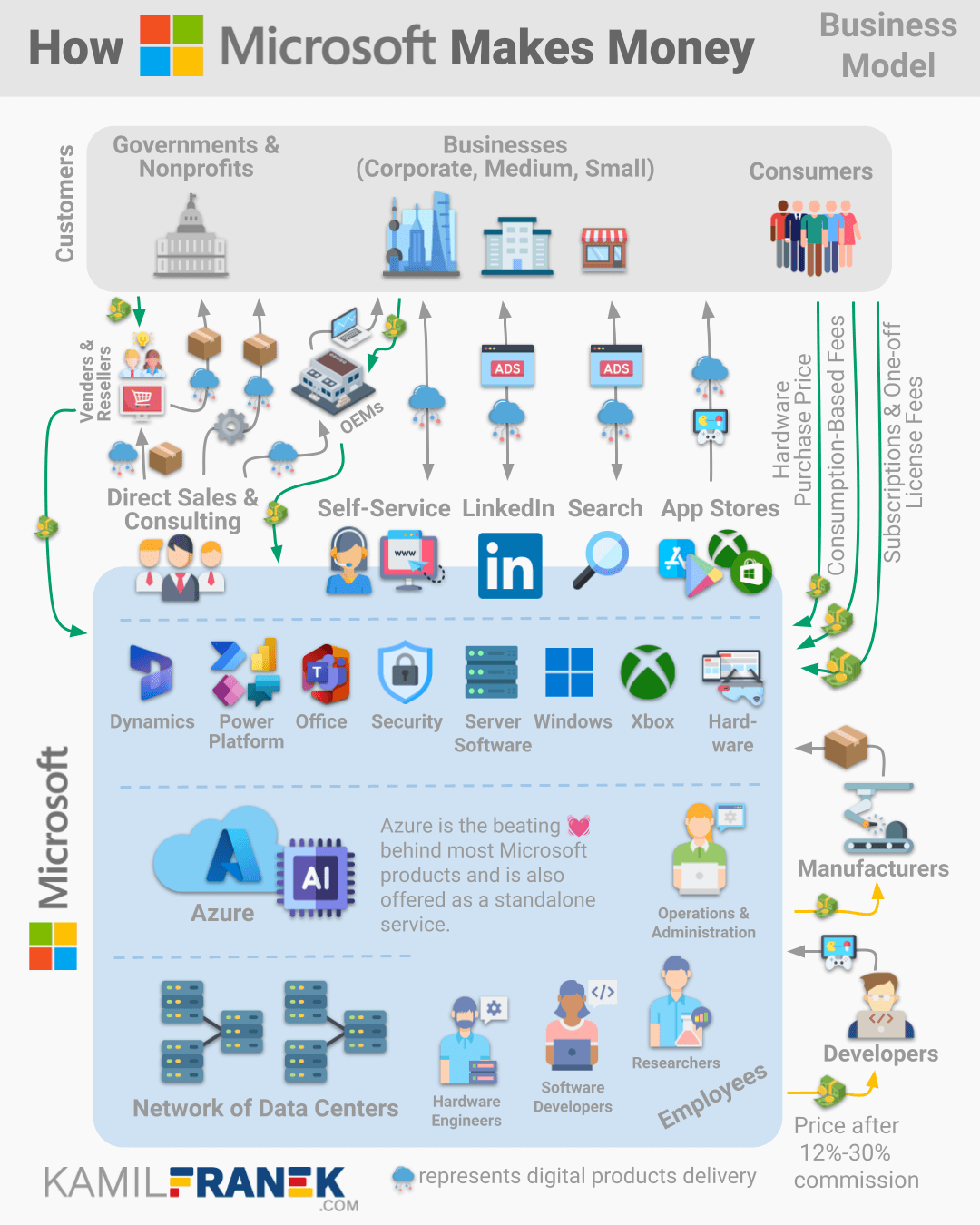
Integrating Generative AI Across the Stack
The embodiment of this AI-first approach is Copilot, an intelligent assistant that is rapidly becoming ubiquitous across Microsoft’s product suite. From powering contextual suggestions and content generation in Microsoft 365 applications like Word, Excel, and PowerPoint, to summarizing web content and assisting with browsing tasks in Edge, Copilot aims to redefine user interaction and productivity. In Windows, Copilot is integrated directly into the operating system, offering a centralized AI assistant for system commands, application launching, and personalized support. Developers have also seen significant advancements with GitHub Copilot, an AI pair programmer that writes code suggestions, auto-completes functions, and even helps debug, dramatically enhancing development velocity and code quality.
The resurgence of Bing Chat, now powered by advanced generative AI models, has injected new life into Microsoft’s search engine. It offers conversational search experiences, allowing users to ask complex questions, generate content, and receive summarized answers, moving beyond traditional keyword-based searches. This integration directly challenges Google’s long-standing dominance in the search arena by offering a fundamentally different, more interactive user experience.
On the enterprise front, Azure AI has become a powerhouse, offering a comprehensive suite of AI services for businesses. From custom model training and deployment to pre-built cognitive services for vision, speech, and language, Azure AI empowers organizations to infuse intelligence into their applications and operations. This extends to specialized solutions for various industries, leveraging Microsoft’s deep vertical expertise to deliver tailored AI capabilities.
Strategic Investments in AI Infrastructure and Talent
Microsoft’s relationship with OpenAI is more than just a collaboration; it’s a strategic alliance that has reshaped the AI landscape. This partnership has allowed Microsoft to leverage OpenAI’s foundational models while providing the immense computational power of Azure’s infrastructure. This symbiotic relationship ensures that Microsoft remains at the forefront of AI model development, continually pushing the boundaries of what generative AI can achieve.
Beyond software, Microsoft has also invested heavily in building AI-optimized hardware and cloud services. This includes specialized silicon for AI workloads, such as custom accelerators for Azure, ensuring that its cloud platform can efficiently handle the ever-increasing demands of AI model training and inference. Furthermore, the company has ramped up its recruitment of AI researchers, engineers, and data scientists, fostering a culture of innovation and securing its long-term talent pipeline in this critical field.
Expanding the Gaming Horizon: Cloud and Content
While AI dominates headlines, Microsoft’s commitment to gaming has been equally transformative, marked by aggressive content acquisition and significant advancements in cloud gaming technology. The goal is to establish Xbox as an expansive ecosystem, not just a console, reaching gamers wherever they are.
The Activision Blizzard Acquisition and its Technological Underpinnings
The monumental acquisition of Activision Blizzard stands as a testament to Microsoft’s ambitions in the gaming sector. This move was not merely about consolidating intellectual property but about significantly bolstering the Xbox Game Pass content library, making it an even more compelling subscription service. From a technological standpoint, integrating Activision Blizzard’s vast portfolio—including franchises like Call of Duty, Warcraft, and Candy Crush—presents both challenges and immense opportunities. It necessitates seamless cross-platform deployment, robust backend infrastructure to support millions of new players, and potentially deeper technological integrations to enhance gameplay experiences across different devices.
Crucially, this acquisition also strengthens Microsoft’s position in the burgeoning cloud gaming market. With a broader array of popular titles, Microsoft can further drive the adoption of Project xCloud (Xbox Cloud Gaming), allowing users to stream high-fidelity games to various devices, including phones, tablets, and smart TVs, without the need for dedicated console hardware. This initiative is a core part of Xbox’s strategy to expand its audience beyond traditional console owners, making gaming more accessible than ever before.
Innovation in Console and Services Technology
Beyond acquisitions, Microsoft continues to innovate within its core console business. The Xbox Series X/S architecture represents a significant leap in console technology, featuring custom SSDs for lightning-fast load times, powerful CPUs and GPUs for stunning graphics and high frame rates, and advanced audio capabilities. These consoles are designed with future-proofing in mind, supporting backward compatibility and enabling developers to create more immersive and graphically intensive experiences.
The Xbox Game Pass ecosystem continues to evolve, offering a diverse library of games, including day-one access to new Xbox Game Studios titles. Microsoft has also invested heavily in improving game development tools and services, making it easier for studios of all sizes to create compelling games for the Xbox platform and Windows. This focus on developer support ensures a continuous pipeline of innovative and high-quality content for the Xbox community.
Reinventing the Productivity and Cloud Landscape
At its core, Microsoft remains a cloud and productivity company. Its Azure cloud platform continues to be a driving force for enterprise digital transformation, while Windows and Microsoft 365 are constantly being refined to meet the evolving demands of modern work.
Azure’s Continued Dominance and Hybrid Cloud Evolution
Azure has cemented its position as one of the world’s leading cloud computing platforms, continuously expanding its array of services. Recent developments include enhanced offerings for data analytics (e.g., Azure Synapse Analytics, Azure Databricks), advanced solutions for IoT (Internet of Things) deployments, and robust edge computing capabilities that extend cloud intelligence closer to data sources. Microsoft’s focus on enterprise-grade security and compliance in the cloud remains paramount, with new features designed to protect sensitive data, ensure regulatory adherence, and provide comprehensive threat detection and response.
A key differentiator for Microsoft is its strong commitment to hybrid cloud strategies. Technologies like Azure Stack allow organizations to run Azure services in their own data centers, providing consistency between on-premises and cloud environments. Azure Arc extends Azure’s management capabilities to any infrastructure, whether it’s on-premises, multi-cloud, or at the edge, offering a unified control plane for diverse IT landscapes. This flexibility is crucial for enterprises navigating complex regulatory requirements and existing infrastructure investments.
Modernizing Windows and Microsoft 365
Windows 11 represents a significant evolution of Microsoft’s flagship operating system. It introduces a refined user interface and user experience (UI/UX) with a redesigned Start menu, improved multitasking features (Snap Layouts, Snap Groups), and enhanced performance gains. Under the hood, Windows 11 focuses on security by design, with stricter hardware requirements and integrated protections that make it a more resilient platform against modern threats.
Microsoft Teams has evolved beyond a mere communication tool to become a comprehensive collaborative hub. It now features deeper integrations with Microsoft 365 applications, enabling seamless co-authoring, project management, and virtual events. New features continue to roll out, enhancing meeting experiences, integrating with third-party applications, and catering to the diverse needs of hybrid workforces. The entire Microsoft 365 suite is continually updated with new capabilities, often leveraging AI to improve user efficiency and creativity, demonstrating Microsoft’s ongoing dedication to empowering productive work environments.
Hardware Innovation and Ecosystem Cohesion
Microsoft’s hardware endeavors, particularly its Surface lineup, play a crucial role in showcasing the full potential of its software and services, providing a tangible expression of its vision for modern computing.
Surface Lineup’s Role in Defining Modern Computing
The Surface family of devices—including the versatile Surface Pro tablets, the sleek Surface Laptop notebooks, the creative Surface Studio all-in-ones, and the portable Surface Go—serves as Microsoft’s reference hardware. These devices are meticulously engineered to deliver optimal performance for Windows and Microsoft 365, demonstrating best-in-class integration of hardware and software. Recent iterations have pushed boundaries in design, display technology, and input methods (e.g., Surface Pen, Surface Dial).
A notable trend is the push for ARM-based Windows devices, spearheaded by Surface products. Microsoft is investing heavily in optimizing Windows for ARM processors, aiming to deliver enhanced battery life, instant-on capabilities, and cellular connectivity without compromising performance. This effort seeks to diversify the Windows hardware ecosystem and provide consumers with more choice in form factors and capabilities, fostering a more competitive market. The seamless integration between Surface hardware and Microsoft’s software stack ensures a cohesive and optimized user experience, exemplifying how Windows and Microsoft 365 are meant to be consumed.

Driving Open Standards and Developer Engagement
Beyond its proprietary offerings, Microsoft has increasingly embraced and contributed to open-source projects. This strategic shift has fostered greater collaboration within the developer community and allowed Microsoft to integrate best-of-breed technologies across its platforms. Its ownership of GitHub solidifies its position as a central figure in the developer world, providing tools and platforms that empower millions of developers globally.
Tools like Visual Studio continue to evolve, offering a comprehensive development environment for a multitude of languages and platforms, including cloud-native applications. By continually investing in developer tools, documentation, and community engagement, Microsoft ensures that its platforms remain attractive and accessible for software creators, driving innovation from the ground up. This commitment to an open and supportive developer ecosystem is crucial for the long-term health and growth of Microsoft’s technological endeavors.