
The sheer scale of a global technology giant like Microsoft is often encapsulated by its market capitalization, revenue figures, or the ubiquitous presence of its products. Yet, a fundamental, albeit often overlooked, metric that underpins its operational capacity and financial health is its employee count. Far from being a mere statistic, the number of individuals contributing to Microsoft’s ecosystem is a critical component of its business finance, reflecting immense operational costs, strategic investments in human capital, and a core driver of its unparalleled valuation. Understanding “how many Microsoft employees” there are provides a crucial window into the company’s financial structure, its capacity for innovation, and its future economic trajectory.

The Scale of Microsoft’s Workforce and Its Financial Footprint
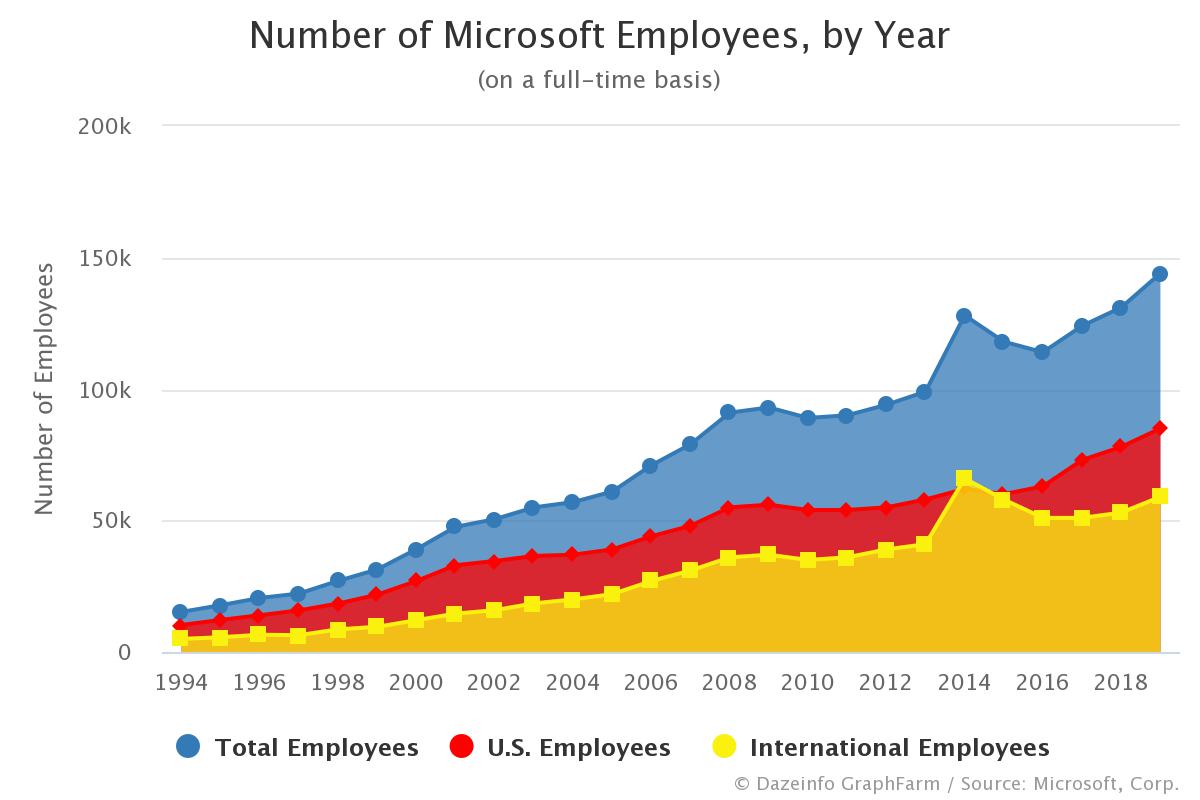
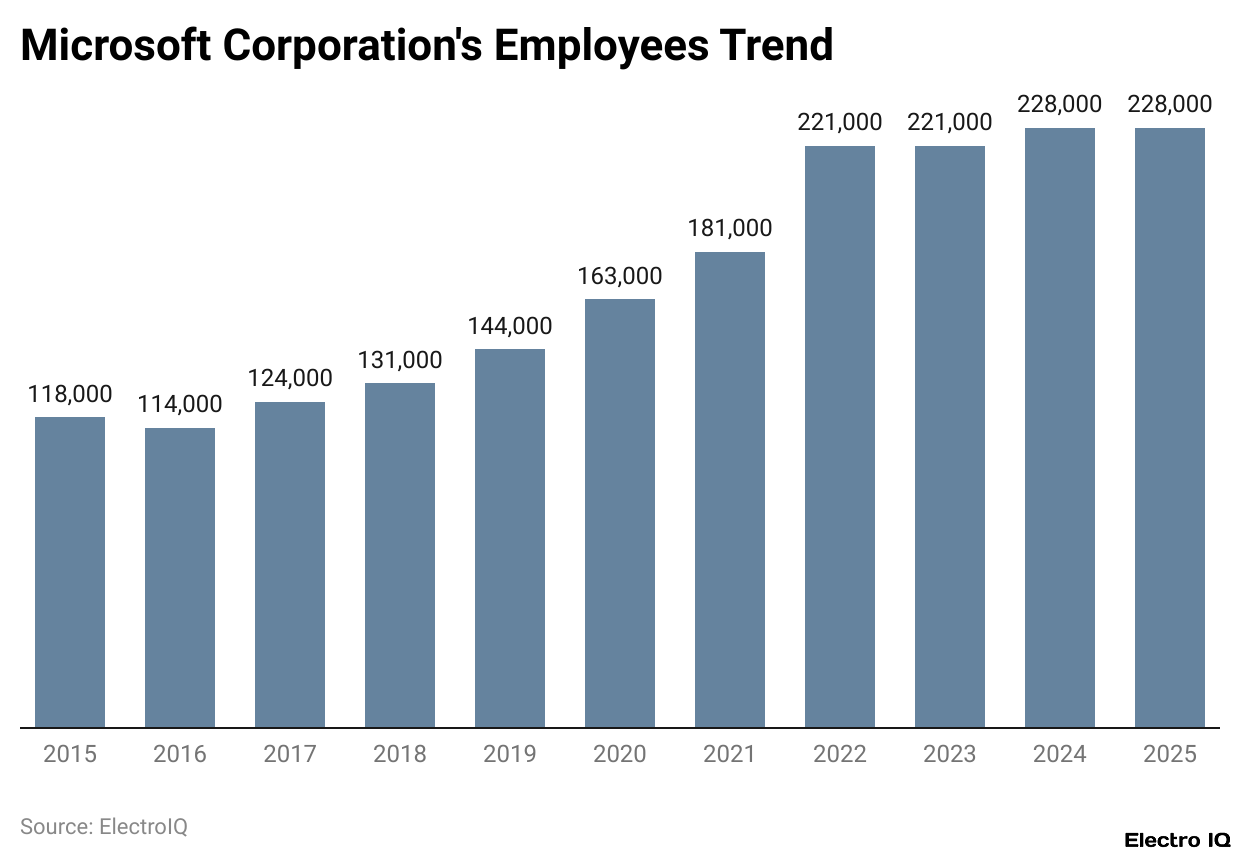
As of the most recent financial reports, Microsoft’s global workforce hovers around a staggering 220,000 to 230,000 full-time employees. This figure is not static; it fluctuates with market demands, strategic acquisitions, and internal restructuring. However, the consistent presence of such a massive workforce represents one of the company’s largest and most significant financial commitments. Each employee comes with a comprehensive package of salaries, bonuses, stock options, health benefits, and retirement plans, translating into annual payroll and compensation expenses that run into tens of billions of dollars. This immense expenditure is a primary line item on Microsoft’s income statement and a critical consideration for investors and financial analysts.
Beyond direct compensation, the financial footprint extends to real estate, infrastructure, training and development, and operational support necessary to maintain such a large global team. Every office building, every data center, every piece of equipment, and every software license utilized by employees adds to the overhead. From a financial perspective, this scale demands meticulous resource allocation and cost management strategies to ensure that the investment in human capital yields proportional returns in productivity, innovation, and ultimately, profitability. The ratio of revenue generated per employee, for instance, becomes a vital benchmark for assessing the efficiency and financial productivity of this vast workforce, helping to justify the colossal investment in human capital.
Historical Growth and Strategic Workforce Management
Evolution of Employee Count and Financial Strategy
Microsoft’s journey from a modest startup to a multinational behemoth is inextricably linked to the exponential growth of its workforce. In its early days, employee numbers grew organically as the company expanded its product portfolio, from the foundational MS-DOS to the dominant Windows operating system and the ubiquitous Office suite. Each new product line, each foray into a new market segment—be it gaming with Xbox or enterprise solutions with Dynamics—necessitated a corresponding increase in skilled personnel: software engineers, project managers, sales professionals, and support staff. This period of sustained growth reflected a financial strategy centered on aggressive market penetration and securing leadership positions through continuous innovation, demanding substantial upfront investment in human resources.
Periods of rapid scaling often coincide with heightened capital expenditure on talent acquisition and retention. Microsoft’s ability to attract and retain top-tier talent through competitive compensation packages, robust benefit structures, and a culture of innovation has been a cornerstone of its financial success. However, growth is rarely linear. There have also been phases of workforce optimization, where strategic reductions or reallocation of roles have occurred to streamline operations, reduce redundancy, or pivot towards emerging technologies. These adjustments are critical financial maneuvers, designed to maintain cost efficiency, enhance agility, and ensure that the human capital investment remains aligned with evolving strategic priorities and market dynamics. The ebb and flow of employee count, therefore, is a direct reflection of Microsoft’s adaptive financial planning and its commitment to long-term value creation.
Acquisitions, Divestitures, and Headcount Dynamics
Mergers and acquisitions (M&A) are powerful drivers of rapid shifts in an organization’s employee count and, consequently, its financial structure. Microsoft’s history is replete with major acquisitions that have instantly transformed its workforce demographics and operational costs. For example, the acquisition of LinkedIn in 2016 brought approximately 10,000 employees into the Microsoft fold, significantly increasing its headcount and introducing a new financial dimension related to managing a distinct corporate culture and compensation structure. More recently, the acquisition of Activision Blizzard, a transaction valued at nearly $69 billion, added around 10,000 more employees, bringing with it a vast array of game developers, designers, and operational staff.
From a financial perspective, these large-scale integrations present both opportunities and challenges. On one hand, they promise synergies—cost reductions through shared services, increased market reach, and enhanced revenue potential. On the other hand, they entail substantial integration costs, including severance packages for redundant roles, harmonization of benefits, and potential cultural clashes that can impact productivity. The financial impact of integrating new workforces is meticulously analyzed during due diligence, projecting the added payroll, benefits, and administrative overhead against the anticipated revenue growth and operational efficiencies.
Conversely, divestitures can lead to significant headcount reductions. The sale of the Nokia phone division, for instance, resulted in thousands of employees leaving Microsoft, significantly trimming its operational expenditures related to a segment that was deemed strategically misaligned or financially underperforming. These decisions are deeply rooted in financial strategy, aiming to streamline operations, shed non-core assets, and reallocate capital and human resources to more promising ventures, thereby optimizing the company’s overall financial health and shareholder value.
Financial Efficiency and Productivity Metrics
Revenue Per Employee – A Key Performance Indicator
For a company of Microsoft’s immense scale, traditional financial statements offer a broad view, but deeper insights into operational efficiency often come from specific metrics. Revenue Per Employee (RPE) stands out as a particularly insightful KPI in the technology sector. It is calculated by dividing the company’s total revenue by its total number of employees. A high RPE generally indicates that a company is effectively leveraging its human capital to generate substantial revenue, often signifying a high-value product portfolio, strong pricing power, or highly efficient operations.
Analyzing Microsoft’s RPE over time and in comparison to its industry peers reveals much about its financial strategy and operational effectiveness. Given Microsoft’s substantial revenue streams from high-margin software licenses, cloud services (Azure), and enterprise solutions, its RPE tends to be robust. A consistently high RPE suggests that the company’s investment in its workforce is yielding significant financial returns, justifying the vast expenditure on salaries, benefits, and associated overheads. This metric is closely watched by investors as it provides a tangible measure of how efficiently Microsoft converts its human resources into sales, directly impacting its profitability and overall market valuation. Furthermore, internal RPE targets can drive strategic decisions regarding staffing levels, automation investments, and product development priorities, all aimed at enhancing financial output per individual.
Managing Workforce Costs and Profitability
The financial management of Microsoft’s workforce goes far beyond simply paying salaries. It encompasses a sophisticated strategy to balance competitive compensation—essential for attracting and retaining the world’s top tech talent—with rigorous cost control to maintain and grow profitability. Microsoft’s compensation philosophy includes base salaries, performance-based bonuses, and significant equity grants (stock options and restricted stock units), which align employee incentives with shareholder interests. While these packages are substantial, they are carefully benchmarked against industry standards to ensure competitiveness without becoming fiscally unsustainable.
Beyond direct compensation, the company invests heavily in employee benefits, including comprehensive health insurance, retirement plans, professional development, and wellness programs. These investments, while adding to the overall cost base, are seen as crucial for employee satisfaction, productivity, and reducing turnover, which itself carries significant recruitment and training costs.
Microsoft employs various strategies to optimize workforce costs without compromising innovation or market leadership. These include leveraging a global talent pool to access diverse skill sets at varying cost structures, strategically using contractors and external vendors for non-core functions, and investing in automation technologies that can enhance productivity without necessarily increasing headcount. Every decision related to hiring, compensation adjustments, and workforce restructuring is scrutinized through a financial lens, evaluating its potential impact on quarterly earnings, long-term profitability goals, and the company’s ability to sustain its competitive advantage in a rapidly evolving technological landscape.
The Future Workforce: AI, Automation, and Financial Reallocation
AI’s Dual Impact on Employee Numbers and Investment
The rise of artificial intelligence and automation presents a complex dual impact on Microsoft’s employee numbers and financial investment strategy. On one hand, AI-powered tools and platforms, such as Copilot for developers, can significantly enhance the productivity of existing employees, potentially reducing the need for additional headcount in certain functions or allowing teams to achieve more with the same resources. Routine tasks, data analysis, and even aspects of code generation could become increasingly automated, leading to efficiency gains that may alter future staffing requirements. The financial implication here is a potential shift from human capital expenditure to technological capital investment, where fewer employees might be needed for certain tasks, but the investment in the underlying AI infrastructure and development becomes paramount.
On the other hand, AI creates entirely new roles and demands for specialized skills. Microsoft needs AI researchers, machine learning engineers, data scientists, and ethicists to develop, deploy, and manage its AI offerings. This necessitates significant financial investment in attracting and training this new breed of talent. Furthermore, integrating AI into products like Microsoft 365 or Azure requires a workforce capable of understanding and implementing these sophisticated technologies. The financial reallocation involves not just the initial R&D costs for AI, but also ongoing operational expenses for AI infrastructure, energy consumption, and the highly compensated specialists required to push the boundaries of AI capabilities. Microsoft’s strategic bet on AI, therefore, is a massive financial commitment that will inevitably reshape its workforce composition and skill requirements, rather than necessarily reducing total headcount across the board.
Strategic Workforce Planning and Financial Resilience
As a leading technology firm, Microsoft’s long-term financial resilience is intimately tied to its strategic workforce planning. This involves anticipating future skill needs, identifying talent gaps, and proactively investing in training, reskilling, and diverse talent acquisition programs. The shift towards cloud computing, AI, and cutting-edge gaming technologies means that the company must continually evolve its human capital to remain competitive and drive future revenue streams. Financial resources are strategically allocated to these areas, ensuring that the workforce possesses the expertise required to innovate and execute on future product roadmaps.
This forward-looking approach to workforce management is a critical aspect of business finance. It’s about ensuring that capital invested in human resources generates sustainable long-term value. Microsoft invests in internal training platforms, collaborates with educational institutions, and fosters a culture of continuous learning to keep its employees at the forefront of technological advancements. By maintaining a highly skilled and adaptable workforce, Microsoft enhances its ability to pivot quickly in response to market changes, seize new opportunities, and mitigate risks, all of which are fundamental to its ongoing financial health and market leadership. The number of employees, therefore, is not just a present count, but a dynamic reflection of Microsoft’s deliberate financial strategy to cultivate the talent required for tomorrow’s technological landscape, ensuring its enduring profitability and global impact.
aViewFromTheCave is a participant in the Amazon Services LLC Associates Program, an affiliate advertising program designed to provide a means for sites to earn advertising fees by advertising and linking to Amazon.com. Amazon, the Amazon logo, AmazonSupply, and the AmazonSupply logo are trademarks of Amazon.com, Inc. or its affiliates. As an Amazon Associate we earn affiliate commissions from qualifying purchases.