
For many aspiring investors and seasoned market watchers alike, the question of “how much is a share of Microsoft?” is often a starting point for exploring the intricate world of stock market investing. Microsoft (MSFT) is not just a technology behemoth; it’s a staple in countless investment portfolios, representing stability, innovation, and long-term growth potential. However, understanding its share price involves more than just looking up a number on any given day. It requires delving into market dynamics, corporate fundamentals, and the broader economic landscape.
The price of a single share of Microsoft, or any publicly traded company, is a fluid figure, changing second by second during market hours. It reflects the collective sentiment of millions of investors, supply and demand, and the company’s perceived future earnings potential. For an investor, approaching MSFT stock means understanding these underlying mechanisms and integrating them into a well-thought-out financial strategy. This article will guide you through the intricacies of Microsoft’s stock, what drives its valuation, how you can invest, and crucial considerations for adding it to your portfolio.
Understanding Microsoft’s Stock Price Dynamics
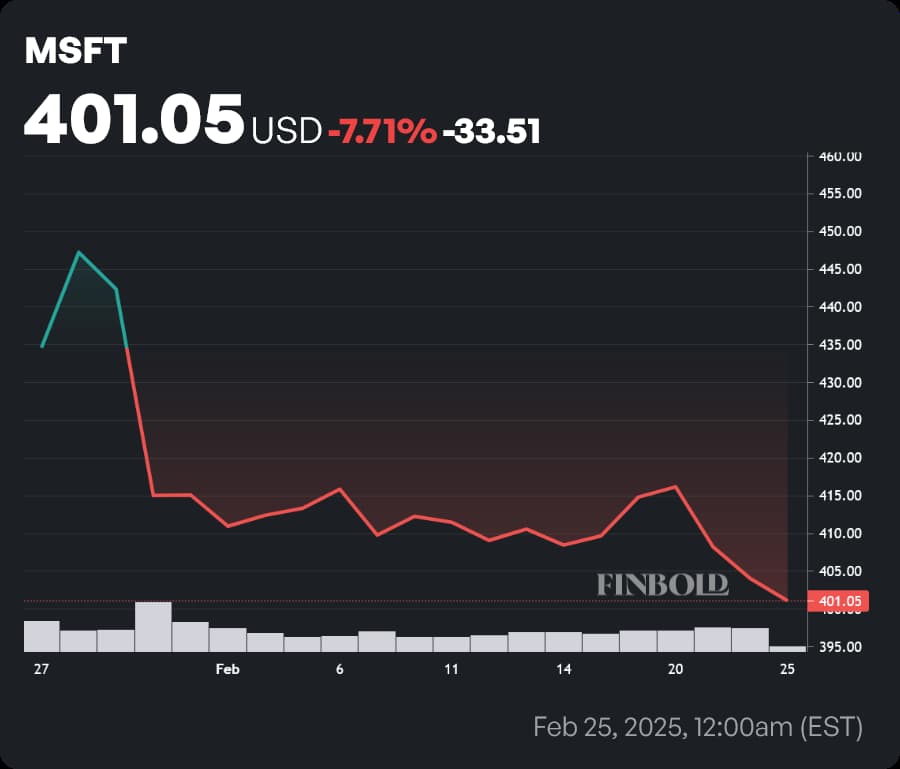
The immediate answer to “how much is a share of Microsoft?” can be found with a quick search on any financial platform. However, that number is merely a snapshot. To truly understand its value, we must explore the factors that underpin its continuous fluctuation and its historical trajectory.
The Current Market Valuation: A Dynamic Snapshot
At any given moment during trading hours (typically 9:30 AM to 4:00 PM ET, Monday through Friday, excluding holidays), the price of a Microsoft share is determined by the last transaction executed on an exchange like the NASDAQ. This price is the equilibrium point where the highest bid a buyer is willing to pay meets the lowest ask a seller is willing to accept. It’s a real-time auction, influenced by a constant stream of news, analyst reports, economic data, and investor sentiment.
It’s critical to remember that this “current price” is highly dynamic. By the time you read this, the exact figure will have undoubtedly shifted. Instead of focusing solely on the day’s closing price, investors often look at metrics like the 52-week high and low, daily trading volume, and market capitalization (share price multiplied by total shares outstanding) to get a fuller picture of its immediate context and scale. Microsoft, with its massive market capitalization, is one of the world’s most valuable companies, a testament to its pervasive influence across global industries.
Factors Influencing MSFT’s Share Price
Several interconnected factors continuously exert pressure on Microsoft’s stock price, creating its characteristic upward and downward movements. Understanding these drivers is key to insightful investing.
Firstly, company performance is paramount. Microsoft’s quarterly earnings reports are critical events. Revenue growth, profit margins, cloud computing (Azure) expansion, Windows and Office ecosystem strength, gaming (Xbox) performance, and LinkedIn’s contributions all play a significant role. Exceeding analyst expectations often leads to price increases, while missing them can trigger sell-offs.
Secondly, macroeconomic conditions heavily influence all stocks, including Microsoft. Interest rate changes, inflation data, GDP growth, and employment figures can shift investor sentiment towards growth stocks like tech companies. A robust economy generally bodes well for corporate spending on software and cloud services, boosting Microsoft’s outlook. Conversely, economic slowdowns can temper enthusiasm.
Thirdly, industry trends and competitive landscape are always at play. Microsoft operates in highly competitive sectors (cloud with AWS and Google Cloud, productivity with Google Workspace, gaming with Sony and Nintendo). Innovation breakthroughs, new product launches (like significant AI integrations), regulatory challenges, or even the performance of competitors can directly impact investor perception of Microsoft’s future profitability and, consequently, its share price.
Finally, investor sentiment and market psychology can create short-term volatility. Fear, greed, hype cycles (e.g., around AI advancements), and broad market trends can sometimes override fundamental analysis in the short run. News events, geopolitical developments, or even influential analyst upgrades/downgrades can cause rapid price swings.
Historical Performance and Stock Splits
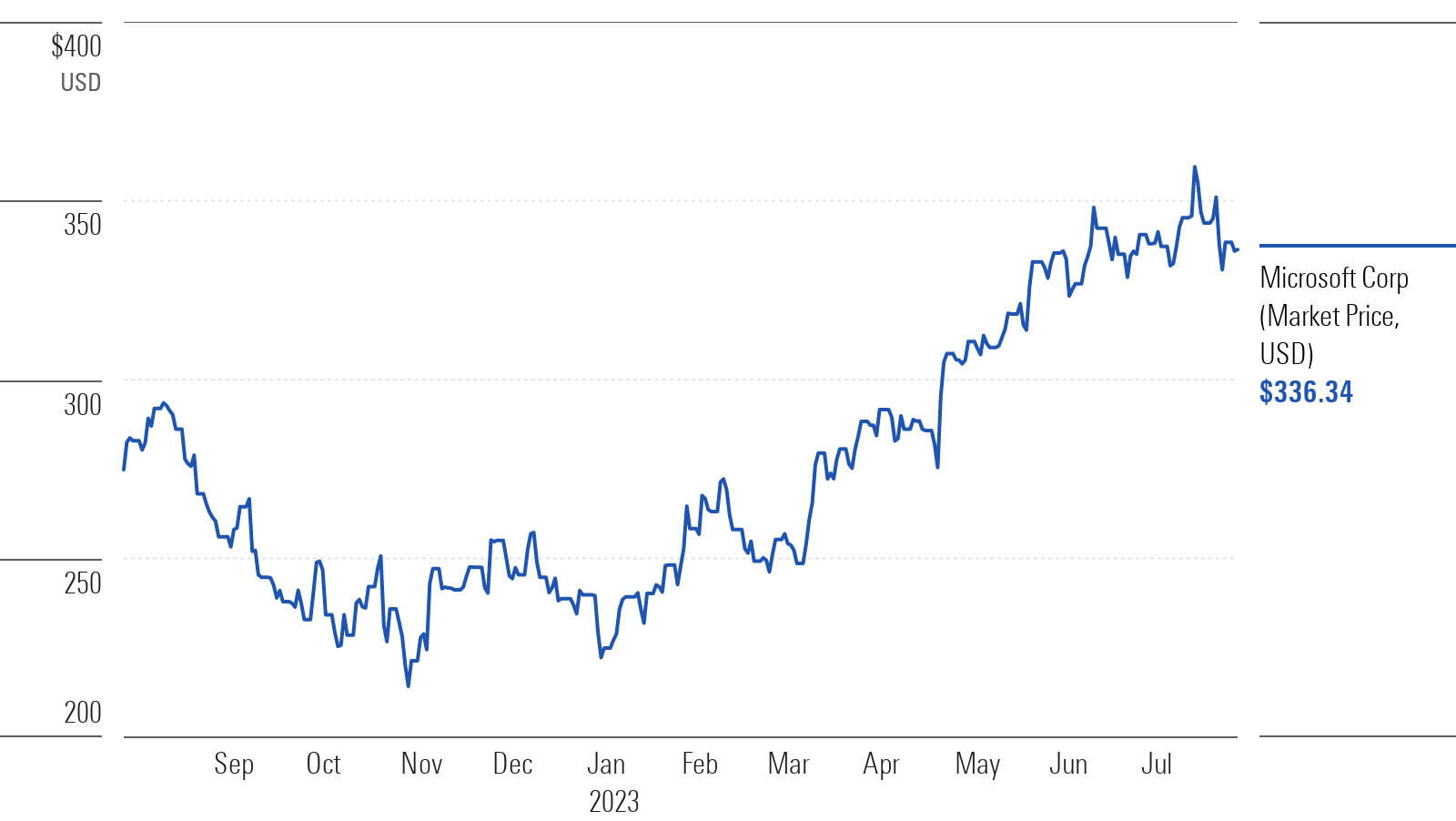
Microsoft has a storied history on the stock market, having gone public in 1986. Its journey has been marked by periods of explosive growth, significant innovation, and strategic adaptations. Over its nearly four decades as a public company, Microsoft has executed nine stock splits. A stock split is when a company increases the number of its outstanding shares by dividing existing shares, without altering the total market value of the company. For example, a 2-for-1 split means each existing share becomes two shares, and the price per share is halved. While splits don’t change the total value of an investor’s holdings, they make shares more accessible to a broader range of investors by lowering the per-share price. Microsoft’s last split was a 2-for-1 split in February 2003.
This history of consistent growth and strategic financial management underscores why Microsoft is often seen as a cornerstone investment. Its long-term chart shows a remarkable upward trajectory, rewarding patient shareholders handsomely over decades.
Why Invest in Microsoft? A Deep Dive into its Financial Appeal
Beyond its current price, understanding why Microsoft is a compelling investment is crucial for any potential shareholder. Its appeal stems from a robust financial profile, diversified business operations, a culture of innovation, and a commitment to shareholder returns.
Diversified Business Segments Fueling Growth
One of Microsoft’s greatest strengths lies in its incredibly diverse business model, which creates multiple revenue streams and mitigates risks associated with over-reliance on a single product or service.
- Intelligent Cloud: This segment, anchored by Azure, Microsoft’s cloud computing platform, is a primary growth engine. Azure competes directly with Amazon Web Services (AWS) and Google Cloud, providing infrastructure, platform, and software services to businesses worldwide. The ongoing digital transformation of industries ensures sustained demand for cloud services.
- Productivity and Business Processes: This includes the ubiquitous Office 365 suite (Word, Excel, PowerPoint, Outlook), LinkedIn, and Dynamics 365. The subscription-based model for Office 365 provides stable, recurring revenue, while LinkedIn dominates the professional networking space and Dynamics offers enterprise resource planning (ERP) and customer relationship management (CRM) solutions.
- More Personal Computing: This segment encompasses Windows operating systems, Xbox gaming consoles and services, Surface devices, and search advertising (Bing). While Windows might seem like a mature product, its massive installed base ensures consistent licensing revenue. Xbox continues to be a dominant player in the gaming industry, consistently innovating with new consoles and subscription services like Game Pass.
This diversification means that if one segment faces headwinds, others can often pick up the slack, contributing to overall corporate stability and sustained growth.
A History of Innovation and Market Dominance
Microsoft’s longevity and success are intrinsically linked to its relentless pursuit of innovation. From its early days revolutionizing personal computing with MS-DOS and Windows, to its current leadership in cloud computing and artificial intelligence, the company has consistently adapted and led technological paradigms.
Today, Microsoft is at the forefront of the AI revolution, integrating advanced AI capabilities across its entire product suite – from Azure AI services for developers to Copilot in Microsoft 365, enhancing productivity for millions. This strategic focus on AI is expected to unlock new growth avenues and solidify its competitive position for years to come. Its deep pockets allow for significant R&D investments and strategic acquisitions, further cementing its market dominance and enabling it to stay ahead of emerging trends.
Dividend Payouts and Shareholder Returns
For income-focused investors, Microsoft’s commitment to returning value to shareholders through dividends is an attractive feature. Microsoft has a long history of paying and consistently increasing its quarterly dividends, making it a reliable source of passive income. While the dividend yield might not be as high as some traditional “income stocks,” its consistent growth reflects the company’s strong free cash flow generation and confidence in its future earnings.
Beyond dividends, Microsoft also engages in share buyback programs. Share buybacks reduce the number of outstanding shares, which can boost earnings per share and, in turn, potentially increase the stock price. This dual approach of dividends and buybacks demonstrates a comprehensive strategy to enhance shareholder value.
How to Purchase Microsoft Shares
Once you’ve decided to invest in Microsoft, the next step is understanding the practical process of acquiring its shares. This typically involves setting up a brokerage account and placing an order.
Choosing a Brokerage Account
The first and most crucial step is to open an investment account with a reputable brokerage firm. In today’s digital age, numerous online brokers offer user-friendly platforms and competitive fees. Popular choices include:
- Traditional Brokerages: Firms like Charles Schwab, Fidelity, and Vanguard offer comprehensive services, including investment advice, research tools, and a wide range of investment products.
- Discount Brokerages: Companies like E*TRADE, TD Ameritrade (now part of Schwab), and Robinhood often provide lower commission fees, sometimes even zero commissions on stock trades, and streamlined online experiences.
- Robo-Advisors: While primarily focused on automated portfolio management, some robo-advisors (like Betterment or Wealthfront) allow you to invest in ETFs that might hold MSFT, or even directly in individual stocks through their platforms.
When choosing a broker, consider factors such as trading fees, minimum deposit requirements, available investment tools and research, customer service quality, and the overall user experience. Ensure the brokerage is regulated by relevant financial authorities (e.g., SEC and FINRA in the U.S.) to protect your investments.
Types of Orders: Market vs. Limit
Once your brokerage account is funded, you’ll need to place an order to buy Microsoft shares. The two most common types of orders are:
- Market Order: This is an instruction to buy shares immediately at the best available price. While it guarantees execution, it doesn’t guarantee a specific price, meaning the price you pay might be slightly higher or lower than what you saw just moments before, especially in volatile markets. Market orders are suitable if you prioritize speed of execution over a precise price point.
- Limit Order: This is an instruction to buy shares only at a specified price or lower. For example, if MSFT is trading at $420, you might set a limit order to buy at $418. Your order will only execute if the stock price drops to $418 or below. Limit orders provide price control but do not guarantee execution, as the stock might never reach your desired price. They are ideal for investors who have a target entry price and are willing to wait.
For beginners, a market order is often simpler, but as you gain experience, limit orders can be valuable tools for precision.
Fractional Shares: Making Investing Accessible
Historically, buying a stock meant purchasing full shares. With high-priced stocks like Microsoft, this could require a significant upfront investment. However, many brokerages now offer fractional shares, allowing investors to buy a portion of a share for as little as $1. This innovation democratizes investing, enabling individuals with smaller capital to build diversified portfolios and own pieces of expensive companies like Microsoft without needing hundreds of dollars for a single share. If you only have $100 to invest in MSFT, you could buy approximately 0.23 shares (based on a hypothetical $430 share price), providing an accessible entry point.
Strategic Considerations for Investing in MSFT
While Microsoft presents a compelling investment case, it’s crucial to approach any investment with a well-defined strategy and a full understanding of the associated risks and opportunities.
Individual Stock vs. Diversified Funds
Investing in a single stock like Microsoft means placing a significant bet on the performance of one company. While Microsoft is a robust company, individual stocks carry inherent risks. Unforeseen corporate missteps, intense competition, regulatory changes, or a shift in technological paradigms could impact its performance.
A more diversified approach often involves investing in Exchange Traded Funds (ETFs) or mutual funds that hold Microsoft as one of their components. For example, a technology-focused ETF, a large-cap growth fund, or a broad market index fund (like an S&P 500 ETF) would typically include Microsoft. This strategy provides exposure to Microsoft’s growth while spreading risk across numerous other companies, offering a smoother ride through market fluctuations. For many investors, a combination of core diversified funds and a select few individual stocks (like MSFT) can strike a good balance.
Risk Assessment and Due Diligence
Even with a company as stable as Microsoft, no investment is entirely risk-free. Before investing, conduct your due diligence:
- Financial Health: Review Microsoft’s annual reports (10-K) and quarterly reports (10-Q) for insights into its revenue, earnings, cash flow, debt levels, and balance sheet strength.
- Competitive Landscape: Understand who Microsoft’s competitors are in each segment and how well it is positioned to maintain or grow its market share.
- Future Outlook: Evaluate management’s vision, strategic initiatives (e.g., AI investments, new product pipelines), and potential challenges.
- Valuation Metrics: Look at metrics like Price-to-Earnings (P/E) ratio, Price-to-Sales (P/S) ratio, and PEG ratio to assess if the stock is reasonably valued relative to its growth prospects and industry peers.
It’s also important to understand your own risk tolerance. Are you comfortable with potential short-term price volatility for long-term gains, or do you prefer more stable investments? Microsoft is generally considered a relatively stable large-cap growth stock, but even giants can experience significant drawdowns.
Long-Term vs. Short-Term Investment Horizons
Microsoft is typically considered a long-term investment. Its consistent innovation, diversified business, and strong financial position make it attractive for investors looking to compound wealth over years, if not decades. Short-term trading based on daily price fluctuations is highly speculative and generally not recommended for most investors, as it’s notoriously difficult to time the market successfully.
A long-term perspective allows investors to ride out market corrections and benefit from the power of compounding and the company’s sustained growth. This aligns with Microsoft’s own strategic approach, which focuses on long-term technological leadership rather than quarterly swings.
The Broader Economic Landscape and Your Portfolio
Your decision to invest in Microsoft, and indeed any stock, should always be contextualized within your personal financial goals and the broader economic environment.
Macroeconomic Factors and Tech Stock Performance
Technology stocks, often considered growth stocks, can be particularly sensitive to macroeconomic shifts. For instance, periods of rising interest rates can make future earnings less valuable in present terms, sometimes leading to a rotation out of growth stocks into value stocks. Conversely, a stable or declining interest rate environment can favor tech giants. Global economic growth trends, geopolitical stability, and regulatory environments also play a role in how international businesses like Microsoft perform. Keeping an eye on these larger trends can help you understand the forces acting upon your investment.
Personal Financial Goals and Risk Tolerance
Ultimately, the decision to invest in Microsoft must align with your individual financial objectives. Are you saving for retirement, a down payment on a house, or simply looking to grow your wealth? Your time horizon, capital available, and comfort level with risk will dictate how much you allocate to individual stocks versus broader index funds. For many, Microsoft can be a valuable component of a diversified portfolio, but it should be just one piece of a larger, well-considered financial plan. Regular review of your portfolio and financial goals is essential to ensure your investments remain aligned with your objectives.
Conclusion
Asking “how much is a share of Microsoft?” is the gateway to a deeper understanding of market dynamics, corporate valuation, and investment strategy. While the immediate price is a moving target, Microsoft’s enduring appeal as an investment lies in its diversified business segments, relentless innovation, strong financial health, and consistent shareholder returns. Investing in Microsoft involves selecting a suitable brokerage, understanding order types, and considering the benefits of fractional shares. However, like all investments, it requires diligent research, an awareness of both company-specific and macroeconomic risks, and a clear alignment with your personal financial goals and risk tolerance. For many, Microsoft remains a cornerstone investment, representing a prudent choice for long-term growth within a well-diversified portfolio.
aViewFromTheCave is a participant in the Amazon Services LLC Associates Program, an affiliate advertising program designed to provide a means for sites to earn advertising fees by advertising and linking to Amazon.com. Amazon, the Amazon logo, AmazonSupply, and the AmazonSupply logo are trademarks of Amazon.com, Inc. or its affiliates. As an Amazon Associate we earn affiliate commissions from qualifying purchases.