
Navigating the landscape of higher education finance can often feel like deciphering a complex code – and in a way, it is. For millions of students aspiring to pursue post-secondary education, the Free Application for Federal Student Aid (FAFSA) stands as the gateway to unlocking crucial financial support. Far more than just a form, the FAFSA is a pivotal financial instrument, connecting students with billions of dollars in federal, state, and institutional aid. A seemingly small, yet profoundly impactful, step within this application process is the addition of school codes. This action directly dictates which educational institutions will receive your financial information, subsequently determining where your aid eligibility will be assessed. Understanding how to correctly add these codes is not merely a procedural formality; it is a strategic financial move that can significantly influence your educational funding and overall financial planning for college.
This comprehensive guide will illuminate the precise steps for adding school codes to your FAFSA, while simultaneously delving into the financial implications and strategic considerations behind this critical task. By mastering this element, you empower yourself to maximize your financial aid opportunities and make well-informed decisions about your academic future.
The FAFSA: A Cornerstone of Educational Finance
Before diving into the specifics of school codes, it’s essential to appreciate the broader financial significance of the FAFSA itself. As a federal form, it is used to determine a student’s eligibility for federal student aid, including Pell Grants, Direct Subsidized/Unsubsidized Loans, and federal work-study. Beyond federal aid, many states and individual colleges also utilize FAFSA data to award their own grants, scholarships, and institutional aid packages. Therefore, submitting a FAFSA is not just about federal money; it’s about casting a wide net for all potential financial resources to fund your education.
The information you provide on the FAFSA, regarding your family’s income, assets, and household size, is distilled into an Expected Family Contribution (EFC) – soon to be replaced by the Student Aid Index (SAI) – which is essentially an index number used by financial aid offices to determine how much financial aid you are eligible to receive. This number is then subtracted from the Cost of Attendance (COA) at each institution you apply to, revealing your financial need. This need is what schools aim to cover through various aid packages. Consequently, every piece of data, including the selection of your prospective schools via their codes, directly impacts the financial aid offers you receive.
Understanding Federal School Codes
Federal school codes are six-digit identifiers assigned by the U.S. Department of Education to institutions eligible to participate in federal student aid programs. Each college, university, or career school that offers federal financial aid has a unique code. These codes are the digital addresses through which your FAFSA data travels from the Department of Education to the financial aid offices of your chosen institutions. Without a school code listed on your FAFSA, a college will not receive your application data and, therefore, cannot consider you for any federal, state, or institutional aid based on your FAFSA. This makes the accuracy and completeness of your school list paramount to your financial success in higher education.
Step-by-Step Guide: Adding School Codes to Your FAFSA
The process of adding school codes is integrated seamlessly into the FAFSA application. Whether you are filing for the first time or making corrections to an existing application, the steps are straightforward, designed to ensure your financial data reaches the correct destinations.
Initial FAFSA Application Submission
When you first complete your FAFSA online at studentaid.gov, you will reach a section dedicated to school selection.
- Access the FAFSA Website: Begin by logging in to your FAFSA application at studentaid.gov using your FSA ID. This secure digital credential acts as your electronic signature and identifier for all federal student aid services. Ensure you keep your FSA ID and password confidential, as they are your keys to managing your financial aid profile.
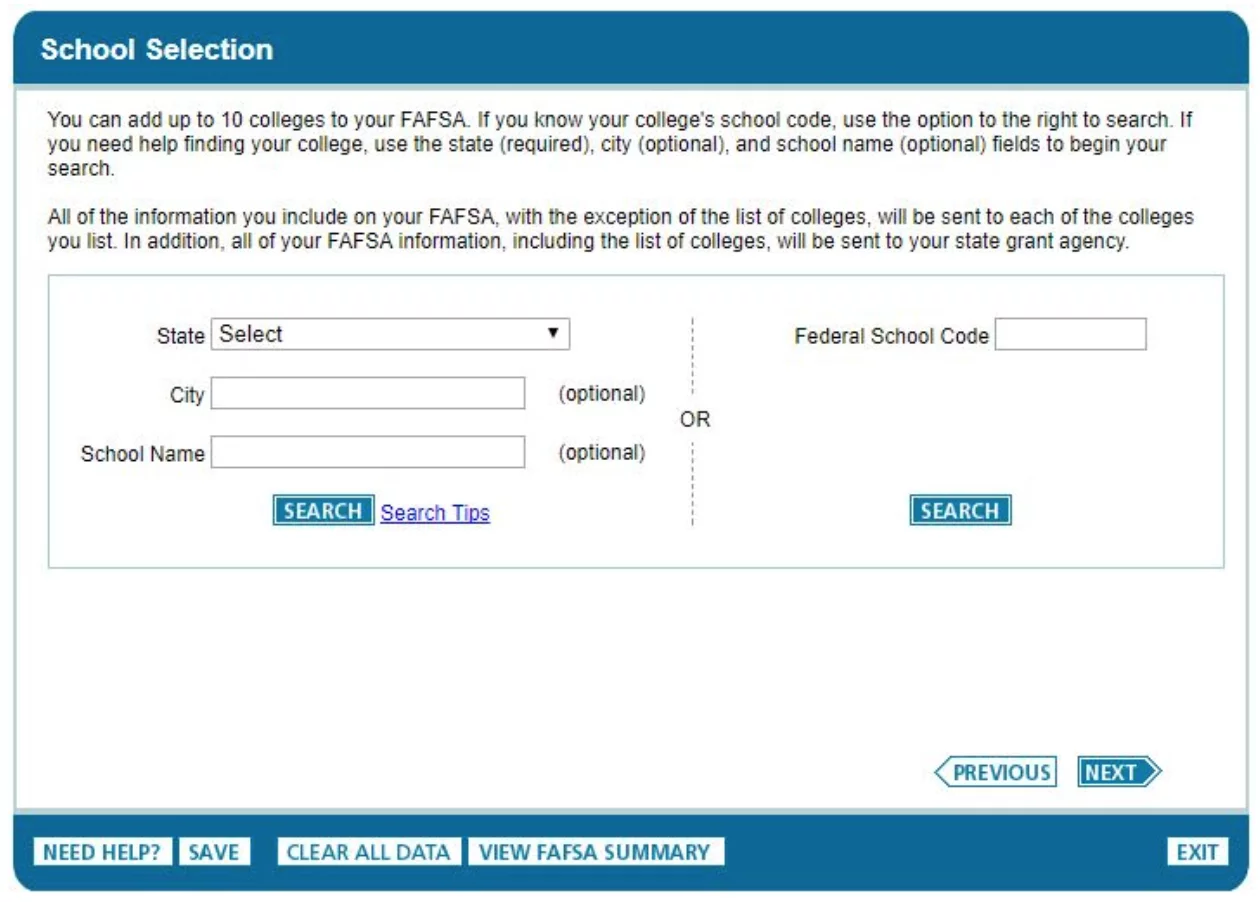
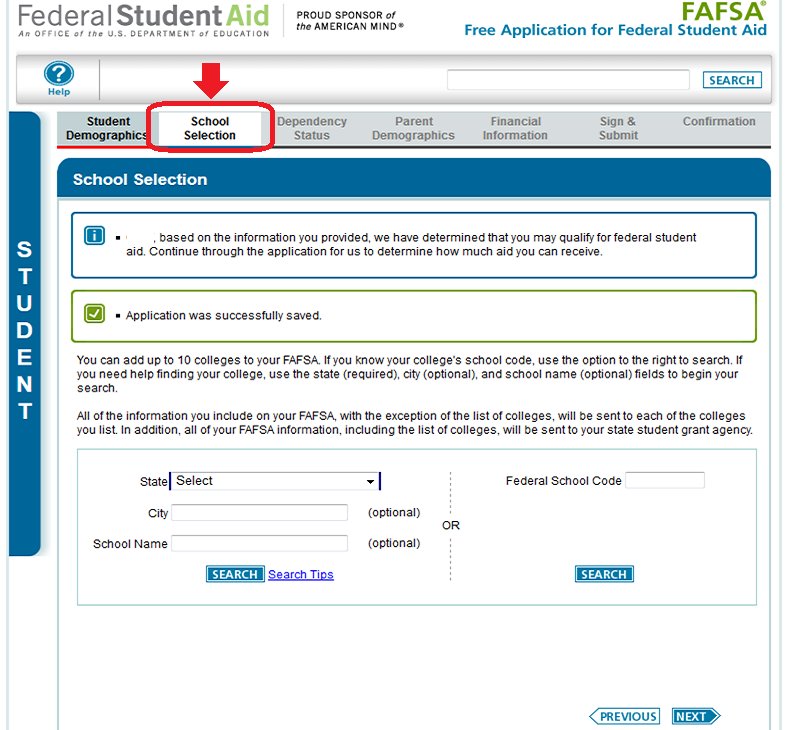
- Navigate to the School Selection Section: After successfully logging in, you’ll be directed to your application summary or the section where you can continue your application. Progress through the sections until you reach the “School Selection” page. This page is specifically designed for you to search for and add the institutions you are considering.
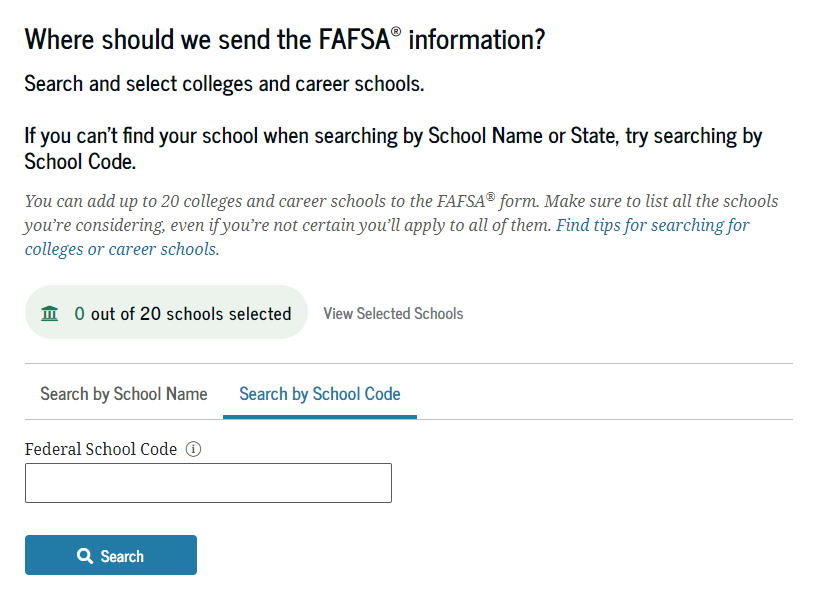
- Search for Schools: On the school selection page, you will have the option to search for schools using various criteria:
- School Name: This is often the easiest method if you know the exact name of the institution.
- State and City: If you’re exploring options within a particular geographical area, you can filter by state and city.
- Federal School Code: If you already know the six-digit code for a specific institution, you can enter it directly for a precise match.
- Add Schools to Your List: As you find schools, you will select them from the search results, and they will be added to your “Selected Schools” list. The FAFSA allows you to add up to ten schools at a time during the initial application process. It’s a strategic financial move to include all institutions you are seriously considering, even if you haven’t been accepted yet, to ensure you receive aid offers from each.
- Review and Save: Once you have added all desired schools, carefully review your list to ensure accuracy. Mistakes here could mean a delay or complete failure in receiving aid offers from your target schools. After reviewing, proceed to the next sections to complete the application, sign with your FSA ID, and submit.
Making Corrections or Adding More Schools Post-Submission
The financial journey to college often involves twists and turns. You might apply to more schools later, or simply forget to add some to your initial FAFSA. The good news is that you can easily update your FAFSA to add or remove school codes after submission.
- Log Back In: Return to studentaid.gov and log in with your FSA ID.
- Access Your Submitted FAFSA: On your dashboard, you will see your submitted FAFSA. Select the option to “Make FAFSA Corrections” or “View or Print your SAR.”
- Navigate to the School Selection Section: Once you are in the corrections mode, proceed through the application sections until you reach the “School Selection” page, just as you did during the initial application.
- Manage Your School List: Here, you can:
- Add New Schools: Search for and add new institutions using the same methods described above.
- Remove Existing Schools: If you’ve decided not to apply to a particular school, or if you’ve already made your enrollment decision, you can remove it from your list. This is particularly useful if you need to add more than ten schools, as you can replace previously listed schools with new ones.
- Re-sign and Resubmit: After making your changes, you must re-sign the FAFSA with your FSA ID and resubmit it for the changes to take effect. Failure to re-sign and resubmit means your updates will not be processed, and your financial data will not be sent to the newly added schools.
Strategic Financial Considerations for School Codes
Adding school codes is more than just a procedural checkbox; it’s a strategic financial decision that impacts your entire college funding plan. Thoughtful execution in this area can lead to more comprehensive aid packages and better financial outcomes.
Maximizing Your Ten-School Limit (and Beyond)
The FAFSA allows for ten schools to be listed at any given time. For many students, this limit is sufficient. However, for those applying to a broader range of institutions, strategic management of this list is key.
- Initial Broad Application: When first applying, list all schools you are seriously considering. This ensures that you receive aid offers from as many potential institutions as possible, giving you a wider array of financial packages to compare.
- Rotating Schools for More Options: If you apply to more than ten schools, you can use the correction feature to strategically rotate your school list. Once you’ve received your Student Aid Report (SAR) and confirmed that your financial data has been sent to the initial ten schools, you can remove some of them (e.g., those you’ve ruled out or received satisfactory offers from) and add new ones. Remember to resubmit the FAFSA each time you make a change. While this requires a bit more effort, it ensures all your prospective schools receive your FAFSA data for financial aid consideration.
- Prioritizing Early Decision/Early Action Schools: If you’re applying to schools with early deadlines, ensure those institutions are on your FAFSA list from the outset to meet their specific financial aid submission requirements.
Understanding the Impact on Aid Offers
Each school you list on your FAFSA will receive your financial data and, using your EFC/SAI and their own Cost of Attendance (COA), will calculate a unique financial aid package. This can include grants, scholarships, federal loans, and work-study.
- Comparing Aid Packages: Adding multiple school codes allows you to collect various financial aid offers. This is crucial for comparison shopping – evaluating not just the sticker price of a college but also the net price (COA minus grants and scholarships) and the overall financial burden, including loan amounts. A comprehensive understanding of these offers is vital for making the most financially responsible choice for your higher education.
- Negotiation Leverage: Having multiple aid offers can sometimes provide leverage for appealing a financial aid decision. If one school offers a significantly better package, you might be able to present this information to another preferred institution, requesting they reconsider their offer to better match your needs. This is a nuanced financial strategy that requires careful communication with financial aid offices.
Deadlines and Timeliness: The Financial Clock
Financial aid operates on strict timelines. Missing deadlines can directly translate into missing out on crucial funding.
- Federal and State Deadlines: The federal FAFSA deadline is typically June 30th after the academic year for which you’re applying. However, state and institutional deadlines are often much earlier, sometimes as early as October or November of the previous year. Many state-specific aid programs operate on a “first-come, first-served” basis until funds are exhausted. Therefore, the earlier you submit your FAFSA with all your school codes, the better your chances of securing state and institutional grants.
- Institutional Deadlines: Each college has its own priority financial aid deadline. Listing a school on your FAFSA before this deadline is critical to be considered for their most competitive institutional aid. Ensure you research and adhere to these dates for all your prospective schools to maximize your financial opportunities.
Beyond School Codes: Sustaining Your Financial Journey
While adding school codes is a critical step, it’s part of a larger ongoing financial management process for college.
Reviewing Your Student Aid Report (SAR)
After submitting your FAFSA, you’ll receive a Student Aid Report (SAR). This document summarizes the information you provided on your FAFSA and indicates your EFC/SAI. It’s a key financial document that should be reviewed carefully for any errors. Any inaccuracies could lead to incorrect aid calculations, so promptly making corrections via the FAFSA website is paramount for your financial well-being.
Understanding Loan Implications
For many students, federal student loans form a significant part of their financial aid package. While grants and scholarships are “free money,” loans must be repaid with interest. Understanding the types of federal loans (subsidized vs. unsubsidized, Direct PLUS Loans), their interest rates, and repayment terms is a crucial aspect of responsible financial planning for college. Minimize borrowing where possible and only take out what is absolutely necessary to manage future debt burdens.
Long-Term Financial Planning
Funding a college education extends beyond receiving aid offers. Students and families should engage in comprehensive financial planning, including budgeting for living expenses, textbooks, and personal costs not covered by aid. Exploring part-time employment, developing strong money management skills, and even considering a side hustle can significantly contribute to a stable financial foundation throughout your academic journey. Financial literacy cultivated during this period will serve you well into your post-graduate life.
Conclusion
Adding school codes to your FAFSA is more than a simple entry; it’s a strategic act deeply rooted in personal finance and the pursuit of educational opportunity. By accurately identifying the institutions that will receive your financial data, you unlock the potential for grants, scholarships, and other forms of aid that can dramatically reduce the cost of your degree. This process demands precision, strategic thinking about deadlines, and an understanding of the broader financial aid ecosystem.
By diligently following the steps outlined, managing your school list effectively, and understanding the financial implications of each decision, you position yourself to maximize your financial aid potential. Remember, the FAFSA is your primary tool in securing financial assistance for higher education; mastering its nuances, especially something as fundamental as school codes, is an investment in your financial future and academic success. Approach this task with the diligence it deserves, and you will pave a smoother, more financially secure path to achieving your educational aspirations.
aViewFromTheCave is a participant in the Amazon Services LLC Associates Program, an affiliate advertising program designed to provide a means for sites to earn advertising fees by advertising and linking to Amazon.com. Amazon, the Amazon logo, AmazonSupply, and the AmazonSupply logo are trademarks of Amazon.com, Inc. or its affiliates. As an Amazon Associate we earn affiliate commissions from qualifying purchases.